By the time you're done reading this article, you'll know exactly how to start an online convenience store and sell groceries online.
Many people's lives now heavily rely on online purchasing and selling. People can buy at virtual stores in the convenience of their homes . Online markets offer a fresh and more practical setting for the exchange of almost all products and services.
Online sales have gained popularity among both companies and customers as a more affordable and practical method of shopping and till date remains profitable model.
So, how can convenience stores and grocery stores stay in business in uncertain times?
The solution
The online business model helps the suppliers and customers to remain in business unaffected during emergency situations. One way to continue selling products to customers is by switching up your business model to selling online. By setting up an online convenience store, you can continue providing essential supplies to the general public while keeping your business going and reach a larger audience beyond your local area.
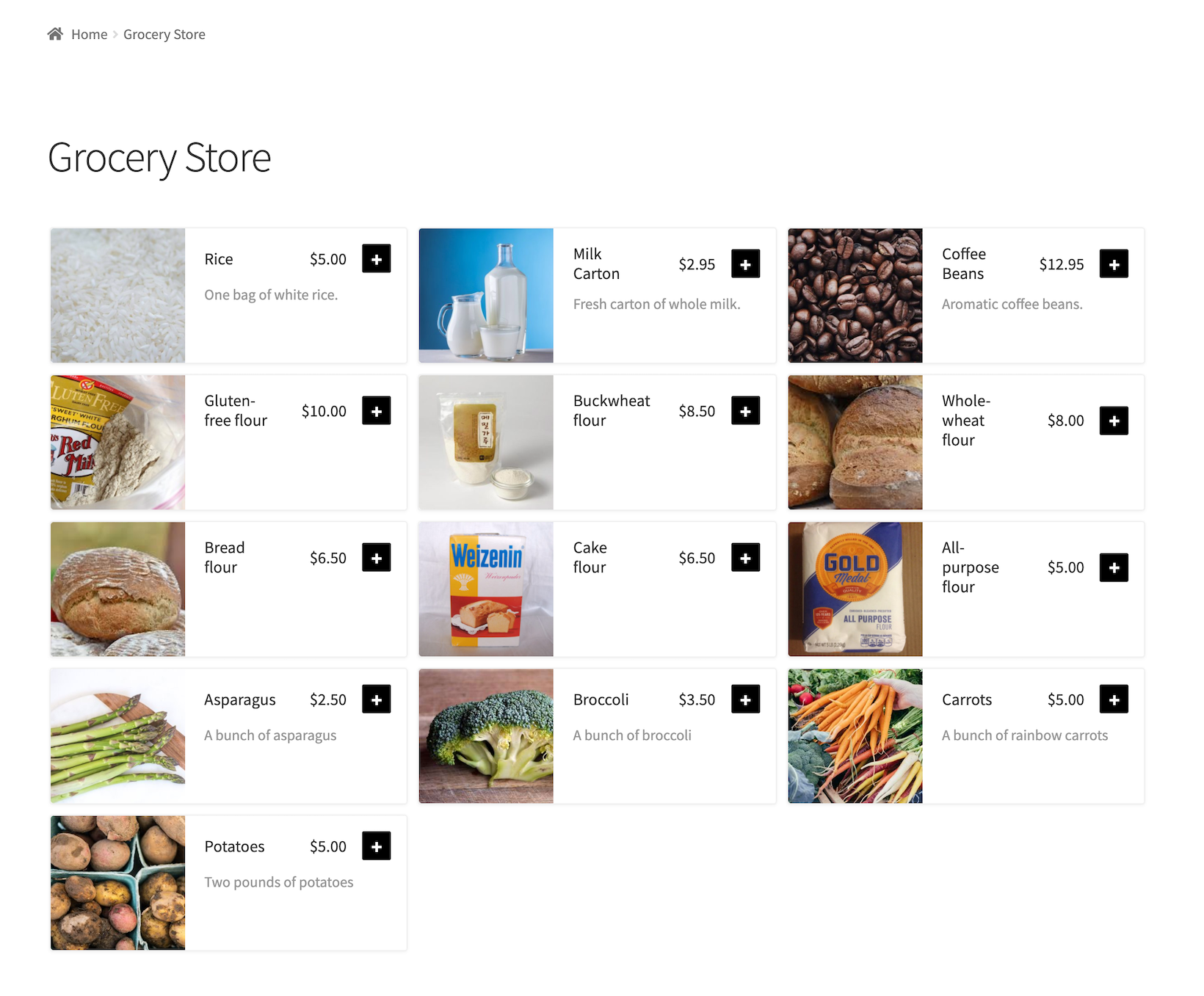
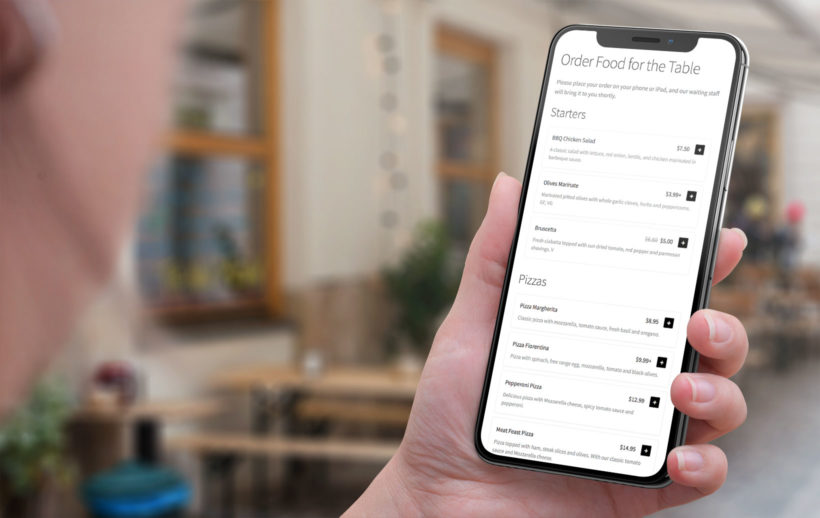
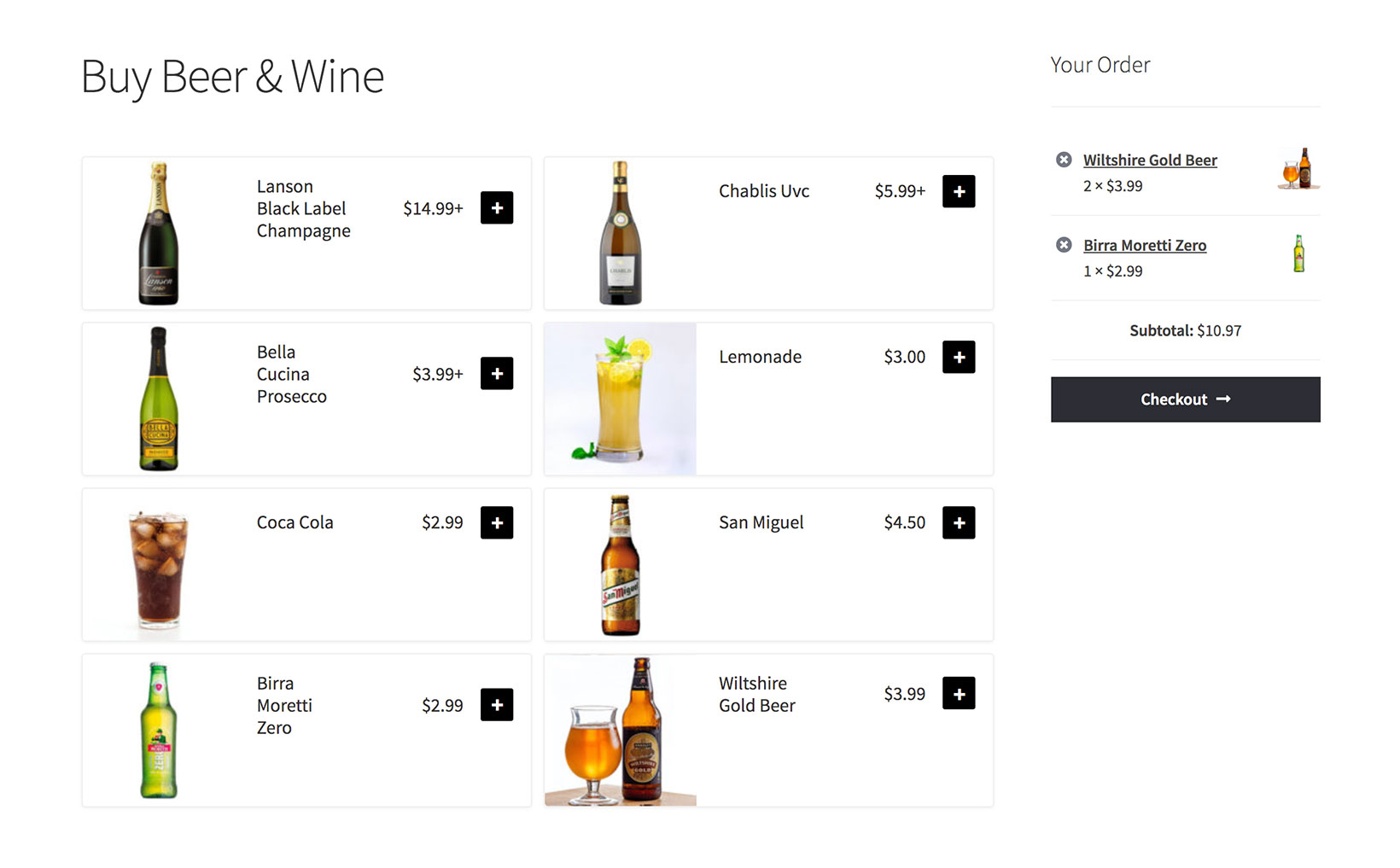
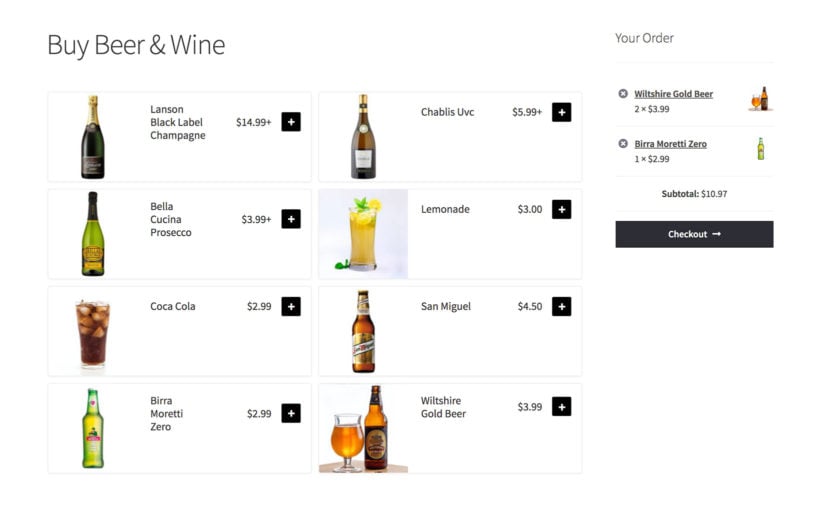
1 - Online grocery store (powered by WooCommerce Restaurant Ordering plugin)
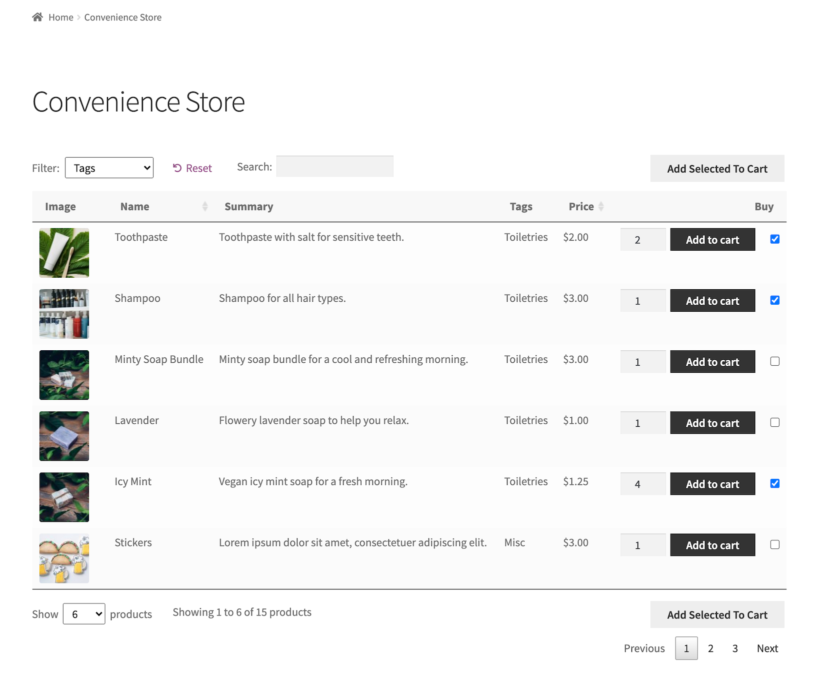
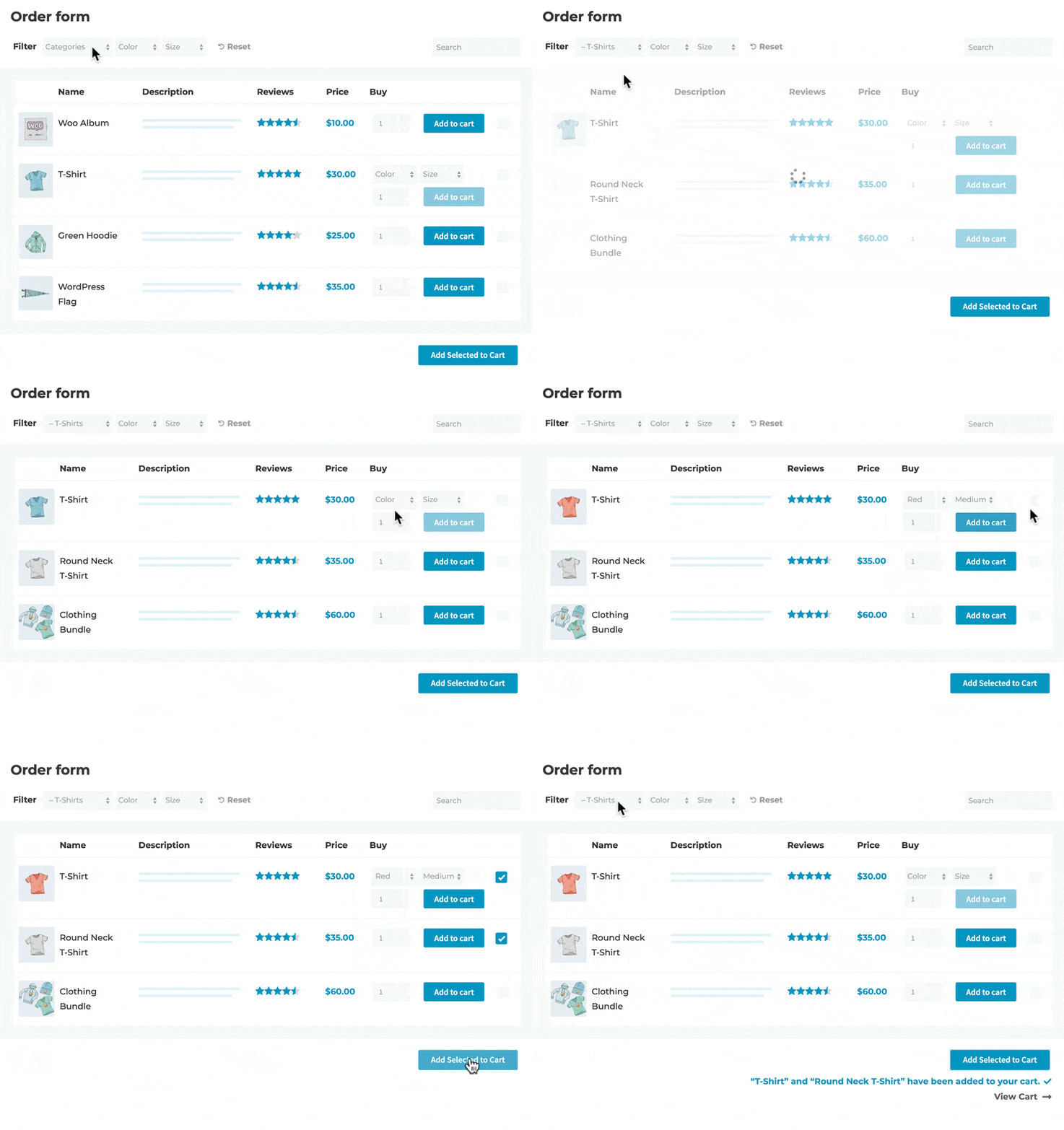
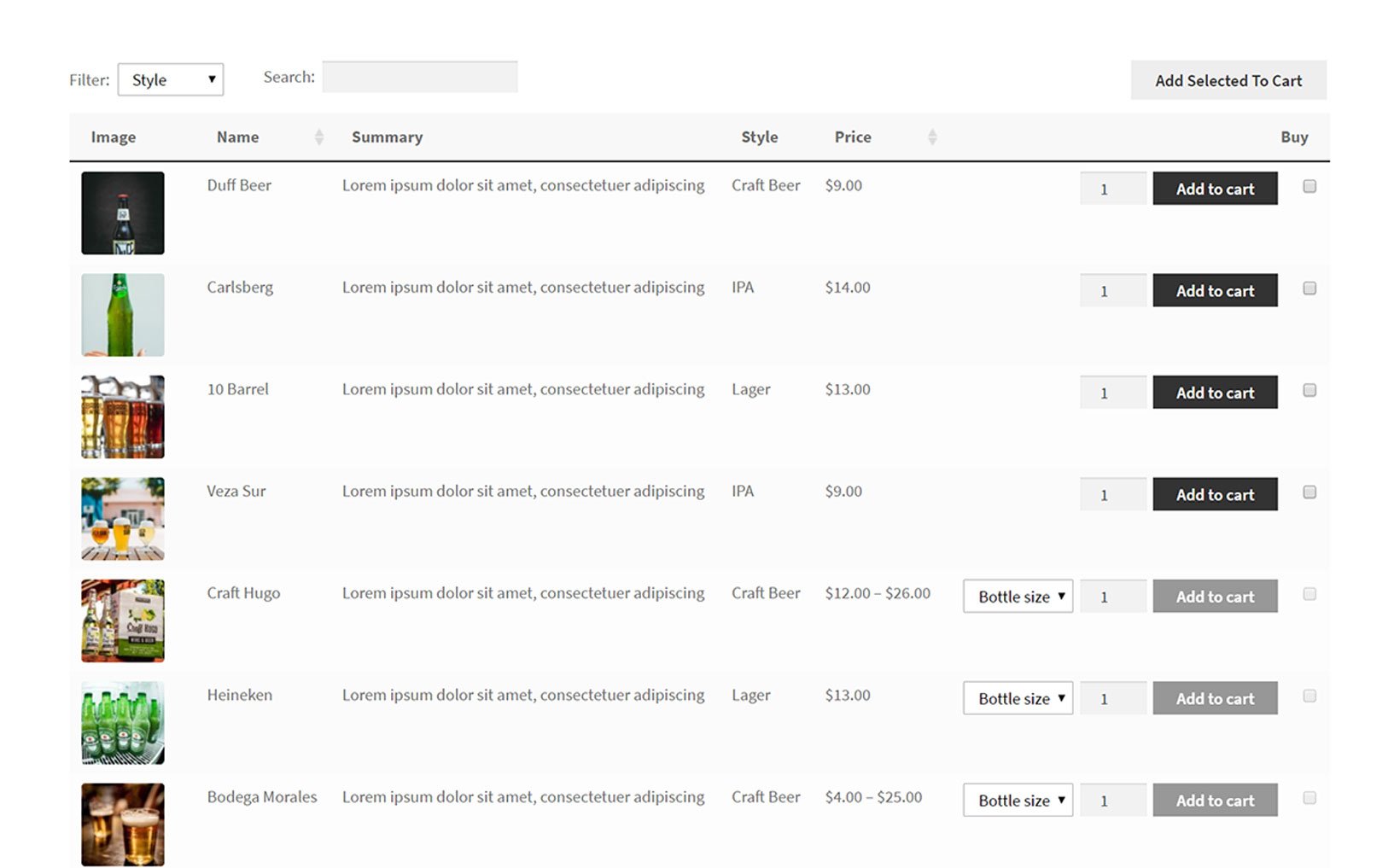
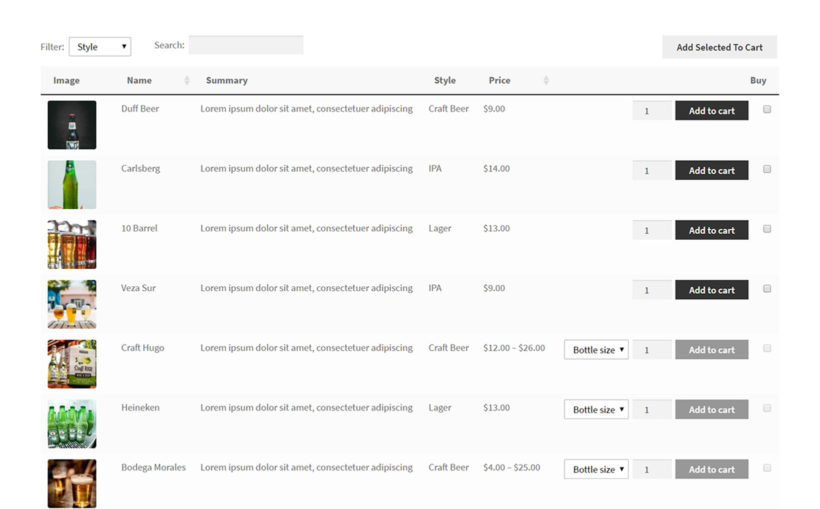
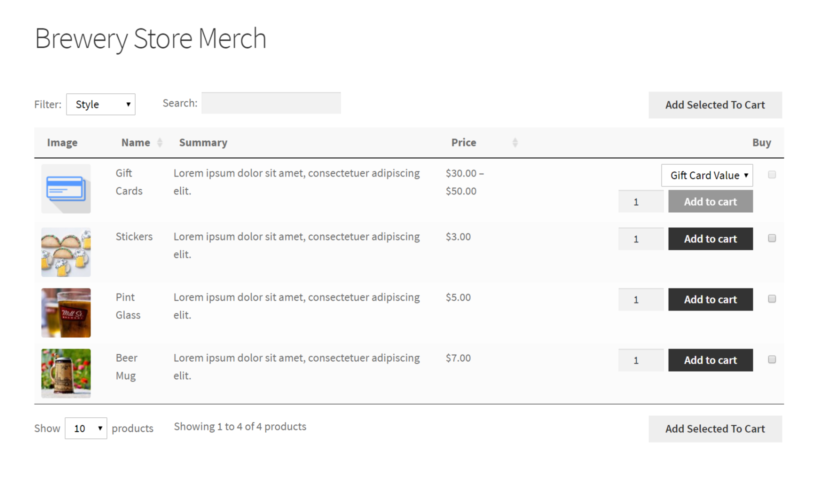
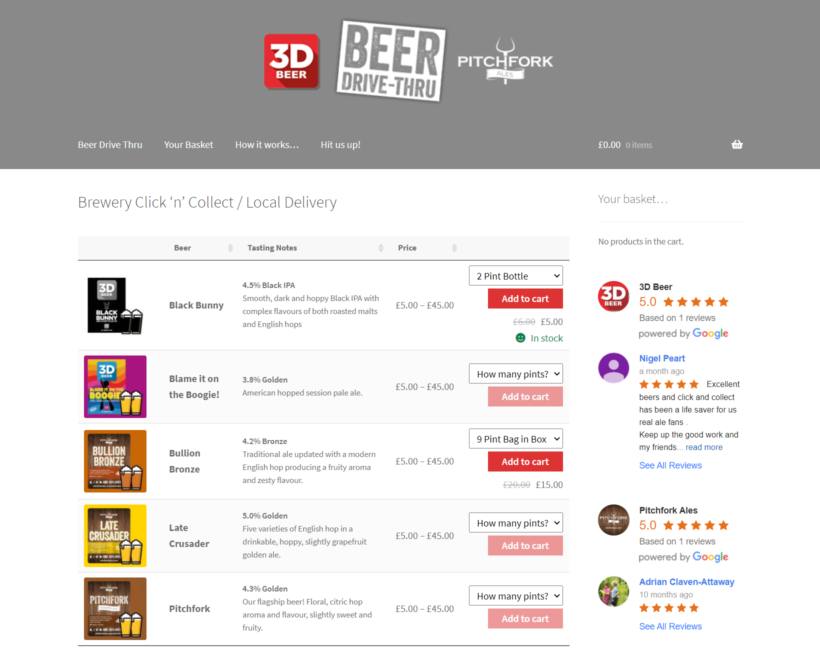
2 - Online convenience store (powered by WooCommerce Product Table plugin)
The easiest way to do this is with a WordPress WooCommerce website, coupled with one of these plugins for displaying your products:
So, if you're looking for a way to sell convenience store products and grocery items, then don't worry! This in-depth guide will show you how to start an online convenience store. As well as making it quick and easy to find and buy groceries and other products, you'll learn how to offer local grocery collection and home delivery options.
And the best part? We'll show you step-by-step how you can set up your online convenience store and sell groceries online. It's quick and easy, and there's absolutely no technical knowledge required to follow this tutorial. You can set everything up and start selling in no time!
Choosing the right plugin for your online convenience store
Before you can start setting up your online convenience store, it's a good idea to take a step back and figure out what sort of layout would be best for the types of products you're selling.
For example:
If you sell a dozen grocery items or fresh produce, you'd be better off with a menu-style food order form. This makes online grocery shopping quick and easy.
However, if you plan on selling hundreds (or even thousands) of convenience store products, a searchable and sortable product table ordering form with filters would be better suited to your needs.
Take another look at the two options, and choose whichever layout is best for you:
1 - Online grocery store (powered by WooCommerce Restaurant Ordering plugin)
2 - Online convenience store (powered by WooCommerce Product Table plugin)
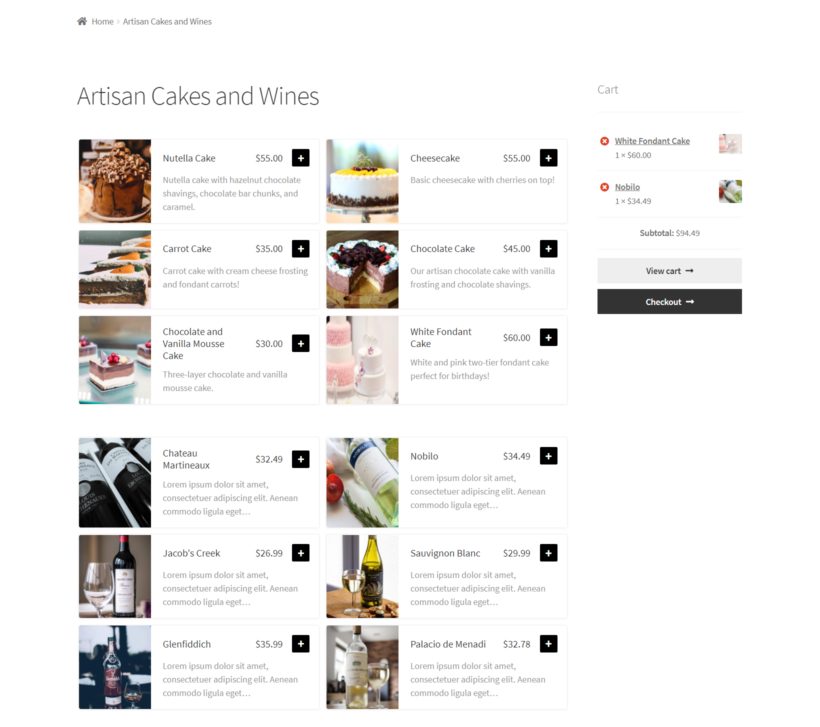
The WooCommerce Restaurant Ordering plugin is designed specifically for selling food products like flour, grains, fruits, and vegetables. The plugin also lets you display food items in a tiled layout on your site's front-end with 1, 2, or 3 columns.
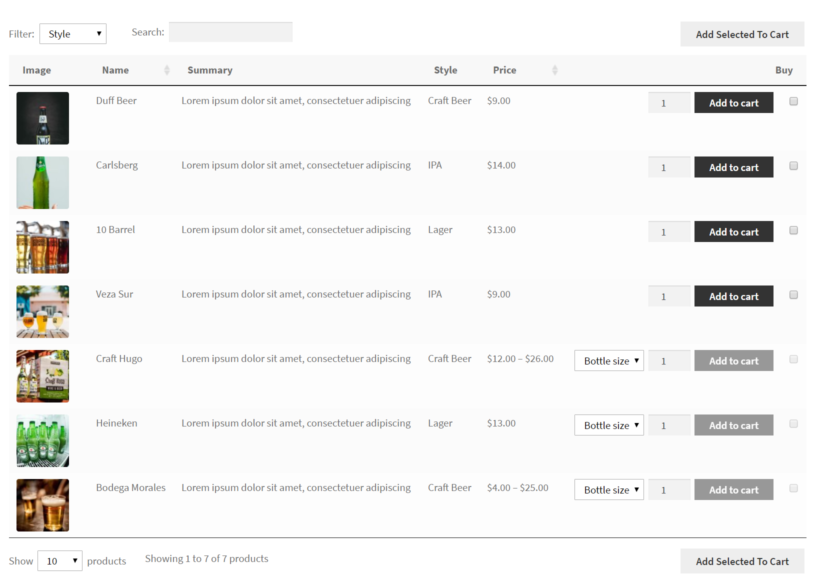
On the other hand, the WooCommerce Product Table plugin is ideal for selling a large number of products, like convenience store products. It comes with searching, sorting, and filtering options out of the box to help people quickly and easily find what they need.
Next, I'll show you how to use each plugin to sell groceries or other convenience store products online.
Before you start
This tutorial assumes that you already have a WordPress website with the free WooCommerce installed, and some products added. If you haven't got that far yet, then checkout this ultimate guide to WooCommerce.
Once you're done, come back here and continue transforming your website into a fully fledged online grocery or convenience store.
Option 1 - How to start selling groceries online using the WooCommerce Restaurant Ordering plugin
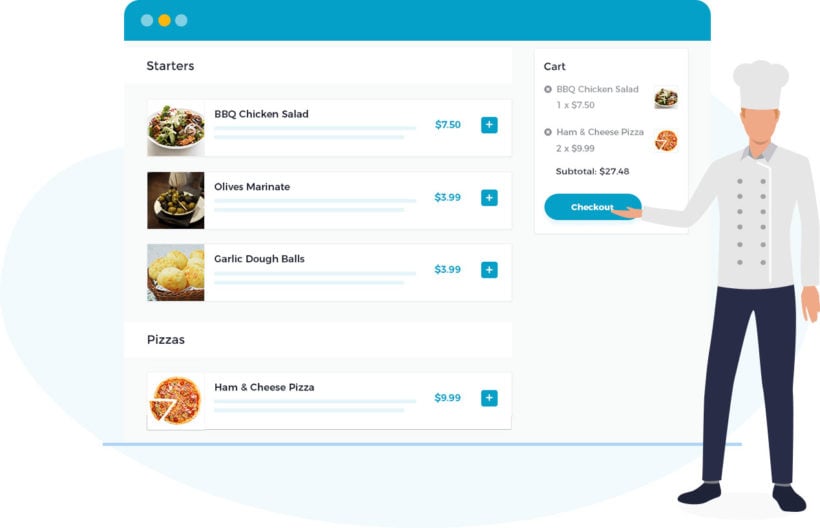
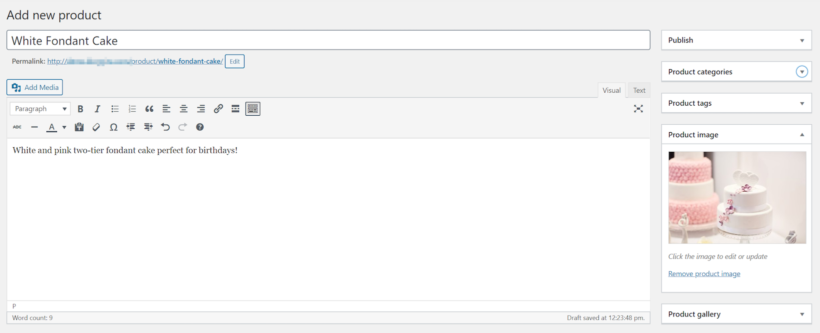
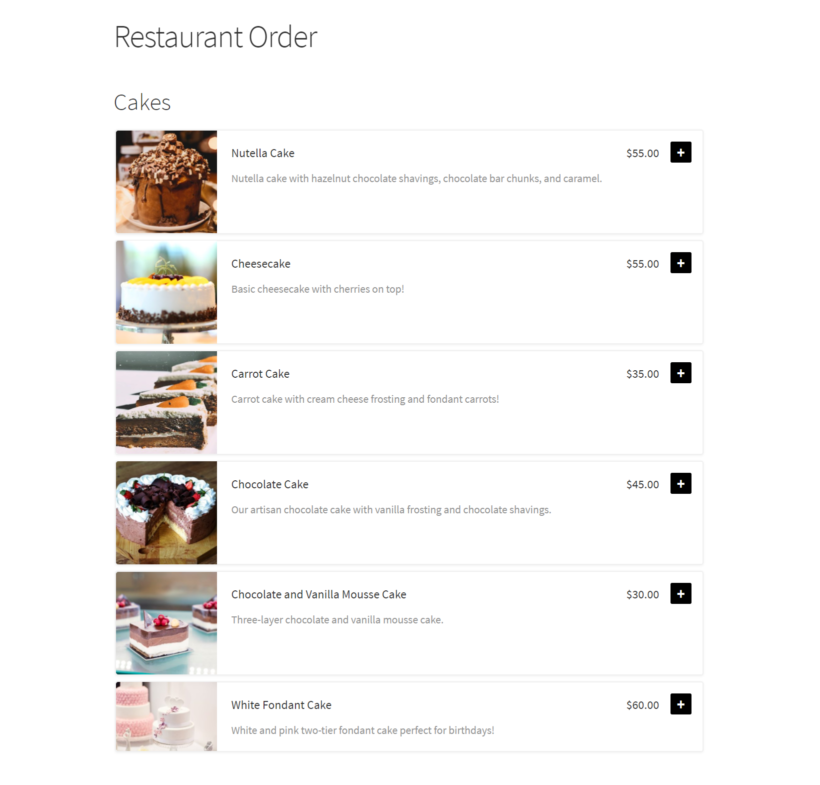
The easiest way to start selling groceries online is by using the WooCommerce Restaurant Ordering plugin. All you have to do is create categories for your grocery food items, and the plugin will automatically list them in a food order form page for you.
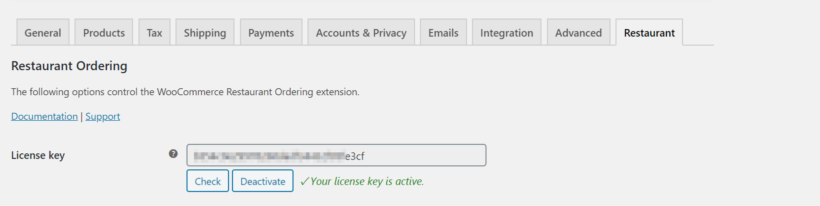
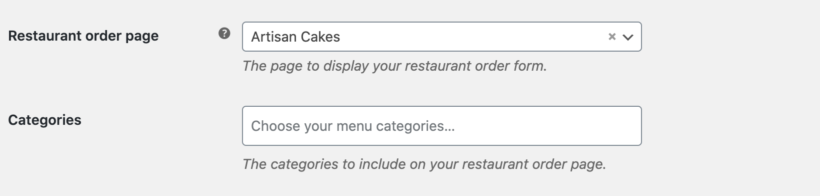
Go to WooCommerce →Settings→Restaurant and activate the plugin's license key.
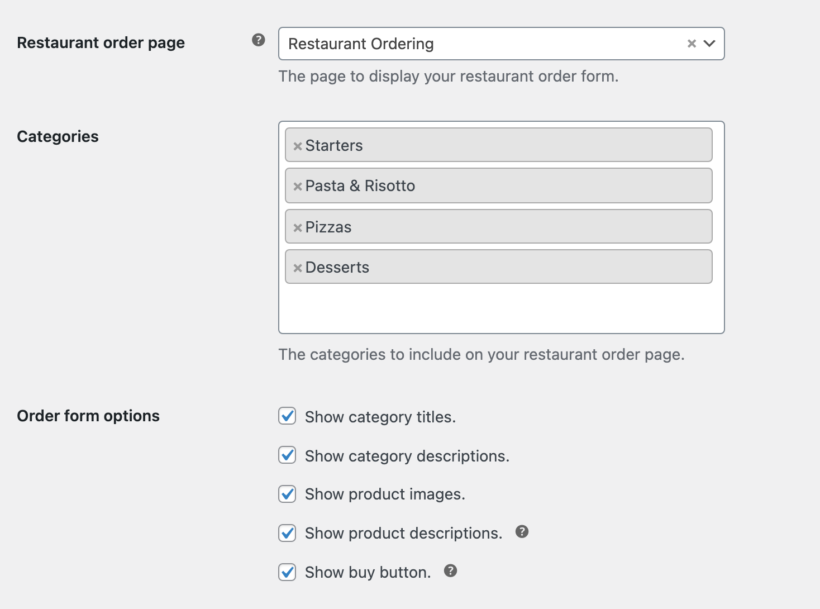
Choose which page you'd like to display the grocery order form on using the Restaurant order page dropdown.
Select which Categories to include in your grocery order form using the dropdown.
Choose what information you'd like to display about your groceries.
Click the Save changes button at the bottom of the screen to proceed.
Once that's done, go to the main list of Pages in the WordPress admin and find a new page called 'Restaurant Ordering'. Change the name to something more appropriate, and you'll see that this page lists all your grocery products.
Alternatively, you can use the [restaurant_ordering] shortcode to list each grocery category on a separate page or in a tabbed layout or on multiple pages on your website.
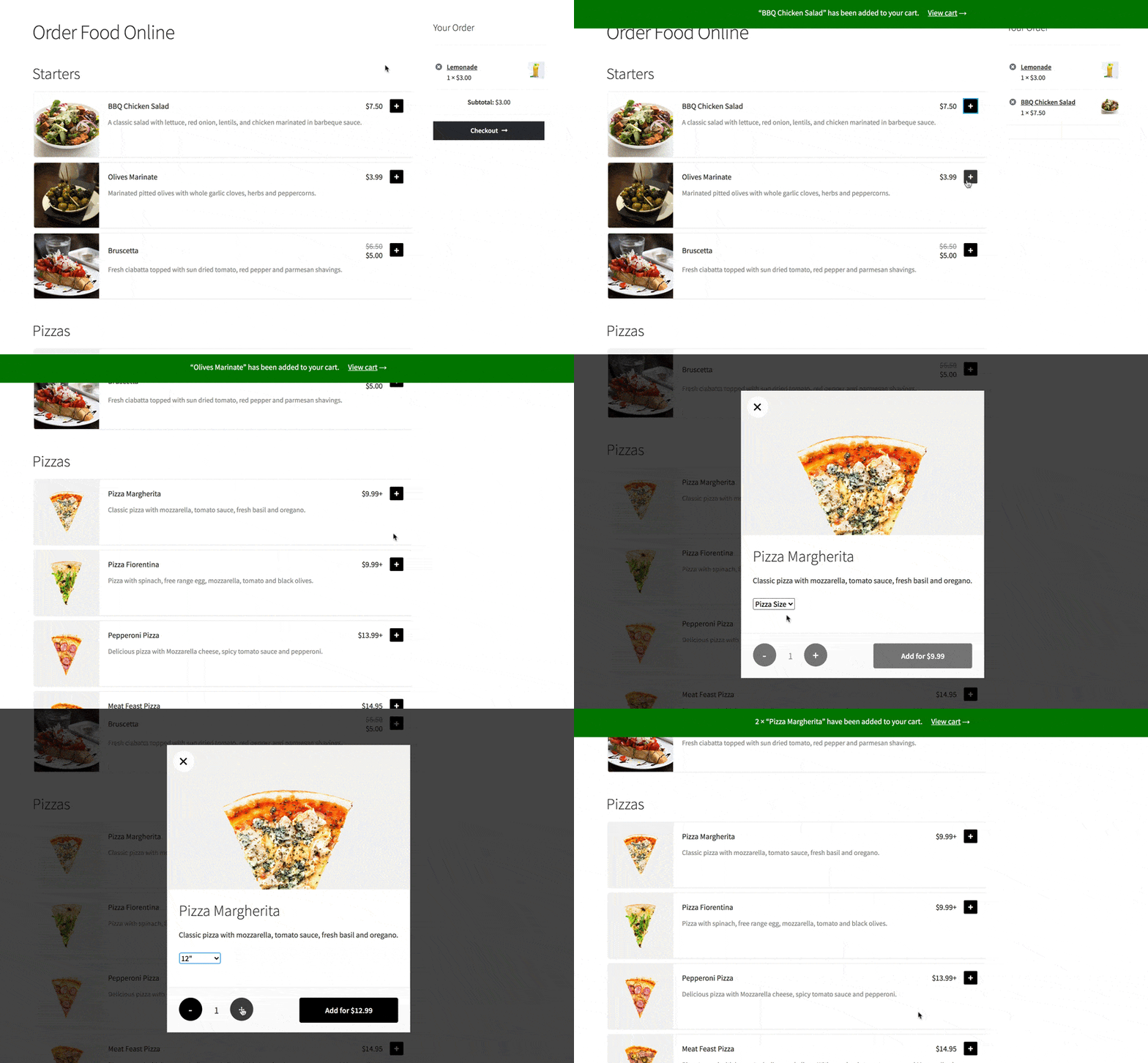
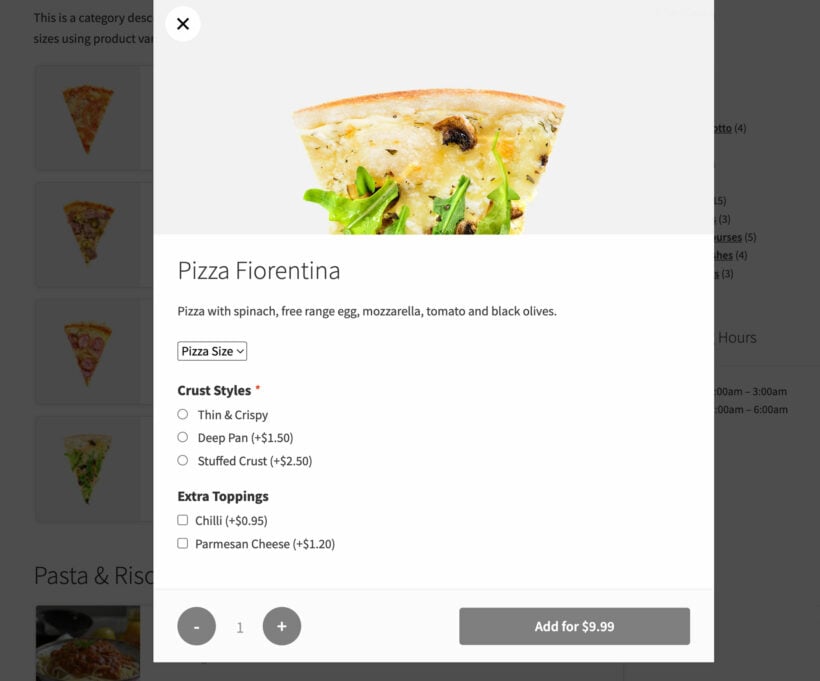
You can now start accepting online orders. Customers can view your 'Buy groceries' page and add products to the cart. If you've added variations of your groceries (for example, to provide different size options for the same product) then these will appear in a lightbox. Perfect!
Option 2 - How to set up an online convenience store using the WooCommerce Product Table plugin
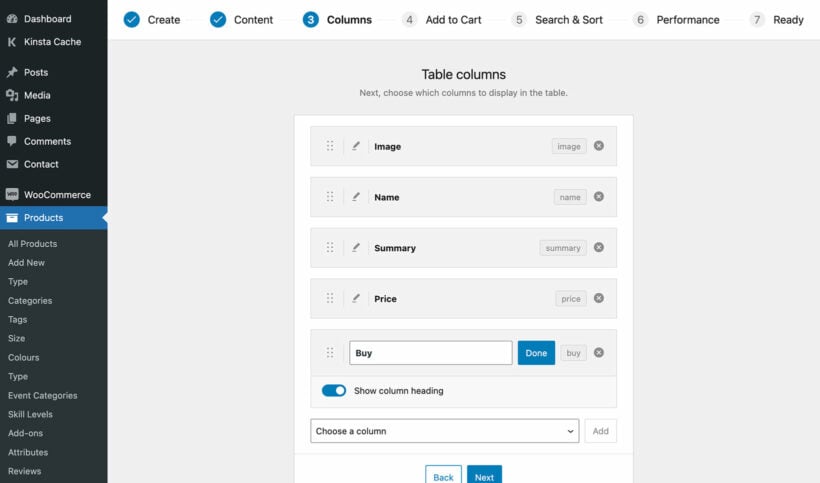
The WooCommerce Product Table plugin makes it easy to set up an online convenience store in WooCommerce in a few simple steps. The first thing you need to do is create categories for your online convenience store items. Do this under Products → Categories.
Once that's done, follow these steps to display your products on the front-end:
Go to WooCommerce →Settings→Products→Product tables and activate the plugin's license key.
To display the product table on the front-end, either:
Use the [product_table] shortcode to list all the products in a table with a Categories or Tags filter above.
Tick the Table display boxes on the plugin settings page to enable the product table layout throughout your online convenience store. This way, people will see the tables on the shop and individual category pages and can browse the store as needed.
Tick the checkbox next to the Lazy load option under the Loading products section if you plan on selling hundreds of products.
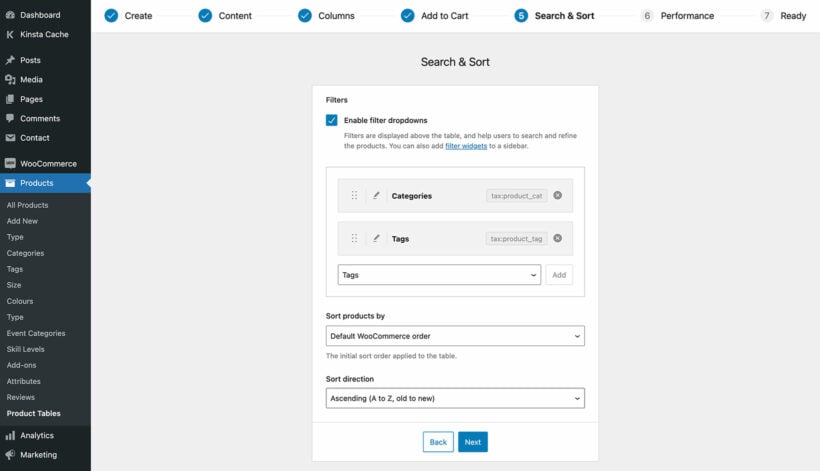
If you have lots of products, then you'll also want to enable the Search and Filter options.
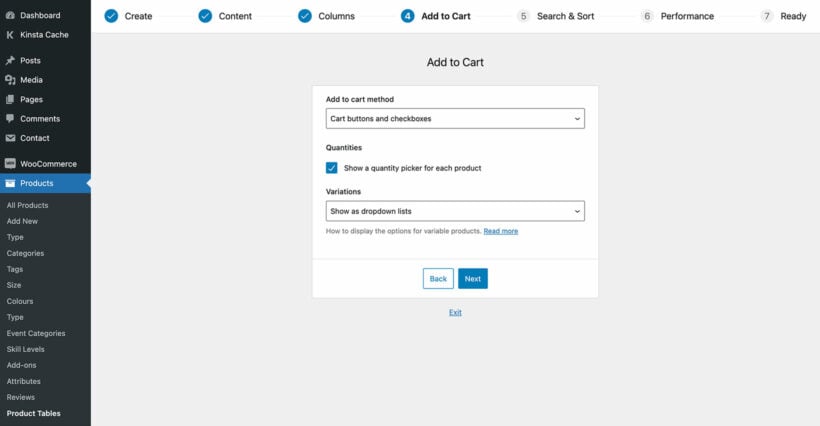
Set the Add to cart button dropdown to either Checkbox only or Button and checkbox. This way, customers can quickly choose quantities, variations, and tick multiple products before adding them all to the cart.
Click the Save changes button at the bottom of the screen to proceed.
Set up local collection and home delivery options
The WooCommerce Restaurant Ordering and WooCommerce Product Table plugins are the perfect way to list grocery and convenience store products in a one-page order form. Once customers add products to their cart, they can proceed to the checkout page.
The WooCommerce plugin handles the entire checkout process. This means that you can give customers the option to collect the grocery items and convenience store products from your physical store, or have them delivered straight to their doorstep like Amazon. You can offer free delivery or charge a delivery fee.
In addition, online grocery and convenience stores can choose to either restrict their customers to a specific local area. Or, they can open up their usual market by offering nationwide (or even international) delivery options.
To take things to the next level, you can let customers choose their collection or delivery time slot. You can easily do this with the WooCommerce Opening Hours & Chosen Times plugin. This way, you can let people choose an exact time slot for their local grocery store delivery or collection.
The delivery slots plugin works seamlessly with WooCommerce Restaurant Ordering and WooCommerce Product Table. Offering delivery services is a great way to enhance the customer's shopping experience.
Set up your online convenience store today!
The WooCommerce Restaurant Ordering plugin makes it easy for customers to purchase grocery items from your e-commerce store. And the WooCommerce Product Table plugin lets you set up an online convenience store and start selling hundreds (or even thousands) of products in no time.
Plus, you can offer grocery delivery services. This gives customers the option to collect their orders from your store or have it delivered to their home the way Amazon does it.
Both plugins come with everything you need to get up and running quickly:
Quick plug-and-play setup.
In-depth documentation (absolutely no way to get it wrong).
Technical support is available if you need any help.
30-day money-back guarantee. Love it or get a full refund - zero risk!
Get the WooCommerce Restaurant Ordering plugin and sell groceries online today through your online grocery store. Or, use the WooCommerce Product Table plugin to set up an online convenience store. Choose the right plugin for your needs, and set it up today!
By the time you’ve read this article, you’ll know exactly how to set up PayPal for food orders. Your customers will be able to order food using PayPal, just like with hosted services such as Grubhub, Just Eat and UberEats - but with you in control.
Over the past few years, mobile payments have been very popular, and this trend is anticipated to continue as more businesses use this technology. This implies that more restaurants have started accepting cash-less food orders in coming years. Restaurants that set up online food ordering systems have seen a huge increase in takeaway orders! Restaurants are now having to make permanent changes to stay in business longer-term. Online food orders are an important part of this.
Of course, customers LOVE PayPal because it's so easy and they can pay for food orders from their mobiles.
So, how can a restaurant like yours set up online ordering with easy PayPal payments?
By the end of this FREE guide, you’ll walk away knowing EXACTLY:
What you need to set up online orders for your restaurant with PayPal payments just like Grubhub, Just Eat or Uber Eats.
How to set up all of the components without any technical knowledge or experience.
How to do all of this EVEN if you don’t have a website yet!
And the best part? We’ll show you how to automate the whole process.
Why PayPal alone is a terrible way to sell food online
If you’ve used PayPal to accept payments for your products or services, you probably already know that it’s not the best way to sell food online.
The problem with using PayPal for food orders is that you have to log into your PayPal account to create each PayPal payment button individually. After creating the buttons, you paste them on your website. This doesn’t look professional and makes for a terrible user experience.
Further, PayPal doesn't provide a shopping cart system that lets customers order multiple food items at once. This is a major problem since most people need to order more than one food item at a time!
From a back-end perspective, you won’t receive any sort of ‘new order’ notification or customer emails if you use PayPal alone for food orders. You will only receive basic payment notifications from PayPal which may get mixed up with other PayPal emails.
You also miss out on analytics and sales reporting features (like Google Analytics) as well as the ability to integrate with other systems, such as opening hours, delivery slots or the printer in your restaurant’s kitchen.
But what if you could set up PayPal for food orders just like Grubhub - without any of these problems?
The solution – Build a WordPress WooCommerce website for selling food online
A WordPress website with the free WooCommerce plugin is a far better way to sell food online and accept payments via PayPal. The best part is that you can enhance your site’s core functionality using specialized plugins, like WooCommerce Restaurant Ordering. This makes it even easier to showcase your food items and allow customers to place orders.
The WooCommerce plugin offers seamless integration with PayPal as standard, in a much better way than if you were to use PayPal alone to let customers place orders as we described earlier.
It’s incredibly easy to set up. As a result, you can start letting customers order food with PayPal today!
Plus, this is mobile-responsive, which means it will work seamlessly on iOS and Android devices without requiring customers to download a mobile app first.
Setting up PayPal payments for food orders
If you don’t already have a WordPress website set up with the WooCommerce plugin installed, check out this complete guide on how to get started.
Once you’ve set it up and added some food items as WooCommerce products, come back to this tutorial to learn how to set up PayPal payment options for food orders.
Step #1: Get the WooCommerce Restaurant Ordering plugin
Go to WooCommerce → Settings → Restaurant and enter the license key in the License key field.
Click the Save changes button at the bottom of the screen to continue.
Step #2: Customize your restaurant food order form
The WooCommerce Restaurant Ordering plugin automatically creates a front-end food order form for you once you activate the license key. However, you can customize the food ordering page in a variety of different ways.
For example, you can set the restaurant order page, select which product categories to showcase in the food ordering form, set the number of columns, choose an order method, and much more. You can also add your opening hours and prevent PayPal food orders from coming in while you're closed.
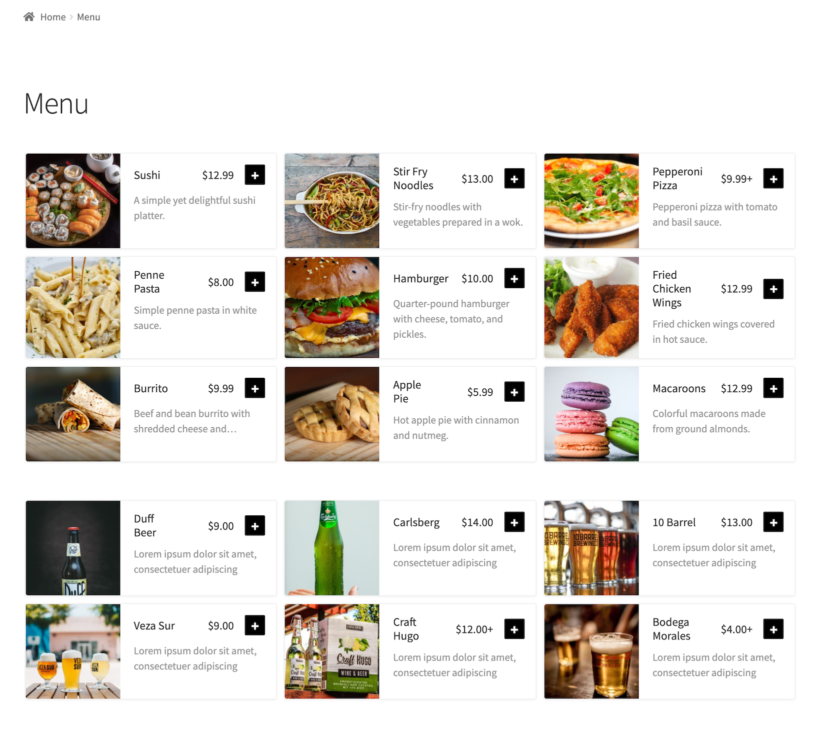
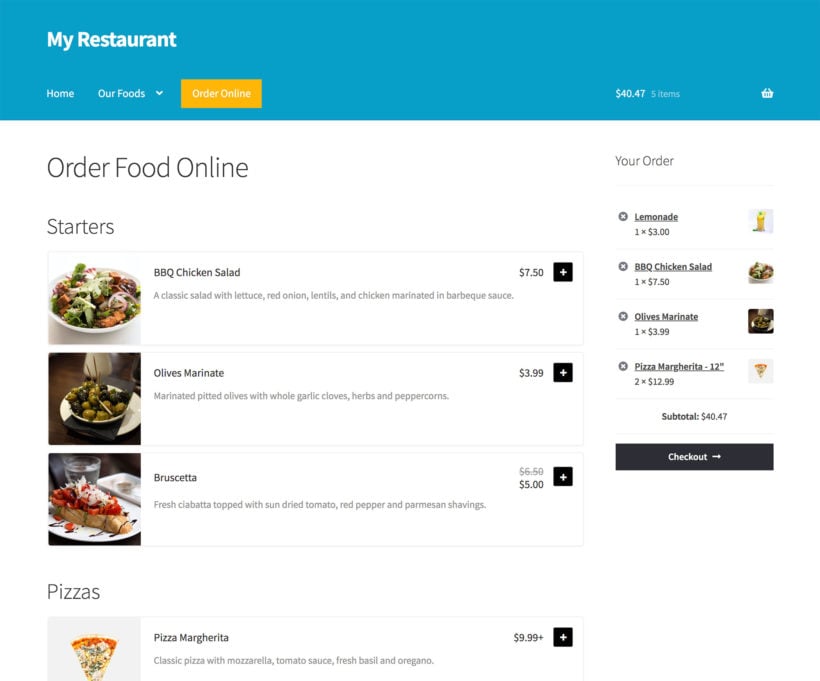
Based on your configuration settings, your food order form might look something like this:
Customers can click the (+) icon to add food items to their shopping cart and proceed to checkout.
Step #3: Set up PayPal payments
Now that your restaurant food ordering form is set up, the final step is to start accepting payments for food orders via PayPal. For this, head over to WooCommerce → Settings → Restaurant from the admin area.
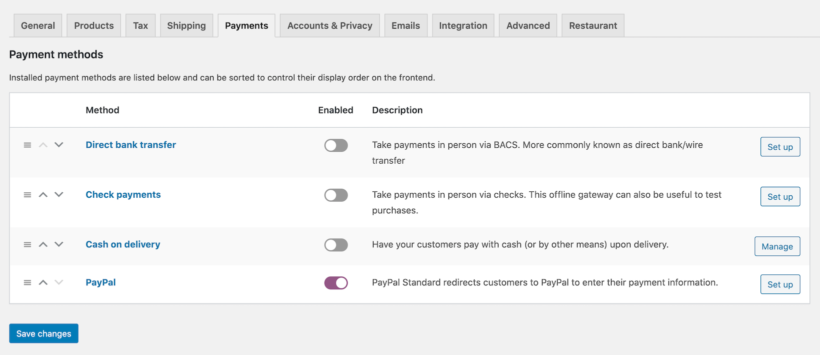
Next, enable the PayPal payment method option and click the Set up button to start setting it up. Enter your PayPal email address in the PayPal email field. You can also configure other settings on the same screen based on your preferences.
Click the Save changes button to proceed.
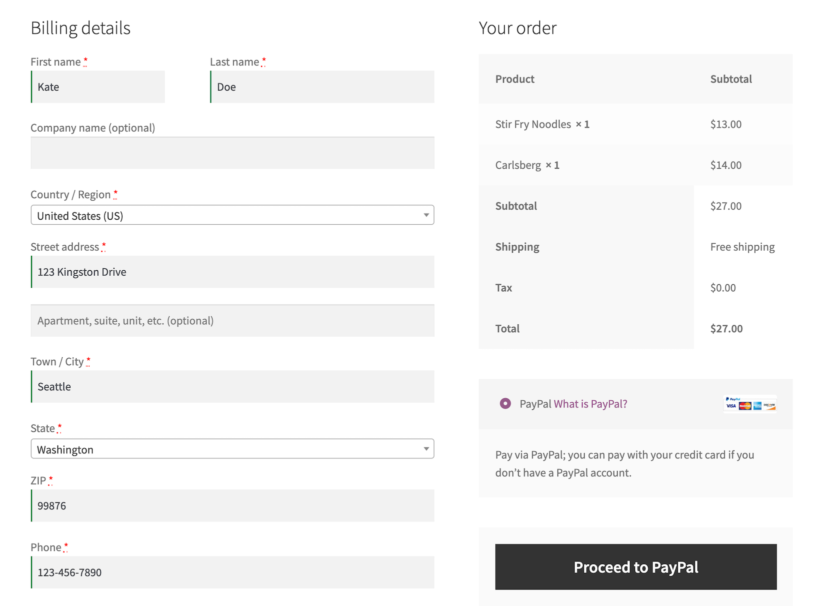
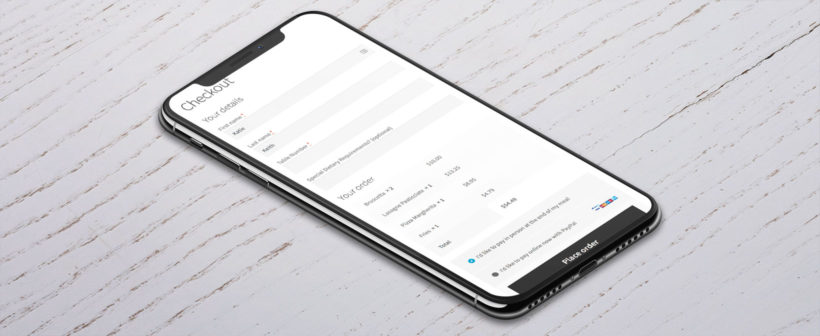
When customers proceed to checkout, they'll be able to make pay for food orders with PayPal:
That's it! Now, you can let customers place food orders and accept payments through PayPal.
Adding extra features to your PayPal-powered food ordering system
The great thing about using WordPress and WooCommerce to set up your PayPal-powered food ordering system is that you can add extra features to it using plugins. For example, you can set up food delivery slots and printing solutions that print orders straight to your restaurant’s kitchen.
Popup cart and checkout
The WooCommerce Restaurant Ordering plugin lets customers add their food items to the cart from one page. However, WooCommerce itself still takes customers through multiple pages in order to complete their order.
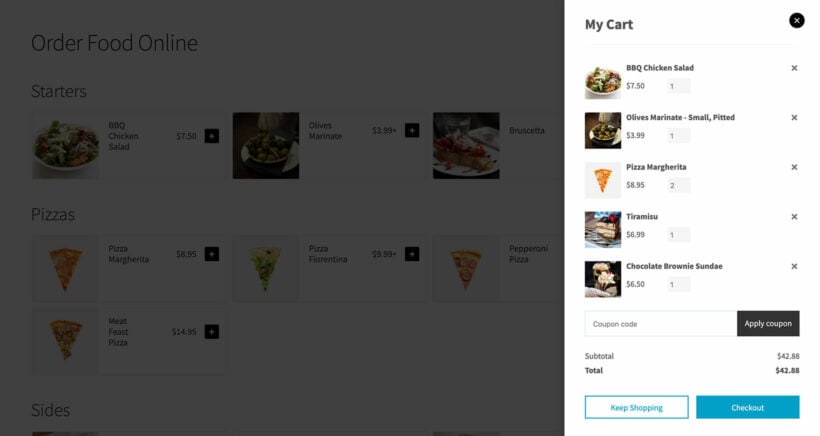
To speed up the cart and checkout, install WooCommerce Fast Cart. This adds an instant floating cart to the page as soon as the customer adds products to their cart. They can then review their selections, enter their details and pay from directly in the popup.
WooCommerce Fast Cart is fully compatible with the WooCommerce PayPal Checkout Payment Gateway. This lets you add PayPal Checkout buttons to the popup cart, making it even easier for customers to 'Buy Now' and place a PayPal food order.
Delivery time slots
The WooCommerce Opening Hours and Delivery Times plugin lets customers choose a delivery time slot for their food delivery orders similar to Eat24 Food Delivery. This makes it easy to manage food orders, especially on high-traffic days.
For example, the plugin gives you the option to restrict the number of food order bookings in each time slot. In addition to this, you can set how far in advance customers should place their food orders before their delivery or takeout time slot. You can also decide how many food orders to accept within each food delivery time slot so that the kitchen doesn’t exceed capacity.
The plugin also lets customers book a delivery time slot before they add food items to their cart in order to avoid disappointment at the checkout page. This is especially useful for local restaurants that want to let customers order online and offer food delivery services.
Print orders to the kitchen
There are a variety of WordPress plugins available that let you send new food orders straight to the kitchen and print them for staff. This is possible with the WooCommerce Automatic Order Printing plugin.
Want to set up online ordering for your restaurant with PayPal payments in 30 minutes?
This plug-and-play solution was specially designed to help stop restaurants from going out of business during the Coronavirus pandemic. PayPal food orders are now essential as part of the ongoing order management of any restaurant.
You can use the WooCommerce Restaurant Ordering plugin to set up your online food ordering system and accept payments via PayPal, credit card, or debit card just like Grubhub or Dominos. No technical knowledge is required:
Plug-&-play setup for the plugin.
FREE tutorial showing you every step and every click you need to do (absolutely no way to get it wrong).
Technical support is available if you need any help
30-day money-back guarantee. Love it or get a full refund, 0 risks.
WooCommerce can't hide prices until login on its own, so you need a plugin. WooCommerce Wholesale Pro hides prices and Add to Cart buttons from logged-out users, and I'll show you how to set it up, step by step.
By default, WooCommerce shows prices to everyone, including visitors who haven't logged in. This guide shows you how to change that using WooCommerce Wholesale Pro, ensuring only registered users can see prices and place orders.
Many store owners, particularly those running wholesale-only shops, need to restrict pricing to a member-facing interface. Restricting visibility ensures that only approved customers or wholesalers can view costs and complete a purchase. Since WooCommerce doesn't offer a native setting to hide pricing from guests, a dedicated plugin is the most effective solution.
We built Wholesale Pro specifically for stores like this. It started when we noticed that the most common use of our Protected Categories plugin was wholesale, and those customers needed more than category restrictions: role-based pricing, wholesale registration, and wholesale-only payment, shipping and tax options. So we built a plugin designed around the wholesale workflow from the start.
If you’re in this situation, the setup is straightforward. In this tutorial, we’ll explain how to configure your store in a few simple steps. There is no technical knowledge required, so you can quickly manage your shop's visibility and protect your margins from unauthorized viewers.
How do you hide prices until login in WooCommerce?
WooCommerce does not hide prices from guests by default. To hide prices until login, install a plugin such as WooCommerce Wholesale Pro, then turn on the ‘Hide prices until login’ setting.
The plugin removes product prices and the ‘Add to Cart’ button from logged-out visitors across the shop and single product pages, and shows a custom message in their place. Logged-in customers see standard prices, while wholesale roles see their own pricing. You can apply this to the whole store or to chosen categories.
Why hide price until login?
Many stores want to let everyone browse the catalog while hiding prices. They show prices, product options, and purchasing options to logged-in users only. To do this, you hide prices and the add to cart button from guest users, and reveal them once a user logs in.
Hiding prices until login can be a powerful strategy for WooCommerce stores that sell to wholesale customers or have a membership-based model. By controlling price visibility, you not only maintain exclusivity but also encourage potential buyers to register, boosting engagement and customer retention
Hiding prices from guests is a common need for wholesale and members-only stores, and it's straightforward to set up once you have the right plugin.
Free vs paid plugins to hide prices until login in WooCommerce
When looking to hide prices from guests, you’ll find several free plugins in the WordPress.org repository, such as Hide Price Until User Login For WooCommerce. While these are excellent for simple sites, it’s important to understand where they fall short compared to a professional solution like WooCommerce Wholesale Pro or WooCommerce's own Hide Prices & Private Store plugin.
The Limitations of free plugins
Free plugins generally offer a "one-size-fits-all" approach. They typically hide prices globally across your entire store. This works if you want a basic catalog mode, but it lacks nuance. For example, most free versions don't allow you to:
Target specific categories: You might want to hide prices for high-end machinery but keep them public for small parts. Free plugins rarely offer this level of control.
Support multiple user roles: If you have different tiers (e.g., Retail, Silver Wholesale, and Gold Wholesale), a free plugin usually treats everyone who is "logged in" exactly the same.
Include a registration system: Hiding prices is only half the battle. You also need a way for users to register for access. Free plugins often require you to install additional, separate plugins to manage user approvals.
Why invest in a paid plugin?
A premium plugin like WooCommerce Wholesale Pro is designed for businesses that need to balance public visibility with private pricing. It’s worth the investment if you require:
Granular control: You can hide prices globally, by product category, or even for specific user roles while keeping your shop SEO-friendly.
A complete ecosystem: It includes a built-in new user registration and moderation system. This means you can vet new customers before they gain access to your pricing, a must-have for B2B and wholesale operations.
Role-based pricing: Instead of just showing the "normal" price after login, you can display unique discounts based on the user's role.
If you simply want to hide every price on your site with no exceptions, a free plugin is a fine starting point. However, if you are running a professional store, need to approve your members, or want to offer tiered pricing, a paid solution is the only way to ensure a seamless experience for both you and your customers.
Use cases for a wooCommerce hide price until login plugin
Wholesale stores that don’t sell directly to the general public and only want to show prices to wholesale customers. A WooCommerce hide price until login plugin enabled everyone to browse your inventory, while only allowing pre-approved wholesale users to register, see prices or purchases.
Manufacturers publish details of their products on their websites but only allow approved resellers to purchase from them.
WooCommerce members-only stores where people have to join a club or buy a membership before making a purchase. Letting prospective customers browse products without prices encourages them to create an account via a custom WooCommerce registration form. This allows store owners to build an email list and retarget customers more effectively. In addition, it allows them to let visitors browse their products and increases their store’s online visibility.
Displaying your products publicly, while hiding prices and buy buttons from logged out users, is the perfect solution. You get the SEO benefits of having this important information available to all, and the business benefits of only allowing pre-approved customers to see prices or purchases.
Even though WooCommerce Wholesale Pro is primarily aimed at wholesale stores, it can be an ideal solution for any online store that wants to use the WooCommerce show price after login feature to hide prices and disable purchasing options for logged-out users and guests.
How to use WooCommerce Wholesale Pro to hide prices until login
With the WooCommerce Wholesale Pro plugin, you can easily hide prices until login for your store’s visitors and customers. You can either hide prices completely or display alternate content in their place. For example, you could add a 'Login to view prices and place an order message, linking to your login page. You can also check out the plugin documentation for step-by-step instructions.
For this tutorial, we’ll assume you already have the WooCommerce plugin set up on your WordPress website and some products added to your store.
Step #1: Get the WooCommerce Wholesale Pro plugin
The first step is to get the WooCommerce Wholesale Pro plugin and install and activate it on your WordPress website. You’ll receive the plugin files along with a license key. Copy this to your clipboard.
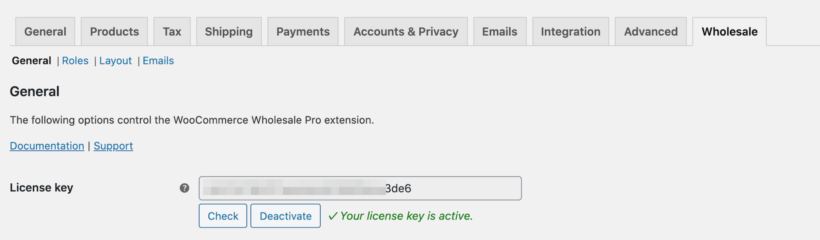
Log into your WordPress dashboard and head over to WooCommerce →Settings→Wholesale→General. Paste the license key in the License key field and click the Save changes button.
Step #2: Configure the plugin’s settings
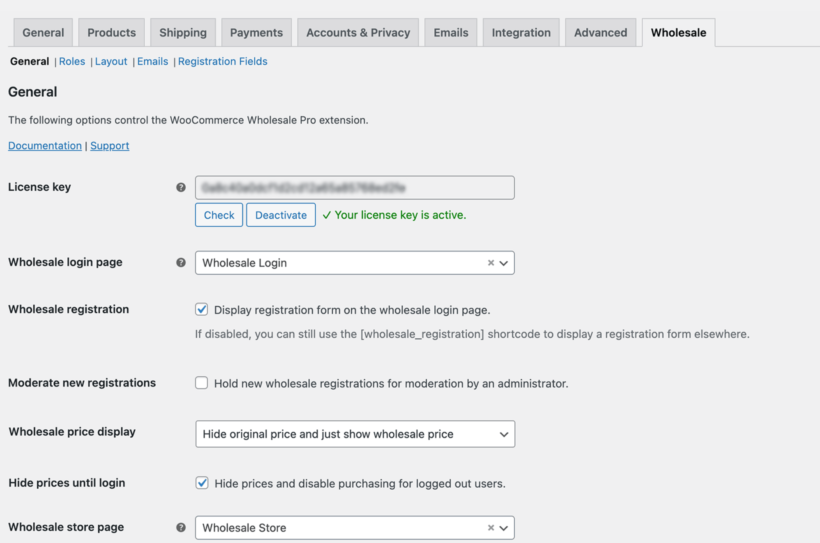
From the same screen (i.e. WooCommerce →Settings→Wholesale→General), tick the checkbox next to the Hide prices until login option as shown in the screenshot below:
This will automatically hide product prices and any information in the add to cart area.
More specifically:
Logged out users (non-logged-in users) will be able to browse products and view product pages as usual. However, if a user is not logged in and has not used the login to see add to cart and prices in WooCommerce feature, they will not have access to price information or the add to cart option. This also applies to other user roles such as Subscribers. Put simply; they will only be allowed to browse the store in catalog mode.
Logged in users with a non-wholesale role (e.g. Customers) will see the normal price for each product.
Logged in users with a wholesale role will see the correct wholesale price for their role.
Next, we’ll show you how to create WooCommerce wholesale user roles with wholesale pricing. If you're only utilizing WooCommerce's hide price if not logged in feature to conceal prices from visitors and not creating a wholesale store, you can skip the next steps.
Step #3: Add wholesale user roles and prices (optional)
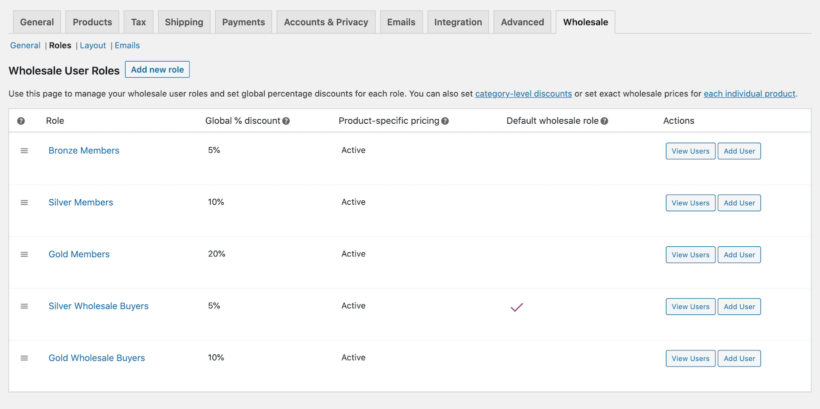
Go to WooCommerce →Settings→Wholesale→Roles from the WordPress admin panel and click the Add new role button. From here, you can manage your WooCommerce user roles by either adding a global percentage discount to the default wholesale role or creating extra roles, each with its own specific role-based discounts.
If you want all new wholesale registrations to be assigned this user role automatically, tick the checkbox next to the Default role option. In addition, if you want to set exact wholesale WooCommerce prices for specific products instead of offering a percentage discount, tick the checkbox next to the Product specific pricing option.
Note: You can offer discounts to each wholesale user role based on the product category.
Click the Save changes button to proceed.
You can create as many wholesale user roles as possible by following the steps outlined above.
For example, if you want to create a members-only WooCommerce store, you would simply create user roles for the different memberships you offer. You might have user roles for Bronze Members, Silver Members, and Gold Members.
How to hide the add to cart button until login in WooCommerce
By default, WooCommerce encourages immediate purchases, but many business models need a layer of exclusivity. The WooCommerce Wholesale Pro plugin hides the add to cart button automatically. You do not have to configure separate rules for the price and the button. The plugin hides both elements at the same time.
Once you have enabled the "Hide prices until login" option, the plugin automatically removes the "Add to Cart" button from both the single product page and the main shop archives for logged-out users. In its place, the plugin displays your custom lead-in text or a login link, ensuring the call to action is replaced with a prompt to log in or register. This creates a clean, professional catalog appearance that protects your margins while maintaining a high-quality user experience for guest browsers.
This feature also extends to more complex product setups. Any variation selectors, product add-on fields, or booking calendars are automatically hidden from view until the user authenticates, preventing guests from interacting with product options before they are authorized to see the price.
How to show a login to see prices message in WooCommerce
When you hide prices from guest users, it is important to provide a clear call to action so they know how to gain access. Rather than simply leaving a blank space where the price and buy buttons used to be, WooCommerce Wholesale Pro allows you to display a custom "Login to see prices" message.
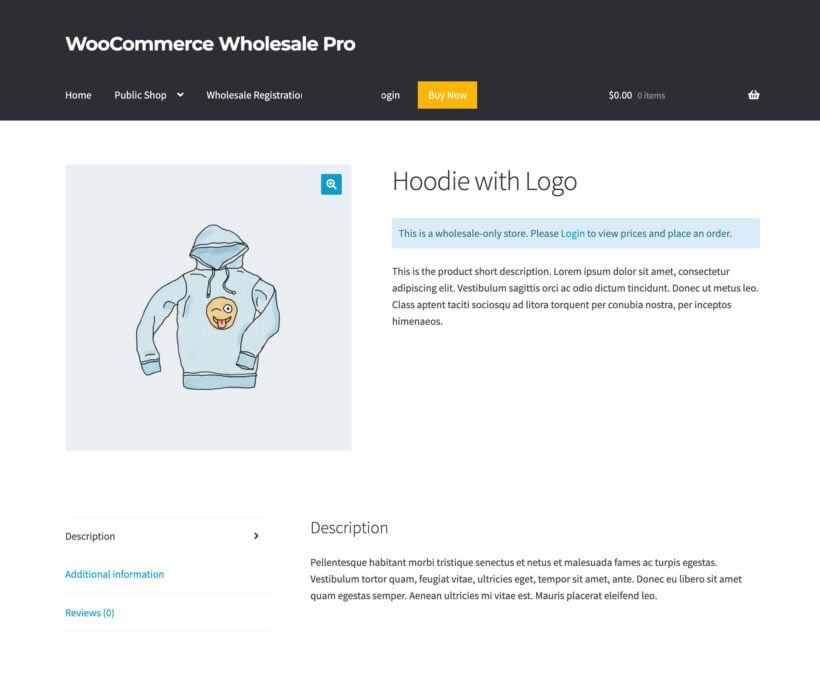
Once you enable the 'Hide price until login' option, an 'Alternate content' field will appear immediately underneath. This field is fully customizable. While it displays as plain text by default, you can incorporate HTML or shortcodes to make the prompt more functional. For example, you can include a direct link to your login or registration page with a message like: "Please log in to view prices."
By using this feature, you guide prospective customers toward the next step in the journey. In the example below, the message has been placed in a styled box to make it more prominent on the single product page, ensuring visitors don't miss the instructions on how to access your exclusive pricing.
Optionally display alternate content on the single product page
Front-end pricing preview: Guest users vs. logged in users
Let’s take a look at what the online store will look like to guest users, logged in customers, and logged in wholesale users on the front end:
1 - WooCommerce main shop page for guest visitors
2 - WooCommerce main shop page for logged-in customers
3 - WooCommerce store for wholesale users with wholesale pricing
And here’s what the single product page will look like:
1 - Single product page for guest visitors
2 - Single product page for logged-in customers
3 - Single product page for wholesale customers
It hides prices until login for visitors and guests. On the WooCommerce main shop page, guest users will only be able to see some product detail, including the product image, ratings, sales banners, and a Read More button redirecting them to the single product page. And, on the single product page, you’ll notice that both the product’s price and add to cart options are hidden.
In order to view product prices and purchasing options, customers will have to log into their accounts.
When a user with the Customer user role logs into their account, they’ll see regular product prices (i.e. without discounts). In addition to this, they’ll also see the product prices, purchasing options (including variations), and the add to cart button on the single product pages.
When wholesale user logs into their user account, they’ll be able to see the product prices with the percentage discount applied to it (or the exact wholesale price you’ve set for the individual product). They’ll see the same wholesale rates on the single product page along with product purchasing options.
This way, they can add products to their shopping cart and proceed to the checkout page. All of this is possible without messing around with HTML/CSS code or adding code to the functions.php file via FTP.
How to hide prices for specific product categories for logged-out users
Can I hide prices for specific product categories only?
Yes. WooCommerce Wholesale Pro allows you to hide prices for specific categories rather than your entire store. You can manage these visibility settings per category within the standard WooCommerce category settings in your WordPress admin.
If you want to hide the price of certain product categories only for users who are not logged in, follow these steps:
Navigate to the Products → Categories section and select the category you wish to edit.
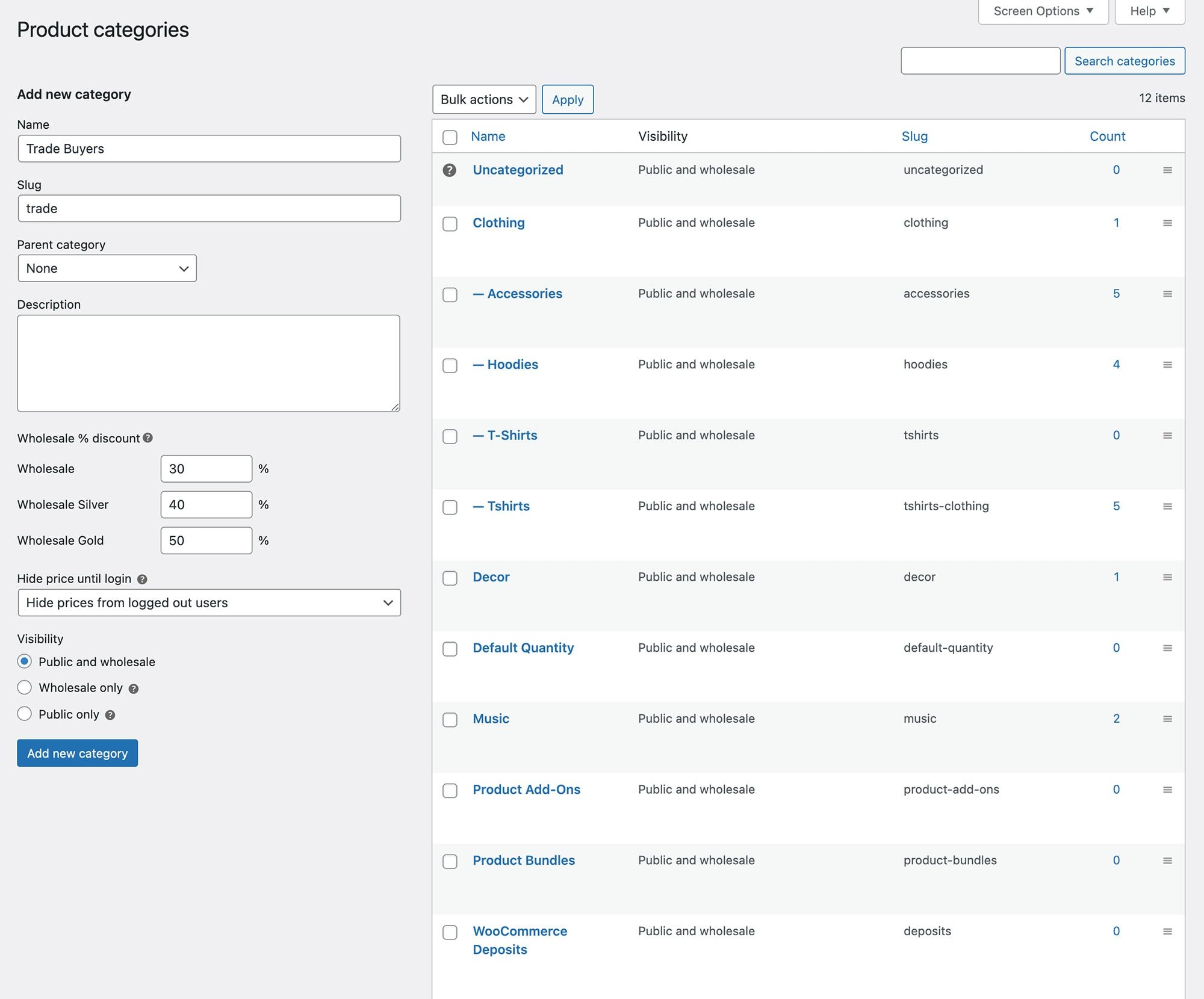
Look for the 'Hide price until login' option, which offers three settings:
Use the global or parent category setting (the default) - this means the global setting (as described earlier) will be applied.
Hide prices from logged-out users - this means users who are not logged in will never see the price of products in this category, regardless of the global setting.
Show prices to logged-out users - this means users who are not logged in will always see the price of products in this category, regardless of the global setting.
To control what shows up in place of the price for all hidden price categories, use the global 'Alternate content' field. Note that subcategories will inherit the parent category's setting unless you specifically hide the price for the subcategory.
In cases where a product belongs to multiple categories with different WooCommerce hide until price if not lo settings, WooCommerce Wholesale Pro will prioritize the most secure approach and hide the price from users who are not logged in.
List products without prices in quick order forms
If you have implemented the WooCommerce different price for logged in users feature to hide prices from non-registered guests and visitors, it's likely that your customers are already familiar with your products and services. As a result, they need a quicker way to select multiple products, choose variations, and add to the cart.
You can do this by using WooCommerce Wholesale Pro with the WooCommerce Product Table plugin, which you can buy together as a two-plugin bundle. It displays any or all of your products in a quick order form layout like this:
You can choose whether to enable the order form layout for guests and/or logged in wholesale users. It's an excellent way to speed up shopping, and therefore to increase your sales and conversions.
How to programmatically hide prices until login
You can also hide prices from guests using a simple code snippet instead of a plugin. This method works well for developers or those comfortable editing theme files.
To get started, add the following code to your child theme’s functions.php file or via a plugin like Code Snippets:
add_filter( 'woocommerce_get_price_html', 'hide_price_for_guests', 10, 2 );
function hide_price_for_guests( $price, $product ) {
    if ( ! is_user_logged_in() ) {
        return '<p class="login-to-see-price">Please <a href="' . esc_url( wp_login_url( get_permalink() ) ) . '">log in</a> to see prices.</p>';
    }
    return $price;
}
This snippet checks whether the current user is logged in. If they’re not, it replaces the product price with a login prompt that links to the WooCommerce login page. Once logged in, users will be able to see the prices as normal.
You can customize the login message or style it with CSS as needed to match your theme. This is a simple way to create a WooCommerce hide price until login experience without a plugin, but there are limitations, and you have to maintain the custom code yourself, through all future updates of WooCommerce and WordPress.
How to allow users to request a quote
Instead of simply hiding prices until login, you might want to offer a more interactive experience by setting up a WooCommerce request a quote system. This is especially useful for stores selling custom products, bulk items, or offering specialized B2B pricing.
Using the WooCommerce Product Options plugin, you can create a "Request a Quote" system by adding custom fields to your product pages. For example, you could add a checkbox labeled Request a quote, a text box for additional notes, or even a file upload field. This gives customers a direct way to ask for pricing information based on their specific needs.
While this is a great solution for individual products, it’s worth noting that WooCommerce Wholesale Pro offers a much more complete system. It automatically hides prices from guests, supports role-based pricing, and lets you create a members-only wholesale area. So if you're running a B2B store or need more control over pricing visibility and user roles, it’s a more comprehensive alternative to using a basic code snippet.
How to hide prices for wholesale customers only in WooCommerce
Understanding the distinction between global price visibility and role-based pricing is crucial for maintaining a professional storefront. WooCommerce Wholesale Pro provides two distinct layers of control to manage these scenarios effectively.
When the "Hide prices until login" option is enabled, your store essentially becomes a public showroom. Logged-out guests can browse your product range, but the prices and "Add to Cart" buttons are completely hidden. This is the ideal strategy if you want to protect your pricing strategy from competitors or the general public while still benefiting from SEO by keeping your products crawlable. Once a user logs in, the plugin "unlocks" visibility based on their specific account type.
While the first scenario controls who sees prices, role-based pricing controls what price they see. This is specific to logged-in users. A standard customer will log in and see the retail price, whereas a user assigned a specific Wholesale Role will see the discounted rates assigned to them. You can even customize the display, such as showing the wholesale price next to a crossed-out original price to emphasize the savings.
The plugin allows you to layer these features. You can hide all prices from the public to eliminate doubt about your market positioning, then automatically reveal standard prices to retail customers and exclusive discounts to wholesale partners upon login. This ensures a seamless, "plug-and-play" experience for every user segment.
Frequently asked questions
How do I hide prices until login in WooCommerce for free?
Free plugins in the WordPress repository can hide prices from logged-out users, but they usually apply one global rule with no category control, no multiple roles, and no built-in registration. A paid plugin such as WooCommerce Wholesale Pro adds those controls when a free option is not enough.
Can I hide prices until login without a plugin?
Yes. You can add a code snippet to your child theme that replaces the price with a login prompt for logged-out users. It works, but you have to maintain the code through future WooCommerce and WordPress updates, so a plugin is usually simpler for non-developers.
How do I show a “login to see price” message in WooCommerce?
With WooCommerce Wholesale Pro, the ‘Hide prices until login’ setting adds an ‘Alternate content’ field. You can enter plain text, HTML, or shortcodes there, such as a link to your login page, so guests see a clear prompt where the price used to be.
Can I hide prices for registered users only in certain categories?
Yes. WooCommerce Wholesale Pro lets you hide prices for specific product categories rather than the whole store. Each category can use the global setting, always hide prices from logged-out users, or always show them, and the most restrictive rule wins when a product sits in more than one category.
Next step: Hide price until login with WooCommerce Wholesale Pro
Transform your store into a private wholesale portal with the "Hide Prices Until Login" feature. This setting protects your competitive margins by ensuring that only verified, registered customers can access your pricing.
By tailoring visibility based on user roles, you not only build a high-quality, professional shopping experience but also rapidly grow your member database. It’s a sophisticated way to manage a hybrid B2B and B2C store without the need for a second website.
Get Started Risk-Free:
Plug-and-play setup: Built with clean, optimized code for immediate compatibility.
Comprehensive documentation: Clear, step-by-step guides to get you running in minutes.
Expert support: Our technical team is ready to assist if you have any questions.
30-day money-back guarantee: Love the results or get a full refund, completely risk-free.
The complete guide to dine-in restaurant ordering - let customers use their phones to order food straight from their table.
As restaurants adapt to the new requirements around social distancing, it's essential to minimize direct contact with customers. An increasingly common way is to allow customers to order food from their mobile phones from their table while they dine-in. This is safer and more convenient than taking orders in person.
This tutorial will teach you how to set up food ordering for dining-in at your restaurant. The system can be hosted on any WordPress website. You can use it to allow customers to order food for dinging in from the table and have their orders sent straight to the kitchen. Staff can also use it to take online POS orders on behalf of your customers.
Are you looking for a restaurant ordering where customers order food for home delivery? Then check out our home delivery tutorial!
What you need
For this tutorial you will need:
A website powered by WordPress. If your restaurant already uses WordPress for your main website, then you can add the mobile food ordering system to your existing site.
The free WooCommerce plugin to add e-commerce features to your website. This includes the ability to add your food menu, and for customers to place their orders.
The WooCommerce Restaurant Ordering plugin. This plugin lists your food products on a page for customers to order from. It looks similar to your traditional printed menu, making it easy for customers to select their foods while they dine-in.
The Checkout Field Editor plugin. This allows you to simplify the WooCommerce checkout, removing irrelevant fields such as the food delivery address, and adding extra fields for table number and dietary requirements or allergies.
Once you've set up the food ordering system in this tutorial, customers can use their cellphones to order food from the table like this:
Your customers arrive at the restaurant and sit at the table.
One member of the party uses their phone or tablet to order food for the table. They do this by viewing the dining in food ordering page on your website. They select their food and drink from a quick one-page order form, and then proceed to the checkout.
They enter some basic information on the checkout and choose whether to pay online or at the end of their meal. Finally, they enter any extra information such as their table number or allergies.
Once the food is ready, the waiting staff bring it to the table or leave it in a safe place for the customer to pick up.
At the end of the meal, if the customer hasn't paid online then you can give them a bill in the usual way.
1. Add products to WooCommerce
The first step is to add each food item from your printed menu as a WooCommerce product. To do this, go to Products → Add New and add all the required information. This would typically include the product name, a short description, a price, and possibly an image.
If you offer a choice of options for particular items, you can add these as product variations or product add-ons:
Use variations for dishes that come with a fixed set of options, such as Small, Medium, Large.
Use the Product Options extension for dishes where the customer can select from a list of several options. This might include pizza toppings where the customer can add multiple options, each of which will add to the price.
Customers can choose extra options from a lightbox
Structure your menu into categories
Go to Products → Categories and create the categories that you'd like to structure the mobile food order form into. This should generally be the same as the categories on your printed menu - e.g. Starters, Main Courses, Desserts, etc. Then add each food product to the correct category.
2. Create a one-page food order form
To create your order form page:
Go to Pages -> Add New in the WordPress admin dashboard. Give your page a title, then click Publish.
Next, go to WooCommerce → Settings → Restaurant. Under the Restaurant order page option, select the page you just created.
Under Categories, select the product categories to show on your restaurant order page.
You can drag and drop the categories to change the order. The settings page also includes options to show or hide certain information in the menu, select the number of columns to display, etc.
Save the settings, then open your Restaurant Ordering page on your website to se if everything looks correct. It should look something like the following:
An example of a food order form
3. Customize the WooCommerce checkout
The WooCommerce checkout is generic and not designed specifically for taking food orders. To make it perfect for ordering restaurant food at the table, I recommend adding some extra fields and hiding others. You can easily do this with the Checkout Field Editor plugin.
Install the plugin and use it to hide any fields that aren't needed. I'd recommend hiding fields such as the customer address. Since customers are ordering from their cellphones, make the checkout as simple as possible.
You may also want to add some extra fields. The most important ones for ordering food to be delivered to the table are:
Table number or location (e.g. inside or outside).
Any dietary requirements or allergies.
Payment methods
You also need to choose how customers who order food on cellphone will pay for their order. There are two main options:
Pay online when they place their orderYou can use any of the payment gateways supported by WooCommerce to let customers pay when they place their order. This is good for social distancing, while saving you time taking payment at the end of the meal. The easiest payment option to set up is PayPal - it's great for customers as there's less information to enter. For credit card payments, I recommend Stripe which supports all major credit cards, debit cards, Apple Pay, etc. Set up your payment gateway under WooCommerce → Settings → Payments.
Pay at the end of the mealYou can keep it simple and give customers a printed bill at the end of their meal. They can then pay using your restaurant's existing payment methods (e.g. cash or using your credit card machine). Alternatively, if you want the payment to go through to the website ordering system then you can use a card reader that links with the website. There are 2 main options for this:
If you're in the US and Canada then you can use WooCommerce In Person Payments to order a card reader and take credit card payments from customers.
Finally, you need to communicate how to order food from the table to your customers.
There are various options here. One way is to print an instructions sheet and put it on each table, telling customers how to order. This should include the URL (web address) of the food ordering page, for example www.myrestaurant.com/dine-in.
An example QR code
You could also include a QR code which customers scan from their phone. The QR code links directly to your order page, so gives access without having to type in URLs.
The easy way to take food and drink orders from the table
As you can see, it's surprisingly easy to set up your own online food ordering system so that customers can use their cellphone to send food orders straight to the kitchen. It promotes social distancing by minimizing direct contact between waiting staff and hungry customers.
By the end of this article, you’ll walk away knowing exactly how to sell food online from home.
It’s no secret that the online food industry is booming. You might be thinking of starting your own food business to sell food online from home. For this, you’ll need a website that lets customers browse your menu and place their orders.
If you’re in a similar situation, then don’t worry! This in-depth guide will teach you how to sell food online from home in a few simple steps:
Set up your small startup food business website using WordPress and WooCommerce.
And the best part? We’ll show you step-by-step how to sell food online from home. It’s incredibly quick and easy and there is absolutely no technical knowledge required to follow this tutorial. This means that you can set everything up and start selling food online from home today!
Introducing WooCommerce Restaurant Ordering
WooCommerce Restaurant Ordering is a WordPress plugin that makes it easy for small food businesses and mom and pop style shops to start selling food online from home. The plugin lets you create an intuitive, front-end food order system complete with a food order form. It’s the easiest way to start selling food online from home.
You can add simple food products or add variations and extra product options to your food ordering system. For example, if you sell pizzas, you might want to give customers the option to select the size or extra toppings. You can also add text boxes for dietary requirements or allergens, or for letting customers add notes like Hold the pickles!.
In addition to this, you can add a sidebar to your food ordering page that contains information about the customer’s cart. This is a great way to give patrons and customers a quick overview of their order before they proceed to the checkout page.
The WooCommerce Restaurant Ordering plugin is designed to help small food businesses deliver an exceptional user experience through their website and better manage customer orders in WooCommerce.
How to sell food online from home using WooCommerce Restaurant Ordering
Here, we’ll walk you through a step-by-step tutorial on how to sell food online from home. You might also like to sign up to our free online course, which has even more advice and tips:
Step #1: Set up WordPress and WooCommerce
If you’re just getting started then chances are you don’t already have a website set up. So, the first step is to choose a hosting provider for your food business website. Our best advice is to go with Kinsta, but you can use any hosting provider.
Next, you’ll need to install WordPress and WooCommerce (an e-commerce platform to set up your online store) on your website. If you choose to go with Kinsta, the team will install the WordPress content management system for you. However, if you’d like to take the DIY approach, we recommend checking out these helpful articles:
Once you’ve set up your basic WooCommerce-powered food business website, you can set up your basic food ordering website by installing a WordPress theme. And once your basic website is set up, come back to this tutorial for details on how to start selling food online from home.
Step #2: Add food items as WooCommerce products
Now that your WordPress site is set up, it’s time to add food items to it as WooCommerce products. To do this, head over to Products →All Products from the WordPress admin panel and click the Add New button.
Next, enter the following information for each food item you want to sell through your food business website:
Click the Publish button to proceed. Add all of the food items to your food website in the same way. You can also add food variations and extra options.
Step #3: Get the WooCommerce Restaurant Ordering plugin
Get the WooCommerce Restaurant Ordering plugin and install and activate it on your WordPress website. You’ll receive the plugin’s license key in an order confirmation email.
From the WordPress dashboard, head over to WooCommerce→Settings→Restaurant and enter the license key in the License key field. Click the Save changes button at the bottom of the screen to continue.
Once you activate the license key, the WooCommerce Restaurant Ordering plugin automatically creates a Restaurant Order page for you. You can access this by going to Pages→All Pages from the WordPress dashboard.
If you preview the page on the front-end of your website, it should look something like this:
Next, we’ll show you how you can configure the plugin’s settings to customize the food ordering page.
Step #4: Configure the plugin’s settings
To configure the WooCommerce Restaurant Ordering plugin’s settings, head over to WooCommerce→Settings→Restaurant from the admin area.
Food order page
The Restaurant order page dropdown lets you choose the page to display the food order form on.
You can leave it as is or select a new page if required. The WooCommerce Restaurant Ordering plugin adds the shortcode [restaurant_ordering] to whichever page you select.
Categories
By default, the food ordering plugin lists products from all of your product categories on the food ordering form. You can use the Categories option to add the product categories you’d like to include in your food order form.
You can organize different types of food under a separate category. If you have multiple product categories selected, you can drag and drop them to change the order in which they’re listed on the front-end.
The Order form options setting lets you select the information you’d like to display in your food order forms. You can choose to display:
Category titles
Category descriptions
Product images
Product descriptions
Buy button
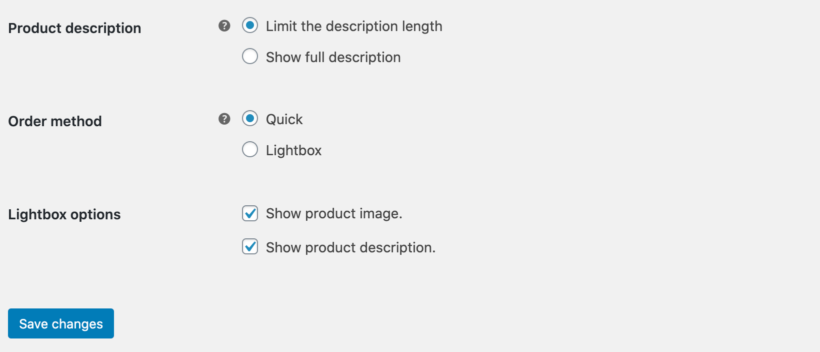
Order form options
If you’re selling products from a single category (e.g. only Cakes), you can untick the checkbox next to the Show category titles and Show category descriptions option.
However, if you’re selling products from multiple product categories, we recommend leaving all of the checkboxes ticked.
Number of columns
The Number of columns option lets you choose how many columns to display food items in on the front-end. This is particularly useful for online food businesses that sell a variety of food items.
It’s also a great way to enhance the look and feel of your food order form and make it more like a real-world menu.
Order method
We recommend going with the Quick order method option to let customers quickly add food items to their cart and place their order.
If you’re selling food items with variations or extra product options, the WooCommerce Restaurant Ordering plugin will automatically display a lightbox to let customers select options.
Lightbox options
Ideally, you want to display both the product image and full product description in the lightbox. We recommend leaving both checkboxes ticked.
Step #5: Preview the food ordering system
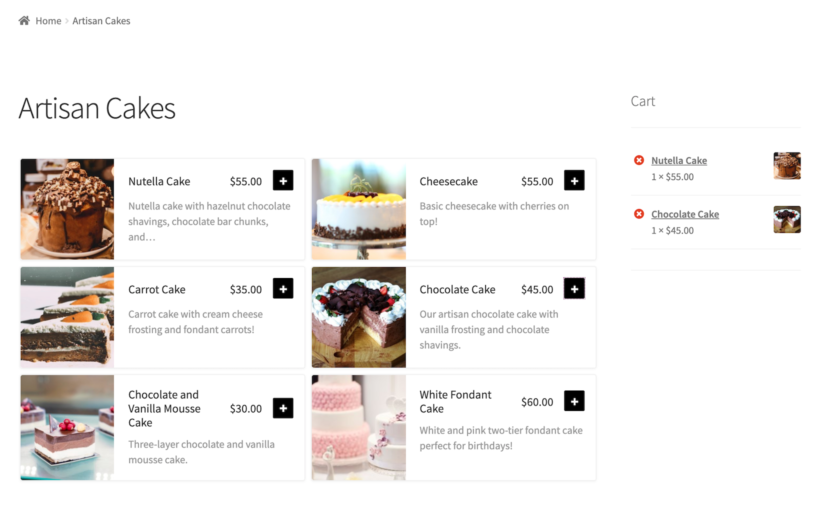
Once you’ve configured the WooCommerce Restaurant Ordering plugin’s settings, you can preview the food ordering system on the front-end. It should look something like this:
To further enhance the customer’s shopping experience, we’ve added the WooCommerce cart widget to the sidebar. This way, customers can preview their orders before proceeding to the checkout page.
The WooCommerce Restaurant Ordering plugin lets you list products in a quick, one-page food ordering form. The rest of the checkout process is provided by WooCommerce. This means that you can use WooCommerce’s built-in options to let customers order food for home delivery.
We recommend setting up WooCommerce delivery zones to offer food delivery options within a specific area only. This is much easier to manage (especially when you’re just getting started) than offering country-wide shipping options.
To take things further, you can set up a free delivery area and multiple paid delivery areas. All of this is possible with WooCommerce Shipping Zones.
Lots of small food businesses sell foods that are also perfect as gifts. Some examples of food gifts include chocolate brownies, food hampers, or gourmet marshmallows.
These are equally perfect for special occasions like Mother’s Day, Father’s Day, Valentine’s Day, and birthdays as well as for situations where you’re looking for a gift that isn’t too personal, for example, for a coworker.
To sell food gifts through your small food business website, you can use the WooCommerce Opening Hours & Chosen Times plugin to allow customers to choose an exact delivery date. This helps them rest assured that the food gift arrives at the exact right time!
You can also use the Checkout Field Editor plugin to add a Gift message field to the WooCommerce checkout. To take things further, you can create any additional fields such as a checkbox to let customers mark the order as a gift so that you don’t include any price information with their order.
Bonus tips
As a new food business owner, there are many things you’ll need to think about before you can start selling food from home.
For example, it’s a good idea to check out your local legislation (e.g. the FDA) and cottage food laws to see whether you need to apply for a business license, food licensing, or a food hygiene certificate. Food safety and kitchen inspection laws vary from state to state. You should be able to find out most of this information through Google.
In addition, we recommend checking out shipping rules (e.g. labeling requirements) for perishable items. For example, let’s say you’re based in New York, United States, and want to accept cross-border orders. You might want to check to see if you’re allowed to send gourmet marshmallows to your patrons and customers in Toronto, Canada.
Sell food online from home in less than 30 minutes!
Selling food online from your home kitchen or commercial kitchen is a great way to launch a small business and generate income through food sales. All you have to do is set up your small food business website, create a menu, and start accepting orders!
The WooCommerce Restaurant Ordering plugin can help you sell food online from home by creating a one-page food order form. You can then promote your food store on social media to spread the word. We encourage you to try it out for yourself!
You get a:
Plug-and-play setup for the plugin.
In-depth documentation (absolutely no way to get it wrong).
Technical support is available if you need any help.
30-day money-back guarantee. Love it or get a full refund, 0 risk!
If a product isn't in stock, then customers want to know the back in stock date. By the end of this article, you’ll walk away armed with the knowledge of how to set up back in stock notifications in WooCommerce and provide clear information to customers.
As an online store owner, it’s important to let your customers know when out of stock products will be available again, since lead time has an effect on purchasing decisions. If you don’t do this, customers will be more likely to buy from your competitors and you could miss out on sales.
For example, if you’re facing stock issues on products, you’ll want to let customers know when the new stock is expected to be available again. Are you looking for a back in stock notifier for WooCommerce? Jump to our step-by-step setup guide to get started.
Don’t worry, by the end of this FREE guide you’ll walk away knowing EXACTLY how to:
Enable backorders in WooCommerce so customers can still place orders.
Clearly display the back in stock date on product pages.
Allow customers to enter their email address and join a waitlist to be sent a notification email when the product is back in stock.
Take a hybrid approach which involves enabling backorders and setting up a waitlist.
And the best part? At the end of this article, we’ll show you how to automate the whole process so that customers can either (1) order out of stock products immediately after making an informed decision on whether to wait or (2) allow them to receive a product back in stock email when the product is available.
2 ways to deal with out of stock products
If you sell products through your e-commerce store, you’ll probably run into scenarios where some products are temporarily out of stock. The good news is that there are two ways to handle out of stock products in WooCommerce while delivering a good user experience:
Enable backordersYou can enable backorders on your WooCommerce store so that customers can still place orders for out of stock products. In addition, you can display the back in stock date (for a simple product or variable product) directly on the single product page. To do this, use the WooCommerce Lead Time plugin. This plugin acts as a back in stock notifier for WooCommerce, showing accurate lead times, restock dates, or custom messages to keep your customers informed. It helps manage expectations and reduces the need for customer inquiries about availability.
Join a WooCommerce waiting listAllow customers to enter their email addresses directly on the single product page to join a waitlist. This way, they can be notified when the product is back in stock.
For this, we recommend the WooCommerce Waiting List plugin. It adds a simple email signup field to out-of-stock product pages and automatically notifies customers when the product becomes available again, helping you recover lost sales with minimal effort. (Here are some example emails.)
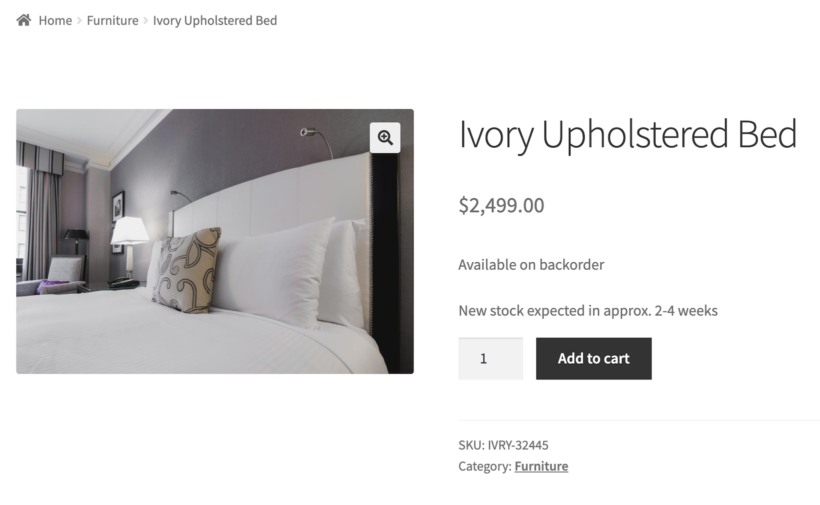
1: Display a lead time and let customers place their orders.
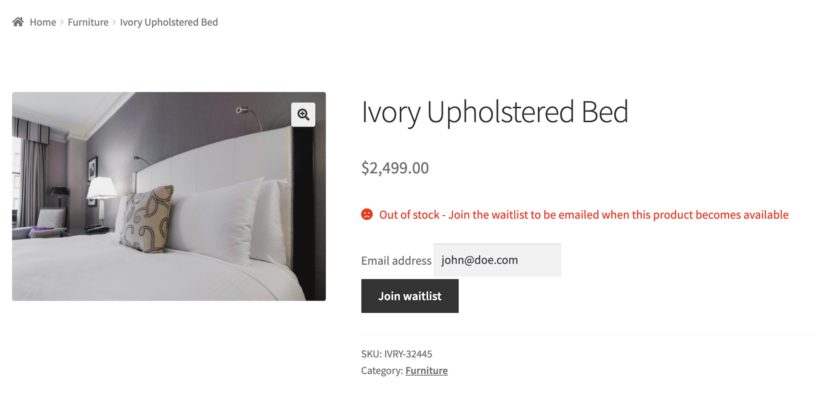
2: Display an out of stock notification and encourage customers to join the waiting list.
Advice on setting up back in stock notifications in WooCommerce
Now, you might be wondering how you should deal with out of stock items. We explored two different implementations earlier and now we'll help you choose the best solution for your e-commerce store.
Enabling backorders in WooCommerce is generally best because the customer places the order and pays straight away. So, there’s no risk that you’ll lose the sale to a competitor. This also works for variable products i.e. WooCommerce product variations.
The second option – using an “email when back in stock” plugin – means that the customer doesn’t know how long they’ll be waiting. In this scenario, they could be more likely to buy elsewhere while they’re waiting to receive a stock alert i.e. a back in stock notification from your WooCommerce store.
That said, the 'joining a waitlist' option is best if you have major stock problems. For example, if you can’t display reliable information about when the product will be back in stock. In this sort of scenario, you’re better off taking the customer’s email address and hoping that it’s not too late to secure the sale when you do receive stock again.
How to set up back in stock notifications in WooCommerce (in 2 different ways)
Here, we’ll explain how you can set up back in stock notifications in WooCommerce in two different ways.
Method #1: Enable backorders with a WooCommerce back in stock notifier
The easiest way to add more information to WooCommerce backorder notices on your online store is by using the WooCommerce Lead Time plugin. Its Notify customer option lets you display a backorder notice or back in stock date on the single product page as soon as a product goes out of stock. However, customers can still place their orders.
Go to the product you’d like to enable backorders on and scroll down to the Product data section.
Click on the Inventory tab.
Set the product Stock status to On backorder using the dropdown.
Use the Lead time option to let customers know when the product is expected to be back in stock. You can use this option to set a separate lead time message for specific products, for example by adding the back in stock date. There's no need to use a shortcode.
Click the Publish button to continue.
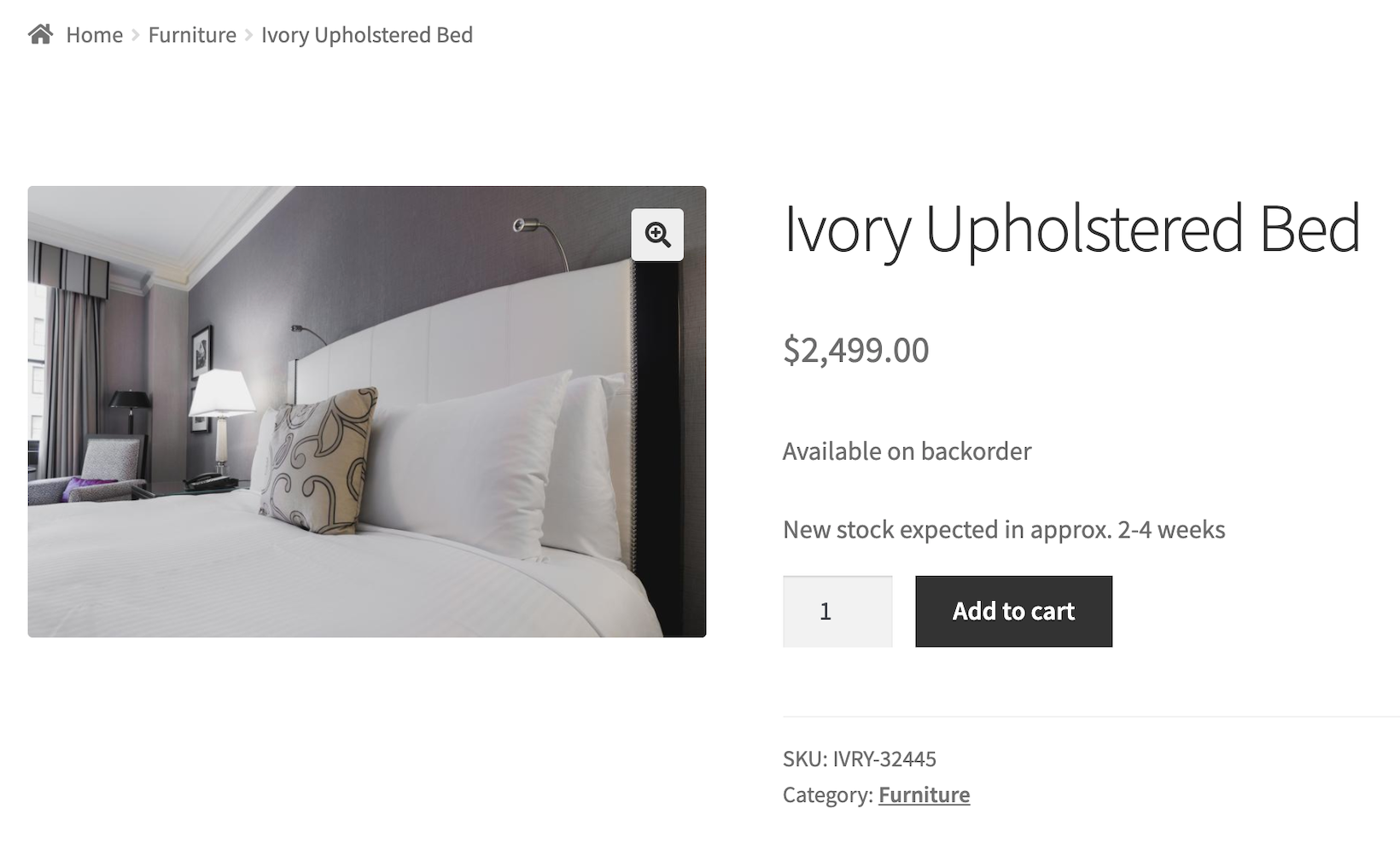
The single product page should look something like this on the front-end:
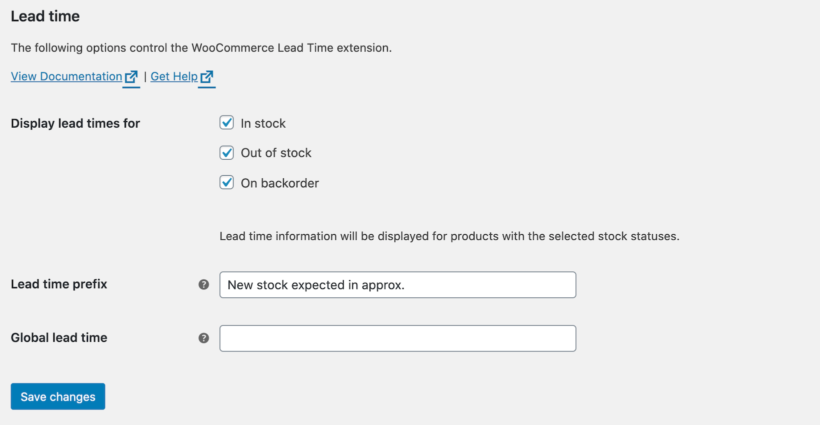
You can modify the lead time text that appears before the product-specific message for all of your products on the plugin settings page i.e. WooCommerce → Settings → Products →Lead time from the WordPress backend. All you have to do is enter the text you’d like to have displayed on the front-end in the Lead time prefix field.
With backorders, customers can add the product to their cart and proceed to the checkout page - even if the product is out of stock. The clearly displayed back in stock date tells the customer what to expect, while still capturing the sale for you.
Method #2: Set up a waitlist for out of stock notifications
The WooCommerce Waiting List add-on works as a 'notify me when back in stock' add-on; you automatically notify customers when a product becomes available for purchase again. It replaces the add to cart button on single product pages and the shop page with a waiting list button.
All you have to do is install the WooCommerce Waitlist add-on on your WordPress website and activate it. It will automatically replace the add to cart buttons with Join waitlist buttons on the front-end for products that are out of stock.
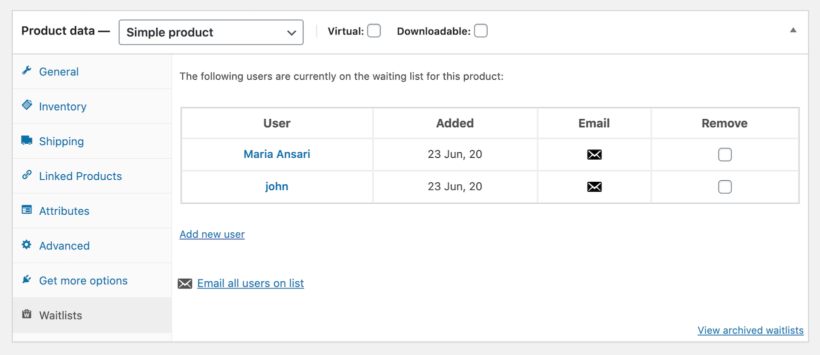
Customers can then enter their email address to be notified whenever the product is back in stock. On the backend, you can see the email addresses of everyone that has joined the waitlist for a product. To do this, head over to the Product data section and click on the Waitlists tab.
From here, you can send a product back in stock email notification (i.e. a stock alert) to all users on the waitlist to let them know the product is back in stock. You can also manually add or remove people from the waitlist. In addition to this, you can use the export waitlist option to get a CSV file of everyone on the email subscription list.
When dealing with popular products, you might have hundreds or thousands of customers on your waitlist. The WooCommerce waitlist plugin handles this efficiently by using background processing to send emails without overloading your server. This ensures all your customers receive their notifications reliably, even for products with large waitlists. The plugin also maintains email logs so you can track which notifications have been sent and troubleshoot any deliverability issues that might arise.
Can I use both solutions together?
Yes, both plugins work nicely together! So, you can use both the enable backorder and waitlist solution together on your WooCommerce store to handle out of stock products.
From a technical standpoint, you can enable the “email when back in stock” feature from the WooCommerce Waitlist plugin and display expected times for products to be back in stock using the WooCommerce Lead Time plugin.
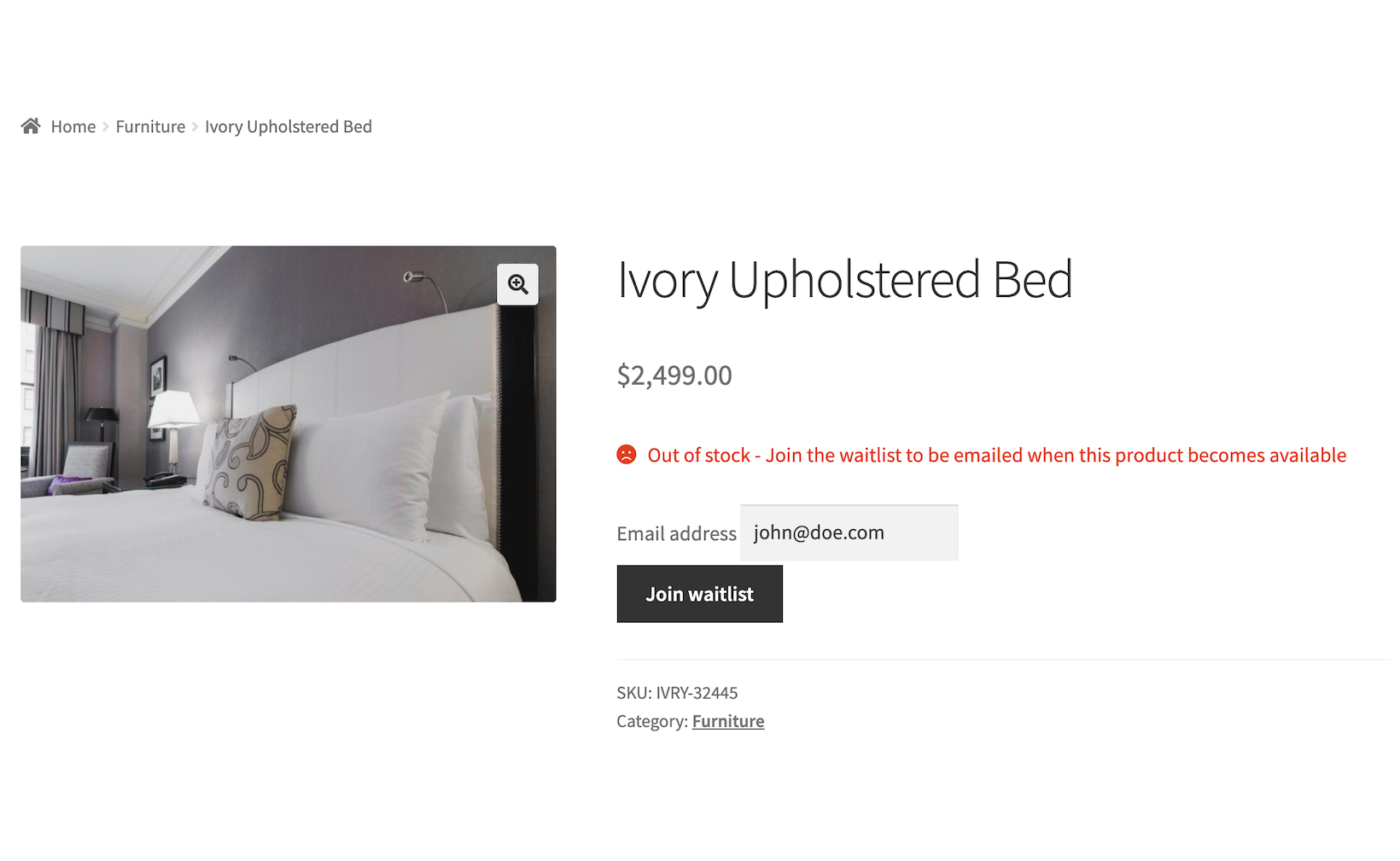
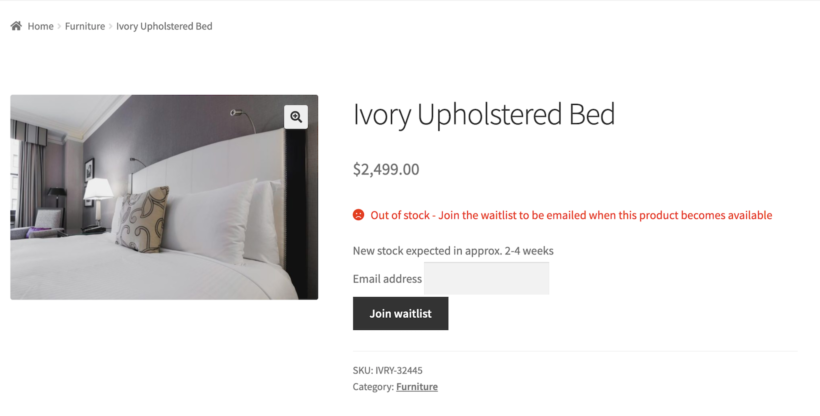
The add to cart button is replaced with a Join waitlist button on the front-end and the lead time text appears after the Out of stock - Join the waitlist to be emailed when this product becomes available text that’s added by the WooCommerce Waitlist plugin.
Once you’re done setting this up, it’ll look something like this on the front-end:
Set up WooCommerce back in stock notifications in less than 5 minutes
As an online store owner, you should have a solution in case you run into an out of stock product scenario. The way we see it, there are two easy ways of handling this:
You can enable backorders in WooCommerce so customers can still place orders and you don’t miss out on their sale. When you do this, it's essential to use WooCommerce Lead Time to display a clear WooCommerce back in stock date.
Alternatively, you can give customers the option to enter their email address and join a waitlist to be sent a stock alert when the product is back in stock.
Whichever option you ultimately decide to go with will prevent you from losing sales due to stock issues. The best part is that there’s absolutely no technical knowledge required and you don’t have to mess around with custom PHP or HTML code on your store.
Instead, you get a:
Plug-and-play setup for the plugin.
In-depth documentation (absolutely no way to get it wrong).
Technical support is available if you need any help.
30-day money-back guarantee. Love it or get a full refund, 0 risk!
Listing WooCommerce new products in a prominent location immediately draws the attention of existing customers who shop with you regularly and are interested in your latest products. A WooCommerce new products page is a great way to boost product visibility. It ensures that visitors see your latest products when they land on your online store.
And the easiest way to list WooCommerce new products anywhere on your WordPress site is by using the WooCommerce Product Table plugin.
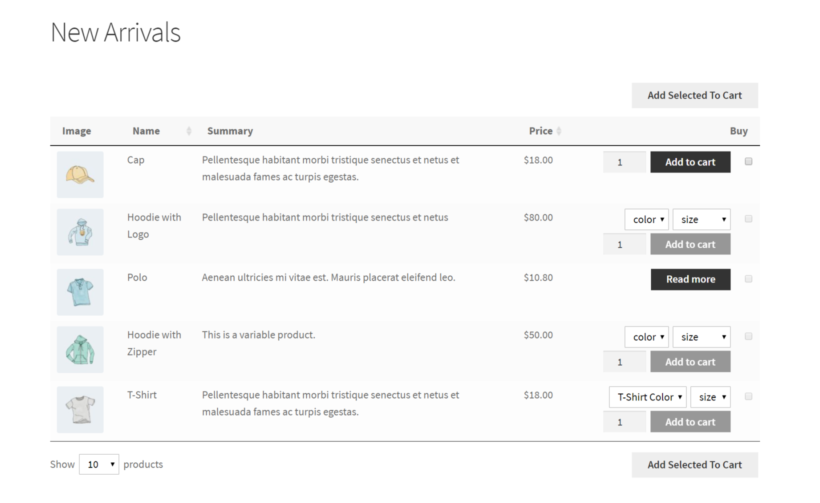
An example of a WooCommerce new products page
In this article, we’ll take a closer look at why you should list WooCommerce new arrivals in your store and the best places to list new products. You can either create a dedicated WooCommerce latest products page, or list newly released products anywhere else in your store. We’ll also walk you through a step-by-step tutorial explaining how to list WooCommerce new products using a product table.
You'll also learn how to give exclusive early access to new products to specific customers only.
Why list WooCommerce new products separately in your store?
One of the main motivations to list WooCommerce new products on a WooCommerce new products page is to make them easy to find.
It makes it easy for your regular customers to find the latest products that they haven't seen before. And new customers can easily differentiate between your WooCommerce new arrivals and older stock.
In addition to this, you don’t have to add a New! Badge to the product images of your WooCommerce new products. This saves you from a lot of manual work. Plus, this might be visually similar to the products you have on sale.
Instead, you can simply have a dedicated WooCommerce new products page that lists new products separately from older stock. This can also help you improve rankings on search engines like Google. The easiest way to display new products is in a user-friendly table layout.
Where is the best place to list WooCommerce latest products?
Unlike featured products, you have full control over where you list your WooCommerce new products.
The best place to list your new WooCommerce products is on a separate New Products (or New Arrivals) product page. This way, customers will know exactly where to go to see the latest products you have in stock.
If you prefer, you can also list new products somewhere prominent such as a 'New arrivals' section on your homepage.
Both options work well for all sorts of e-commerce stores including those that sell:
Apparel
Gift items
Furniture and home decor
Cookware
Arts and crafts supplies
Tech products
Toys
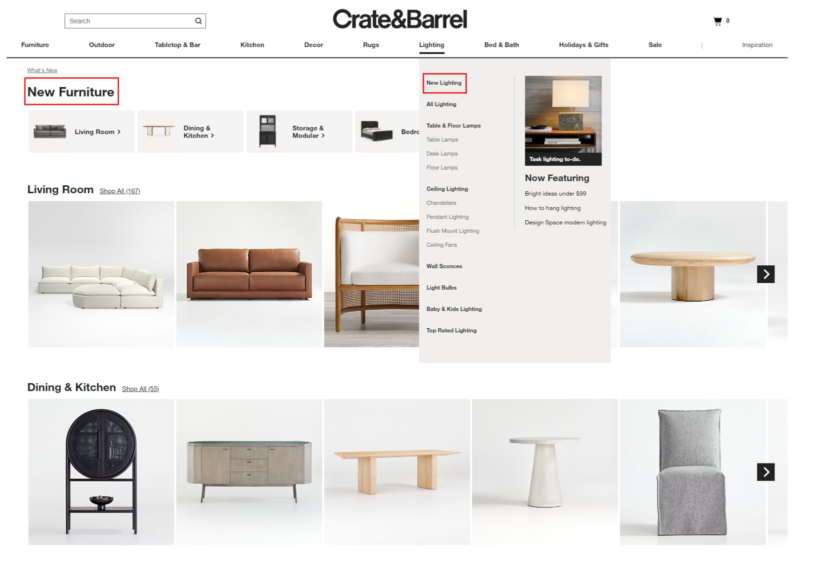
If you sell lots of products, you can create a WooCommerce new products page for the different categories of products you sell. Take a look at this example from Crate and Barrel:
For example, if you sell furniture, home decor goods, and lighting, you could create three different product pages to showcase your WooCommerce new products. These would be New Furniture, New Home Decor, and New Lighting.
You can also list WooCommerce new products on the same page as your older stock. This can help you boost product visibility in your store and potentially encourage customers to buy more from you.
Case study: how The Games Den lists new arrivals on their website
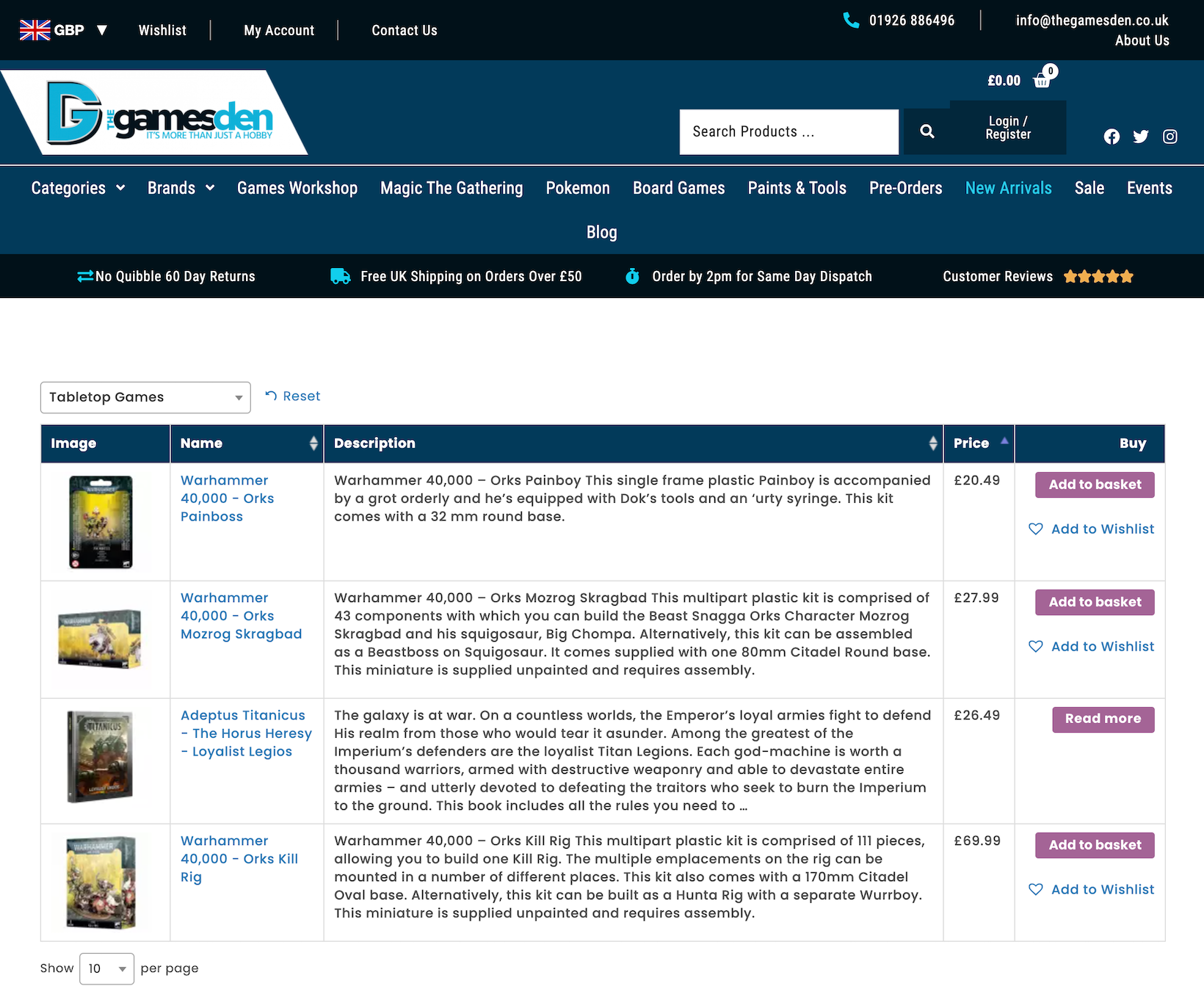
The Games Den is a UK-based company that sells a wide range of board games, tabletop games, and card games as well as accessories, miniatures, and paints. They used our WooCommerce Product Table plugin to list new products in a neat table layout on their New Arrivals page.
The table is configured to show 30 of the latest products in an organized way by default. Each product has an image, name, description, price, and buy button. The Games Den also uses TI's Wishlist plugin to add wishlist links to the table. They’ve chosen to show the wishlist links in the Buy column.
Customers can narrow down their search using the filter dropdown above the table. It lets them choose which category of products to show on the page such as Accessories, Miniatures, or Tabletop Games. In addition to this, they can sort the columns in the table alphabetically or by price (low-to-high or high-to-low).
Customers can click the product’s name to go to the single product page and learn more about it before adding it to their shopping cart.
How to list WooCommerce new products using WooCommerce Product Table
Once you have the WooCommerce plugin and WooCommerce Product Table installed and activated on your WordPress website, here’s what you need to do:
Step 1: Create a table of new products
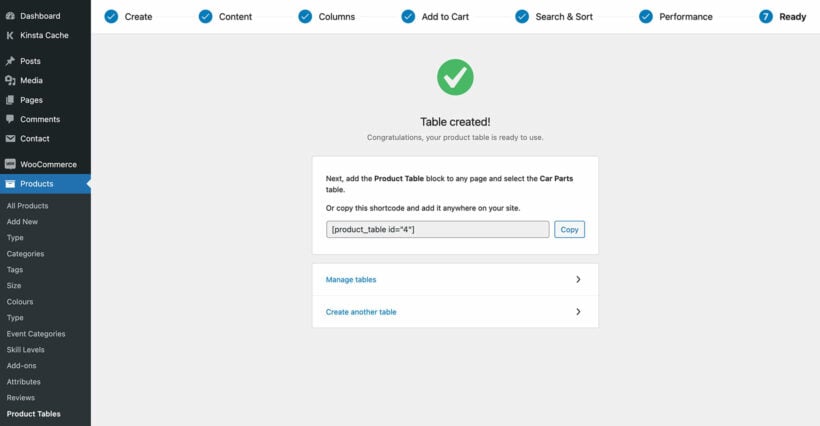
Head over to Products → Product Tables to create your first table of new products. Alternatively, do this in the setup wizard which opens when you first activate the plugin. configure the WooCommerce Product Table settings.
The table builder will walk you through the step-by-step process of listing new products:
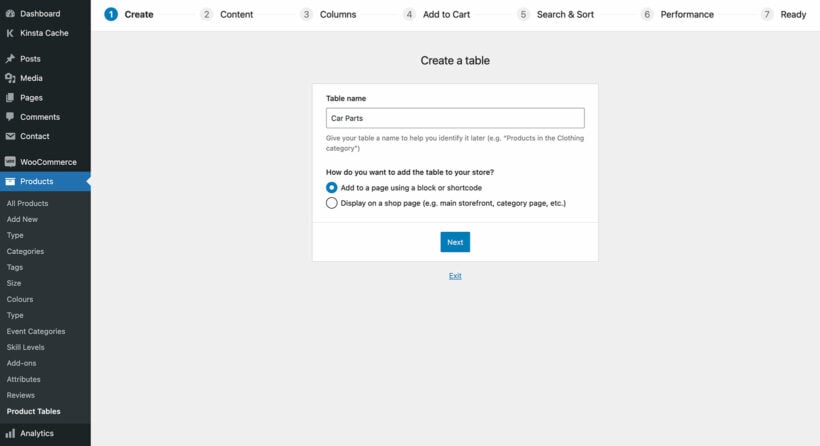
Add a memorable name for the table on the 'Create a table' opening screen. Leave the "Add to a page using a block or shortcode" option enabled and click Next.
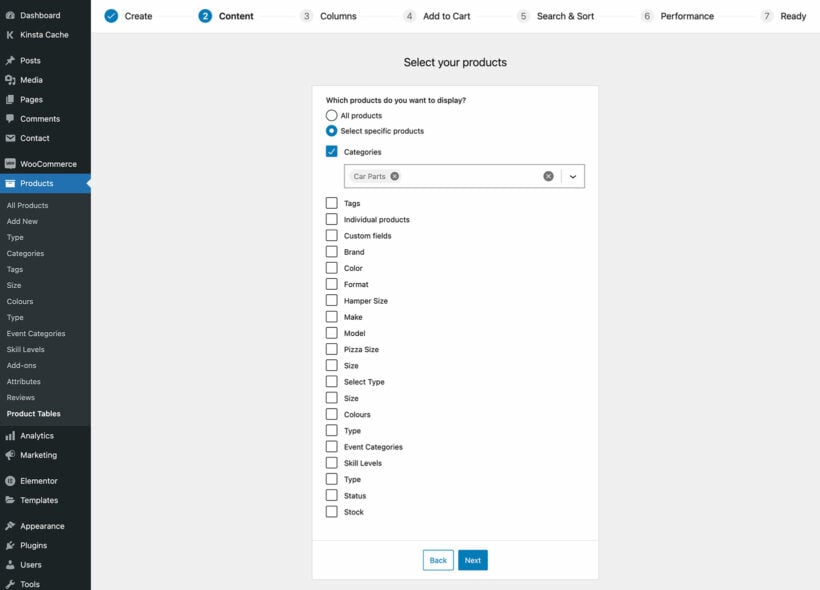
On the second page, choose specific products/categories/etc. to display the new products for, or leave this set to "All products".
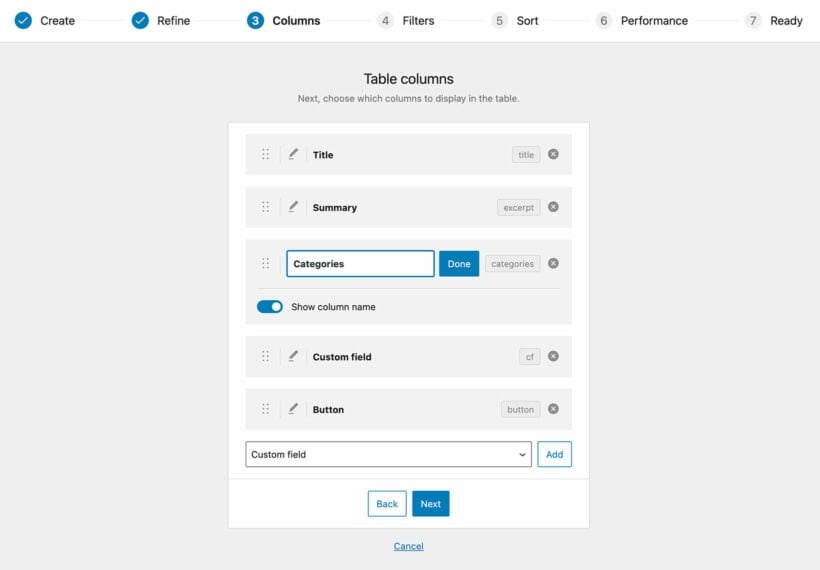
The 'Columns' page lets you choose what product data to display about the new products. (Tip: Since you're listing new WooCommerce products, consider including a 'Date' column. This will display the date when the new product was added to your store so that customers can see how new it is.)
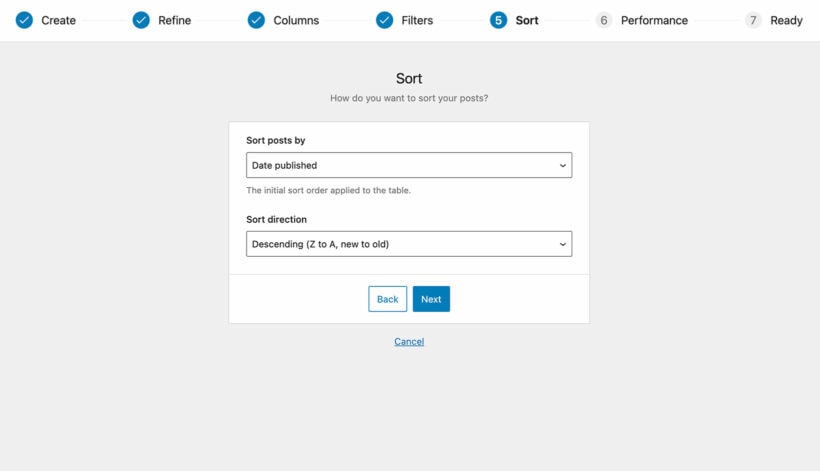
On the 'Sort' page, choose to sort the products by 'Date published' in 'Descending' order. This is essential to listing new WooCommerce products.
Copy the shortcode that appears on the final screen of the wizard.
Step 2: Choose how many new products to display
So far, our table will list ALL products with the new arrivals first. However, our goal today is to list the new arrivals only.
To do that, we need to set the maximum number of new products which can appear in the table.
Go to the plugin settings tab at Products → Product Tables → Settings.
Change the 'Product limit' option to the number of new WooCommerce products that you wish to display. For example, set this to 10 to display the 10 newest products in your ecommerce store.
Change any other options as needed. For example, if you're only listing 10 new products then I'd recommend hiding the search box, product totals and reset button which are only needed for larger product tables.
Click the Save changes button to proceed.
Step 3: Create a WooCommerce new products page to showcase the new arrivals
The final step is to create a new page to showcase the WooCommerce new products and new arrivals. Here’s what you need to do:
Go to Pages → Add New from the WordPress admin and give your WooCommerce new products page a title. For example, it could be something like New Arrivals.
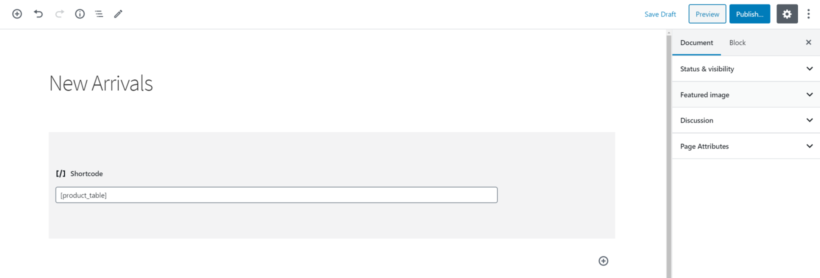
Next, either add the shortcode that you copied in Step 1 above, or insert a 'Product Table' Gutenberg block and select the name of your new products table.
Preview the WooCommerce new products page. It should look something like this:
We’ve used the Storefront WordPress theme for this tutorial although WooCommerce Product Table works with most WooCommerce-compatible themes.
Bonus: Give exclusive early access to certain customers
So far, you've learned how to list new arrivals in WooCommerce so that everyone can see them. That's fine for after they are officially released. But what if you want to give early access to new products to specific customers only?
For example, one store owner told us:
Whenever we do a new launch we protect the "new arrivals" category so our VIPs can have 1 hour of private shopping before public access. It's great for items that will sell out.
You can do this by installing our other plugin, WooCommerce Protected Categories. Put the new products in a specific category and restrict it using one of these methods:
Password protect the category and send a link to your early access customers, along with the password. When they click on the link, they will have to enter the password before they can view or buy the new arrivals. This is a good option if your customers don't already have accounts on your website.
Restrict the category to specific logged in users or roles. This is a good option if your VIP customers already have accounts on your website because they simply log into their account and can automatically see the new products.
Either way, simply change the category visibility back to 'Public' when your new arrivals are ready to be launched to the wider public.
Display 'Coming soon' products in your store
So far, we've only talked about how to display newly available products. But what about building interest before a new product is released? That's important too.
It's a great idea to display upcoming products in your WooCommerce store, even though they're not available yet:
You can start gathering interest (e.g. email addresses) from customers.
The new product page will start ranking in search engines, giving your SEO a head start.
Customers can see what's on the way, making them more likely to re-visit your website soon.
While there aren't any dedicated 'WooCommerce coming soon' plugins, you can easily achieve this by installing the WooCommerce Discontinued Products plugin. While its name is a bit confusing, it's actually perfect for this use case!
When you mark a product as discontinued, the plugin will stop it from being purchasable - ideal for products that aren't yet released. You can choose whether to display upcoming products in your store - either way, the product pages can immediately be crawled by search engines.
The plugin lets you add a text message to the product page. This gives you an opportunity to notify customers that the product is coming soon.
As soon as the product becomes available for sale, simply change the stock to 'In stock'. Customers can start placing orders immediately.
How to send email alerts for WooCommerce new arrivals
MailOptin lets you automatically email your customers and email subscribers whenever you add a new product to your WooCommerce shop. Check out our in-depth tutorial on sending email alerts for new arrivals.
You can also send an automated daily, weekly and monthly summary or email digests of all new arrivals with MailOptin. Below is how to set it up.
Setting Up MailOptin
Go to MailOptin → Email automation and click the 'Add New' button.
Enter a name or title for the automation and then select 'Posts Email Digest'.
Set up the look and feel of the email to your heart's content.
Click on 'Settings', then scroll down to 'Select Post Type' and select 'Product'.
You can further filter the kind of product that will trigger the email. There are lots of factors to choose from including product categories, tags, variations, and other taxonomies.
Defining Email Recipients
Scroll down to the 'Recipient' section to define who receives the newsletter which could be your WordPress users further filtered or restricted to specific roles such as Author, Contributor, Subscriber, Editor or a combination of roles depending on who you’re trying to reach.
If you want the recipient of the email to be all WooCommerce customers, select 'Registered Users' as the connection and 'Customer' as the user role.
To send the email notification to your list subscribers, select your email marketing service (eg. Mailchimp) as the connection and then your email list.
Please note that you need to have MailOptin connected to your email service provider before it can show up in the 'Connection' dropdown.
Scheduling setup
Select the interval or frequency and time when the newsletter will be sent. This can be daily, weekly, or monthly.
Note that the time is based on the Timezone you’ve set in WordPress. MailOptin also recognizes the day you’ve selected as the start of a week in WordPress.
Finally, save the changes and activate the automation using the toggle switch at the top.
Setup is now complete and your subscribers will receive email notification of new WooCommerce products.
List WooCommerce new arrivals in a table
Listing your latest WooCommerce products in a front-end table layout is a great way to boost product visibility, draw in your customer’s attention, and boost sales.
Using the WooCommerce Product Table plugin, you can set up your own Latest Products page in a few simple steps, or list new products on other pages such as the homepage. And, when you’re ready to take things to the next level, you can send email alerts to your mailing list whenever you add a new product to your WooCommerce store.
And if you want to give exclusive early access to your most important VIP customers, install the WooCommerce Protected Categories plugin and set it up in minutes.
As a business owner or website administrator, there are plenty of reasons why you might want to hide WordPress pages from public view. For example, if you’re running an online membership site or have a small business that sells premium content, then hiding certain pages, posts, categories, or your entire site from public view is essential.
The only problem is that WordPress comes with very limited options for hiding pages, posts, and categories. Not to mention, the options that are available to you aren’t particularly user-friendly.
The good news is that by the time you’re done reading this article, you’ll walk away knowing exactly how to:
And the best part? At the end, we’ll show you how to do all this in under 15 minutes using a great plugin, Password Protected Categories!
What’s wrong with the hidden content features in WordPress itself?
If you’ve been using WordPress for some time now, you probably already know the content management system (CMS) comes with hidden content features out of the box. However, these built-in options are pretty clumsy and not at all user-friendly, to say the least.
More specifically, WordPress’ built-in hidden content features will leave you password protecting individual pages and posts.
There are two main reasons why:
Manually password-protect new postsYou have to remember to password-protect each individual new post or page on your website. As you can probably imagine, this leaves plenty of room for human error. In addition, it’s more time-consuming for you, especially if you have to password protect dozens of posts or pages.
Poor user experienceIf you password-protect individual pages or posts then your site’s users will need to enter a password for each page or post they’d like to access. This delivers terrible user experience and makes your site come off as unprofessional.
Fortunately, there’s a better way to hide WordPress pages, posts, and categories that doesn't involve messing around with PHP files.
The solution: Password Protected Categories
The Password Protected Categories plugin makes it incredibly easy for WordPress site owners to hide just about any type of content on your WordPress site. This includes posts, pages, categories, and custom post types.
If you’re running an online business or membership site, or if you sell online courses, it might be easier for you to hide WordPress categories instead of password-protecting individual posts and pages.
Password Protected Categories key features
Here’s why protecting entire categories is better than hiding individual posts and pages:
Protect entire categories at once
Instantly hide the entire WordPress category page and all its contents. This includes all of the content sorted under that category and its sub-categories. So, when you create a new page or post, all you’ll have to do is add it to the protected category. Put simply, you won’t have to worry about remembering to protect it as it will automatically be hidden once it’s sorted under the protected category. And, it doesn't affect permalinks or SEO.
There are 3 types of protection available to you with Password Protected Categories. You can choose to password-protect pages and posts, or make them private to specific users or roles.
Password-protect. You can add one (or more) passwords to a category and instantly protect all of the content and sub-categories sorted under it. Visitors can log in from a single page or the sidebar. The Password Protected Categories plugin will automatically direct them to the correct category based on their password.
User role protection. You can create private categories that will only be visible to logged-in users with a specific role.
Individual user accounts. For even more fine-grained control, you can choose exactly which users on your site can access each private area.
Easier for you and your visitors
There’s no need to create individual user accounts if you use password protection. All you have to do is give a valid password to everyone who you’d like to grant access to. This makes it easy to keep things organized on the back-end. Alternatively, if your users already have accounts then you can enable the user or role protection which works with their existing accounts.
The Password Protected Categories plugin supports multiple passwords. This means you can password-protect a page, post, or category using multiple passwords and give different users different passwords. The key benefit here is that it makes it easier to grant and revoke access to hidden content.
Once someone unlocks a hidden WordPress category, they can navigate to all the pages, posts, and sub-categories inside it without having to re-enter passwords. This delivers a good user experience to your site’s visitors.
Password protecting WordPress categories or making them private doesn’t affect your public-facing site in any way. This makes it easy for business owners to have a private area on their site in addition to a public-facing site.
You can choose whether you’d like to show protected pages or posts on public parts of your site so that people must enter a password to access them. This is a great way to encourage prospective members or subscribers to act on your conversion goal. Similarly, you can choose to hide WordPress pages from public by making them password-protected or private. Password protected categories are hidden from search engines like Google.
How to hide parts of WordPress (in 3 easy steps)
Here, we’ll show you how to hide WordPress posts, pages, and categories in three easy steps:
Log into your WordPress site and install and activate the plugin by heading over to Plugins → Add New from the WP admin. Once that’s done, navigate to Settings →Protected Categories to enter your license key.
Click the Save Changes button at the bottom of the screen to proceed.
Step #2: Configure the plugin settings
From the same screen (i.e. go to Settings →Protected Categories from the WP admin panel), you can configure the plugin’s Category Protection and Login Form settings.
Category Protection
The Password Protected Categories plugin lets you decide how quickly you’d like to hide WordPress categories after they’ve been unlocked. In other words, you can decide how long the category remains unlocked before the password automatically expires. By default, this is set to 10 days.
In addition, you can tick the checkbox next to the Show Categories? option to show password-protected categories, posts, and pages to visitors. If you enable this option, the protected categories will appear in public areas of your WordPress site. This also includes sidebars and navigation menus.
Private, user and role restricted categories
Choose what will happen if someone tries to access hidden content while they're logged out.
Login Form
When a visitor tries to access a password protected page, post, or category on your WordPress site, they’ll be prompted to fill out a WP login form. The Login Form settings let you configure the look and feel of the WP login form that’s displayed on password-protected categories and posts.
You can set the:
Title of the login form
Form message
Password label
Placeholder (i.e. if you want to use the password label as placeholder text)
Button text
Depending on the WordPress theme or child theme you’re using, the login form (or login page) will look something like this on the front-end:
Click the Save Changes button at the bottom of the screen to proceed.
Step #3: Hide WordPress pages, posts, or categories
Once you’ve configured the plugin settings, you can hide WordPress pages, posts, and categories.
Here’s what you need to do to make categories hidden, password-protected or private:
Head over to Posts → Categories from the WP admin panel. Create a new category and give it a name, slug, and description.
You can also create a hidden sub-category. Simply use the Parent Category option to choose the correct parent category. If your parent category isn’t protected then only the content you add to the sub-category will be protected.
Use the Visibility settings to either password-protect the WordPress category or hide it based on users or roles.
If you choose to password-protect the WordPress category, you’ll have the option to set one (or more passwords).
You can also restrict the hidden category to specific users or roles.
Feel free to mix and match the different types of protection, as they are designed to work alongside each other. For example, you can password protect a category and give the password to people who don't have an account; and you can also unlock it for specific logged in roles.
Click the Add New Category button to continue.
Tip: Out of the box, WordPress only lets you categorize posts. If you’d like to categorize your WordPress pages, you’ll need to install a free plugin to hide WordPress pages like your homepage.
Bonus tips
By now you already know how you hide WordPress posts, pages, and categories on your site. Here, we’ll share some bonus tips that will let you hide WordPress content in advanced ways.
How to make your entire site private
You can use the Password Protected Categories plugin to hide WordPress by making your entire site private. The easiest way to do this is by putting all of your site’s content – posts, pages, and custom post types – under one or more protected categories.
For example, you can create a category called Private WordPress and sort all of your content under it. Then, you would simply use the Visibility options of the Private WordPress category to hide it from public view.
How to hide WooCommerce
If you’re running a WooCommerce store and are looking for a way to hide WordPress content or product categories, you can use the WooCommerce Protected Categories plugin instead.
The WooCommerce Protected Categories plugin is built specifically for WooCommerce stores. In addition to this, it comes with extra features to hide product categories based on individual users or roles.
Similar to Password Protected Categories, you can also protect all of the products sorted under a specific category, including sub-categories, automatically. In other words, the products and sub-categories automatically inherit the same protection. They'll also automatically be hidden from search engines like Google.
It is perfect for online store owners that need a way to sell to both wholesale and retail customers. Store owners can also use this to offer discounted rates to customers who create an account on their site.
Where to get the plugin
To get started, all you have to do is install Password Protected Categories – the easy plug and play solution that’s helping people all over the world hide WordPress posts, pages, and categories in a few simple steps.
To recap:
No technical knowledge required – get up and running within minutes and no need to mess around with PHP files.
Just follow the simple steps in our tutorial above to hide WordPress posts, pages, and categories on your site.
Full support is available if you need any help getting started or advice.
30-day money-back guarantee – love it or get a full refund, zero risk!
Get Password Protected Categories and start hiding WordPress today!
If you run a craft brewery, it's a great idea to set up a brewery online store. This is a great way to meet customer demands and sell beer online.
For breweries, hard times and emergency situation can hamper and jeopardize the total meet of their sales targets. All of their usual ways of selling were affected by:
Supplying craft beers to pubs and restaurants.
Face-to-face sales directly from their brewery shop.
Stores and shops they supply craft beers to.
For some microbreweries, selling online became the only way to stay in business and maintain their bottom line. Even with the world opening up again, it is now clear that online sales are essential for success.
The good news is that you can set up an ecommerce website to sell beer online. This is also a great way to reduce costs and overheads as you cut out the middleman and sell directly to the public. And the best part is that it's surprisingly easy to set up!
Selling beer with the WooCommerce Product Table plugin
Selling beer and wine with the WooCommerce Restaurant Ordering plugin
In this article, we’ll show you how to set up a brewery online store using the free WordPress and WooCommerce platforms. You can then choose between two excellent brewery plugins to list your beer in a quick one-page order form: WooCommerce Product Table and WooCommerce Restaurant Ordering.
Setting up WordPress and WooCommerce
We recommend using WordPress and WooCommerce to power your brewery online store. This is because they're easy to set up yourself, and you can sell beer online in a few simple steps. Plus, most of the software you’ll need is open-source and free to use.
This means you won’t have to pay a commission like you would if you were to sell on a hosted ecommerce platform. Finally, selling beer online through your own brewery online store means that you have full control over the look and feel of your store and payouts.
If you don’t already have a WordPress site with WooCommerce installed on it, we recommend checking out these helpful articles:
Once you’ve set up your basic WooCommerce-powered online store, come back here and follow the instructions to sell beer online.
Which is the best brewery plugin for selling beer online?
Once you've installed WordPress and WooCommerce, you need to choose a brewery plugin to list the beers on your public-facing website. Beer sells best in a one-page order form layout, where customers can select the beers they want and quickly add them to their cart.
Choose whichever plugin has the appearance and features you need, and then skip ahead to the setup instructions.
WooCommerce Product Table - Best for listing large numbers of beers
WooCommerce Product Table makes it quick and easy to find specific fine beers. Customers can use the filter dropdowns, column sorting and keyword search to find exactly what they're looking for. As a result, we recommend this beer ordering plugin if you have a large alcoholic drinks catalog.
Each drink is listed on its own row in a one-page order form (or multiple pages if you want pages for ale, lager, wine, golden apple mead, dark beeretc.). You can choose which columns of information to display. Customers can choose quantities and options, select multiple beers, and quickly add them to the cart.
WooCommerce Product Table is great for selling beer online for several reasons:
Structured layout It offers a neat and organized layout for listing various beers.
List beers on one page.Unlike the default WooCommerce shop page, you can use WooCommerce Product Table to list all of your beers on one page with small images. This way, each beer won’t take up lots of space like the standard ecommerce layout that’s better suited for selling more visual products (like clothes).
Quick order form WooCommerce Product Table gives you a quick order form layout. Think of it this way: customers buying beer online will nearly always want to buy multiple beers at once. So, it’s much better to give them the option to select the required quantity of each type of beer and quickly add them all to their shopping cart. This way, they don’t have to visit a separate page to add each beer to their cart.
Customizable The WooCommerce Product Table plugin also gives you the option to choose which information to include in the list of beers. For example, you can choose to display information about the glass bottle size, strength, type of ale, and so on.
Setup instructions →
WooCommerce Restaurant Ordering - Best for a clean, simple layout
If you have a few dozen beers or less, then you might prefer the clean and minimalist design of the WooCommerce Restaurant Ordering plugin. It creates a simple list of your beers and other drink products.
There are lots of reasons why WooCommerce Restaurant Ordering is perfect for selling beer online:
Quick 5-minute setupWhen you install the plugin, it does everything for you and automatically creates a one-page order form page listing your beers. This is divided into category so that customers can easily find what they need.
Flexible optionsYou can choose whether to include information such as the image and product description, and how many columns to list your beers in.
Sell variations and quantity optionsYou can add options as variations (e.g. if a particular beer is available individually or as a crate), which the customer can select from a lightbox popup.
Setup instructions →
How to set up a brewery online store using WooCommerce Product Table
By now you should already have a WooCommerce store set up. Here’s what you need to do next to set up a brewery online store:
Log in to your WordPress admin panel and head over to Products → Product Tables → Add New. This opens the table builder.
Step 2: Create a table listing your brewery products
The next step is to create a quick order form for your brewery online store. Here’s what you need to do:
Table display
Since you’re setting up a brewery online store, I recommend replacing the standard WooCommerce layouts in your theme with the product table. You can do this on the first page of the table builder:
After this page, you can choose exactly which shop pages you want to use the table layout on:
Table content
Use the Columns page to select which columns you’d like to show in the front-end table layout. Here’s a complete list of product table columns you can choose from. At the bare minimum, we recommend displaying image, name, short description, price, and buy.
You might have created product attributes when adding craft beers to WooCommerce as products. This is an easy way to store extra information about each beer (such as the strength (i.e. ABV), type (e.g. IPA, double IPA, pale ale, seltzer), bottle size, or additional attributes (like bestsellers or limited edition beers).
WooCommerce Product Table makes it easy to display them as attribute columns in the table. Just select them from the list of columns.
Add to cart buttons
As we mentioned earlier, customers will likely want to purchase multiple beers at once from your brewery online store. I recommend setting the Add to cart button option to either Checkbox only or Button and checkbox using the dropdown menu.
In addition, you’ll want to tick the checkbox next to the Quantities option to show quantity selectors in the add to cart column. This way, customers can add multiple units of a specific beer to their cart at once.
If you sell variable products then you should set the Variations option to Show as dropdown lists. This way, customers can quickly select different options for each craft beer. For example, they can choose to purchase an individual bottle, growler, a 6-pack, box, keg, or crate. Or, you can have different types of barrels such as dark oak barrels or small barrels and big barrels. This is especially useful for brewery online stores that would like to sell to wholesale customers, as well.
Sorting and filtering
WooCommerce Product Table lets you add attribute filters to your front-end table layout. This makes it easy for customers to quickly find the types of beers they’d like to purchase.
For example, you can create attributes for IPA, craft beer, homebrew, lager, pilsner, wheatbeer, and so on and let customers select beers based on alcoholic strength (i.e. alcohol levels or high-proof liquor).
Your brewery online store might look something like this:
How to use WooCommerce Restaurant Ordering to sell beer online
If you'd rather list your beers in a clean and simple order form, then WooCommerce Restaurant Ordering is perfect for you.
Find the plugin settings page at WooCommerce → Settings → Restaurant.
Choose how you want your brewery order form to work. This includes choosing what information to display and the number of columns.
Go to the Pages section of the WordPress admin, find the new page called 'Restaurant Ordering' and rename it to something more appropriate like 'Order Beer Online'.
Now view the page. You will see your beers and other drinks listed in a professional-looking one-page order form, structured by category:
Add age verification and shipping options
Since most countries across the world restrict the sale of beer based on age, you’ll want to set up age verification on your brewery online store. Check out our separate tutorial on how to add a WordPress age validation pop-up to your store or prevent under-age people from accessing it.
In addition, you might also want to set up postage costs for cool beer since it’s heavy. You can do this using the flat rate options built into WooCommerce.
You can also use the Product Shipping plugin if you want to charge different postage based on weight.
It’s also worth mentioning that WooCommerce offers a local pickup shipping option which is suitable for local brewery online stores that can offer curbside pickup options. This way, customers don’t have to pay postage.
Bonus: Sell merchandise for your brewery
You can also use the WooCommerce Product Table and WooCommerce Restaurant Ordering plugins to sell merchandise for your brewery. This is a great way to establish your brand and supplement your income without doing hard work.
Some popular merch ideas for breweries include branded stickers, gift cards, t-shirts, and hoodies. You can also sell glassware like a branded pint glass or beer mugs.
You can follow the same techniques to sell merch through your brewery online store. We recommend creating a separate category (with sub-categories, if necessary) for the merch. This way, you can display it on separate pages on your brewery online store.
Add a wholesale area to sell to pubs and restaurants
Many breweries will benefit from a wholesale area that they can use to sell beer kegs, boxes, and crates to pubs, shops, restaurants, and other stores that they supply beer to.
These stores can then place their orders online and be charged the correct wholesale price rather than the regular price. The key benefit of selling beer wholesale online is that it saves a lot of time as compared to taking orders manually over the phone. Check out our tutorial on how to create a WooCommerce wholesale store.
Case study: How Beer Drive Thru uses WooCommerce Product Table to sell beers online
The Beer Drive Thru brewery store needed a way to sell beers to customers in an efficient way. Initially, they were looking for a simple way to set up a single page solution or one-page shop. This would allow Beer Drive Thru customers to choose their beers and place their orders, all from one page.
Using the WooCommerce Product Table plugin, they were able to start selling beers online and keep their business operations running during the Coronavirus lockdown.
Very happy with "Product Tables" - it's nicely flexible in terms of both function and style and is a big factor in making the customer experience so much smoother. Excellent support too!
Customers can visit the brewery online store to select the beers they'd like to purchase, set the quantity, and place their order in advance. Then, they can drive into the car park area at the brewery store for contactless pickup (similar to curbside pickup). This is perfect for selling beers during the lockdown.
Beer Drive Thru also offers nationwide delivery options. Using the WooCommerce Product Table plugin, the brewery set up two different order forms with different available options and prices for their beers.
Set up your own brewery online store
Some products - like beer, wine, or medical items like contact lenses - have restrictions when being sold online. A brewery online store is a great way to avoid operational restrictions and reach a wider audience. And the easiest way to sell beer online is by using the WooCommerce Product Table or WooCommerce Restaurant Ordering plugin to showcase the beers you sell and let customers place orders online.
Ready to start selling beer online? Get the plugin today!