Ecommerce business ideas to start in 2026

Every ecommerce business starts with an idea, but finding one that genuinely converts is harder than it sounds. Here are ten ecommerce business ideas that have momentum in 2026, with practical notes on how to launch each one and which WordPress plugins make the day-to-day work easier.
Keep reading to discover ten ecommerce business ideas across digital products, physical kits, subscription boxes and configurable made-to-order items. For each one I'll cover what it is, why it works, how to get started, and what tools you'll need to achieve it.
The ideas all sit on top of WordPress and WooCommerce, so the technical setup stays consistent across the list.
Let's get started!
Different types of ecommerce business model
Before picking an idea, it's worth knowing the business model you're choosing. The same product can be sold in several different ways, and the model affects your margins, inventory and how much customer service you take on.
- Private label and manufacturing. You sell products made by someone else under your brand, or you manufacture and sell them yourself. Margins are higher and brand control is full, though the setup work is heavier than the alternatives.
- Print on demand. You design the print on demand product, a third party prints and ships when someone orders. Startup costs are low and there is no inventory risk, though per-unit margins are thinner than private label.
- Dropshipping. A dropshipping supplier holds and ships inventory while you handle the storefront, marketing and customer service. Startup costs are the lowest of any model, though margins are thin and you give up some control over fulfilment.
- Marketplaces. You sell on marketplaces like Amazon, Etsy or eBay, either individually or all together with a multichannel selling solution like EasyChannel, rather than running your own store. Reach is easy from day one, but you give up the direct relationship with the customer and have no email list to remarket to.
- Subscriptions. Customers pay a recurring fee for a curated box, a software service or ongoing access. Revenue becomes predictable once the customer base is built, though customer acquisition is harder than one-off sales.
- Digital products. Downloadable or digital products include ebooks, courses, downloadable templates and audio files. The unit cost is essentially zero and the model scales without inventory, but customer-acquisition cost dominates the P&L.
- Bulk and B2B. Wholesale orders at lower per-unit prices, sold to retailers or other businesses. Higher order values, longer sales cycles, often needs separate customer accounts and pricing tiers.
Most of the ideas below work in more than one model. For example, a pet brand can run subscription boxes, sell one-off products, drop-ship accessories and license to retailers, all from one WordPress store.
10 ecommerce business ideas to start in 2026
1. Educational products store
An educational products store sells tools and materials that help people learn. The catalog often spans physical items (STEM kits, hands-on science boxes, puzzles and instructional books) and digital items (ebooks, printable worksheets, lesson plans and downloadable courses).
The demand has been strong since pandemic-era homeschooling normalized buying learning materials online. Customers buy repeatedly as children grow or new courses are released, which makes the unit economics work even at modest order sizes.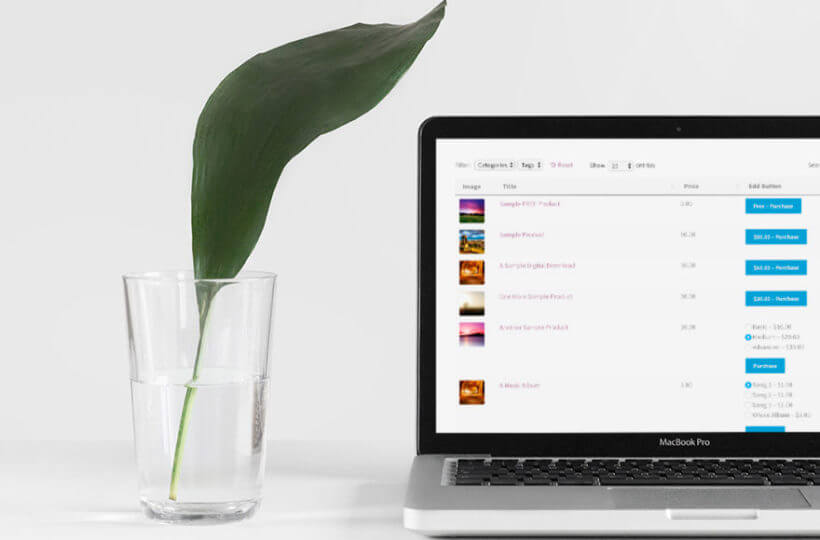
For the digital side of the catalog, pair Easy Digital Downloads with Barn2's Posts Table Pro. EDD handles the downloadable-product mechanics (file delivery, license keys, customer accounts) and Posts Table Pro lists every download in a searchable, filterable table so a customer can find "year 4 maths" or "STEM kit instructions" in one place. See our EDD table plugin guide for the full setup.
To start, pick a single subject area (early-years phonics, secondary chemistry, adult professional skills) and build out 10 to 15 high-quality items before launching. Bundle a digital starter pack with each physical kit purchase to lift average order value and give first-time customers a reason to come back.
2. Hobby-based ecommerce store
Hobbyists are the best ecommerce customers there are. They have specific needs, an active community, and they're willing to spend on the tools and consumables that improve their craft. Examples include photography, woodworking, gardening, baking, cycling, model trains, ceramics and knitting. Pick one with a community you understand.
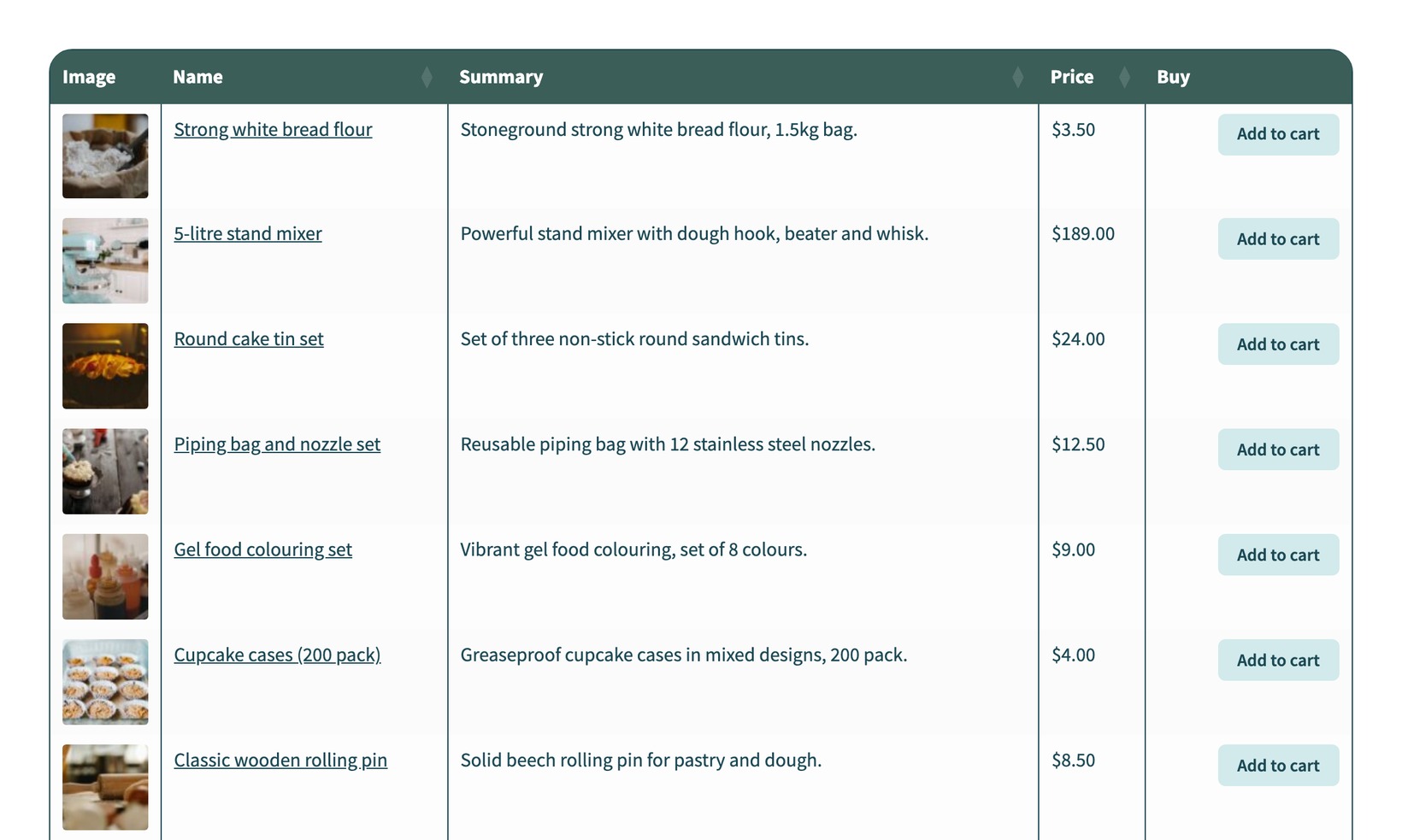
A hobby catalog usually ends up wider than expected. A baking store stocks flours, baking tools, decorating supplies, packaging, books, kits, and customers want to scan a long list at once, not click through page after page of separate products. WooCommerce Product Table lays the whole catalog out as a structured table with inline add-to-cart buttons, so customers can tick the items they need and check out from a single page.
Three things consistently help a hobby store grow fast:
- A weekly tutorial or how-to. Doubles as content marketing and gives existing customers a reason to keep coming back.
- An active presence in one community. A forum, subreddit or Discord where you participate as a peer, not just a seller.
- Small-batch limited-edition products. Reward your most engaged customers with items that feel exclusive and won't be restocked.
3. Personalized products store
Personalized products let customers configure exactly what they buy. Common examples include watches with selectable case, face and strap, engraved jewelry, print-on-demand t-shirts, custom home decor and build-your-own gift hampers. The customer pays a premium because the product is genuinely theirs.
The growth case is strong. McKinsey research finds that 80% of customers are more likely to buy from retailers that offer personalized experiences, and a personalized product is the deepest version of that.
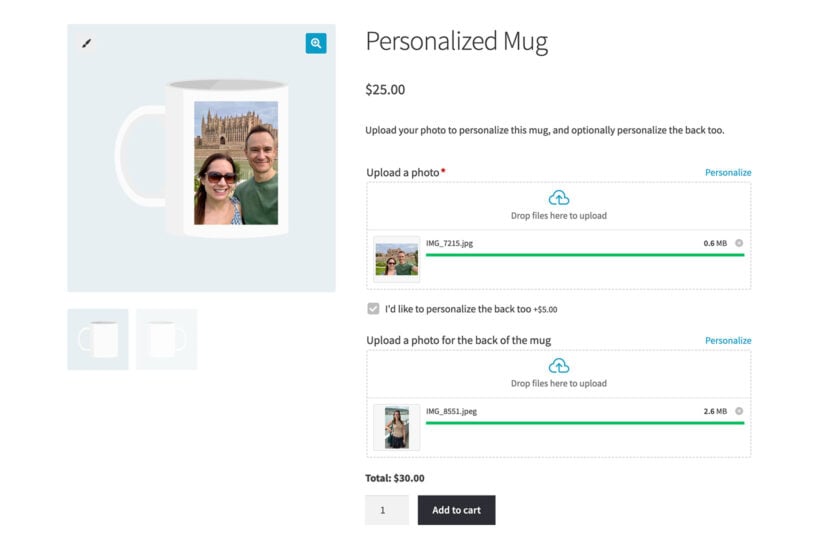
The WordPress plugin that handles this best is WooCommerce Product Options. It adds a configurable options panel above the Add to Cart button on any product, so customers can pick from clickable images, color swatches, dropdowns, text fields or file uploads. Conditional logic shows or hides options based on earlier selections, so a watch builder can offer "strap material" only after "case style" has been picked.
The feature that really sells personalization to customers is the live preview. As a customer types their engraving text, uploads a photo or picks a color, the product image updates in real time to show exactly what they're going to receive. That feedback loop dramatically reduces the "will this actually look right?" hesitation that costs personalized stores a lot of orders.
To set it up:
- Install WooCommerce Product Options and activate it on your site.
- Create a new option group at Products → Options and choose which products/categories the options will appear on.
- Add each customization step as an option (case style, strap color, engraving text and so on). Pick the display style for each option: image swatch, color swatch, dropdown, text input or file upload.
- Enable the Live Preview add-on for products where customers benefit from seeing their design before checkout.
The result is a single product page that handles every variation of a personalized product without you needing to create hundreds of variation SKUs upfront.
4. Mindfulness and relaxation kits
Mindfulness kits curate stress-relief tools into themed boxes. A typical kit might combine scented candles, herbal teas, journals, essential oils, meditation cards and eye masks. The customer pays for the curation as much as the individual products.
Sell them as one-off gift kits or as a monthly subscription box. The subscription version is the higher-value play because it builds predictable revenue and a returning customer base. A "Sleep box" might rotate seasonally, with heavier blankets and lavender in winter, lighter linens and citrus oils in summer.
The kit format pairs naturally with WPO's Products option type, which lets a customer pick which items go into their kit from a curated list of stock products. The same plugin that powers personalized products also powers "pick three from these five" kit builders.
For pricing, a discount applied to the bundle (such as "pick any 5 items for $40") consistently outperforms full-priced kits because the customer feels they've negotiated the deal. WooCommerce Discount Manager handles the bundle pricing logic without touching individual product prices.

5. Collectors' merchandise
Collectibles target customers willing to pay premium prices for rare, limited or branded items. Categories range from sports memorabilia and coins to action figures, vintage gaming, limited-edition art prints and autographed merchandise. The audience is small but devoted, and the margins are some of the best in ecommerce.

The hard part of selling collectibles online is trust. Customers can't pick up the item, so they need to see every detail before they'll commit. Multiple high-resolution images per product, close-up zoom, video walkarounds and clear provenance text are all worth the time.
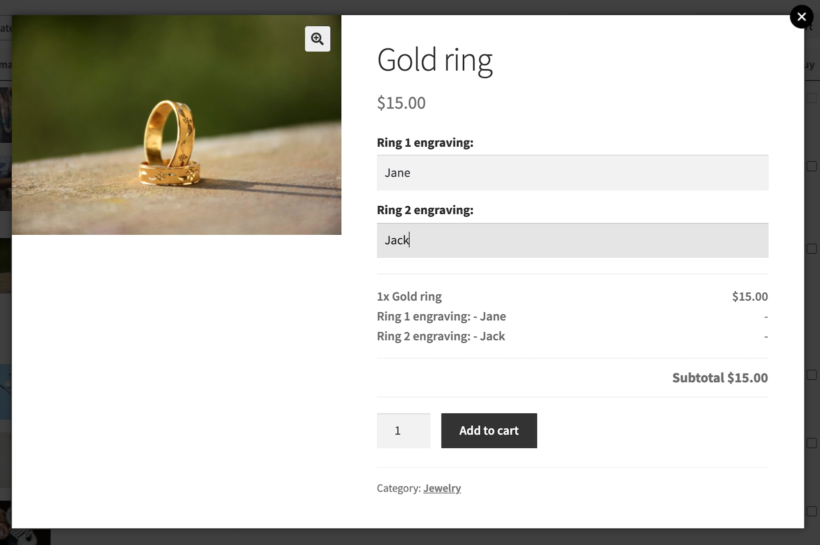
For the storefront, WooCommerce Quick View Pro lets customers preview a collectible in a lightbox without leaving the catalog page, which is useful when the catalog runs to hundreds of items and customers are scanning quickly. Pair it with a generous return policy and named-seller authentication if your niche has trust signals attached.
6. Niche travel accessories
Niche travel accessories solve a specific traveler's specific problem. That might mean eco-friendly toiletries that meet flight liquid rules, noise-canceling earbuds optimized for long-haul flights or modular packing cubes designed for cyclists. The market is huge and crowded, so the win comes from picking a narrow slice and dominating it.
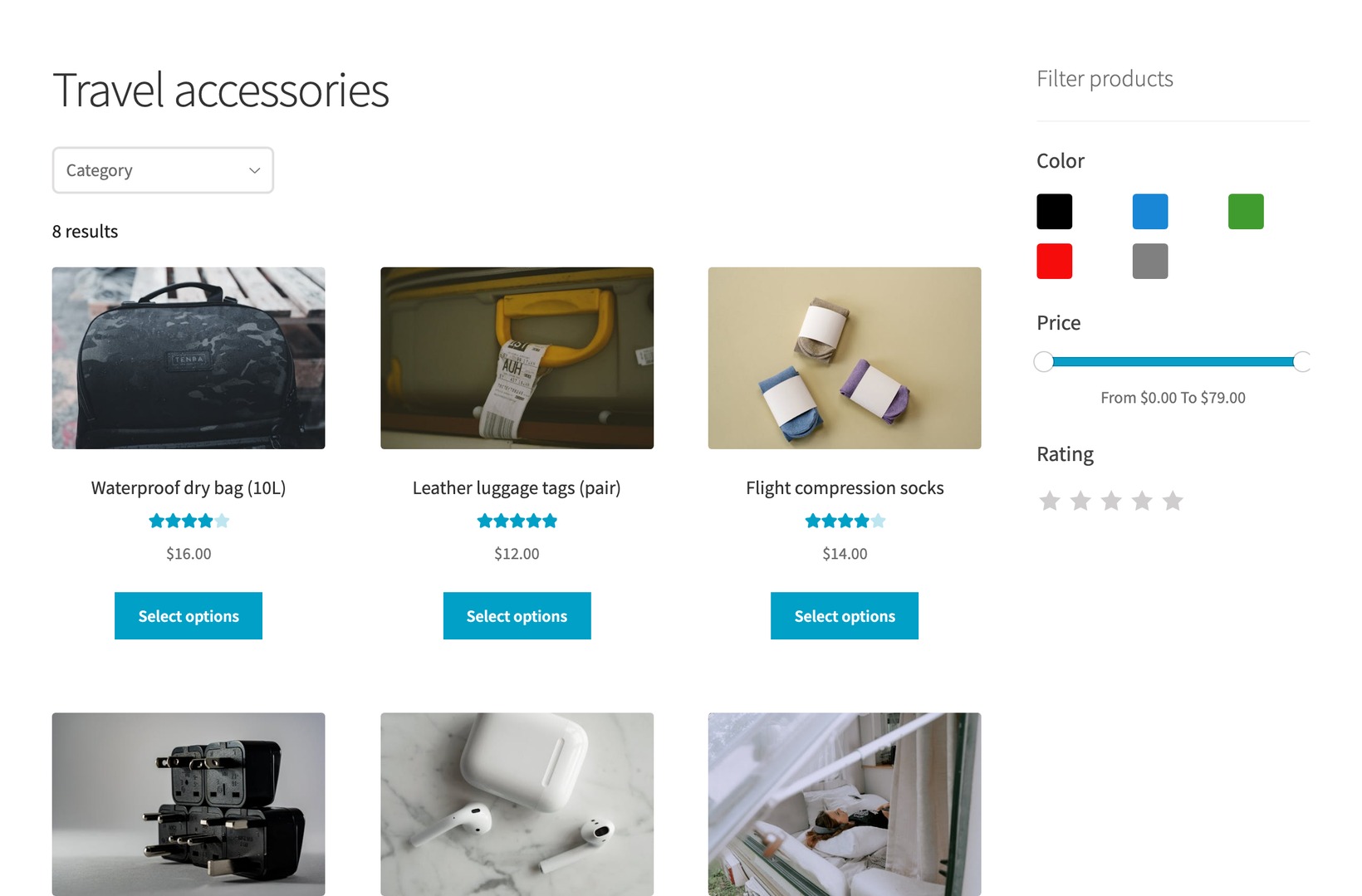
A travel store has lots of dimensions a customer might want to filter on: Cabin-bag-friendly versus checked-bag, eco-friendly materials, price tier, target traveler (business, family, backpacker). WooCommerce Product Filters turns those attributes into AJAX-powered filters that update the page instantly, so customers can find the right product without page reloads.
Pricing benchmark: A small store launching with 30-40 SKUs should aim for $25-$60 average order values and lean into bundle offers (a packing-cube set plus a toiletry kit) to lift it.
7. Eco-friendly home solutions
Eco-friendly home solutions replace single-use or wasteful household items with sustainable alternatives. Examples include reusable cleaning products, biodegradable kitchenware, energy-efficient smart bulbs, refillable laundry detergent and solar-powered garden lights.
The case is strong. Sustainability is no longer a niche preference: PwC's 2024 Voice of the Consumer Survey found that 80% of shoppers are willing to pay more for sustainably sourced goods, with an average premium of 9.7%. That willingness is the market opening this category sits on top of.
The best way to win this category is honesty and transparency:
- Publish the supply chain. Tell customers where each component is made and by whom.
- Name the manufacturers. Generic "ethically sourced" claims read as marketing; named factories and farms read as real.
- Quantify the impact. "This pack saves 12 plastic bottles a year" lands harder than vague green claims.
A clear, well-organized product catalog, a carefully chosen single product WordPress theme, and a strong "About" page do more for trust than marketing copy ever does.
8. Pet lifestyle products
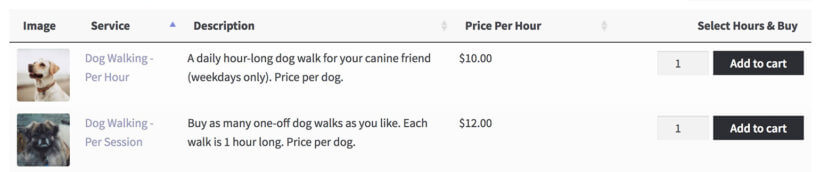
Pet lifestyle products is one of the biggest ecommerce categories there is. Pet food and treats alone generated $64.4 billion in US sales in 2023, and pet ownership keeps growing. Every sub-niche has room, from premium toys and designer beds to GPS trackers, grooming subscription boxes and training tools.
Pet owners are loyal customers when the product works. A self-cleaning litter box, a tracking collar, a slow-feeder bowl: They all solve real daily problems and earn repeat purchases for years.
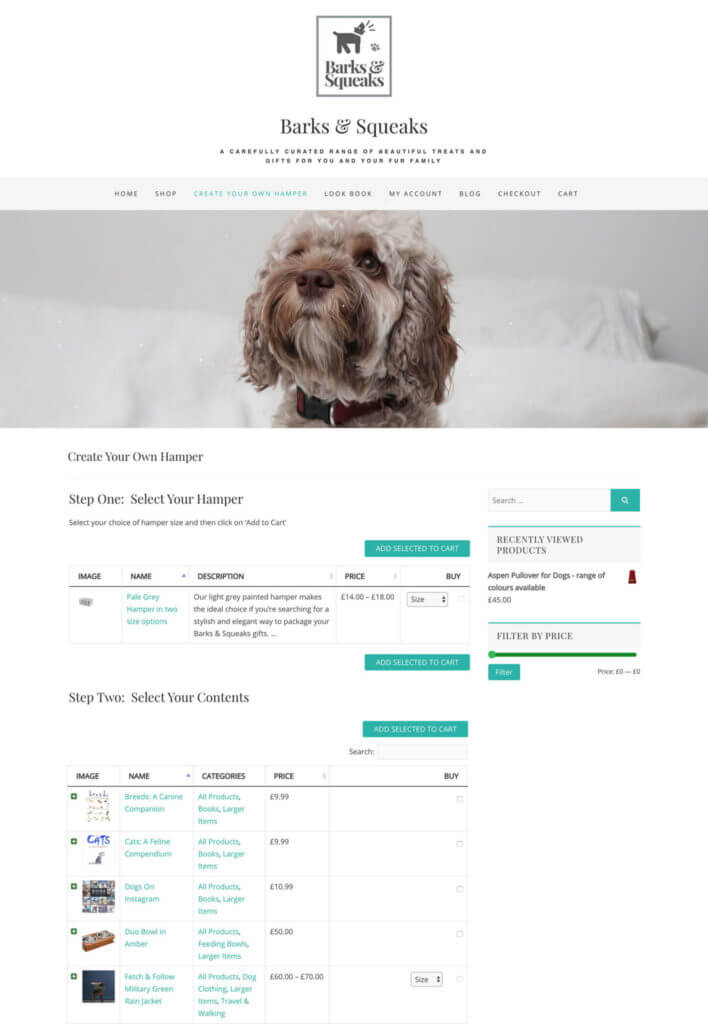
If you're going down the subscription route, a monthly "treats and toys" box for a specific dog size or activity level is a proven format. Position it as a problem-solver (variety, surprise, expert-curated) rather than as just convenience, and the willingness-to-pay goes up. The WooCommerce Subscriptions plugin is perfect for this.
9. Celebration kits
Celebration kits assemble decorations, party supplies and gifts for specific occasions. Common formats include birthday party-in-a-box, baby shower kits, holiday hampers, graduation packs and anniversary boxes. The customer pays for not having to assemble the kit themselves.
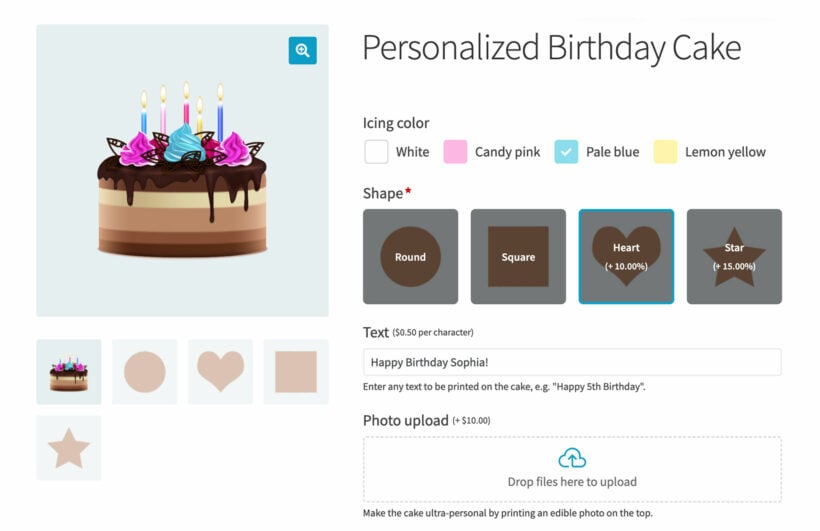
The kit-builder pattern is the same as the mindfulness category above: A customer picks items from a curated list to build their box. WooCommerce Product Options handles the picking-from-a-list UX. Where celebration kits differ is the seasonality, with demand spiking hard around named holidays, so plan inventory and ads to match.
Two practical tips that consistently lift orders:
- Add a personalization option to the kit itself, not just to individual products. "Add a custom card with your message" as an upsell on the kit page captures intent at the highest-attention moment.
- Offer pre-built kits alongside the build-your-own option. Some customers want to pick every item; many want one tap. Show both side by side and most customers will pick the pre-built version, but the build-your-own option earns trust by being there.
10. Health monitoring devices
Health monitoring devices help customers track sleep, hydration, activity, blood pressure, glucose or stress. Common product types include sleep rings, smart hydration bottles, continuous glucose monitors, UV-exposure patches and smart scales. The category is growing fast as more people quantify their own health.
The friction in this category is education. Most customers don't know what a sleep ring actually measures, or whether they need one. The win is in long-form content that explains what each device does, what the data actually means and which devices are right for which goals.
The product page itself should make trust signals impossible to miss. Independent reviews, app screenshots, accuracy specs and the return policy should all appear in the first scroll. Customers are spending $100-$400 on something that lives on their body, so they need to feel certain before checking out.
Tips that apply to every ecommerce business idea
Regardless of which idea you pick, a few things consistently make the difference between a store that limps along and one that compounds.
- Pick a narrow niche before going broad. A baking store that started with "sourdough only" is easier to market than a generic baking store. You can widen the catalog later, but the brand and audience build faster when the niche is sharp.
- Write the descriptions like you're talking to one customer. Generic product blurbs cost sales. A short, honest description that explains who the product is for and what problem it solves converts better than a feature list.
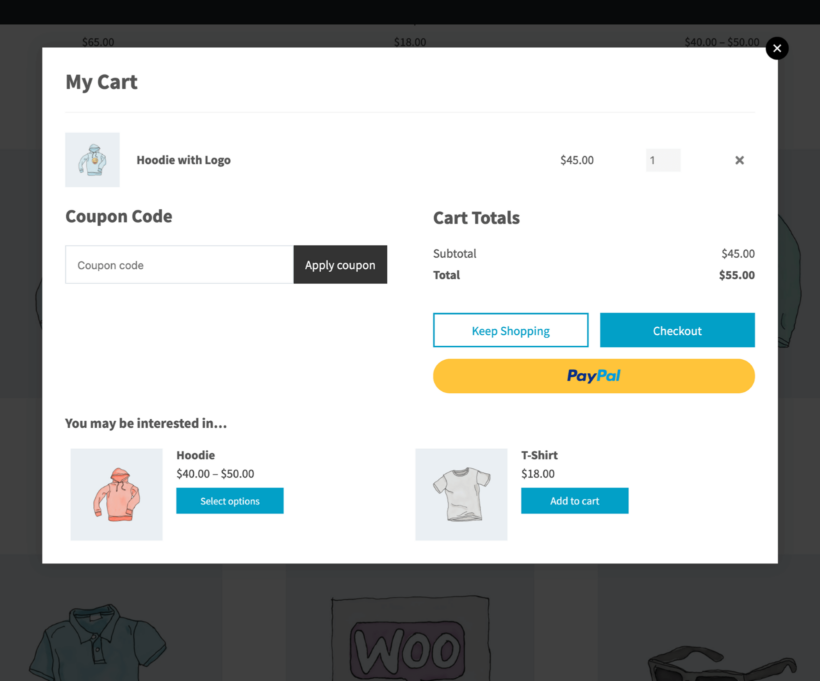
- Reduce friction at the checkout. The store with a same-page popup checkout consistently outconverts the store with a multi-page checkout flow. WooCommerce Fast Cart replaces the standard cart-to-checkout page hop with an in-place popup, which cuts the bounce point that costs every store the most orders.
- Use one paid traffic channel well before adding a second. Splitting a small budget across Instagram, TikTok, Google and influencer partnerships starves all of them. Pick the one your customer hangs out on, learn it, then add another.
- Build the email list from day one. Owned audience beats rented audience every time. A modest 5-10% discount in exchange for an email address recovers the value of the discount on the second or third purchase.
For more ideas in the same space, see our guide to creating product bundles in WooCommerce and the checkout page examples for design inspiration, and the checkout customization guide for stores ready to optimize the final step.
Ready to launch your ecommerce business idea?
The hardest part of starting an ecommerce business is picking the idea and executing on it consistently. The plugin stack is the easy part. WooCommerce plus a small set of Barn2 plugins covers the practical needs of every idea on this list.
Here's the short version of which Barn2 plugin fits each business model:
- Configurable, personalized or kit-style products with a live preview of the final product: WooCommerce Product Options.
- Catalog-heavy storefronts that customers need to scan quickly: WooCommerce Product Table paired with WooCommerce Product Filters.
- Digital downloadable products like ebooks, worksheets and courses: Easy Digital Downloads paired with Posts Table Pro.
- Cart-to-checkout conversion on every store regardless of niche: WooCommerce Fast Cart.
Pick the idea that matches your interests and the audience you already understand. Then build the store, write the content and put in the months. The plugin stack will be ready when you are.