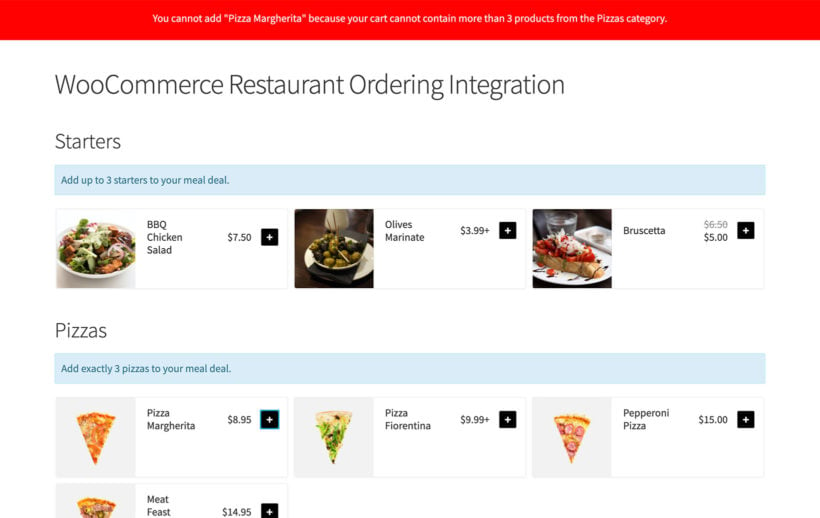
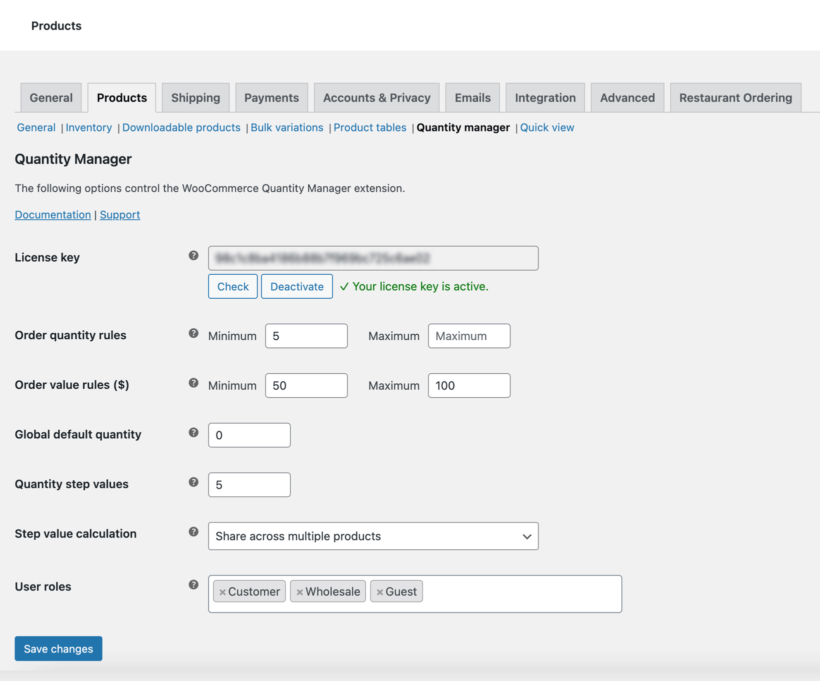
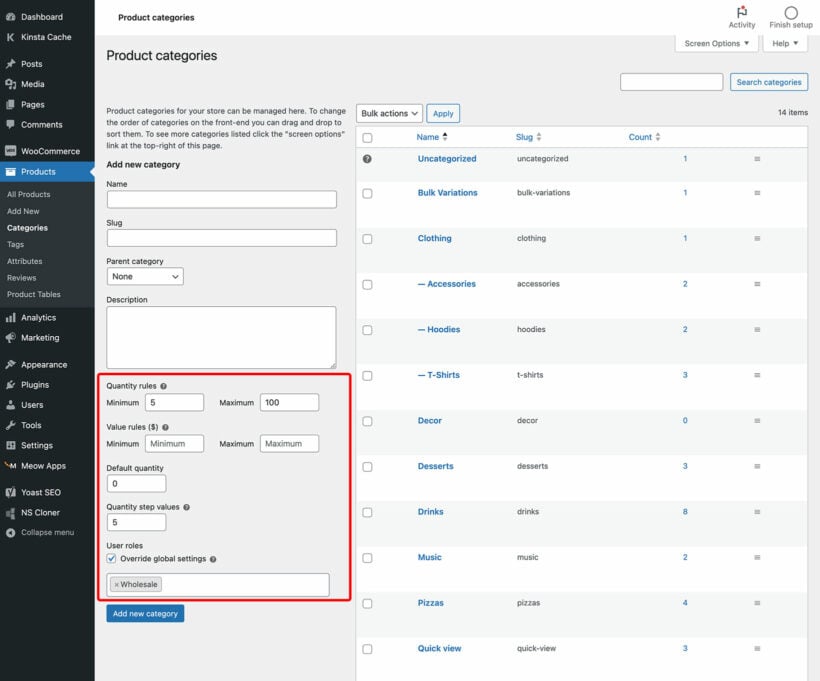
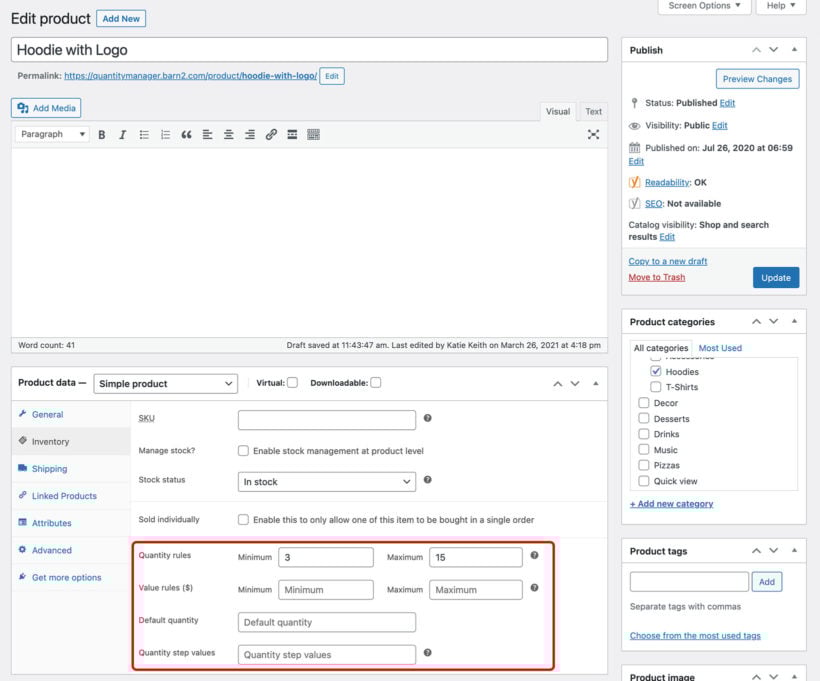
This is the complete guide on how to create and display WooCommerce custom fields. You'll learn how to show extra product data and sell extra product options on your website.
59% of shoppers are more likely to buy from a store that allows for product customization. WooCommerce comes with various types of data which you can add and display about your products. It also comes with a variable product type, with dropdown list fields to allow customers to select different options. But what if you want to create your own custom fields and display them in your ecommerce store?
Read on, or watch this video to find out!
In this tutorial, I'm going to reveal two easy ways to create WooCommerce custom fields and display them on the shop or product page:
Extra product option fields which allow customers to customize the product.
Custom fields for displaying extra data about the product.
Keep reading to learn more about each type of custom field in WooCommerce and how to set them up, step-by-step.
What are WooCommerce custom product fields?
When people talk about WooCommerce custom fields, they typically mean one of two things:
Selling extra product options, as an alternative (or enhancement) to variationsThis involves installing a WooCommerce custom product fields plugin which displays dropdown lists, checkboxes, radio buttons, text fields, etc. for the customer to complete before adding the product to their cart. You can either do this by displaying existing variations in more interesting ways, or by creating custom options using a plugin. Technically, extra product options aren't custom fields at all - they're better known as product add-ons! However, a lot of people refer to them as custom fields. They're perfect for adding a WooCommerce text field to the product page, and collecting other data and options from customers.
Adding extra information about the productThis is the classic use of custom fields. In WordPress, custom fields are used to add additional data to posts, pages, or products. You use these to store and display extra information on your website. For example, if you're already using all the built-in types of product data for other purposes then a WooCommerce custom field plugin can display additional text for you.
Continuing on, we will explore the steps involved in adding both types of custom fields to your WooCommerce products. You will also learn how to make the custom fields visible on the shop and product page.
By following the steps outlined in this guide, you will be able to effectively use custom fields in WooCommerce. This will enhance your store and improve the shopping experience for customers. Whether you're looking to add extra information about your products or offer additional options, WooCommerce custom fields are a powerful tool to help achieve your goals.
Using custom fields to provide options and collect information from customers
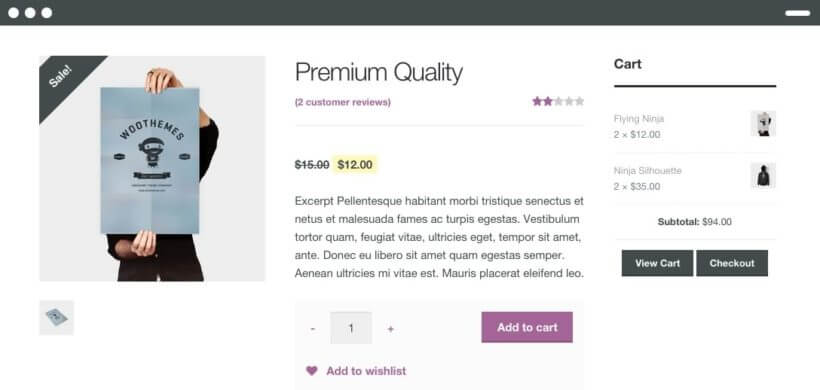
A product with various extra fields added, as an alternative to variations
First, we'll look at how to use custom fields in WooCommerce to show extra information about your products. This involves offering additional options to customers.
This type of custom field goes beyond merely displaying extra information about a product. It offers customers the option to select additional features before adding the product to their cart.
This method is a remarkable alternative or improvement to product variations. That's because it allows you to add a wide range of field types, including radio buttons, checkboxes, and text inputs - either as custom options, or by taking existing variations and displaying them in more interactive ways. By adding extra fields on the product short description page, customers can provide more choices and data that they can receive along with their orders. For example, adding a WooCommerce custom text field on the product page lets customers enter their own text to be submitted with their order.
Once the customer selects the custom fields from the product page, this is displayed as a custom order field in order notification emails etc. That way, the store owner knows which options the customer has chosen.
Radio button: A custom field which forces customers to select one option from a list.
Text: Let customers enter custom text, such as a personalized message or allergy information.
Text area: Collect entire paragraphs of information from the customer, suitable for longer messages.
File upload: Let customers upload files while placing the order. You can control details like the file types and maximum file size.
Number: Add a custom field to collect numeric information. This is useful for things like phone numbers, measurements or dimensions (especially when used with the price formula custom field type).
Color swatches: A more visual type of WooCommerce custom field, which lets customers choose from a choice of colors.
Dropdown: Let customers to choose an option from a dropdown list.
Customer-defined pricing: This custom field type provides a "Name your price" box where customers can enter an amount to be added to the product price.
Price formula: This is a more advanced WooCommerce custom field type. Use it to create a WooCommerce price calculator with a custom formula to calculate the price based on the information that the customer submits. This type of custom field is popular for creating a measurement price calculator for products priced by size, weight or area.
Date: Add a date custom field to the WooCommerce product page.
Products: This is less of a custom field than the other types. It displays selected products above the add to cart product and is a good tool for upselling additional products.
Visual editor: This is more like the classic definition of a custom field, which lets you display read-only data on the WooCommerce product page. Use this to enter static information such as headings or introductory sentences, instead of fields for the customer to fill in.
HTML: This custom field is like the visual editor field but more technical. You can use it to enter HTML that will appear as static information on the WooCommerce product page.
Introducing the Product Options plugin
There are several WooCommerce custom fields plugins available for adding extra product information to your store. However, when it comes to finding the best solution for letting customers select extra product options during checkout, we highly recommend WooCommerce Product Options. This plugin stands out as the best option for adding custom fields to your products and displaying them during the checkout process.
You can add a wide range of options that appear as custom fields for the customer to select. In fact, it supports all the custom field types listed above. Shoppers can complete these extra custom fields and add them to their cart from the following locations:
From a quick view lightbox, if you're using WooCommerce Quick View Pro. (Customers can access the lightbox from the main shop page or product category pages, so it's a quick way to select add-on custom fields without having to visit a separate page for each product.)
1a. How to create custom fields on product pages
Now we get to the tutorial part of this article. First, I'll tell you how to add custom fields to your WooCommerce products. Afterwards, I'll discuss the options for displaying custom fields on product pages and other shop pages.
The plugin setup wizard will open when you activate the plugin. Use this to activate your license key.
Next, go to Products → Product Options.
Click 'Add New' to create a new group of product options. This will be your group of WooCommerce custom fields. Name it whatever you like.
Use the onscreen instructions to add as many custom fields as you like. For each one, scroll down to configure additional options for each custom field. For example, you can use the price options to increase or decrease the product page based on the custom fields selected. Some field types can only be created directly in the plugin, and others also let you select existing variations to display.
Use the 'Advanced' section to configure additional options. For example, you can add minimum and maximum quantities for some of the custom field types. You can also add conditional logic to your WooCommerce custom fields so that the fields appear conditionally based on the user's selections. This is good if - for example - you want customers to be able to tick a 'Customize this product' to reveal the hidden custom fields.
1b. How to set up custom fields on shop and category pages
As a front end plugin, WooCommerce Product Options seamlessly displays custom field data on the WooCommerce product page. Once you've added your custom product option fields and selected which products they will appear of, they will start appearing straight away.
However, this requires the customer to visit a separate page for each product they want to fill in custom fields for. That might work for your use case, or you might also like customers to be able to select custom fields on the shop page, category pages, and so on. There are 2 easy ways to do this. I'll tell you about these next.
Method 1 - Display WooCommerce custom fields on a shop page order form
You can use the WooCommerce Product Table plugin with WooCommerce Product Options to display the extra options on your main shop pages. This will replace your usual store layout with a structured product table view, complete with a 'Buy' column. The buy column contains all the purchase options for adding the product to the cart. This includes product variation dropdowns, product add-on custom fields, and a quantity picker.
Example of WooCommerce Product Table used with Product Options
Customers can quickly find the products they want, fill in all the custom fields, and add them to the cart - all from the shop and category pages. This is a good option if you want to add a custom field to a product category, which you can do by enabling the table view on category pages.
Use the plugin setup wizard to choose the main options for your product tables.
Select the option to display the product table layout on a shop page.
On the next screen, select which WooCommerce shop pages you want to display the order form with custom fields on.
When you choose your table columns, make sure you include a 'Buy' column. The custom fields that you added using WooCommerce Product Options will appear here.
And that's it! Your shop pages will now show product tables complete with WooCommerce custom fields.
Display product option custom fields in a quick view lightbox
Maybe you want customers to be able to fill in the custom fields without visiting individual product pages, but you don't want to change or clutter up the shop page. That's fine.
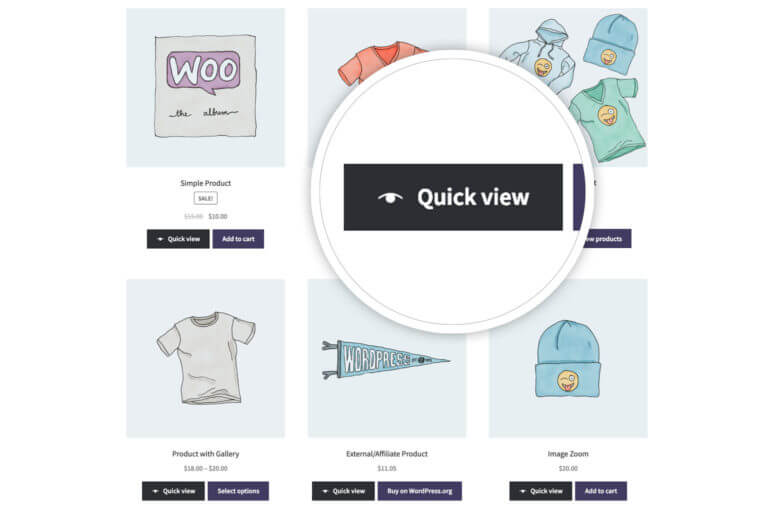
The solution is to use the WooCommerce Quick View Pro plugin to add 'Quick View' buttons to your shop and category pages. Customers will use these to launch a product lightbox containing the WooCommerce custom field options for that product. That way, they can easily fill in the custom fields and add to the cart, without having to visit the product page.
Example of Product Options used to display the custom fields in a WooCommerce Quick View Pro lightbox
Use the setup wizard to choose what you want to include in the quick view lightbox. Make sure you include the add to cart button, as the WooCommerce custom field options are attached to this.
And that's it! This will add quick view buttons to your shop pages, linked to lightboxes containing your WooCommerce custom fields.
Using custom fields to store extra product data
So far, we've learned how to add custom fields to the WooCommerce product page which the customer interacts with. This involves things like adding some text, selecting options, and so on.
But that's not really the technical meaning of the term 'custom field' in WordPress! A WooCommerce custom field actually refers to something different: a custom meta field which is attached to the 'products' post type.
In part 2 of this tutorial, we're going to focus on custom fields in the technical sense of the word. This is all about displaying extra data on your WooCommerce products, rather than providing editable fields for customers to interact with.
WooCommerce comes with a range of standard fields for storing and displaying information about your products. This includes data such as the product title, price, categories, tags, attributes, tags, dimensions, stock information, and so on. Here, we're talking about how to add a static WooCommerce text field on the product page. That's why it's different from adding custom fields for your customers to fill in.
However, sometimes the built-in WooCommerce product data isn't enough. When that happens, you need to install a WooCommerce custom fields plugin and add some additional fields.
In this section, I'll show you how to use the best plugin to add custom fields to WooCommerce. I'll also show you how to display them on the front end of your shop and product pages like this:
WooCommerce Product Table plugin displaying custom fields in the front end
But before we start, I'll explain the difference between custom fields and taxonomies to make sure that custom fields are actually what you need.
Custom fields or taxonomies?
Lots of people wonder "What is the difference between a custom field and a custom taxonomy"? It's a valid question because they're both ways of adding and displaying custom data about WooCommerce products. Understanding the differences between the two options is crucial in knowing which one best fits your specific requirements.
What are custom fields?
Custom fields, also known as post meta, are individual pieces of information that can be added to your products. They are flexible and be used to store a wide range of data, including text, images, and other media.
In short, custom fields add extra fields to the Add/Edit Product screen in WooCommerce. They're ideal for storing standalone data about products. Here are some examples of when you should use WooCommerce custom fields:
To store a unique product barcode, inventory, or reference number.
For adding extra ways for people to interact with your products. This might be by adding extra buttons (e.g. 'Enquire about this product), icons, or social sharing links.
To display multimedia content about the product, such as embedded video or audio tracks.
To store additional notes about the prices or alternate price options. For example, if you're using a bulk discount WooCommerce plugin and want to list the quantity-based discounts, then you can add this information to a custom field.
The idea of a custom field is that it stores unique information. Since the data stored in the field is unique, you can display it in the WooCommerce front end - e.g. on the product detail page, shop, or category pages. However, you wouldn't expect to use this data to group or filter products. If you want to filter by that type of data, then you need a custom taxonomy instead.
You can create WooCommerce custom fields using any custom fields plugin for WordPress. Once you've created the custom fields, it's easy to show them on your website using the WooCommerce Product Table plugin. Keep reading for full step-by-step instructions on how to do all this. First, I'll quickly tell you about WooCommerce custom taxonomies so that you can be sure you're choosing the most appropriate field type for your data.
What are custom taxonomies?
Like WooCommerce custom fields, taxonomies are a way to store and show extra product data. They are a way of grouping and organizing products into categories or tags. However, the difference is that they are designed to store reusable information which can be used to group and filter products. For example, you can create a dedicated archive page listing all products that share a specific custom taxonomy term. You can also use taxonomies to filter products using the WooCommerce Product Table plugin.
Custom taxonomies are very similar to WooCommerce product categories. In fact, WooCommerce categories are actually set up as a taxonomy under the hood. When you create a custom taxonomy in WooCommerce, it adds tick boxes/checkboxes to the right-hand side of the Add/Edit Product screen - just like categories.
Here are some examples of when you might use WooCommerce custom taxonomies:
A WooCommerce bookstore needs to store extra product data such as year of publication, author, and publisher. Since more than one book has the same year, author, or publisher, customers need to be able to sort and filter by this data. You can do this using WooCommerce custom taxonomies.
If your products relate to a specific geographical area, then you can use custom taxonomies to group products by area. For example, you could create a custom taxonomy called 'Area' and add a separate taxonomy term for each state or county. Customers can then filter by area, or view lists of products from a specific area only.
A WooCommerce clothes store can use custom taxonomies to store extra data such as brand names. Customers can then search and filter to find products with their favourite brands, as this field isn't built into WooCommerce as standard.
In summary
Custom field for 'Condition', custom taxonomy for 'Colours'.
When deciding between custom fields and taxonomies, it's important to consider the type of information you want to store and the way in which you want to organize your products. If you need to add unique or specific information to a product, custom fields may be the better choice. However, if you're looking to categorize and organize your products, taxonomies may be suitable.
Ok, now you know when to use custom fields. Next, I'll show you how to create advanced product fields for WooCommerce. It's surprisingly easy!
While many individuals opt to add custom fields programmatically, this tutorial is designed for non-developers. By reading on, you will learn how to add custom fields to your WooCommerce products without writing a single line of code. This makes it possible for you to display extra product fields wherever you desire, including on the product page, the shop page, and category pages.
Which custom field plugin?
In order to add custom fields to your WooCommerce products, you'll need to have a WooCommerce custom fields plugin installed. There are numerous high-quality and free plugins available for creating custom fields in WooCommerce, including Easy Post Types and Fields and Advanced Custom Fields (ACF). Each custom field plugin offers unique features and benefits, so you can choose the one that best fits your needs and preferences.
If you prefer, you can also opt for a dedicated WooCommerce custom fields plugin. These are specifically designed for adding custom fields to products in the WooCommerce platform. However, custom fields are essentially the same whatever WordPress post type you're adding them to. For that reason, there's no need to use a WooCommerce-specific plugin.
I'm going to show you how to create WooCommerce custom fields using Easy Post Types and Fields, and also Advanced Custom Fields. These are my two favorites.
However, the instructions are the same for most other custom field plugins for WordPress. If the custom fields don't show up on your site when you follow the later sections of this tutorial, make sure the plugin isn't adding extra characters to the start of the custom field name. (You might need to contact their plugin support to ask about this.) For example, Toolset automatically adds wpcf- to the start of the custom field name, so you need to know this.
Creating custom fields with Easy Custom Post Types & Fields
Easy Post Types and Fields is a free WooCommerce custom fields plugin. It makes it easy to add custom data fields to your WooCommerce products.
This plugin was designed to make it as quick and easy as possible to add custom fields. It comes with a choice of plain text and visual editor custom field types. Use it if you want a quick and straightforward way to add WooCommerce custom text fields to the product page.
How to add custom fields to WooCommerce products
Log into the WordPress dashboard and go to Plugins → AddNew.
Search for ‘Easy Post Types and Fields’, then install and activate the free plugin.
The setup wizard will open. Skip this and go to Post Types → Manage, then click on the 'Other Post Types' tab.
Find the 'Products' post type (this is added by WooCommerce) and click 'Custom Fields'.
Click the button to add as many fields as you like to your WooCommerce products. Make a note of the name of each custom field - you'll need this to display it later in this tutorial.
Finally, edit your products. On the 'Edit Product' screen, you'll find the custom fields that you added in step 4. Fill in the data as needed.
How to create custom fields with the Advanced Custom Fields plugin
Advanced Custom Fields (ACF) is a popular WordPress custom fields plugin. Use it if you're willing to spend a bit more time on setup and want extra features such as additional field types:
Log into WordPress and find Plugins → Add New. Search for ‘Advanced Custom Fields’, then install and activate this free plugin.
Click ‘Custom Fields’ on the left-hand side of the WordPress dashboard.
Click the ‘Add New’ link by the ‘Field Group’ at the top of the page.
Next, you'll see the ‘Add New Field Group’ page:
First, add a name for the group of custom fields you're creating. (No one else will see this.)
Location – Choose Show this field group if Post Type is equal to Product. This tells Advanced Custom Fields to show the custom field on the Add/Edit WooCommerce product screen.
Press the blue ‘Add Field’ button. Now it's time to create the individual custom fields where you'll store the extra product data.
Add a Label for the custom field. This is how the custom field will be labeled on the Add/Edit Product screen.
Choose a Name for the custom field (this should be 1 word in lowercase). You'll need this to display the WooCommerce custom field on the front end of your website, later.
Choose a Field Type from the available types of a custom field. You can choose text, text area, numbers, checkbox, radio button, etc.
Complete any extra fields for the custom field such as adding a default placeholder value. Finally, click the blue ‘Publish’ button.
That's how to create WooCommerce fields. The next step is to add data to the custom field value for some or all of your products. To do this, go to the 'Edit' page for each product and you'll see the extra WooCommerce custom field(s) lower down the page. They'll be shown somewhere below the Product Data section. Edit the placeholder, enter values into the custom fields, and then save the product.
2b. How to display custom fields on shop pages
How to show custom fields on the shop page
A shop page product table with a custom field column
In the previous section, I showed you how to store new custom fields for your WooCommerce products in the back end. The next step is to display these fields on the front end of your WordPress website for customers to see. Of course if you're using custom fields simply as a way to store internal notes, then there's no need to display them. However, if you want to show your WooCommerce custom fields on your website, it's a simple process.
There are several ways to make custom fields visible on the front end of your website. This includes displaying custom fields on product pages, the shop page, and category pages.
The easiest way to show your extra product data is to install the WooCommerce Product Table plugin. This takes your products and lists them in a quick order form layout anywhere on your site. You can add product tables to any page you like. This might be normal pages, or your WooCommerce shop and category pages.
You can choose which columns to include in the product table. The great thing is that you can include WooCommerce custom fields in the table. This is more flexible than the default store layout, which just lists basic information such as the product name and price. It's a really easy way to display the extra product data that is stored in custom fields.
The product table builder will open. Activate your license key and choose the other settings for your first product table. For example, you can choose which products to include in the table. Alternatively, you can select which default shop pages you want to display the table with custom fields on.
In the Columns section, make sure you add your custom field columns. If you're using the Easy Post Types and Fields or Advanced Custom Fields plugins to create custom fields, then these fields will appear in the list of columns. For other custom field plugins, select 'Custom field' and enter the custom field name.
Now it's time to add product tables to a page. (You can skip this step if you selected the option to show product tables on your main shop pages.) To list products with custom fields anywhere, either use the shortcode from the final page of the table builder or insert a 'Product Table' Gutenberg block.
Next, view the page and see what it looks like! You will see a product table, complete with custom fields.
Make changes to how your custom fields are displayed
WooCommerce Product Table is a very flexible plugin. Choosing your columns is just one of over 50 options! Look at them all and configure your table to show whatever product data you need.
Have a play, and get your product tables and WooCommerce custom fields showing exactly as you need them.
How to display custom fields on the WooCommerce product page
So far, I've shown you several ways of displaying custom fields on WordPress pages, shop, or product category pages. It's also possible to show a WooCommerce text field on the product page (also known as the product detail page).
The WooCommerce product page is great, as it displays lots of product data such as product title, image gallery, short and long description, product category, product price, attributes and variations. However, there's no built-in way to add custom fields to custom product pages.
You can do this using the WooCommerce Product Table plugin that we looked at in the previous section. It can show custom field values anywhere on your site - including the WooCommerce product page. When used on the single product page, it looks like this:
A product table displaying custom field data on the WooCommerce product page
Setup tutorial
1. First, create the table of custom fields
Edit each product and add data to the custom fields as required.
When you activate it, a table builder will open guiding you through the main settings for your custom tables. You can also launch this later at Products → Product Tables.
On the 'Create a table' page, select the 'Add to a page using a block or shortcode' option.
On the 'Select your products' page, select the 'Individual products' checkbox and search for the product whose custom fields you want to display. (Don't worry if you want to show different custom fields on different products, as I'll show you how to do this in a minute.)
Select other options for the table, such as columns. If you're using the Easy Post Types and Fields or Advanced Custom Fields plugins for your custom fields, then these will appear in the list of columns. For other custom field plugins, choose 'Custom field' and add the custom field name.
Copy the shortcode from the final page of the table builder.
Now repeat Steps 3-8 for the other products that you want to display product custom fields on. You can quickly do this by duplicating an existing table and changing which product is selected.
Now go to Products → Product Tables → Settings. I recommend disabling elements such as the search box, product totals and reset button. That's because these are designed for listing large numbers of products in a table, and they're not relevant to displaying custom fields on the WooCommerce product page.
2. Next, add the table to the product page
Open the 'Edit Product' screen for the product where you want to add a table of custom fields.
Add a product table shortcode that you copied earlier to the Short Description field.
This is how it will look on the front end WooCommerce product page:
What if I don't want to show the custom fields for each product manually?
The instructions above tell you how to manually add a product table with custom fields for specific products. You can do this for as many products as you want to display custom fields.
If you want to show custom fields on all your WooCommerce product pages then you will need to do this globally by adding product tables to the single-product.php template. This is a bit technical and you can ask your developer to do this for you. If you don't have one then I recommend that you post a job on Codeable where one of their WordPress experts will send you a quote.
To get you started, we've provided an article with code snippets on how to automatically add product tables after the short description field on the single product page. The code snippet adds a table of the current product's variations, and you can change the [product_table] shortcode to add custom field columns, disable the variations option, and make any other changes you require.
Can I add custom fields to other sections of the WooCommerce product page?
Above, I showed you how to add custom fields to a table in the short description on the WooCommerce product page. This is a good option because most themes show the short description near the top of the page, under the product name and price.
If you'd rather show custom fields elsewhere on the single product page, that's absolutely fine. Simply add the product table shortcode to wherever you'd like to display the custom field values. For example, you could add it to the long product description instead.
What other extra data can I show on the WooCommerce product page?
Custom fields and taxonomies are just the tip of the iceberg. You can use WooCommerce Product Tables to show any type of product data in a table. This can include:
Product image, name, price
Short or long description
Categories and tags
Attributes and variations
Star rating from reviews
Embedded audio and video
This is a much more flexible way to show WooCommerce extra product data in the short description field. Customers can see all the relevant data from the neat table layout, instead of having to scroll down to the long description tabs.
Have a play with showing custom fields and other data on the WooCommerce product page. Think about what will best sell your products and maximize conversions. This is a great way to increase sales and make your e-commerce store an even bigger success.
Alternate method: Show a text custom field above the add to cart column
So far, you've learned how to add a table to the single product page, with each custom fields displayed in a column of the table. If that's not the layout you want, then I have an alternative suggestion for you.
We're going to use a plugin called WooCommerce Lead Time. While the plugin is designed to display waiting times, it works by creating a WooCommerce custom field and showing it on the single product page, immediately above the add to cart button. As a result, you can use it to show any type of text-based information and not just lead times.
To set it up, simply install the plugin and add the information that you want to display to the 'lead time' field. The text you have added to the 'lead time' custom field will appear above the add to cart button, under the short description.
The other benefit of using WooCommerce Lead Time for your custom field is that you can choose whether to add the information individually for specific products only; or globally so that it appears on all product pages.
How to list WooCommerce products with a specific custom field value
Finally, I'll show you one more option for showing WooCommerce custom fields in the Product Table plugin.
As well as displaying custom field labels in the table layout, you can create tables containing products with a specific custom field value.
For example, imagine that you wanted to display products with a custom field value of 'June' (saved in a custom field called 'Month'). To do this, you could select 'Custom field' on the 'Select your products' page of the table builder and enter 'month' as the custom field name, and 'June' as the value.
How to add custom fields to product programmatically
If you're a developer, then you might be wondering how to add custom fields to a WooCommerce product programmatically. Can you even add custom fields to a WooCommerce product without plugins?
The answer is yes! WooCommerce allows you to programmatically add custom fields to products without installing any additional plugins. However, as you can imagine, the programmatic approach to creating custom fields for WooCommerce products involves programming!
With a programmatic approach, you can add custom information directly to your product metadata. You can also include your custom field(s) as part of the existing WooCommerce product data meta box.
Code sample 1
Your code will depend on the kind of custom fields you're looking to add to your products. Many product types only need a simple custom text field to let users enter some value. For such use cases, this custom text input field snippet by WooCommerce developer Rodolfo Melogli suffices:
As you can see, you’ll be using a bunch of core WooCommerce functions and hooks in the code. For example, you're using the WooCommerce hook "woocommerce_before_add_to_cart_button" to show your custom field on your product page. You're also using the woocommerce_add_order_item_meta hook to save your product input fields for Woocommerce into the order meta information. These can vary greatly depending on the custom fields you're trying to add.
When you take such input from your users, you should include it in your cart page summary (with your cart item details), your checkout, and also in your order's email. The snippet we just saw doesn't just let you allow your users to enter a text-based value inside your product page but also takes it over to your cart and checkout. Not just that, it adds the custom input to your order confirmation email too.
Code sample 2
Next, we'll share some example codes kindly published by Plugin Republic. You'll be adding these snippets to your WordPress child theme's functions.php file. You could use the code snippet below to register a custom field, display the input field in the General tab of the WooCommerce product data box, and save it as product metadata:
/**
* Displays the custom text field input field in the WooCommerce product data meta box
*/
function cfwc_create_custom_field() {
$args = array(
'id' => 'custom_text_field_title',
'label' => __( 'Custom Text Field Title', 'cfwc' ),
'class' => 'cfwc-custom-field',
'desc_tip' => true,
'description' => __( 'Enter the title of your custom text field.', 'ctwc' ),
);
woocommerce_wp_text_input( $args );
}
add_action( 'woocommerce_product_options_general_product_data', 'cfwc_create_custom_field' );
/**
* Saves the custom field data to product meta data
*/
function cfwc_save_custom_field( $post_id ) {
$product = wc_get_product( $post_id );
$title = isset( $_POST['custom_text_field_title'] ) ? $_POST['custom_text_field_title'] : '';
$product->update_meta_data( 'custom_text_field_title', sanitize_text_field( $title ) );
$product->save();
}
add_action( 'woocommerce_process_product_meta', 'cfwc_save_custom_field' );
Then, you could use WooCommerce's many hooks to display that field data on the front end of your e-commerce store at the spot where you want it to appear.
For example, this snippet displays the custom field data after the add to cart button on your single product page:
/**
* Displays custom field data after the add to cart button
*/
function cfwc_display_custom_field() {
global $post;
// Check for the custom field value
$product = wc_get_product( $post->ID );
$title = $product->get_meta( 'custom_text_field_title' );
if( $title ) {
echo get_post_meta($post->ID, 'custom_text_field_title', true);
}
}
add_action( 'woocommerce_after_add_to_cart_button', 'cfwc_display_custom_field' );
There are also other hooks that let you display information on the WooCommerce checkout page or the cart page.
Is It worth adding WooCommerce custom text fields programmatically?
While you don't need any plugins to programmatically add custom fields to WooCommerce using this method, you can end up with errors. Your custom code could have compatibility issues with the other WooCommerce extensions or WordPress site plugins that you might be running. You can also experience code validation errors.
As you can tell, using plugins is a much simpler way to add custom fields to product pages. While it is possible to display custom fields without the use of a plugin, it's really only accessible to developers. That's why the methods described above are a better option for most store owners.
2 easy ways to create and display custom fields
And that's it! I've shown you two easy ways to show custom fields on your website:
We've learned how to add custom product input fields for WooCommerce to collect extra information from customers. This uses the WooCommerce Product Options plugin.
Neither method for adding custom fields to WooCommerce products requires any special technical knowledge.
Follow whichever method in this tutorial interests you the most, and put it into practice on your own website. It's a fantastic non-technical way to store and display extra product data in WooCommerce.
If you sell lots of similar products, then how can customers choose between them? A WooCommerce product comparison table is the solution.
Your store might have exactly what a particular customer has come looking for. But, there's just too much stuff for them to sift through that it's starting to affect your conversion rate.
There are lots of reasons to add WooCommerce product comparison tables to your store:
If you sell lots of products then customers need an easy way to see them alongside one another.
Product comparison buttons are especially important if you sell technical products where customers use factual data to make buying decisions. (E.g. TV's or mobile phones).
Maybe you sell visual products such as clothing, and customers need to compare images of each product to choose which they like best.
This is where WooCommerce Product Table - the best WooCommerce product comparison table plugin - comes in.
A WooCommerce product comparison table plugin lists products in a structured format. This format makes it easy for customers to find what they're looking for. It also helps them compare similar products. The table presents products alongside each other. Customers can make direct comparisons. They can quickly and easily choose which ones to buy.
What's wrong with most WooCommerce product comparison table plugins?
A WooCommerce product comparison table plugin is a tool that displays products in a table format with multiple columns of data for easy comparison.
The WooCommerce product comparison table plugin market is crowded. There are plenty of products available. These often let customers tick 2 or more products. Then they view them on a separate page. You might also come across static table plugins. With these, you have to manually enter the data.
Most comparison table plugins for WooCommerce face several problems:
Don't have features to help customers find products to compare in the first place.
Show the product comparisons in the same layout as the rest of the store, instead of having a dedicated comparison table.
Contain very little product data in the comparison table – usually image, name and price. You can add extra data if you create comparison tables using a static WordPress table plugin, but you have to enter everything manually which is no good.
We can do better 💪
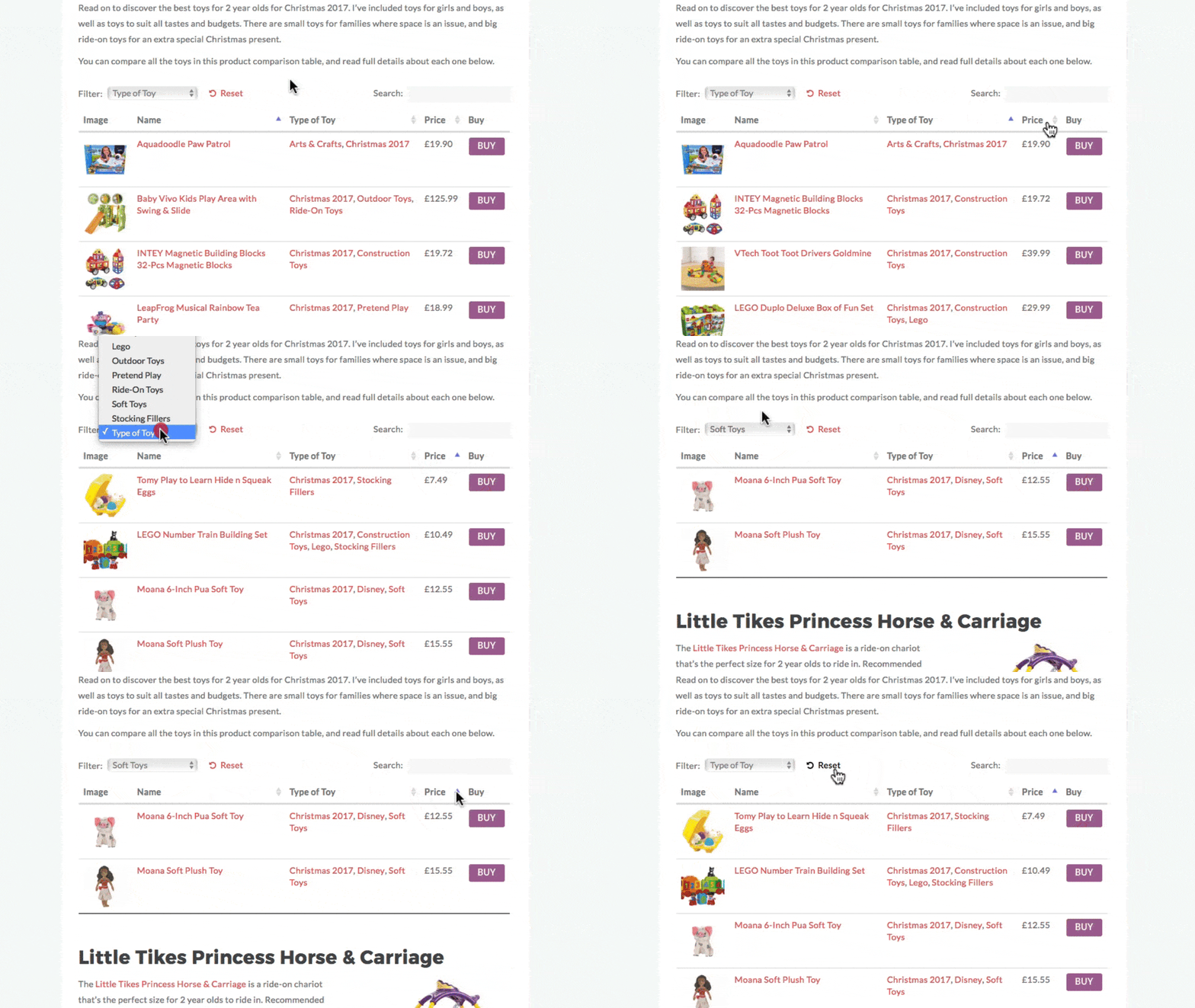
WooCommerce Product Table is a different type of product comparison plugin. It automatically lists products in a searchable, sortable table layout with filters. You can add columns of extra product data to the comparison table. This lets customers compare products in a more meaningful way.
You can use it alone for easy product comparisons. You can also use it with YITH WooCommerce Compare. This adds shortlists and lightboxes to the comparison table.
Read on to discover how to create the perfect WooCommerce product comparison table.
How does the WooCommerce comparison table work?
WooCommerce Product Table is highly flexible. There are many ways to configure your tables. Used correctly, it functions perfectly as a WooCommerce comparison table plugin.
This is how customers can use it to compare products in WooCommerce:
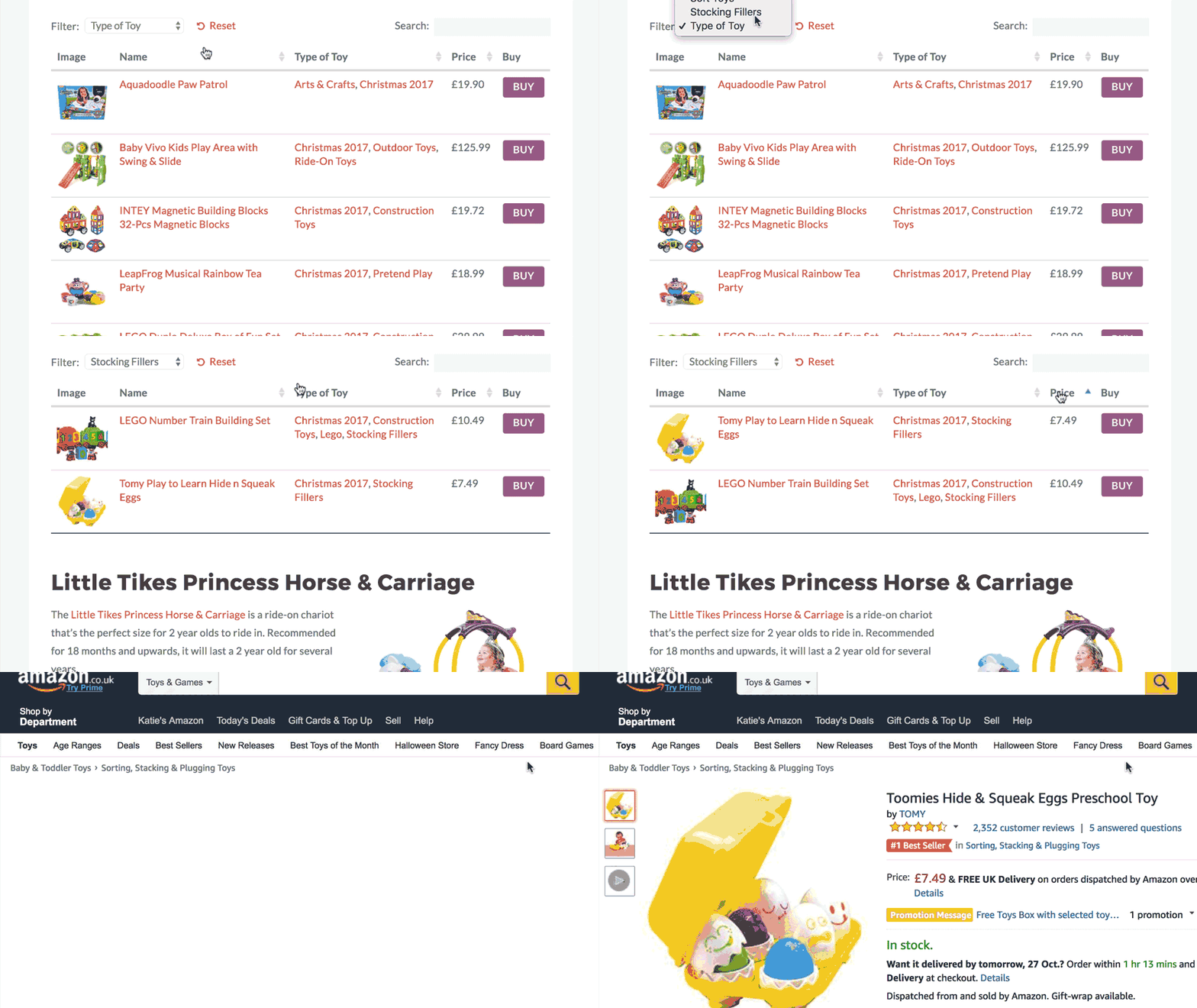
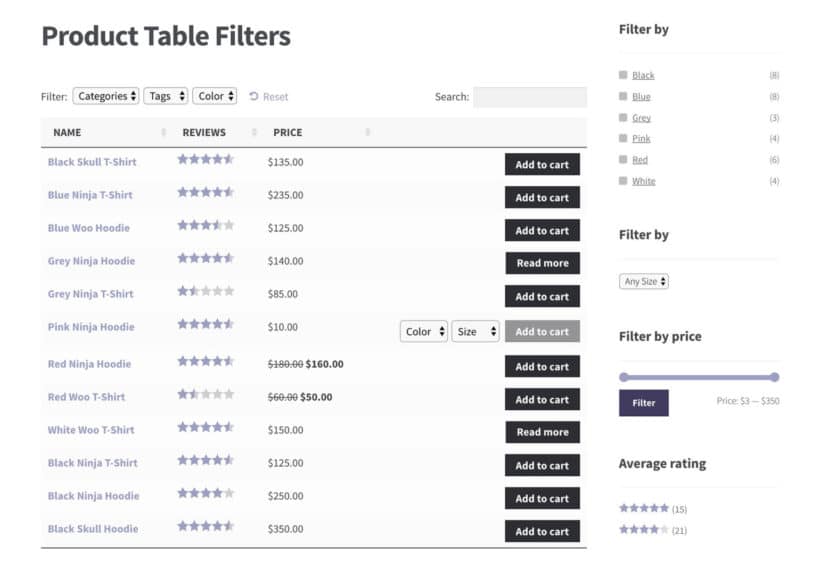
Customers will view a page on your website with products listed in a table The table provides several ways to find products to compare. Customers can type keywords into the search box. Filter dropdowns above the list make it easy to refine the list. Filter widgets in the sidebar also help refine the list. Customers can sort the table by clicking on any column header. They can filter the table by clicking on a category, tag or custom taxonomy term.
As the customer filters the table, the number of products listed will decrease until they can just see the products they want to compare This works differently from some WooCommerce product comparison table plugins. You filter the table instead of ticking boxes. This method helps customers find suitable products more quickly. They don't have to scroll through long lists of products.
You can include as many columns of product data as you like in the table Each product takes up 1 row in the table. Customers can easily view the data for each product. They can make direct comparisons. For example, if you're selling smartphones, you might want to compare storage capacity. You can include a 'Memory' column in the WooCommerce comparison table.
The result is that customers can find what they're looking for much more quickly. This leads to a higher conversion rate. It also means more sales, revenue, and profit for you.
How can the WooCommerce product filter plugin enhance product comparisons?
Product filters are interactive elements that allow customers to narrow down product selections based on specific criteria like price, size, or category.
The WooCommerce comparison table is a great tool for side-by-side product comparisons. However, finding exact products can still be difficult. This is where the WooCommerce Product Filters plugin comes in.
The plugin adds advanced filtering options to the comparison table. These include categories, attributes, and tags. Customers can use the facets to examine closely the content they're looking for. They can quickly compare products that meet their specific criteria. This leads to increased sales and customer satisfaction.
For example, a customer might be comparing laptops. They want to narrow down options by screen size, processor, and price range. With product filters, they can easily find and compare matching laptops. They don't need to scroll through long product lists.
How to create a WooCommerce product comparison table
WooCommerce Product Table only takes a few minutes to set up. You don't need to do any data entry or custom coding. It works instantly with your existing WooCommerce products. It lists them in a neat comparison table.
Watch the video tutorial, or read the detailed written instructions below.
Open the table builder at Products → Product Tables → Add New. Go through each step to set up your comparison tables.
2a. Choose which products appear in the comparison table
The first page asks about table placement. You can add comparison tables to a normal page. You can also enable them on your WooCommerce shop templates. For this tutorial, I'll assume you're creating a separate product comparison page. However, you can enable the comparison table view on all shop pages if you prefer.
By default, the WooCommerce product comparison table lists all products in your store. This is ideal for many types of comparison shopping. Customers can view the full list. They can use filters to refine it according to their interests.
However, if you sell different types of products, you might want multiple comparison tables listing different categories. For example, customers rarely want to compare t-shirts and shoes in the same clothing comparison table. It's best to list these separately.
WooCommerce Product Table can create tables listing specific products only. You can create comparison tables with products from certain categories or tags. You can also list products with specific custom field or taxonomy values.
2b. Add product data to the comparison table
Add plenty of columns of product data. You can choose exactly which columns appear in the product comparison table. The plugin supports all standard WooCommerce fields. It also supports extra fields like product attributes, variations, custom fields, and taxonomies.
This creates an opportunity for useful WooCommerce product comparison tables. Other plugins can't match this functionality. Make the most of it by planning your columns carefully!
To let customers compare products in WooCommerce, think carefully about what data they will want to compare. For example:
If people will compare prices, include a price column. Add a price filter sidebar widget for easy price comparisons.
Use weight and dimensions columns for furniture items. Customers often buy based on size.
Product attributes allow direct comparisons of information like size and color. List each attribute as a column in the comparison table.
Use WooCommerce custom fields and taxonomies to store extra product data. List this as columns in the table. This can include additional technical data not stored elsewhere.
2c. Change how products are added to the cart
The default WooCommerce comparison table includes standard "add to cart" buttons. If you prefer, you can replace these with checkboxes. Customers can then add multiple products to the cart at once.
If you don't want customers to purchase directly from the comparison table, remove the add to cart column altogether.
2d. Lazy load option for bigger comparison tables
Lazy load is a performance optimization technique that loads content as needed rather than all at once.
Sites with many products in a WooCommerce comparison table can activate lazy load. This prevents performance problems. It loads 1 page of products at a time. Your site will never crash, regardless of product count.
2e. Add filters for refining the comparison table
The table builder lets you add filter dropdowns above the WooCommerce comparison table. Customers can filter by category, tag or attribute. This helps them start comparing similar products.
The comparison table plugin works with WooCommerce product filter widgets. If your page has a widgetized area like a sidebar, add widgets there. These can refine the list by attribute, price, or rating.
Step 3: Add the WooCommerce comparison table to a page
Go to the page where you want to add a WooCommerce product comparison table. Add a 'Product Table' block. Or copy the shortcode from the last page of the table builder.
This will list all your products in a user-friendly WooCommerce comparison table.
Add 'Compare' buttons to the product comparison table
So far, we've looked at using WooCommerce Product Table on its own. Customers compare products by searching, sorting and filtering the table. They compare products that meet their criteria.
To enhance this further, add 'Compare' buttons to the WooCommerce comparison table. Use Product Table with the YITH WooCommerce Compare plugin.
By combining these two plugins, customers can view products in a space-saving table layout. They click WooCommerce product comparison buttons for items they're interested in. This opens a neat comparison table. Each product appears in a separate column. Customers view products side by side. They add favorites straight to the cart.
WooCommerce Product Table with comparison buttons
Customer can click to compare items in a lightbox
I'll tell you how to use the two plugins together next.
Setup instructions
Before you start, follow the instructions above to create a comparison table with WooCommerce Product Table. Next:
Get YITH WooCommerce Compare. Set it up on your WordPress site according to YITH's documentation.
Decide which product field will hold the comparison buttons. You might add them to the product short or long description if these are unused. Alternatively, create a custom field for them. Use plugins like Easy Post Types & Fields or Advanced Custom Fields.
Go to the 'Edit Product' screen for each product. Add the shortcode [yith_compare_button type="button"] to your chosen field. (Tip: If you have too many products to do this manually, see the next section for dynamic methods.)
Edit your WooCommerce comparison table. Go to Products → Product Tables and click 'Edit':
Add an extra column for the field containing YITH compare buttons. Click the pencil icon. Rename it to something like 'Compare'.
Ensure the 'lazy load' box is disabled. Lazy load is incompatible with YITH's plugin.
Finally, go to Products → Product Tables → Settings. Enable the 'Shortcodes' button. This displays the product comparison buttons correctly in the table.
Can I add the shortcode dynamically?
The above instructions are for non-coders. They provide an easy way to add a 'Compare' button alongside every product. I've assumed you manually added YITH compare buttons to a field on the 'Edit Product' screen.
For automatic compare button addition, add [yith_compare_button type="button"] as a default value. Add it to the custom field displayed in the table. Most custom field plugins like Advanced Custom Fields allow default values. (Note: For existing products, edit and click 'Update' to apply the default content.)
Alternatively, developers can write custom code for this. If you need a developer, post a job on Codeable. Their pre-approved WordPress experts will send quotes. Codeable is excellent for finding WordPress developers who specialize in plugin customization.
Here are tips for adding product comparison buttons dynamically:
Use this code or similar to insert 'Compare' buttons into a product table field:
Case study - WooCommerce comparison table of electrical products with extra technical data
Universal Fans sells fans to retail and trade customers. They use WooCommerce Product Table to create a comparison table for their exhaust fans. This helps customers find the right fan based on technical data.
The comparison table page has 4 tabs. Each contains a product table listing a specific fan type. The comparison table includes columns for SKU, image, name, and price. It also shows several product attributes containing technical data. Each column is sortable. Customers can filter by duct size. They can also perform keyword searches.
To maximize space for product comparison data, Universal Fans excluded buy buttons from the table. Instead, customers click on any fan to access its product page. There they can choose options and buy.
Universal Fans said:
I am very happy with the plugin, for us it works really well. We sell relatively technical products, so it is really helpful for customers to be able to view products in certain categories and view them in a list format, which can be sorted by custom attributes.
WooCommerce Product Table is the perfect product comparison table plugin for sites like Universal Fans. Next, I'll show you how to create comparison tables for your own WooCommerce store.
Tips on supercharging your WooCommerce comparison tables
Create affiliate product comparison tables in WooCommerce
Affiliate product comparison tables are tables that list third-party products with referral links that earn commissions.
Many WooCommerce websites earn money by providing helpful comparisons of third-party products. Each product has an affiliate link. Website owners earn referral commissions when customers click through and buy from other websites.
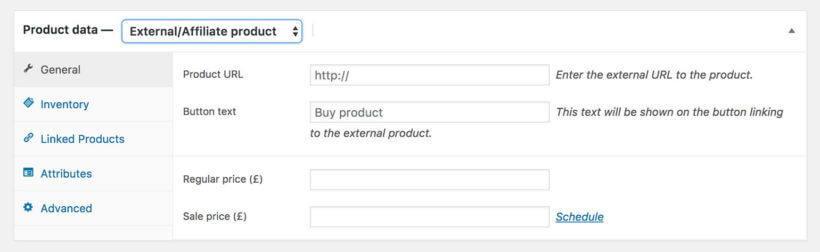
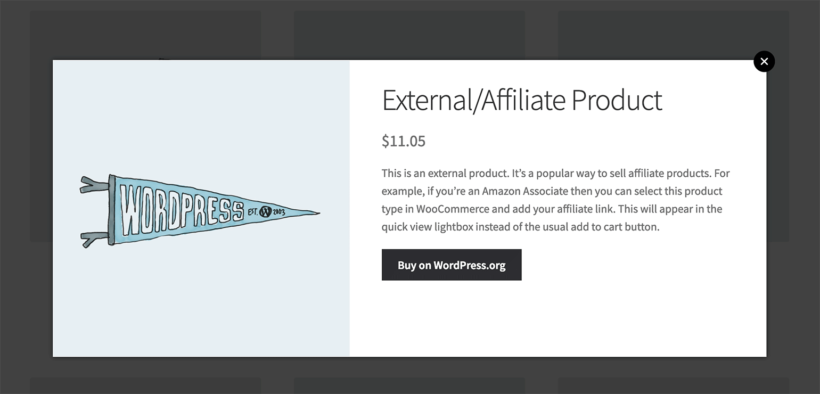
You can create affiliate product comparison tables without additional plugins. WooCommerce has a built-in External/Affiliate Products type. Add products in WooCommerce as usual. Select this product type. Add your referral link to the affiliate product.
WooCommerce Product Table fully supports External/Affiliate Products. Your affiliate links appear in the comparison table instead of add to cart buttons.
Use icons to allow more visual product comparisons
Make your WooCommerce product comparison tables more eye-catching. Add icons or content from other shortcodes. For example, use icons to represent different product features. Don't just list features using text.
This enables more visual product comparisons. Customers instantly see which features are available in each product.
Tip: To make this work, enable the 'Shortcodes' option at Products → Product Tables → Settings. This tells the comparison table to render code correctly. It won't just show the code.
Compare product variations in WooCommerce
So far, I've discussed creating WooCommerce comparison tables for actual products. You can also use these instructions to compare product variations instead.
To do this, use the option to list each variation as a separate row in the table. Do this on the 'Add to cart' page of the table builder (step 2c, above). Customers can use filters to refine the list of variations. They can then compare the ones they're interested in.
Get the WooCommerce product comparison table plugin
By listing product data in a structured table or grid view, customers make direct comparisons. They decide which product to buy. Customers filter products to see only items related to their purchase intent. Stock status and add-to-cart options appear directly in the comparison table. This will directly impact your conversion rate.
This post covered the exact steps to increase sales with a WooCommerce product comparison table plugin. Put this into practice now. Watch the sales come in.
The easier it is for customers to view and compare your products, the more likely they are to make a purchase. This ultimately makes your store a success. Do share in the comments how you end up having this set up on your site :)
While WooCommerce is widely used for simple stores, it’s also possible to create custom product boxes in WooCommerce. Keep reading to learn how to set up a ‘Build Your Own Product’ system.
Whether you want to sell bespoke vegetable boxes, luxury food, or gift baskets, build your own pizza or burrito, build a box, or something else, you can sell custom product boxes with WooCommerce.
Used creatively, WooCommerce is perfect for selling custom product boxes and bespoke orders. Customers can choose from a selection of products in different categories to order a custom combination that is unique to them. They can view the available box contents in a user-friendly list, tick the ones they want, and add to the cart – all from a simple one-page order form.
Pretty neat, right? Below you’ll see an animation showing a WooCommerce custom product box plugin in action:
Best of all, it’s surprisingly easy to create a WooCommerce build your own product system using the flexible Product Table plugin to list the available box contents. You won’t even need to write any code :)
This tutorial will cover everything you need to know to get started on your own WooCommerce custom product box site. We’ll show you how to install and set up WordPress and the required plugins and different strategies for organizing and listing the available box contents. We'll also share some handy design tips to tailor your 'Build your own product' ordering system to suit any kind of business.
Examples of custom product boxes in WooCommerce
First, let’s look at the types of WooCommerce build your own product that you can sell with WooCommerce. This will help you to understand the options and think about what you need for your own custom product boxes.
1. Build your own pizza, sandwich, wrap, burrito, or salad
A WooCommerce takeaway restaurant website might want to let customers choose fillings and build their own meals. This could be used to create a customized pizza, sandwich, sub, wrap, burrito, salad, or other custom product box.
For example, the item choices might work as follows:
Build your own pizza – choose your base, choose your sauce, choose your toppings, and choose your dips.
Create your own sandwich – choose your bread, choose your fillings, choose your salads, and choose your sauces.
Build a burrito website – choose your fillings, choose extras, and sides.
The WooCommerce build your own product website would have separate lists of the different types of items – one for each category. For example, the pizza example would start with a list of bases, followed by a list of sauce choices, and so on. Customers could add as many extras as they like to their custom product selection, all from one page.
2. Create your own custom gift basket product
There’s something depressing about buying a basket/hamper as a gift when you don’t get to choose what’s in it! Whether you’re buying a food, beauty, or gift basket, it’s far better to build your own gift basket with items that you know your loved one will enjoy.
You can use WooCommerce to develop a custom product box website selling gift baskets. This might involve creating 3 separate categories: one for the hamper or product box options; one listing all the foods/gifts/cosmetics/etc to fill the gift basket; and one with the padding and wrapping options. Customers can choose their options and add all the individual elements to the cart, creating their own custom gift baskets.
3. Custom meat or vegetable boxes with WooCommerce
The meat and vegetable box industry is growing rapidly as more and more people discover the benefits of local and organic food.
There are 2 main types of meat box or vegetable box websites:
Some companies use WooCommerce to sell the same weekly meat or veg box to all their customers.This contains whatever produce is currently in season, and customers can’t choose the contents. You may sell a choice of meat or vegetable boxes (e.g. Small and Large boxes), but there are no customization options for individual customers. The best way to set this up is to add each box as a separate WooCommerce product (e.g. meat box, fruit box, and vegetable box), with or without variations (e.g. size options). Display the products and/or variations in a table using WooCommerce Product Table. Use YITH WooCommerce Subscriptions to get recurring revenue, as customers can sign up to receive the same box weekly, fortnightly, or monthly (or at whatever regular intervals you choose).
The other type of vegetable box scheme allows customers can selecting the items to include in the box.Instead of ordering a box with pre-defined contents, customers can view a list of available items and create a custom product box in WooCommerce. The custom food box company will then fill each box individually, and deliver it to them. Continue reading this tutorial to learn how to set this up.
Before you start, make sure you’re clear on specifically what type of product box you’re building.
How will customers build their own WooCommerce product?
If you follow this tutorial to set up your own WooCommerce custom product box system, it will work like this:
The customer will be taken to a single page listing all the box items that are available to choose from, divided neatly into sections/categories.(Or if you prefer, you can divide the process among several pages.) Each section can have basic instructions above the list of products, for example: “Please choose 1 item from each section.”
Customers can select all the items they require.Standalone items will appear on their own row in the list. Mutually exclusive items will appear as dropdown lists so that customers can choose between them. If you use an additional Product Add-Ons plugin (more info about this below), then you can also add further options such as checkboxes and custom gift messages.
Once they have filled their custom product box, the customer can click the ‘Add Selected to Cart’ button.This will add all the products to the WooCommerce cart with the selected options.
Next, the customer can click through to view their selected products in the cart, view the total price, and make any changes.They can then access the checkout, enter their details and order the 'Build your own product' online.
As the store owner, you will receive email notification of each new order. You can then build the product box containing the items they have selected, and deliver it to them as appropriate.
What will my build-your-own WooCommerce site cost?
The great thing about selling WooCommerce custom product boxes is that you’ll be using the self-hosted version of WordPress. You will own your own data, and won’t have to pay high monthly charges for a hosted e-commerce platform. It also gives you more control over what your website will cost.
Here’s a list of the various elements of your WordPress WooCommerce website and what they might cost:
Your WooCommerce build your own product website
WordPressCMS (content management system) – this powers your overall website and is 100% free of charge.
WordPress theme – free (if you choose, you can purchase a premium WooCommerce theme for approx $65. However, the Storefront theme featured in this tutorial is free).
WooCommerce plugin – this adds the core e-commerce functionality to WordPress and is also free.
WooCommerce Product Table plugin – this paid-for plugin lists your products in a table layout so that customers can choose and customize the options to build their boxes.
Bonus: WooCommerce Product Options plugin– you only need this if the product variation options that come built into the free WooCommerce plugin aren’t suitable. The core WooCommerce platform lets customers select customization options from 1 or more dropdown lists. If you want further options, such as multi-select checkboxes or custom gift messages, then you’ll need the Product Options plugin too.
Any further plugins you choose to add extra functionality, such as ongoing subscription boxes.
Other costs
Web hosting(Ongoing cost) – There are many web hosts for various price ranges. If you’re outside of Europe, we recommend signing up direct with Kinsta or or WP Engine. It’s important to choose a managed WordPress host because they will ensure your website loads quickly, is reliable and you won’t lose sales due to downtime etc. They also come with extra features such as backups with one-click restores, and free staging sites. Scrimping on hosting is a false economy.
Payment gateway feesIf your customers will be paying for their WooCommerce build your own products online, then you will need a payment gateway. This will take a percentage of each sale in fees. PayPal is the easiest payment option to set up and charges are just a few percent. If you will be receiving a lot of online orders then I’d recommend a credit card processor with even lower fees such as Stripe.
Total up the options you’ll need to give you an idea of the cost involved. It’s amazing just how inexpensive it is to set up a website for your business creating your own products.
With those costs clear, we’re nearly ready to cover how to actually create a custom product box website with WooCommerce. But first, let's have a quick look at 2 websites that are already using WooCommerce and product tables to sell 'Build your own' products.
Case study #1 - using WooCommerce to sell custom cosmetics product boxes
Inspire Cosmetics uses the WooCommerce Product Table plugin to sell custom product boxes of cosmetics. They've built a multi-step page where customers are taken through an intuitive journey to build their own product box. First, you choose an experience box. Second, you choose the experience box contents from 2 tables listing the cosmetics products. Third, you complete your order via the WooCommerce cart and checkout.
They used the Beaver Builder WordPress page builder plugin to create the tabbed layout. To boost performance, each tab links to a separate page but the customer has the illusion of remaining on one page for the entire process.
They also use the WooCommerce Quantity Manager plugin to ensure that people select the correct quantity of items for their experience box. This allows them to sell different-sized boxes with the correct validation rules.
Case study #2 - using WooCommerce to sell custom product baskets for pets
Barks and Squeaks uses WooCommerce Product Table to sell create your own product gift baskets for pets and their owners. Customers can quickly choose variations and create a custom product box containing multiple WooCommerce products. You can use the "Who Is It For?" filter above the table to narrow down the list. This speeds up the buying process.
Now you've seen the WooCommerce design your own product system in action on 2 real websites, I'll show you how to set it up yourself!
How to create a WooCommerce custom product box website
Building a 'Build your own product' system from scratch can be a daunting proposition, but WordPress and the right plugins make it really easy.
This section will show you everything you need to know: you’ll learn how to set up WordPress and an appropriate theme, along with the plugins you need. Then, I’ll show you how to use those WooCommerce plugins to set up your product categories and tables, and then create your own product page listing the box contents.
Step 1 – Set up WordPress
First, sign up with a good WordPress web host such as Kinsta or WP Engine and follow their instructions to install WordPress.
Once you’ve logged into the WordPress admin for the first time, go to Appearance → Themes and install a theme. Themes are the “templates” on which all WordPress sites are built, and there are hundreds of thousands to choose from, so you can make your site look just how you want.
You can either buy a premium theme and install it, or use a good quality free theme such as Storefront. All the product images in this tutorial and the accompanying video use the Storefront theme.
If you don’t like the design of Storefront, check out its many child themes which offer a good choice of themes for your WordPress website design. There’s even a child theme designed specifically for food websites!
Step 2 – Install WooCommerce
When you first activate WooCommerce, you’ll be taken to a Setup Wizard. This will walk you through the main steps to creating your online store. For example, it will auto-create your main pages such as the shop page, cart, and checkout. You can choose your tax and shipping settings and set up payment gateways. You can then use the official WooCommerce documentation to make any further changes to the overall setup of your online shop.
Step 3 – Create ‘build your own product’ categories
Once you’ve set up WooCommerce, it’s time to create the categories that the custom product box ordering system will be divided into. First, write them down on a piece of paper to make sure it’s logical and user-friendly.
Think about the best way to group product elements. For example, if you’re creating a ‘build a gift basket’ website then you might want 3 categories: one for the box/basket, one for the contents, and one for finishing touches such as padding and bows.
Remember, you’re creating a tailored user experience: you need to take the customer on a journey to create the custom product box, making one decision at a time.
Once you’ve planned a category structure, go to Products → Categories in the WordPress admin. Create as many categories as you need.
Step 4 – Plan your products
Now, it’s time to create some products. Each of the items that customers can choose as part of the "build your own" process will be a ‘product’ in WooCommerce. Again, it’s best to plan your products before adding them to the website:
First, write a list of all the separate items that customers will be able add to their box when building the custom product.Structure the list into the categories you created a minute ago. For example, if you’re building a ‘design a custom pizza’ website then your list should include things like bases (deep pan base, Italian base), sauces (tomato sauce, spicy garlic sauce), toppings (pepperoni, ham, meatballs, mozzarella, goat’s cheese), and so on.
Next, decide whether to create each item on the list as an individual product, or to group them into variations.I’d recommend using individual products for standalone items, and variable products for items that the customer has to choose between. For example:
In the pizza example, the customer only needs a single pizza base, so you would add a single variable product called ‘Pizza Base’. You might then add 2 variation options to this product: ‘deep pan’ and ‘Italian’. Later, I’ll show you how to display these on an order form with a dropdown so that customers can select a base from the 2 options. (NB: with variable products, it will still sometimes be possible for customers to choose more than 1 option if they want to. However, using this format will discourage them from doing so).
For other types of items, such as pizza toppings, the customer can choose as many as they like. It’s not an ‘either/or’ choice and the toppings aren’t dependent on each other. You should add each of these items as individual products, not as variations.
Tip - Use Add-Ons for extra product options
If variations aren’t flexible enough then you can add extra product options using the WooCommerce Product Options plugin instead. This has extra options such as check boxes, radio buttons, the ability for customers to add some custom text, etc.
Step 5 – Add the products
Once you’ve worked out all the products that you’ll need to create, and decided on the format, it’s time to add them to WooCommerce. Follow this process for each product:
Go to Products → Add New in the WordPress admin.
Add all the product data such as title, description, category, and upload a featured image.
In the ‘Product Data’ section, choose a product type:
Select ‘Simple Product’ if you’re creating a standalone item that can be added to the eventual WooCommerce build your own product without variations. Add a price, plus choose the stock options if you want to use stock control.
Select ‘Variable Product’ if you’re creating several mutually exclusive items for customers to choose from (like my pizza base example in the previous section). This is slightly trickier to set up – please follow the instructions on creating attributes in the WooCommerce documentation. Once you’ve created your attributes, tick the ‘Use for Variations’ box and go to the ‘Variations’ tab. You can then select your attributes and create the variations (one for each options) with their own pricing and stock control.
If you’re using WooCommerce Product Options to provide extra options, then you can use these with the Simple or Variable product type. Add your options under Products → Options.
Finally, click Publish to add the product to the custom product box website.
Build Your Own Product Table with Simple Products & Variations
Build Your Own Product Table with Extra Product Options
Now comes the fun part!
Step 6 – Create a ‘build your own product’ page
It’s time to list everything on a single page or order form, so that customers can select items and build their own custom product box. You’ll need the WooCommerce Table plugin for this:
Create your first tableThe product table builder will open automatically. Go through each page to choose details such as which products to display, and which columns to include. Copy the shortcode from the final page of the table builder - you'll need this for Step 6.
Create more tablesGo to Products → Product Tables and create a different table for each section of the 'Build your own product' system. For example, you might create a different one to list the products from each category.
Create a page (Pages → Add New) which you will use for the custom product box online order form. Add whatever information you like to this page, for example instructions and any rules/restrictions that customers should follow in selecting their products. (E.g. you might add instructions like “Choose 1 product from each category”.)
Divide the page into sub-headings – 1 for each category. For example, a ‘build a custom pizza’ website might need H2 subheadings for Base, Sauce, Cheeses and Toppings.
Insert tables onto the pageNow insert the product tables that you created in Steps 2 and 3 into the relevant parts of the page. To do this, either use the 'Product Table' Gutenberg block or the shortcode that you copied earlier.
The end result will be a page listing each section of your 'Build your own product' order form, like this:
Split the 'build a box' process across multiple pages
In the previous section, you learned how to add multiple product tables to a single page. Alternatively, you can split the 'build your own custom product' ordering process across several pages.
Depending on what you're selling, this can have several benefits:
If you have a small selection of products then it makes sense to keep everything on one page. In contrast, if you have a lot of products or options then it's good to use multiple pages.
It can also be better for performance, as fewer products are being loaded all at once (although WooCommerce Product Table does come with a lazy load option, which helps with page load times).
How to set it up
To create a multi-step 'Build your own product' process, it's important to make things as easy as possible for the customer. The process must be simple and intuitive. For example:
You might add a 'Next Step' button under each product table, intuitively directing users to the next page after they add products to the cart.
For an even more seamless user experience, install the free WooCommerce Add to Cart Custom Redirect plugin. List your basket/box products on the first page of the order process, and use this plugin to redirect each one to the page where you've listed the box contents products. Users will automatically be redirected to the correct next page, depending on which box they choose. This is an excellent option if you offer different content products for each box. (Tip: To use this plugin with WooCommerce Product Table, you must ensure that the Ajax cart option is disabled. The redirection only works if the page refreshes after adding a box to the cart.)
Bonus options
By now, you know how to create a WooCommerce store where customers can select multiple items to create a build your own custom product box. Before we finish, I’ll tell you about some plugins that can further enhance it.
Add 'quick view' links
So far, you've learned how to list the components of your 'build your own' WooCommerce products on a single page, with an add to cart column listing all the options. That's fine if you have a small number of options for each product. But what if you're creating more complex custom product box systems systems, with many variations or product add-ons? You can see from the screenshots above that the product list will start to look cluttered if you have too many options.
If this applies to the build your own products in your ecommerce store, then WooCommerce quick view is the solution:
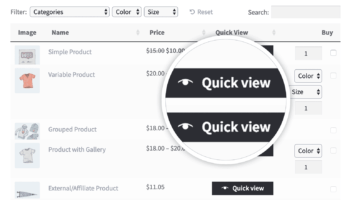
The WooCommerce Product Table plugin featured in this tutorial is designed to work with our other plugin, WooCommerce Quick View Pro. Use the two plugins together to add a Quick View column to your product tables. Customers can use this to view more images, extra information, choose variations and add to the cart from a lightbox popup.
Quick view is a great way to tidy up your custom product box ordering pages without having to take customers to a separate page for each product. This keeps them within the flow of building their own product and avoids distractions. (Tip: If you install WooCommerce Quick View Pro then I recommend using WooCommerce Product Table to disable the links to individual product pages.)
Set quantity rules and defaults
Out of the box, all your WooCommerce products will have a default quantity of 1. Customers can add as many of each item to their custom boxes as they like.
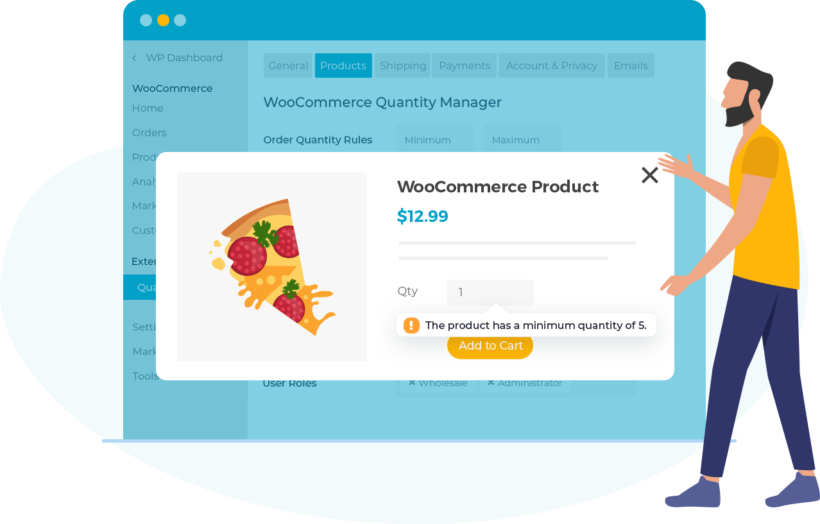
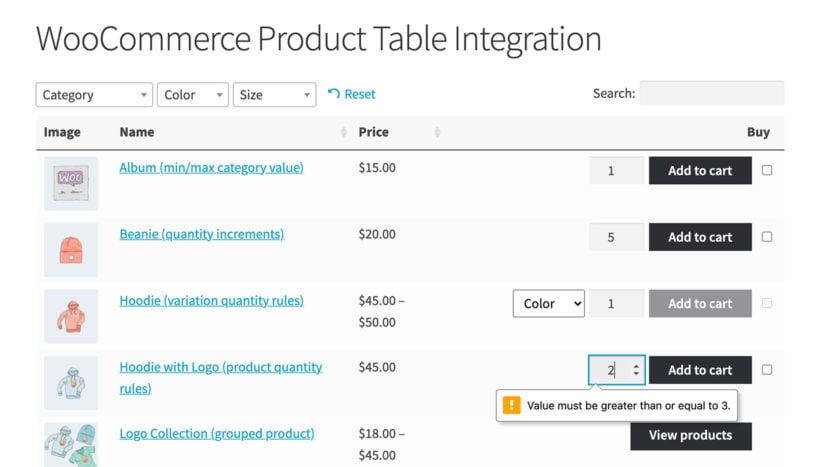
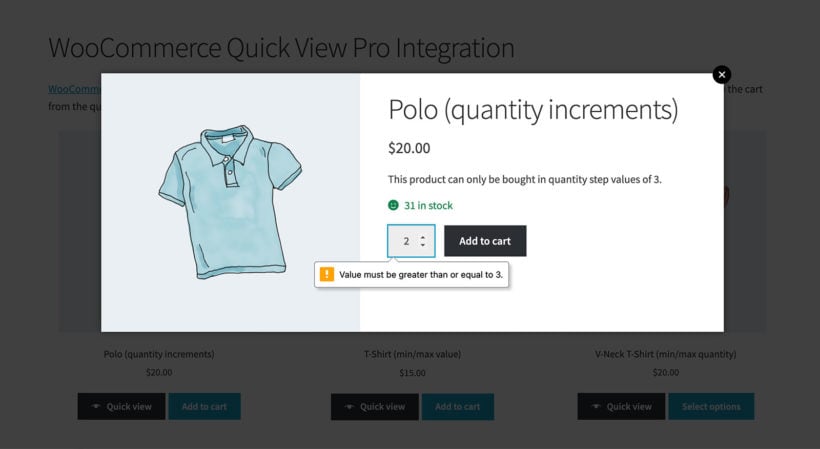
Many 'build a box' schemes need more control over product quantities. Specifically, they need to ensure that customers add the right number of items from each category to their boxes. You can easily do this with the WooCommerce Quantity Manager plugin.
How it works
Let's say that you have created 3 sections for your WooCommerce built-your-own-product system: Box, Contents, and Finishing Touches. You can add minimum and maximum controls like this:
Box - Set the minimum and maximum quantity for this product to 1.
Box contents - If you want customers to choose up to $30 worth of items, then set the maximum category value to $30. Alternatively, set a minimum and maximum quantity so that customers have to choose a certain number of box items instead.
Finishing Touches - To let customer choose up to 2 decorative options for their custom product box, set the maximum category quantity to 2.
Where possible, the WooCommerce Quantity Manager plugin will stop customers from adding the wrong quantity in the first place. For example, the quantity field for the 'Box' product won't let customers select more than 1.
If the customer tries to add too many products from the box contents category, then they will see an error. The error will be helpfully worded and will advise them what they need to change.
If the WooCommerce cart doesn't contain enough products from a certain category then again, a helpful error will ask them to add more.
To improve user experience, I recommend adding clear messages about the quantity requirements to the build-your-own-product page. You can see an example of this in the screenshot above.
Sell different products for each box or basket
So far, we've assumed that you will be offering the same box contents products to everyone, regardless of which box they select.
If you'd rather sell different products depending on the custom product box, then you can do this too.
Simply create a separate category for each gift basket and use WooCommerce Product Table to create a table listing all the products for each box. Put the box itself in the same category, and use the sort options in WooCommerce Product Table to list the box first. Use the free Product Dependencies plugin to prevent people from buying the contents products unless they have also added the correct box to their cart.
Can I add a fixed price for each box option, instead of charging separately for the contents?
Some people use WooCommerce Product Table to create a custom product box website with a fixed price for each box. For example, they might offer Box A for £10 and Box B for £20. Each box contains a different number of products.
How to sell fixed price product boxes in WooCommerce
Install WooCommerce Discount ManagerFirst, install the WooCommerce Discount Manager plugin on your WordPress website.
Create a fixed price dealNext, go to Marketing → Discounts and click 'Create New'. Select the 'Buy X products for a fixed price' discount type.
Choose the discount detailsSelect which products customers can combine to get the fixed price offer, for example your 'box contents' category. Also select the number of items that they must add in order to be charged the fixed price.
After you have saved the fixed price discount, customers can
Repeat the above steps to create as many fixed price deals as you like. For example, you might create one fixed price to sell quantities of 5, another for quantities of 10, and so on.
If there are any quantities that you don't want customers to be able to buy (for example, quantities of less than 5) then you can use the WooCommerce Quantity Manager plugin to prevent this.
Can I sell box subscriptions, and let customers change their order each week/month?
This is possible, with a bit of extra work.
1. Create your subscription and box contents products
First, install YITH WooCommerce Subscriptions and create a subscription product for each box.Create a separate category for these products. Use WooCommerce Product Table to list products from this category on a public page. Customers can view the subscriptions, sign up and pay online. (Note: The subscription product is just for the ongoing subscription/membership plan - do NOT include options for choosing the box contents as part of the subscription product. You'll create separate products for the box contents next.)
Next, create categories for the box contents products.Add each option for the box contents as a separate product, or as variable products with a choice of options. Decide whether or not to charge for these products:
If all products are included within the ongoing subscription plan, then leave the price of the box contents products as 0. This is because the customer has already paid via their subscription and the products are essentially free.
If customers have to pay for each item in addition to the subscription cost, then add prices for each product.
Alternatively, if you include some products within the basic subscription and charge extra for more expensive items, then you can do that too. If the customer selects chargeable items then they will make a one-off payment for these at the checkout, otherwise they can choose their box contents and check out for free.
Create a new product page for choosing the box contents. Use WooCommerce Product Table to list the products from these categories.
Finally, use the AutomateWoo plugin to automatically email your customers at regular intervals, reminding them to order the box contents for that subscription period.The emails should contain instructions on how to log into their account and order their box contents for that week/month.
2. Restrict access to the box contents products
Restrict what subscribers can order, and how often If you want to control how many items customers can order for their box, then you can add the WooCommerce Quantity Manager plugin.
Prevent non-subscribers from ordering box contents products To prevent non-subscribers from ordering the monthly/quarterly box, you need to restrict the page where you've listed these products. Do this using the WooCommerce Protected Categories plugin. Use it to restrict them to logged in customers.
Can customers change their box each week?
Some WooCommerce subscription box websites like to sell subscriptions for a fixed weekly/monthly cost, while giving customers the option to choose the box contents each week. Unfortunately there is no straightforward way for the customer to change their box each time. The way WooCommerce Subscriptions works is that they subscribe to receive the same products each time.
My suggestion
Lots of people have asked us how to do this, so here's a suggestion:
Use YITH WooCommerce Subscriptions to sell the subscriptions without any actual products (i.e. box contents) associated. For example, you might have a product called 'Weekly Box - 10 Items'. This would bill the customer a fixed amount each week.
In a private area on your site (which you could create using our WooCommerce Protected Categories plugin), you could add the products that are available each week. Create a separate category for each subscription option. You would then use the WooCommerce Quantity Manager plugin to restrict the number/value of items that the customer can order from that category. Set the price for each product to 0.00 so that customers can order the products each week without paying extra. Or if a product has a surcharge on top of their fixed subscription amount, then you can set this as the product price and they must pay this when they check out that week.
Use the AutomateWoo extension to automatically email the customer each week with a separate email for each type of subscription. The email should include details of how to access the hidden area where they can choose their products for the week, and the deadline for ordering. Each week, the customer will log into their account, view the hidden category containing the products that are available on their subscription, select them from the product table, and check out in the usual way.
As with all subscription box services, if the customer doesn't order specific products before the weekly deadline then you would choose the items for them.
That's a lot of plugins!
I realise that this method involves combining several plugins. They are all reputable plugins which we have tested to work well together. If you don't wish to code it from scratch yourself (which would be very complex - and therefore expensive) then we believe this is the best method for allowing customers to choose different contents for their subscription boxes each week.
Can people build their own custom product box without having to pay online?
Yes, you can do this. When you set up WooCommerce, you need to choose one of the offline payment options. For example, you can enable payment by check or invoice. You can reword these to anything you like, so your customers won't see the word 'check'.
They can then place the order in WooCommerce without having to pay. You will receive an email notifying you of the order. This will contain details of the selected products and the customer's contact details. You can then arrange payment offline in whichever way works for you.
Get building! How do you use WooCommerce custom product boxes?
And there you have it! You now know everything about creating a WooCommerce build your own product boxes page. Plus, you know doing this can be quick and easy using WooCommerce and the WooCommerce Product Table plugin.
WooCommerce Product Table makes it easy to create custom ordering pages for your build-your-own-product systems.
All of these plugins come with a 30-day money back guarantee, so you can try them on your WordPress site risk-free!
Designing your own site doesn’t have to be hard, no matter what sector you work in. With this simple tutorial, and some help from the most powerful e-commerce platforms on the web, you’ll be able to set up a beautiful, easy-to-use site.
I’d love to hear how you’ve achieved a build your own box system using WooCommerce. Did you use the plugins I’ve mentioned in this tutorial, or are there any good ones I’ve missed? Please add your comments below, and include a link to your site where we can see it working 😀
Easy Digital Downloads Table Plugin is one of the top WordPress e-commerce plugins. Designed specifically for selling digital products, it's perfect for selling downloadable documents, ebooks, audiobooks, and music. The free Easy Digital Downloads plugin has a grid-based layout for displaying downloadable products.
Today, I'll introduce you to our Easy Digital Downloads Table plugin - Posts Table Pro. It provides a flexible shortcode to list Easy Digital Downloads products in a searchable, filterable table layout.
Keep reading to learn how an EDD table plugin can help you to sell more digital products in WP. I'll provide step-by-step setup instructions, with everything you need to create an Easy Digital Downloads product grid. Plus, I'll introduce you to some premium add-ons and functionality that can take your EDD product tables to the next level. There's even a video where you can follow exactly what I'm doing. Let's get started!
Why do I need an Easy Digital Downloads table plugin?
The Easy Digital Downloads grid layout includes information such as a large product image, product name, star rating, short description, and link to the single download page. It's fine for many types of Easy Digital Downloads stores, whereas others can make more sales by adding an Easy Digital Downloads table plugin.
Some WordPress websites are better off with the standard Easy Digital Downloads product grid layout, while others benefit from an EDD table view. Think about the best way to list the type of digital products that you sell.
Benefits of an EDD table layout
Ideal for WooCommerce stores with lots of downloadsThe search box, column sorting, and filters make it easier for customers to find the downloadable products they want.
Create a one-page Easy Digital Downloads order form
The default Easy Download Downloads product grid layout doesn't include the 'Add to Cart' buttons. Instead, customers must click through to the single download page before they can buy. You can speed up the buying process - and increase your sales - by creating a one-page order form. Customers can add as many downloads as they like to the shopping cart from the product table page, and complete their purchase using popular payment gateways like PayPal and Stripe, with the option for recurring payments for subscriptions and other premium add-ons.
Supports embedded audio and video Customers are more likely to buy your downloads if they can view audio and video sample tracks. You can add embedded audio and video players directly in the Easy Digital Downloads product table.
Add extra product data about your downloads The great thing about the Posts Table Pro table plugin is that it supports extra data such as Easy Digital Downloads custom fields and taxonomies. This lets you display extra product data in the Easy Digital Downloads table view. For example, you might create a custom taxonomy for 'Artist' and list it as a column in the table and/or as a filter dropdown. You could also store information in Easy Digital Downloads custom fields, such as an ebook's ISBN number or barcode. Again, this can be displayed as a column in the EDD table layout.
And there's more!
More digital products per page A table-based Easy Digital Downloads product list can include far more products per page. This makes it easier for customers to make buying decisions at a glance. They don't have to scroll through multiple pages of products. The standard layout includes big images, with no option to change the image size. The EDD table view can show or hide the physical products image, and you can also choose the image size.
Support for variable product prices As well as Add to Cart/Buy buttons, the Easy Digital Downloads product table automatically supports price variations in EDD. Customers can select a price option before adding to the cart.
What types of stores need an EDD table view?
Next, we'll look at some use cases. These will help you decide whether an Easy Digital Downloads table plugin is the best way to list your own products.
Digital music catalog
An Easy Digital Downloads shop with hundreds or thousands of products can benefit from an EDD table plugin. Instead of listing the products from each category in a long grid layout, an EDD table makes it easier and quicker for customers to find music they like.
For example, they can type a keyword in the search box or click on any column header to sort and find an artist they like. They can use the filter dropdowns above the Easy Digital Downloads table to refine the list and view the specific music products they're interested in.
You can embed actual music players directly in the Easy Digital Downloads table view. Just add the WordPress audio shortcode to any field in the table and it will appear as an embedded audio player. Customers can listen to a sample music track or playlist to check if they like it before buying. This is a fantastic way to increase your music sales.
Easy Digital Downloads product comparison tables
An EDD table view lets customers compare products side-by-side and make easy buying decisions. Customers can use the search box and filter dropdowns to instantly filter out the downloadable products they don't want. They're just left with the products they're interested in.
The extra data in the Easy Digital Downloads table columns makes it easy to compare products. For example, the EDD product comparison table might include columns for price or extra product data such as genre. Customers can filter the EDD table to find products that meet their criteria. They can then buy directly from the table, without having to visit the single product page.
Now you know why you need an Easy Digital Downloads product grid. Next, I'll give you a real-life case study so that you see it in action on a genuine ecommerce platform. After that, I'll show you how to set it up on your own ecommerce store.
Case study - An Easy Digital Downloads table plugin for Fascinated Sound
Fascinated Sound sell sound effects and music via their EDD website. They use Posts Table Pro to list 600+ downloadable audio products in an Easy Digital Downloads table view.
You can learn more about how they did it in our separate tutorial about WordPress audio plugins. Alternatively, read on to learn how to list Easy Digital Downloads products in a table on your own online store.
How to create an Easy Digital Downloads product table
First, get the Posts Table Pro plugin. It lets you create all sorts of tables in WordPress, but we'll be using it as our EDD product table plugin.
Use the instructions in the confirmation email to install and activate the plugin.
After activation, the Posts Table Pro setup wizard will automatically open. It will guide you through entering your software licensing key and creating your first table.
Follow the table wizard and customize the table that works best for your EDD store. Some tips:
Choose 'downloads' on the content type page. This tells Posts Table Pro to list Easy Digital Downloads products in the table.
Once you've completed creating your table with the Post Table Pro plugin, the setup wizard will confirm that you're finished and provide instructions for inserting the table onto your WordPress site. You can choose to use the "Post Table" block in the Gutenberg editor or copy the EDD advanced shortcodes from the table builder and paste it anywhere on your site, giving you the flexibility to place the table on any page regardless of its content.
Available columns in the Easy Digital Downloads table view
To create a custom product table for Easy Digital Downloads, users can take advantage of Post Table Pro's table builder, which allows for easy customization with a drag-and-drop column editor. The generator offers a variety of column options to choose from, eliminating the need to know the correct syntax or use code-style column names. This intuitive approach makes it simple for users to create custom product tables without having to have technical expertise.
Recommended EDD table columns
Image: displays the primary product image, and you can select the image size.
Title: shows the name or title of the downloadable product.
Content: displays the main content of the product, which can be the full content or a set number of characters. However, if you're using a custom layout or page builder, this column may not look good in the EDD table. In that case, you can use the Excerpt column instead.
Excerpt: shows a brief description summarizing the product, which is recommended over the full content for the Easy Digital Downloads table.
Price: displays the main price for the product, including variable prices if you've added them. The table will show the default price for variable products.
Download Category: displays the category or categories of the download, which you can click on to filter the EDD table by category. You can also disable these links or set them to link to the download category page.
Download Tag: similar to the Download Category column, this displays tags instead and is another useful way to group and filter download products in the table.
The Easy Digital Downloads table can also list any custom field or taxonomy as a column. For example, you can create custom fields with a plugin such as Easy Post Types and Fields. This is ideal if you want to show Easy Digital Downloads custom fields or taxonomies on the front end of your website.
Other possible EDD product table columns
Product notes: If you've added special notes or instructions to appear on the purchase receipt for the product, then they will appear in this column of the table. For example, you might want to mention delivery timescales or methods here. (E.g. "You will receive the download via email within 1 hour of purchase.")
Author: The WordPress user who created the downloadable product. Not relevant for most Easy Digital Downloads tables, but I've included it just in case.
Date: The Publish date of the downloadable product. Again, you probably don't need this but it's there if you do. Change the date by editing the Publish date in the 'Downloads' list within WordPress.
Variable prices: This lists the different prices for any downloads in the tab
le with variable pricing. As you can see from the screenshot, this isn't formatted in a very user-friendly way. The data comes straight from Easy Digital Downloads and there are no options for configuring it. You're probably better off displaying the variation prices in a button column, or just showing the default price in the cf:edd_price column.
Download sales: Total number of sales you've had of each download in the table.
Download earnings: Total earnings. This isn't presented in an ideal format. For example, if a product has had $27,200.54 worth of sales then this will be displayed as '27200.540000'. There are no options to change this, other than custom coding - but you probably don't need this column anyway.
Download files: This column shows the link of the download file(s) in plain text. (If you want to add a clickable link then you'll need to add this manually as a custom field column instead.)
How to add a 'Buy' button to the Easy Digital Downloads table
You might notice that the list of EDD table columns doesn't include a 'Buy' or 'Download' button.
It is possible to add a Buy button to the Easy Digital Downloads product table. This doesn't happen automatically, but is pretty easy to set up yourself:
Use a plugin such as Advanced Custom Fields (free) to add an extra field to the 'download' post type. Call it whatever you like - I called mine 'edd_button'.
Now go to the Add/Edit Download screen for the download that you want to add a Buy button for. You'll see the field that you just created lower down the page.
In the right-hand column, you'll see a 'Purchase Shortcode' field where you can copy an EDD advanced shortcodes for the Buy button. This will look something like: [purchase_link id="8381" text="Add to Cart" style="button" color=""]
Copy the EDD Purchase Shortcode into the custom field you just created and Save the download.
Now, you need to add the new custom field as a column in your Easy Digital Downloads table. To do this, go to Post Tables → Tables, click to edit the table, go to the columns page, and add a custom field column. This will prompt you to enter the name of the custom field.
You must also go to Post Tables → Settings and enable the 'Shortcodes' option to display the button correctly in the table.
Simplifying digital product purchases with Easy Digital Downloads
Now view your Easy Digital Downloads product table. You'll see the extra column, complete with a button to add the download product option to the checkout page. If you're using EDD product variations then the variable pricing options will appear before the Buy button. Nice!
Note: The wording and styling of the buttons in the Easy Digital Downloads table are inherited from EDD and your theme. They looked fantastic straight away in the WordPress themes we tested with, e.g. Storefront. If you want to change how they look then you'll need to add some custom CSS.
Easy Digital Downloads has an All Access extension which you can use to sell all your downloads for a fixed discounted price. There are a couple of ways to sell this from your Easy Digital Downloads product table. You can even sweeten the deal by offering additional discounts with the use of discount codes and coupons, which can be easily applied on the product table page.
Easy Digital Downloads extensions let customers choose whether to buy individual downloads, or whether to upgrade to the All Access Pass (which means more revenue for you)!edd table
You could manually add a link to the All Access Pass product page or a 'Buy' button for the All Access Pass underneath the main add to cart button for each product in the EDD table.
Alternatively, you could add a right-hand column to the page with your Easy Digital Downloads table. Use it to display a widget promoting the All Access Pass.
Personally, I would recommend option 2 because the All Access Pass applies equally to all your digital downloads, so you don't need to repeat it for each one individually.
Listing EDD downloads from a specific category
If you want to display download products from specific categories in your Easy Digital Downloads table, it's easy to do so. By setting your table to show products from one or more specific categories, you can filter out irrelevant products and display only the ones that are relevant to your audience.
Additionally, with Post Table Pro's table builder, you can easily select specific downloads to include in your table. This allows you to curate a table that showcases only the products you want your audience to see, making it easier for them to find what they're looking for and ultimately leading to more conversions.
Adding filters to your Easy Digital Downloads tables
While customers can use the search box or sort columns by default in Easy Digital Downloads tables, they don't have the option to filter results. However, with Post Table Pro's table builder, adding filters is easy. The filter dropdowns can be added above the table and customized to fit your needs. With the ability to add as many filters as you like, you can make it simple for customers to narrow down their search to find exactly what they're looking for.
The filters available are extensive and can include categories, tags, authors, and any custom taxonomy that you've created. With the use of filters in Easy Digital Downloads extensions, you can improve the user experience for your customers and help them easily find and purchase the products they need.
Here's an example of an Easy Digital Downloads table with category and tag filters:
Links in the Easy Digital Downloads table
By default, the EDD product image and name will link to the single download sales page. This is where customers can see full details of the downloadable products, such as the full description and reviews.
If you don't want to link to the product detail page, then you can disable links in the Easy Digital Downloads table layout. Do this by going to Posts Tables → Settings, finding the Links option, and typing "none" in the box.
Giving away free downloads
So far, we've talked about how to sell downloadable products in a table layout.
However, some Easy Digital Downloads sites like to give away free downloads. You can do this by adding Free Downloads of Easy Digital Downloads extensions. This will work with the instructions in this tutorial.
Can I hide my EDD products or make them private?
Posts Table Pro lists your Easy Digital Downloads products in a table and doesn't affect their visibility. To discover an easy way to password protect EDD download categories or hide them from public view, check out our other tutorial:
When you sell digital products online, it's important to make sure you meet European tax rules. This applies if you sell to customers in the EU - even if you're not based in the EU yourself.
You can easily do this with the Easy Digital Downloads EU VAT plugin. This is designed to help any EDD store to charge the correct VAT to each customer and provide all the evidence you need.
As you can see, an Easy Digital Downloads table is an ideal way to list EDD products. It's really flexible and you can choose which columns of product data to include, add filters, and more.
To create your own EDD tables, get Posts Table Pro today. Follow the steps in this tutorial and start increasing your download sales.
Lots of people use WooCommerce to sell user-specific products. For example, you might want to sell different apparel or merchandise to sports teams or soccer clubs. Maybe you privately sell uniform products to to schools. You might sell branded company workwear with the company's logo, and need a hidden area of WooCommerce for each customer.
Perhaps you sell the same products to each customer, but with different prices. Maybe you're a health practitioner or service provider, and only sell to existing patients rather than the general public.
Whatever your reason for creating WooCommerce user-specific products, I'll show you how to do it. And the best thing is, it's really easy and you don't need to edit any code!
This simple plugin lets you add hidden product categories to any WordPress WooCommerce store. You can have a separate category for each customer, each with their own user-specific items.
Your sports teams, clubs, companies or other types of customer will use a simple password to log into their organization's hidden category. Or if you prefer, you can automatically restrict your user-specific categories so that each one is only visible to a specific logged in user. Once they've unlocked their private WooCommerce category, they can view and buy their user-specific products. No one else will even know that their hidden products exist!
You can also use this plugin for user-specific pricing in WooCommerce. Simply follow the instructions in this tutorial, and add a different version of each product - each with its own unique price - to each customer's category.
Tips:
If you need a way to quickly clone products for each organization, then the free Duplicate Posts plugin is perfect.
If you're cloning products and want to manage inventory across each version of the product then we recommend the Group Stock Manager plugin. This lets you share stock levels across multiple products.
Let's get started.
Before you follow this tutorial
Before you start, you should have a WordPress website set up with the free WooCommerce plugin installed. The official WooCommerce documentation is a good starting point.
You can then use this tutorial to create your WooCommerce user-specific products and categories.
How to create user-specific product categories in WooCommerce
Configure the plugin on the WooCommerce Protected Categories settings pageFirst, get the WooCommerce Protected Categories plugin. You'll use this to create your hidden customer-specific products.
Secondly, install the plugin and enter your license key on the plugin settings page. You'll find this in the order confirmation email.
Also on the plugin settings page, DO NOT tick the boxes to show your protected categories and products in the public parts of your store. This is important, as your WooCommerce user-specific products should only be visible to sports teams and organizations with the correct password.
Next, go to Products -> Categories in the WordPress admin. Create a separate category for each sports club/organization that you wish to sell user-specific products to. Tick 'Protected' and either password protect it, or restrict it to a specific user.
If you want to provide multiple categories for each organization, then you can do this by adding 1 or more sub-categories. You can create nested structures with as many sub-category levels as you like. As long as you set all the sub-categories to 'Public' and select the organization's main password-protected category as the 'Parent', all the sub-categories and their products inherit the same protection. Organizations only need to login to their account or enter a password once to unlock their whole hidden area.
Now add your user-specific products
Now, you can add all the user-specific products. For each one, tick the appropriate product category. Leave the product visibility settings as the default. The plugin will automatically protect them with the same password(s) as the protected category.
Lastly, create a user-specific category login page. This depends on whether you've set up password-protected or user restricted categories:
WooCommerce password protectedcategories. Add the shortcode [category_login] to any page of your site. All the sports teams/organizations will use this login page to access their user-specific products. The plugin will redirect them to their own personal category when they enter the password.
Now, link to this page in any way you like, for example from your navigation menu, website header or footer. Or you can keep the login page hidden and email it to your customers instead.
User restricted categories - Add a link to a front end login page. This could be the main WooCommerce 'Account' page, which displays a login form to logged out users and guests. Or you could install a front end login plugin such as Theme My Login. Either way, users can use this page to login to their account and unlock their hidden products.
Finally, you can instantly redirect customers to their personal WooCommerce store by installing the free Peter's Login Redirect plugin. This has a handy feature to add a custom redirect URL for each individual user. Simply add the URL of their hidden WooCommerce category.
And that's it!
In 7 simple steps, you have created WooCommerce user-specific products and categories.
The sports teams or other types of organization will visit your website and access the login page. They will enter the password for their user-specific category, or log in to their WordPress user account. They will be redirected to the correct hidden category containing their user-specific products.
Each organization's category and their products are hidden from public view, so only people with the correct access details can see them. This includes hiding them from search engines and other places that people might accidentally find them.
Once your customers have found their user-specific products, they can add them to the cart and checkout using the standard WooCommerce checkout. You can use other plugins to add multiple payment gateways, shipping options, and everything else you need to make your store a success.
Bonus tip #1 - Get more sales with a WooCommerce product table layout
Before we finish, I'll tell you about another great plugin for selling WooCommerce customer-specific products.
Our bestselling WooCommerce Product Table plugin lists products in a space-saving table view. It's an ideal layout for user-specific products because you are selling to the same customers on a regular basis. They're already familiar with your products and would rather order quickly from a one-page WooCommerce order form. They don't want to scroll through large images and multiple pages of products.
The WooCommerce table view lets your customers see all their branded products in one place. They can quickly search, sort and filter the table to find what they want. The multi-select checkboxes make it easy to tick as many products as they need. Finally, they can click a single button to add everything to the cart.
WooCommerce Product Table integrates beautifully with WooCommerce Protected Categories. Once the customer has unlocked their user-specific category, their own personal products will appear in the product table. This means that you can create a product table listing all your products, and each customer will only be able to see their own personal products. Neat!
Bonus tip #2 - Sell customizable products with Product Add-Ons
Many WooCommerce stores sell customizable client-specific products. For example, perhaps you sell sportswear or workwear and the client needs to upload their logo. Maybe the client wants to add custom text which you will print on their products.
You can do all this by adding another Barn2 plugin, Product Options. This lets you add extra fields to your user-specific products, such as File Upload fields and Text Input boxes. These fields appear on the single product page. Your customers can provide the extra information, and you will receive it via email once they place their order.
What do you need user-specific products for?
I hope the advice in this tutorial is useful and helps you to create your own WooCommerce user-specific products and categories. I'd love to know what sorts of organization you sell to that have their own unique products.
Do you provided branded apparel to sports teams? Maybe you sell corporate workwear with the company's logo. Maybe you do something else that I haven't thought of! Please let me know in the comments.
A WooCommerce secret sale plugin is perfect for creating a hidden sale, with special discounted prices that only pre-approved customers can see. Today, I'm going to tell you how to create secret sales for your own WooCommerce store.
We'll do it using the WooCommerce Protected Categories plugin, which just takes a couple of minutes to set up. You'll have your secret sale up and running in no time!
How does the WooCommerce secret sale plugin work?
WooCommerce Protected Categories is the perfect WooCommerce secret sale plugin. It works by creating a hidden WooCommerce category for your secret sale. The sale category contains your discounted products with the special pricing.
It's completely hidden from the public parts of your site, so only people with access to this hidden category can see the sale prices and buy at the reduced rates. Everyone else continues to see the full priced version of each product. They'll have no idea that the secret sale even exists!
There are 2 ways to share access to your hidden WooCommerce secret sale category:
You can password protect the sale category with 1 or more secret passwords. Give the password to everyone who needs to access the secret sale.
Alternatively, you can mark the WooCommerce secret sale category as 'private' so that only logged in users with the correct role can see it.
Next, I'll show you how to create a secret sale in WooCommerce with both options.
To follow these instructions, I'm assuming that you already have a WooCommerce website with full-priced versions of the products that you want to include in the secret sale. (If not, then the official WooCommerce documentation will help you get to this stage.)
Use the instructions in the 'Getting Started' email to install the plugin and activate your license key.
On the plugin settings page, DO NOT tick the 2 options to show the hidden categories in the public parts of your store. You need the plugin to hide your secret sale products!
Now, go to Products > Categories in the WordPress admin. Create a category called 'Secret Sale' (or whatever you want to call it). Don't worry about protecting it for now - we'll do this in the next section.
If you want to sub-divide your secret sale into sub-categories, create these too. Select the main Secret Sale category as the 'Parent' of your sub-categories.
Next, install the free Duplicate Post WordPress plugin. Go to the plugin settings page and make sure you have enabled the option to duplicate the 'Products' post type.
How to duplicate a product in WooCommerce
Now go to the main list of Products in the WordPress admin (this is the 'Products' list on the left). Hover over each product that you want to include in the WooCommerce secret sale and click the 'Duplicate' link that appears.
This will clone the product and save the new version as a draft with '(Copy)' in the title. Click on each of your cloned products and make the following changes:
Remove '(Copy)' from the title.
Remove the product from the full-price category, and tick the secret sale category instead.
Change the main product price to the correct sale price.
Click the blue 'Update' button.
Now, your WooCommerce secret sale category contains a cloned version of each product with the special discounted price.
The next step is to protect your hidden sale category and hide it from public view.
Option 1 - Password protect your secret sale category
The easiest option is to password protect the category that you're using for the WooCommerce secret sale. Go back to the Edit Category page (Products > Categories in the WordPress admin). Click to edit the category and click the 'Password protected' option in the Visibility section. Enter 1 or more passwords to protect the secret sale category.
If your secret sale category has any sub-categories, leave these set to 'Public'. They will automatically be protected with the same password(s) as the main secret sale category, so customers can unlock the entire sale area with a single password.
Next, you need to create a way for eligible customers to access the WooCommerce secret sale category. You can either link directly to the secret sale category page (e.g. from your navigation menu or an email). Or, you can create a secret sale login form by adding the shortcode [category_login] anywhere on your site.
Either way, whenever someone tries to access the secret sale category (or one of its sub-categories), they must enter a valid password before they can see the sale products inside.
Option 2 - Restrict your sale category to specific logged in user roles
If all your customers already have a user account on your WordPress website, then you may want to automatically show the secret sale to eligible customers. This is more customer-friendly than forcing them to enter a separate password to unlock the secret sale.
You can achieve this using the private categories option in WooCommerce Protected Categories. Private categories (and their products and any sub-categories) are completely hidden from public view. They are visible to logged in users with the correct role.
Go to Products > Categories and click to edit your WooCommerce secret sale category.
Go to the Visibility section and select 'Private'.
Save the category.
Chose which user roles can access the WooCommerce secret sale
By default, this will make the secret sale products visible to logged in administrators and WooCommerce store managers. You probably want other user roles to be able to access the sale too. The free User Role Editor WordPress plugin is the solution. Follow these instructions to choose which role(s) have access to the private secret sale content.
If you want ALL logged in users to have access to the secret sale, then you need to make private content available to the Customer and Subscriber roles. If you want to create a separate user role for the secret sale, then you can do this too. That way, you can continue showing the prices to normal customers, with an extra user role for people who can access the secret sale.
Tip: You can change each customer's user role by going to the main Users page in the WordPress admin, clicking to edit the user, and selecting a different role from the dropdown.
How do users log into the secret sale?
If you're using the private categories option for your WooCommerce secret sale, then the discounted products will automatically be available to logged in users with the correct role. You don't need a separate login form for the secret sale.
Instead, customers can simply login using the standard login form for your WooCommerce store. If you haven't added one yet, then the WooCommerce 'My account' page will automatically show a login form to logged out users. Or if you prefer, you can create a login form using a plugin such as Theme My Login. Either way, logging in will unlock the secret sale for the correct user roles.
Ending your WooCommerce secret sale
All good things come to an end, and secret sales are no exception.
When it's time to end your secret sale, it just takes a minute to close it down:
Use the free Redirection WordPress plugin to automatically direct everyone who tries to access your secret sale category to your main WooCommerce store. This will prevent people from seeing any broken links, for example if they have bookmarked the sale page. If you want to be really belt and braces, then you can also do the same for your sale products.
Next, you can either delete your secret sale category completely via Products > Categories. Or, if you're planning to reactivate your WooCommerce secret sale in future, then just change the password to something that no one else knows. That way, you can easily create new sales in future, but you've locked everyone out for the time being. (If the category is set to private, then you just need to switch it to 'Password protected' and add a password.)
Decide whether to delete your sale products or keep them dormant until the next secret sale. If you decided to keep them, then you don't need to worry about anyone seeing the discounted prices while the sale is inactive. They're still in the password protected category and will remain hidden from public view.
Now you're ready to set up the WooCommerce secret sale plugin
And that's it! In this tutorial, I've told you everything you need to know about how to create a WooCommerce secret sale. You can create a category for your sale, add a discounted version of each product, and hide it from public view. I've shown you how to password protected the secret sale, or make it available to specific user roles only.
Now it's time to get started and use the WooCommerce secret sale plugin on your own website. The plugin comes with a full 30-day money back guarantee, so you can try it risk-free today. Happy selling!
In this tutorial, we'll explain how you can use bulk discounts and dynamic pricing with your own product tables and quick view popups on your WordPress site. You can also see a product table with WooCommerce Discount Manager in action on our demo page.
WooCommerce Discount Manager lets you create bulk discounts based on a minimum and maximum quantity for specific products, across your entire WooCommerce store, or for specific categories or even specific products. It's an incredibly advanced WooCommerce discount plugin and you can use simple or advanced logic to create sophisticated pricing rules. You can create multiple prices per WooCommerce product based on a wide range of discount rules and logic.
We built it because most dynamic pricing plugins create discounts in the back end but do little to show them on the front end. It also means our own plugins, like Product Table and Quick View Pro, integrate with it reliably.
How it works with WooCommerce Product Table
If you're using WooCommerce Discount Manager on your WordPress site, then customers can choose a quantity from the product table and click the Add to Cart button. When they click through to the cart and checkout page, the correct quantity based pricing discount will be applied based on the quantity ordered.
If your product table page has a sidebar, then you can add the WooCommerce Cart widget. When people add products to the cart, the correct volume discount or quantity discount will be shown in the Cart widget on your WooCommerce store. This reassures customers that the volume discounts are working.
If there's no Cart widget on the page, then customers can see the cart discount when they click through to the cart and checkout.
The 'Price' column in the product table will always show the price for a single item. See below for some suggestions on how you can display available bulk discounts in the product table.
How it works with WooCommerce Quick View Pro
If you're using the Discount Manager dynamic pricing plugin with WooCommerce Quick View Pro, then the correct discounted price will appear in the quick view lightbox.
Can I show the bulk discount prices in the product table?
If your product table includes a product Price column then this will always show the product price for 1 item. This applies whichever bulk discount or dynamic pricing plugin you use - the Price column never changes.
When you create a discount, you can add some text to be displayed about the deal, and/or enable a tiered pricing table. These always appear on the single product page (and in the WooCommerce Quick View Pro lightbox), and you can also display them in a special discount_content column of the product table like this:
Where to get the plugins
As you can see, WooCommerce Discount Manager works beautifully with the product table layout. It also works nicely with WooCommerce Quick View Pro if you want to show the discounted prices in a quick view lightbox on your WordPress site.
Passive income is the holy grail for modern online entrepreneurs. The term conjures up images of the successful web store owner reclining in a hammock on some golden-sanded beach, cocktail in one hand, while a sales counter on a nearby laptop slowly ticks upward. A WooCommerce Amazon affiliates website is one of the best ways of achieving this holy grail of online marketing.
The internet – and WordPress (with WooCommerce) in particular – has created unique opportunities to earn money online without having to work for each sale. And one of the most effective, not to mention simplest, ways of doing this is by creating a WooCommerce product reviews website. It works by comparing and reviewing products from Amazon, utilizing the Amazon affiliates program.
You can start a WooCommerce product reviews website on a shoestring budget (under $200) and gain substantial rewards. With that in mind, this guide will show you how to build a WordPress website that can earn Amazon affiliates commissions by publishing product reviews and comparisons. We’ll focus on free tools and plugins where possible. I will only recommend paid options if there’s no free alternative.
You'll build your WooCommerce amazon affiliates site using WordPress, which is free. We’ll bolt-on to WordPress the similarly free WooCommerce plugin, which powers over 41% of all online shops worldwide. This means you’re in good company :)
We’ll also be looking at how to use the WooCommerce Product Table plugin to list products and reviews in a user-friendly product comparison table, with extra features such as search, sort, and filter. This will make it easier for customers to compare the products you’ve reviewed at a glance, make quick buying decisions. And – most importantly – click on your Amazon affiliate links.
What is the Amazon affiliates program and how does it work?
We’ve been discussing the Amazon affiliates program. But what is it, exactly, and how does it work? Well, it’s very simple. Here are the three steps involved:
You develop a genuinely useful website with comparisons and reviews of other companies’ products. These might be reviews you have added yourself and/or reviews that other visitors to your website have written.
Consumers find your website and use the information to decide what to purchase. You’ll list the products on your website using the WooCommerce plugin. But instead of selling the products directly on your site, the Buy button will take the visitor directly to the Amazon listing. This is your affiliate link.
The consumer decides to buy! They’ll do this on Amazon as usual, but since they came to Amazon via your site, and you used your Amazon affiliates link, Amazon will share roughly 5% of the value of the sale with you. (This varies depending on the specific product). This is your affiliate commission.
The great thing about this system is that everyone wins: readers find helpful information and reviews about products they’re interested in, Amazon gets more sales, and you take a share of the proceeds.
If it’s that easy, why isn’t everyone doing it?
So here’s the thing: developing this kind of site is simple (as you’ll see from this guide) – but it would be a bit of a stretch to call it “easy”. As we’ve discussed, there is a small cost involved along with the time required to set the site up. There's also the skill of making sure the reviews and comparisons are valuable to consumers.
The key phrase you should have picked up on in the previous section is that your website needs to be genuinely useful. Your WooCommerce Amazon affiliates website will only be truly successful if you offer meaningful, engaging content that provides value for consumers.
A key part of the strategy of getting visitors to your Amazon affiliates website will be ranking your site well for relevant search terms. (We’ll discuss this later.) Thus, you have to make sure Google is happy. Here’s a tweet from a Google employee that summarizes Google’s position:
DYK there's no inherent problem with affiliate links? The problem is when a site's sole purpose is to be a shallow container for aff links pic.twitter.com/y149XZ0JP6
— Gary 鯨理/경리 Illyes (so official, trust me) (@methode) March 14, 2017
You must publish quality reviews and comparisons that aren’t already available elsewhere. If you don’t get this part right, search engines (rightly) won’t think highly of your site. Consumers won’t have a reason to visit your site, and you won’t earn any Amazon affiliates commission.
However, if you work hard at finding a niche and spend time adding and promoting unique content, then the obvious appeal of passive income can work well for you. The quality content point is especially important, so be sure to get that right. Now, we’ll move on to look at how to select the niche of your WooCommerce Amazon affiliates website.
Which niche should your WooCommerce Amazon affiliates target?
If you can earn a commission for each sale you refer to Amazon, your site should just list as many Amazon products as possible, and you’ll get more commission – right? Unfortunately, no. Your WooCommerce Amazon affiliates website must focus on a niche.
Search engines will respect the authority of a site that clearly focusses on one thing. Here are some examples of good niches for a WooCommerce Amazon affiliates store:
guitars
office supplies
televisions
hot tubs (!)
These examples are fairly disparate, but they all have a couple of features in common:
Customers have a lot of choice, with no obvious “best” product. Furthermore, all the products are fairly similar in outcomes. A consumer wanting to buy a guitar is plausibly confused and will search for reviews – this is where you come in.
Each item is relatively expensive. You earn a fixed commission from Amazon, so the higher the price of the product, the higher your commission.
Amazon offers a good selection of all these products. To run a WooCommerce Amazon affiliates website you must, obviously, be able to link to Amazon products.
How to choose the right niche
When selecting your niche, you should also consider your expertise or personal experience. If you happen to be an expert (or at the very least an enthusiast) in electric guitars, you’ll find it a lot easier to comprehensively review and compare guitars.
Finally, consider the competition. Who else is already reviewing the product you’re considering? If a potential niche is particularly crowded – such as guitar reviews – then get more specific! Guitar reviews may be a well-covered market, but what about the best guitars for teenage girls? Television reviews will be well-covered, but what about the best televisions for small apartments? Get creative and find a space within your niche that is under-served. Search the relevant terms your potential visitors will use to get a sense of what is well-covered and where there is a gap in information. For a more data-driven view of a niche, some site owners also use amazon scraping to analyze product listings, pricing, and review patterns before deciding which categories or comparisons to focus on.
Take a pen and some time now to work out your niche. You may need to go through a couple of ideas before you hit on the right one, but that’s fine! It’s incredibly important to get this section right, as it will directly impact how much affiliate commission your site will drive later.
Search engines will reward the websites and content that are demonstrably the best in their given field. The vast majority of search clicks go to the top couple of search results, so make sure your chosen niche is specific or under-competed enough, so that you can produce the best content, and take those top search rankings.
Case Study – Best Toys for 2 Year Olds WooCommerce Amazon Affiliates Site
Just to prove that I’m not afraid to put my money where my mouth is, let’s take my own Amazon affiliates site Best Toys for 2 Year Olds as an example. This site is powered by WooCommerce and uses precisely the same formula as you’ll find here.
I founded the site because at the time, I had a daughter this age and had been struggling to find developmentally age-appropriate toys. It occupies a niche about which, thanks to my personal experience, I felt I could speak with some authority, giving value to readers.
It’s a very simple website that provides parent-friendly advice and reviews on the best toys for 2 year old children. It’s intentionally non-corporate and speaks from one parent to another. Parents can read the advice and then click through to buy the products on Amazon, which generates the affiliate commissions.
On posts such as the Best Christmas Toys for 2 Year Olds, I’ve used the WooCommerce Product Table plugin in order to display the products in very convenient, sortable tables. This lets parents generate personalized comparison lists, specific to their own criteria. If, for example, they are focused on price, they can find the cheapest toys; if they want toys from a specific category, they can also sort by these. This is the kind of genuine, added value that has made my WooCommerce Amazon affiliates site successful, and it can do the same for you.
Now that you’ve seen what can be done, let’s get on to the specific detail and step-by-step instructions you need to get started.
How much does a WooCommerce Amazon affiliates site cost?
As we’ve mentioned already, there are a handful of costs involved when setting up your WooCommerce Amazon affiliates website. The good news is that this is not expensive to set up, and a successful site will have no problem making this upfront money back in no time.
Remember, thanks to the magic of passive income, once you’ve done the work, each additional sale is pure profit, so the upside is very large!
Here are the three costs involved in setting up your site
NameCheap This is the name of your website (for example, barn2.com). You’ll need to choose a name (i.e., barn2) and an extension (i.e., .com or .co.uk). You should choose a name relevant to the niche you’ve selected, but keep in mind that millions of domains have already been registered, so you may need to get a little creative. You can use a tool such as NameMesh to make the process of finding an available domain easier and a registrar such as NameCheap for your registration.
Web hosting This is how your website is powered. As such, it’s incredibly important! Good hosting will make sure your website is fast, secure, and reliable (all this is very important for keeping and retaining visitors, and making search engines happy). We recommend WP Engine, an excellent WordPress-specialist host that does everything for you. You can get cheaper hosting elsewhere (if you have to do this, choose SiteGround), but you’ll find excellent hosting is money very well spent.
WooCommerce Product Table plugin This is the only paid plugin for WooCommerce needed for this tutorial. You need it to display your products, ratings, and affiliate buttons in a nice, user-friendly comparison table or grid, which can maximize your affiliate income. This is made by our development team at Barn2, so you can be confident of the quality.
The costs come to the low hundreds of dollars; it’s cheap to set this up, and the main investment, therefore, is your time. The setup itself won’t take long, but you will need to spend time on your content. We’ll talk more about this later on.
How to set up a successful WooCommerce Amazon affiliates website in 5 easy steps
With the prerequisites taken care of, let’s turn our attention to the specific steps you need to set up a successful WooCommerce Amazon affiliates website. You’ll want to take the time to methodically follow each of these, and once you’re at the end, you’ll have your new site live! Let’s make a start.
Step 1 – Sign up to the Amazon affiliates program
The obvious first step is to sign up for the Amazon affiliate program. You can do this from the Amazon Associates page: follow the prompts, agree to the terms, and you’ll be good to go.
Once signed up, it’s easy to get Amazon affiliate links for any product: your Amazon account will have an “Amazon Associates SiteStripe” added across the top of the site, and you just need to click Get Link → Text to get personalized affiliate links from any page on Amazon. This is what you’ll use later when linking products from your website, instead of regular Amazon links.
You can make things easier for yourself later on by selecting ten products that you want to review or compare on your site, and getting their affiliate links now. You might find it useful to save them in a spreadsheet for easy reference.
It’s worth mentioning that while this guide is focused on creating a WooCommerce Amazon affiliates website, you don’t have to use Amazon. The method here will work for any affiliate program; we’re focusing on Amazon as it’s the easiest and most convenient. You could, for example, choose to join our WordPress plugins affiliate scheme, and earn a 30% commission on the sales you refer to us :)
Step 2 – Set up WordPress with WooCommerce
It’s now time to get started with your WordPress website
If you’ve chosen WordPress hosting with WPEngine (as we recommended), you’ll find everything set up for you. If you went with SiteGround, the cheaper, option, you’ll need to follow a couple of simple steps, but it’s all self-explanatory.
Once WordPress is setup, head to your new WordPress Dashboard (available at yoursite.com/wp-admin). You’ll want to take a minute to get familiar with how WordPress works: click around to get a feel.
Install a WooCommerce-ready theme
The first thing we’ll do is install a WordPress theme. This is a pre-built, professionally-made website design that can be dropped onto any WordPress site – including yours! Here, we’ll be using a free WordPress theme specifically designed for WooCommerce called Storefront.
Storefront is really easy to install: from the WordPress Dashboard, head to Appearance → Themes, search for Storefront, find the theme, then click Install > Activate.
If you don’t like the design, you can use one of the Storefront child themes, which provide a nice choice of skins. The child theme designs are either free or $39. They all come with full instructions and documentation on how to set them up.
If you want a more versatile theme, there are plenty of WooCommerce-ready themes on ThemeForest. These typically have significantly more features than Storefront and its child themes, but take a lot more work to set up. There’s also a greater potential for things to go wrong, due to the extra complexity. You should only choose a more flexible/complex theme if you’re sure you know what you’re doing and can see that there are definite benefits in doing so.
WordPress makes it remarkably simple to install a theme (it’s just the setup that can take longer), so whichever you go with, you’ll find you very quickly have a great design on your site.
Step 3 – Install WooCommerce
Next, we’ll install WooCommerce. As we’ve touched on, this is the leading ecommerce platform that we’ll use to list and sort the products you’re reviewing. WooCommerce is normally used for selling products, but it can equally be used to power affiliate websites. We’ll get to this later on.
WooCommerce is free and incredibly easy to install. Head to the WordPress Dashboard, then Plugins → Add New. Search WooCommerce, and then install and activate the plugin.
Next, run through the WooCommerce Setup Wizard. This is the quick way to set up your affiliate store, so follow the steps through to the end. Skip any steps that only apply to regular ecommerce stores.
Now you're all set up with WooCommerce!
Nice work: you now have a website, a professional design, and the world’s leading ecommerce platform. Next up, it’s time to add your products.
Step 4 – Add your Amazon affiliate products, with descriptions or reviews
This has all been fairly straightforward so far - technical, perhaps, but straightforward nonetheless. Here we get to the part that requires your personal skills: adding your products and writing the descriptions and reviews.
You can add your first product by heading to Products → Add New, and filling in the fields:
Add all the information for the product, starting with the title. Some info, such as categories or tags won’t be relevant, but make sure to add everything that is. You can copy this from the Amazon listing.
Add a product image. Images ensure that your reviews are more engaging. You can also copy these from the Amazon listing, and add them under the Product Image box.
Add the main description! Now we’re getting into the fun part. You’ll need to describe the product in your own words; do not just copy from the Amazon listing, as visitors and search engines will want to see original content here. Remember, visitors need a good reason to come to your website, so add value here by adding extra information or by displaying the information in a more accessible format.
Add your review of the product. If you decide to add product reviews rather than just comparisons, then add your review below the main description! Make it easy for the reader by highlighting the key information they need to know, answering the questions they’re likely to have, and making a recommendation on whether the product is right for them.
Now add your WooCommerce Amazon affiliates product info
This section is where your site can really add value – something that makes or breaks the success of a WooCommerce Amazon affiliates site – so take the time to get this right. With this section complete, you can turn to add the product data. Again, there are a couple of steps to follow:
Select External/Affiliate product from the dropdown list in the Product Data section. Add your Amazon affiliate link for the product under Product URL, and add the text you want to appear on the button under Button text. “Buy on Amazon” or similar will be appropriate.
You may wish to add the product price and sale price. This makes it more convenient for the reader by displaying the product price before they click through – but lines you up to have to update the price regularly. If you’re okay keeping this up to date, you’ll find readers appreciate the extra information.
Reader-generated content is some of the best content you can have. Why? Because it adds value and you don’t have to write it! Under the Advanced tab, you can tick “Enable reviews” to let visitors leave their own reviews. This has the added benefit of adding “social proof” to your site, which can in turn make your own reviews more credible. WooCommerce will collate the product ratings, and you can display these as a column in your comparison tables (we’ll get to this in the next section).
Finally, click the blue ‘Publish’ button to set your product live!
Now add your other Amazon affiliate products in WooCommerce
It’s now just a case of repeating the steps for all of the products you want to add. This will take you some time, but do make sure to do a thorough job: these reviews will be the backbone of your site!
Once you’ve got your content added, we’ll move onto making their display look nice.
Step 5 – Setup the WooCommerce Product Table
A site filled with excellent products and reviews is no use if nobody can find them! Your next task is to lay out your products and reviews into an easily-accessible format, so that visitors can both browse and find what they’re looking for more effectively.
To do this, you’re going to need the WooCommerce Product Table plugin we mentioned earlier. Buy yourself the plugin (this is the only plugin you’ll have to pay for in this guide). Follow the included instructions to install, and then enter the license key.
You can now add a neat table of your products to any post or page on your site! Earlier, we mentioned the advantages of having this in practice on Best Toys for 2 Year Olds. Readers can take the available information and sort it according to the criteria most important to them. This makes your site much more valuable!
The product table also lets you collate products for specific events and dates. On our case study site, birthdays and Christmas would be great examples.
Add your WooCommerce affiliate product tables
First, go to Products → Product Tables → Add New and create a table listing the products you want to include in the affiliate review blog post.
Create a new post by heading to Posts → Add New. You’ll need to flesh the post out with a title, introduction, categories, images, and so on, but you can come back to these later.
The process for adding the list of affiliate products to the blog post depends on whether you use the WordPress block editor to create your posts:
Block editor - Add a 'Product Table' block and select the table you created a minute ago.
All other editors - Get the shortcode from Products → Product Tables and add it to the page wherever you want the products to appear.
An example
Here’s an example to get you started. This product table is suitable for most WooCommerce Amazon affiliates or review websites:
This table will list products from a category called “clothes” with their image, name, full description, overall star rating, and affiliate link buttons. Replace “clothes” with the slug of the category you want to list in the table.
The description may be the full review that you have written or simply your description of the product.
If you prefer, you can reduce the description length to show an excerpt, and customers can click through to the read the rest on the single product page.
Or, if you don’t want customers to be able to access the single product page, then edit your table (Products → Product Tables) and click the pencil next to each column to view the option to disable the links. This means that the only action that people will be able to take is to click your affiliate links!
The product reviews column will contain the average star rating, based on reviews that other visitors to your website have added. (The stars will be empty or colorless at first, as there are no reviews yet.)
You can now click Publish in order to set your post live, or continue reading for extra WooCommerce Product Table tricks :)
Table Tricks 1: Replace the single product page with quick view
The faster customers can complete a purchase, the less likely they are to give up and go elsewhere. As a result, you need to ensure that customers can buy as quickly as possible. This involves minimising the number of pages that the customer has to visit.
If you're building an Amazon affiliate website then by definition, customers have to load an extra page in order to buy. That's because they have to visit your website first, and then click through to the affiliate site to buy the product.
By default, WooCommerce creates a separate page for each product. This includes affiliate products.
If you want to show extra product images or a short description directly on your WordPress Amazon affiliate website, then you can do this on the single product page. Customers can view products in the comparison table layout, and click on one to access the individual product page. However, this involves loading an additional page for each product.
Add quick view buttons to the list of affiliate products.Instead, you can install the WooCommerce Quick View Pro plugin. This lets you add 'quick view' buttons to the product table. Customers click on these to view the full product image gallery and/or extra information. This might include the short description and a button with your affiliate link. The extra information appears in a quick view lightbox popup. It's much more user-friendly than taking them to a separate page.
Customers use the quick view to speedily learn more about each product. When they're ready, they click on your affiliate link to complete their purchase on Amazon.
To add quick view buttons to the product table, make sure both WooCommerce Product Table and WooCommerce Quick View Pro are installed. You can then edit the table at Products → Product Tables and add a 'Quick View' column.
Tip: If you're using WooCommerce quick view, then you might want to disable the links to the single product page completely. This is an option on the WooCommerce Product Table plugin settings page.
Table Tricks 2: Add extra product data to the comparison table
When we added our products earlier, we added various types of data such as title, description, price, categories and tags. You can display all of this in the WooCommerce product comparison table.
If you need to store and display even more data about the products, then you can do this by creating WooCommerce custom fields and taxonomies. Add them as columns in the table. You could, for example, add extra technical data to your televisions review site. This will help visitors filter which products are right for them.
Remember that you need to add value with your site. Adding extra information to your comparison table is a great way of doing this.
Table Tricks 3: Add filters to the WooCommerce Amazon Affiliates product table
If you’re comparing lots of products, then filters can make it easier for visitors to find the products they’re looking for.
WooCommerce Product Table has 2 types of filters: dropdown lists above the comparison table, plus sidebar widgets. Customers can use these to filter by various types of product data, price, or average rating.
These are just additional ways of adding extra information, sortability, and value to your site. This won’t be appropriate for all WooCommerce Amazon affiliates sites, but think about whether it works for yours.
Note: If you’re just comparing a couple of products, then there’s no need to worry about filters. This is because everything will be on one page regardless.
You’re now ready to enjoy your passive income
That wraps up our guide to earning Amazon affiliates commission – and that sweet passive income – by starting a WooCommerce product reviews website. We’ve shown you the step-by-step details (and a real life case study). So you’ve got all the information you need to make your website a success.
The most effective product review websites will continue to receive attention after launch, with new reviews and comparisons added. You don’t have to spend a lot of time on these. However, do spend some time on them in order to keep visitors and search engines happy.
If you’d prefer, we can take some of the pain out of dealing with search engines with our WordPress SEO packages. Take a look, and discover how we can promote your website for you.
Thanks for reading, and we hope we’ve helped set you on the way to enjoying passive income! Now over to you: do you already earn affiliate income by publishing product reviews and comparisons in WordPress and WooCommerce? Let us know your thoughts and experiences in the comments below :)
Adding minimum and maximum quantity rules to WooCommerce ensures that every sale is both profitable and manageable for your online store. This article will introduce you to the best min max quantity WooCommerce plugin, and show you how to set it up in just a few minutes.
When you use WooCommerce as it comes, your customers can order as few - or as many - of each product as they like. There are no min or max quantity restrictions. This can cause several problems for your company, including:
Unprofitable orders - customers can place tiny orders that are not cost-effective to fulfil.
Products with low profit margins - some products are only profitable when ordered in larger quantities, otherwise you lose money.
Capacity issues - you risk receiving huge orders that are too big for your warehouse to manage.
Packaging difficulties - some products can only be packaged efficiently in certain quantity groupings, e.g. in packs of 4.
Lack of flexibility - you may have different operational processes for certain user groups, such as wholesale buyers. A one-size-fits-all quantity setting makes this difficult.
The WooCommerce Quantity Manager plugin solves all these problems and more. Unlike other min max quantity WooCommerce plugins, it's easy to use and 100% flexible. It gives you total control over the product quantities in your store, without slowing it down.
6 reasons why a WooCommerce minimum and maximum quantity plugin can increase profits
Before we start, let's look at why you might need a WooCommerce min max quantity plugin in the first place. I firmly believe that you should only install plugins that you have a genuine need for. Ask yourself: "Will this plugin make my store more profitable or easier to manage?"
The best min max quantity WooCommerce plugin lets you answer "Yes" to both questions. Here are 6 reasons why it can increase your profits while making your store easier to manage:
Reason #1 - Use the woocommerce min max quantity to increase profits
Many WooCommerce orders are only profitable if they're over a certain minimum and maximum quantity or minimum order value.
This is a big problem if you sell low value products and expect customers to order multiple items at once. For example, an online restaurant ordering system assumes that people will order an entire meal. If someone orders an individual drink or one small side salad then it's not worth preparing and packing their order.
A minimum order WooCommerce plugin lets you guarantee that every order is profitable. Simply set the min/max quantity or value. Customers will be encouraged to continue adding to their order until they can check out at a level that is profitable for you.
Reason #2 - Set a WooCommerce minimum quantity per product to make every product profitable
At the same time, you might have certain products that are only profitable when ordered in bigger quantities. In this case, setting a minimum quantity isn't much use because the issue relates to each product, rather than the overall order value.
Instead, you need a plugin that lets you set the WooCommerce product minimum quantity.
WooCommerce Quantity Manager lets you set a minimum quantity for categories, products or variations. This gives you more flexibility and saves you time. For example, if you have a hardware store with a 'Nails and screws' category then you can set a minimum quantity for this whole category, instead of having to edit each individual product.
Setting minimum quantities helps you make sure that every product is sold for a suitable profit margin.
Reason #3 - Use WooCommerce max quantity to manage capacity and keep your orders manageable
Every business loves to receive big orders, but there is a limit. Realistically, you can only handle orders that your team and warehouse have the capacity to manage. If you receive orders that you can't handle then you risk letting down customers and damaging your reputation.
Of course, WooCommerce itself has stock management features. These manage your inventory and make sure you only sell items that you actually have in stock. However, this only applies to one product at a time. Stock management won't prevent you from receiving unmanageably large orders.
The solution is to use a WooCommerce max quantity plugin such as Quantity Manager. Use it to set a max quantity for entire orders, orders from a specific category, or for each individual product or variation. Depending on your store's needs and capacity issues, you can set a maximum quantity or maximum order value.
This ensures that your store has the capacity to handle every order and won’t get overwhelmed. Your staff and customers will thank you for it!
Reason #4 - Use default quantities to increase your average order value
WooCommerce min and max quantity rules physically control the quantity that customers can order. You can also benefit from a more gentle approach.
The WooCommerce Quantity Manager plugin lets you change the default quantity which appears on the quantity field for each product. While this doesn't control what customers can buy, it's a powerful way to nudge them in the right direction.
The default quantity in WooCommerce itself is 1. Unconsciously, this suggests that it's normal to buy 1 of each product. But you want customers to buy more than 1!
Increase the default quantity or set it to zero. Either way, you're creating the impression that it's normal to buy larger quantities of your products. It's a great way of increasing the average order value in WooCommerce!
Reason #5 - Use WooCommerce quantity increments to improve operational efficiency
In WooCommerce itself, customers can select quantities in increments of 1. This means that they can order in quantities or 1, 2, 3, 4, and so on.
The Quantity Manager plugin lets you change the quantity step value to anything you like - either globally, or per product/category/variation. This works nicely alongside your WooCommerce min max quantity rules to make your warehousing, packaging and delivery more profitable.
For example, you might sell a certain type of product in pallets or boxes that can fit 4 products. If the customer orders a quantity that is not a multiple of 4 then you're paying to ship empty space. This reduces your profits, as well as increasing the carbon footprint. Instead, you can set the quantity increment to 4 and ensure that customers order in groupings of 4.
Quantity increments also help to increase profits if you have a custom manufacturing process and your order quantities need to fit with this.
Reason #6 - Set min and max quantity rules for certain user groups
So far, we've assumed that all your customers will have the same quantity requirements. That's not necessarily the case.
If you have a multi-purpose store that sells to different types of customers, then you might want to set WooCommerce min and max quantities for certain groups only. For example, if you have a B2B wholesale store (e.g. using the WooCommerce Wholesale Pro plugin) then you might want to set a WooCommerce minimum quantity for wholesale buyers only. Wholesale users often have different terms, such as bulk shipping options, which aren't available to normal customers. As a result, it makes sense to set quantity minimums for them without affecting other customers.
You can easily do this with the WooCommerce Quantity Manager plugin. Just choose which user role(s) your minimum maximum quantity rules will apply to.
Why WooCommerce Quantity Manager is the best min max quantity WooCommerce plugin
As you can see, setting minimum and maximum quantity rules can increase both profitability and efficiency. The next step is to choose which WooCommerce order quantity plugin to use.
We built WooCommerce Quantity Manager after struggling with other WooCommerce min max quantity plugins. The problems we found were:
Performance problems - particularly slowing down the cart page.
Unhelpful errors - some of the error messages were quite rude and abrupt, telling the customer that there is a problem without explaining what they need to change in order to check out.
Multiple errors showing at once - some plugins display multiple errors at once if a customer is breaking more than one quantity rule. These can fill up the page and look terrible unless the min max quantity plugin makes an effort to combine and rationalize them.
Confusing logic - A quantity plugin for WooCommerce needs to be written very carefully to achieve the right logic between the different levels of quantity rule. For example, global quantity rules should override category rules, which should override product and variation rules. Otherwise, things get confusing for the store owner and their customers.
Missing options - Most WooCommerce min/max quantity plugins focus on specific features only, so you're left with gaps in functionality. For example, a minimum order WooCommerce plugin might let you set the minimum quantity and value, without offering product minimum quantities or features such as quantity increments and defaults. To get the full business benefits, you need a fully featured WooCommerce quantity plugin that controls all aspects of your product quantities.
We decided to build a plugin that solves all these problems. WooCommerce Quantity Manager was the result.
Which industries need minimum and maximum quantities?
Before we get to the setup tutorial, let's look at some specific industries that can benefit from WooCommerce min max quantities.
WooCommerce wholesale stores with bulk ordering
B2B sales are all about buying in bulk. After all, wholesale buyers are selling on your products to their own customers. As a result, it makes sense to set a WooCommerce minimum quantity per product. This ensures that your store is only used for bulk buying.
If you run a public store alongside a wholesale area, then the 'User Role' feature in the WooCommerce quantity plugin lets you add minimum rules for B2B users only.
If you only sell in bulk then quantity groupings can also be helpful. These lets you set large step values between quantity options. For example, customers might be able to purchase in groups of 5, 10, and so on.
Restaurants selling meal deals
Selling meal deals with WooCommerce Restaurant Ordering and Quantity Manager
They might create a fixed price menu 'product' and then add all the food options as products with the price set to 0.00. To build their meal deal, customers must order the correct number of items from each category. For example, a meal deal might contain up to 2 starters, 2 main courses and up to $15 worth of side dishes or desserts. You can easily add these min max quantity rules and values with the WooCommerce min max quantity plugin.
Even if your restaurant doesn't sell meal deals, it might still need a minimum or maximum quantity. For instance, this is useful if you offer free delivery. Use a WooCommerce minimum quantity to ensure that all overs are expensive enough to justify the delivery cost.
Event tickets
Selling events with WooCommerce Product Table and Quantity Manager
Event tickets often need to be sold in certain groupings based on the layout of the venue. You might also want to force people to buy at least 2 tickets at a time. This ensures that you fill each part of the venue, with no awkward empty seats.
For example, let's say that you're selling tickets to events. Create a different variation for each type of seat. Add quantity groupings to force customers to buy them in pairs, or to sell an entire row together.
You can also set the default ticket number to 0. This is much better for selling events than the usual default of 1. That's because customers can make a fresh choice of how many tickets to buy, instead of assuming that they will buy one at a time.
Selling WooCommerce products in pairs
If you are displaying prices of individual items which are only available in pairs, then quantity increments are the perfect solution. Examples of this might include 'Mummy and Daughter' t-shirts, sets of chairs, sets of drinks glasses or place mats.
Your products will appear to be better value if you display the price per item. However, if it's not possible to buy items individually then you need to set quantity groupings.
Product bundles
If you're selling 'build your own' product bundles, such as gift baskets, then it's important to add min max quantity rules to WooCommerce.
Let customers build a product bundle by selecting the correct number of items from each category. This might include custom gift baskets, cosmetics sets, food boxes, and so on.
For example, you might instruct customers to choose 1 item from the shampoo category, 1 from the conditioner category and 2 from the make-up category. Use WooCommerce minimum and maximum quantity rules to prevent mistakes.
Seasonal sales
When you run a sale, it's important to make sure that everyone can access the discounts. Otherwise, a small number of customers can buy all your discounted stock before anyone else gets a chance.
During sale periods, set a maximum order quantity in WooCommerce. This prevents abuse of the sale prices and ensure that lots of different customers can benefit from the price reduction. This is particularly important for major sales such as Black Friday.
In-demand products
For the same reasons, you can ensure that popular items are shared fairly between customers. Use a WooCommerce max quantity per product to limit the number of in-demand items that each customer can buy. This helps to keep more customers happy overall.
This is also useful for products with low stock levels, preventing just one customer from buying all the remaining stock.
Now you know how you can benefit from minimum and maximum quantities, and which plugin to use. The next step is to install it. I'll show you how in the next section.
Tutorial: How to add WooCommerce min and max quantities
Ok, now we've reached the tutorial section of this article. The min max quantity WooCommerce plugin is really easy to use, and you can start adding minimums and maximums in minutes.
The main thing to think about is where to add the quantity rules:
You can set them globally so that they apply to the entire order.
There are category-level quantity rules which force customers to buy a min or max number of products from specific categories.
It's also possible to add min/max quantities to individual WooCommerce products and variations.
To save yourself time, I recommend adding min and max quantity rules to WooCommerce at the highest possible level. That's because you only have to set global rules in one place, whereas product-level rules need configuring for every product.
With this in mind, follow the instructions below that are most relevant to your store. You don't need to add every type of minimum and maximum quantity rule. Just add the ones you need, and ignore the rest. For example, it's fine to set a minimum quantity without adding a max quantity. The WooCommerce min/max quantity plugin will cleverly apply the correct rule to each product, without any conflicts.
Create a global WooCommerce minimum and maximum order quantity
You can also choose which user roles the min max quantity rules in your store will apply to.
Add category min max quantity rules to WooCommerce
Do this if you want the quantity rules to be shared across all products in a specific category, instead of the entire order. For example, a restaurant creating meal deals should set min and max quantities or values for the starters category, the main courses category, and so on.
Go to WooCommerce → Products → Categories and click to add or edit a category.
Add a WooCommerce minimum quantity and/or WooCommerce maximum quantity for the category. Or if you prefer, then you can set min and max spend limits for the category (e.g. spend between $20 and $50).
You can also set quantity increments and step values for the category, although these are applied to each product individually instead of being shared across the category.
Now, if a customer adds at least one product from the category to their cart, then they must meet the category quantity rules. The cart page will contain helpful notes on any changes they need to make in order to meet the rules.
Add a WooCommerce minimum/maximum quantity per product
As we saw earlier, you can also add min max quantities per product in your WooCommerce store. This means that the quantity rules will be applied to that product individually.
Go to WooCommerce → Products and click to edit the product that you are adding min/max quantities to.
Scroll down to the 'Product Data' section and open the 'Inventory' tab.
Add a WooCommerce minimum quantity per product, a maximum quantity, or a min/max value that the customer must spend when they buy this product.
As always, you can also set a quantity step value and default starting value.
Add min and max quantity rules to individual variations
The above instructions for adding min/max quantities to specific products work for simple or variable products. If you add product-level rules for variable products then they will be shared across all the variations for that product. For example, if there's a per-product minimum quantity of 10 then customers can mix and match variations until there are at least 10 in the cart.
If you want to set min and max quantity rules on each variation individually, then you can do this. Instead of setting the rule in the 'Inventory' tab, go to the 'Variations' tab and click to edit each variation. You'll see min/max quantity fields for the variation here.
Using quantity minimums and maximums with other plugins
One of the best things about the Quantity Manager plugin is that it works with the native WooCommerce quantity field. It also uses native WooCommerce errors to advise customers how to meet the min/max quantity rules. This makes it compatible with a wide range of other plugins.
Here are some examples of how you can use it with other plugins to make your store even more profitable.
Create a one-page order form with quantity rules
Our bestselling WooCommerce Product Table plugin lists products in a quick order form. Customers can quickly enter quantities, choose variations and add multiple products to the cart at once.
Use it with WooCommerce Quantity Manager to add min and max quantity rules to the order form.
Add quick view lightboxes with quantity controls
Our WooCommerce Quick View plugin saves customers time by letting them choose quantities and add to the cart away from the single product page. When you use it with WooCommerce Quick View Pro, they are forced to select the correct quantities from within the quick view lightbox.
Start adding min/max quantities to WooCommerce today!
As you can see, nearly any online store can benefit from adding min and max quantities to WooCommerce. The WooCommerce Quantity Manager plugin has everything you need to add every type of quantity rule, so install it today.
Min/max quantities, values, step values, defaults and user role control.
Quantity rules for entire orders, or at category/product/variation level.


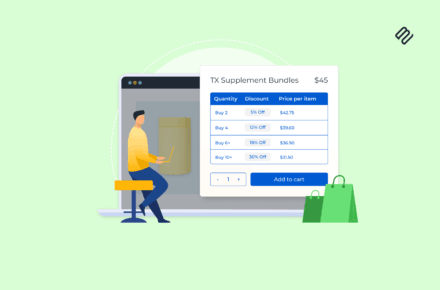




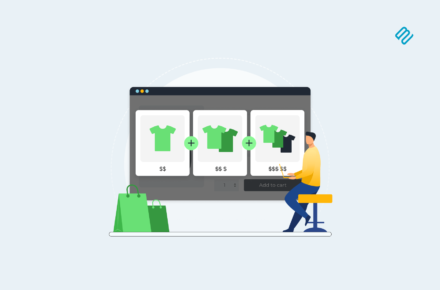
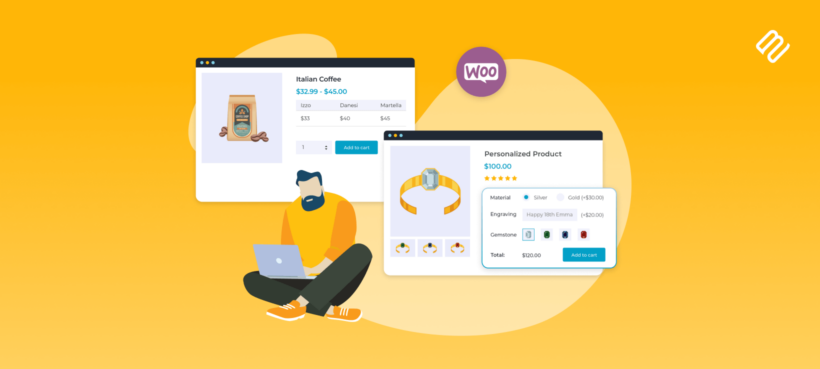
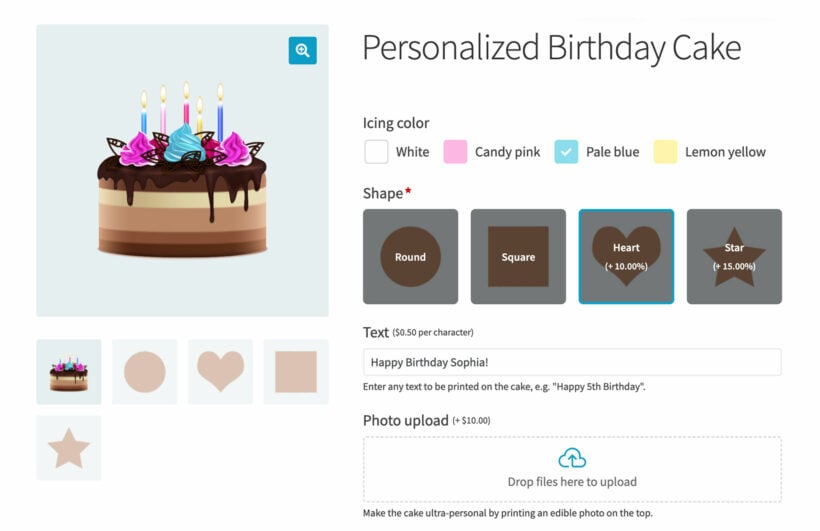
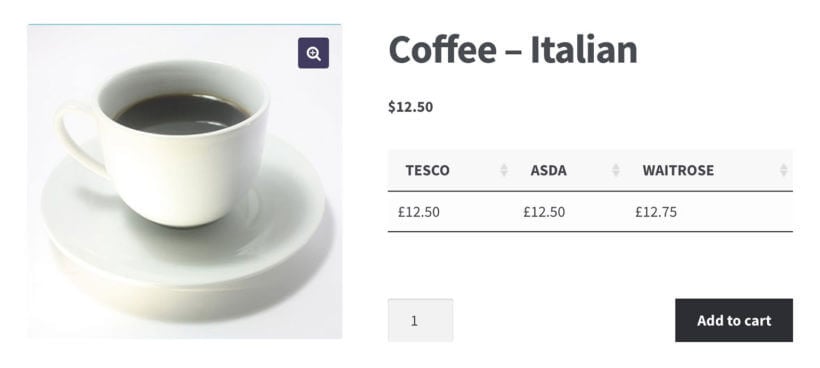
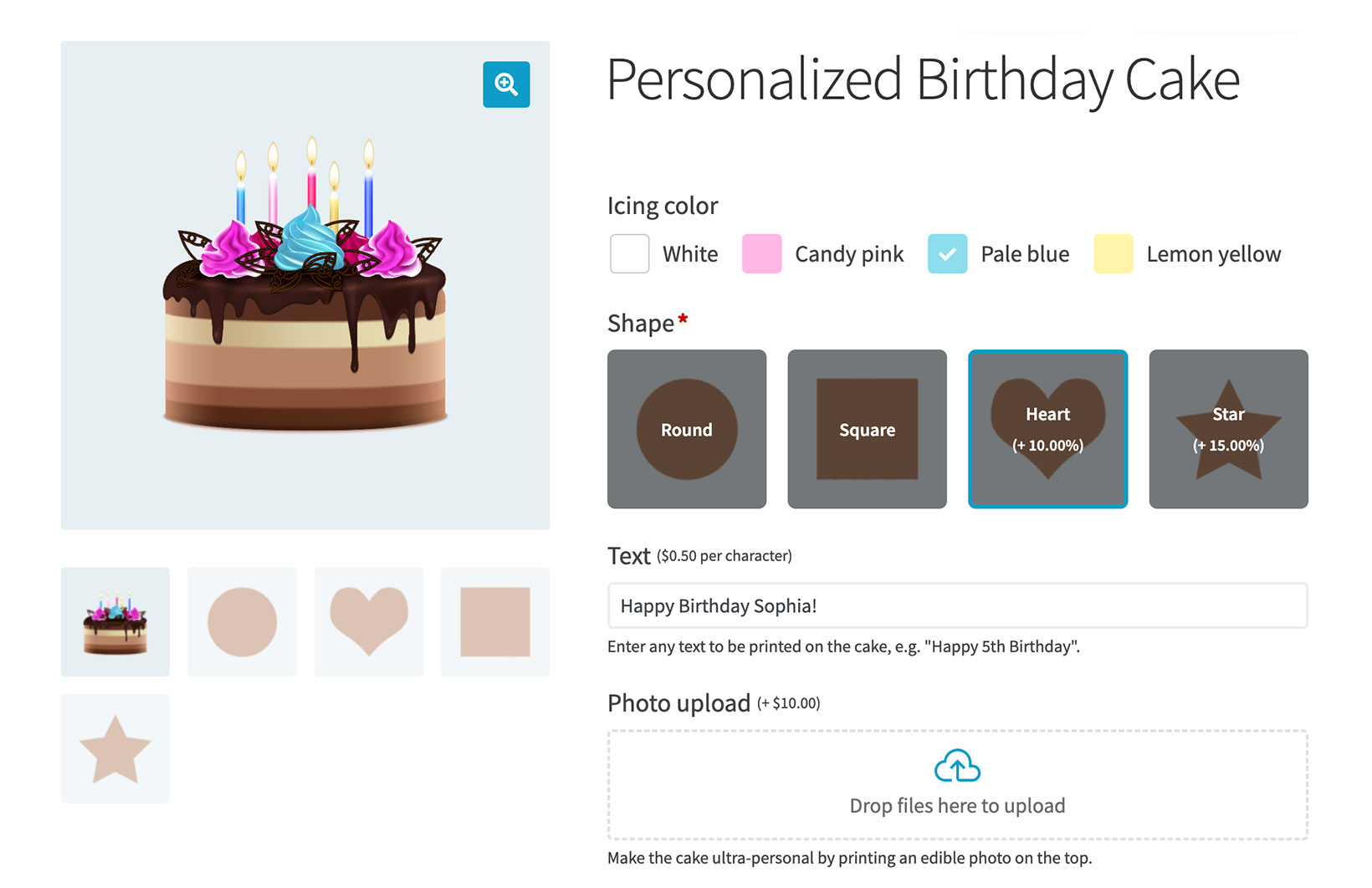
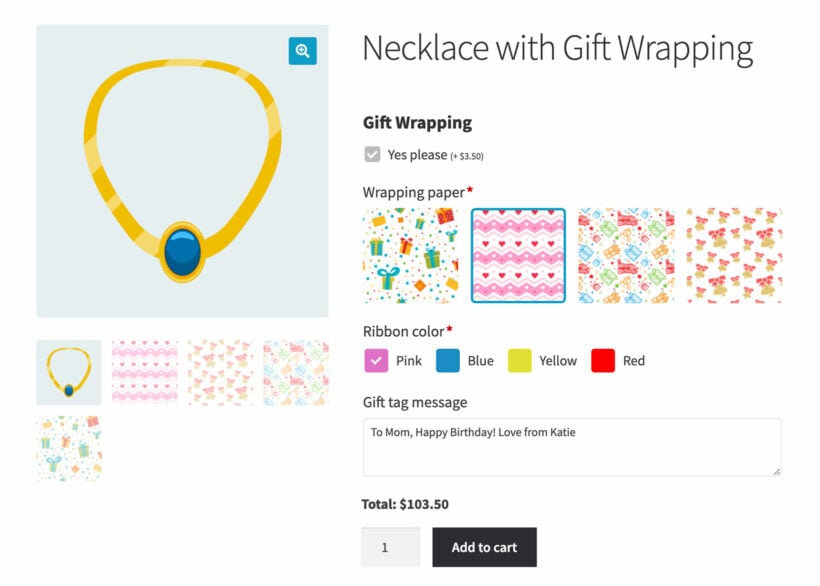
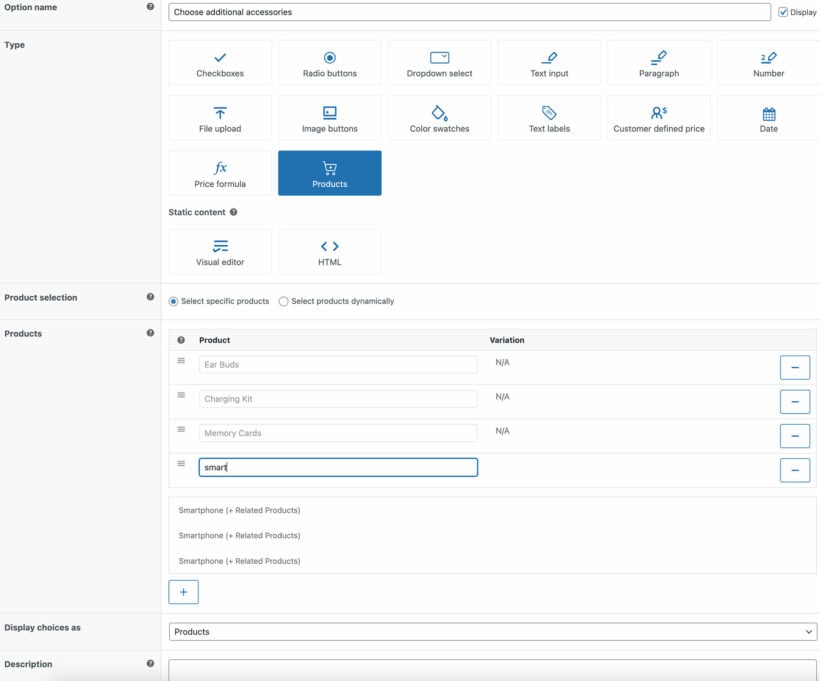
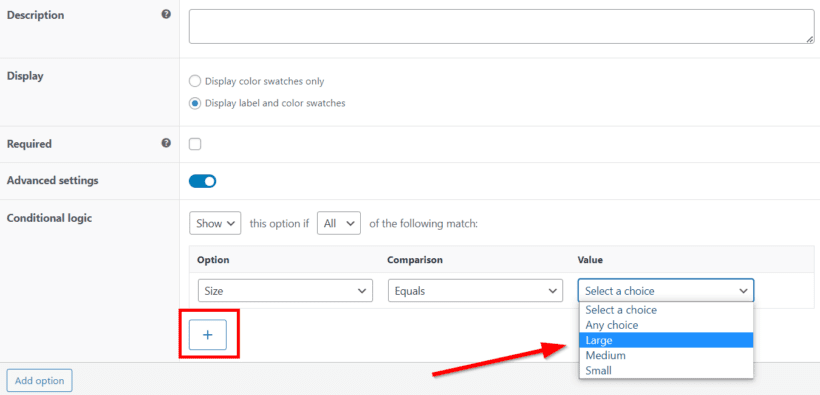
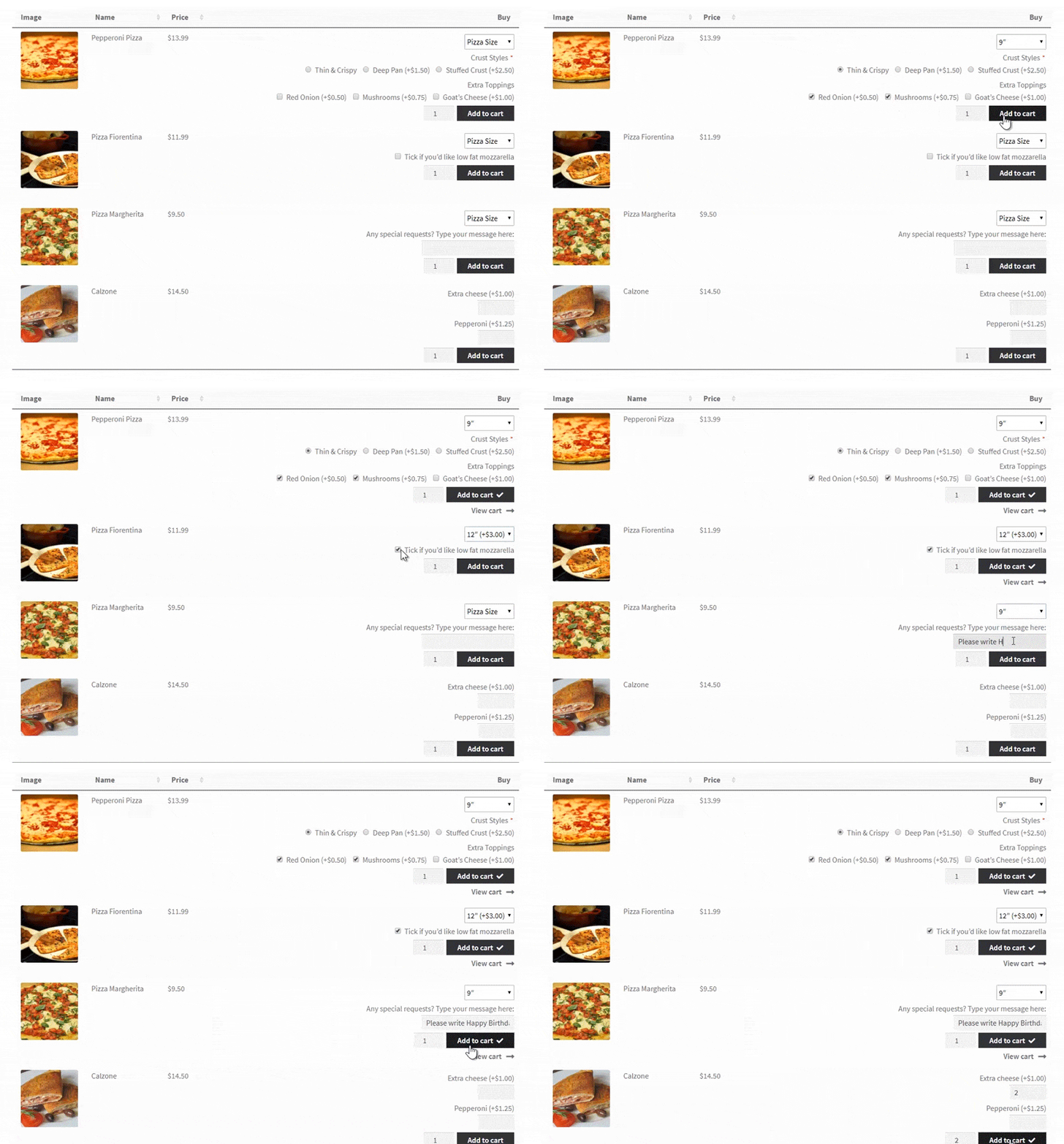
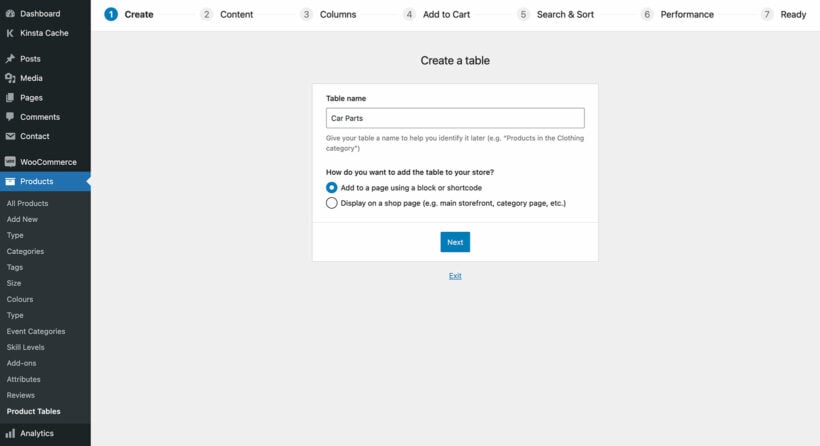
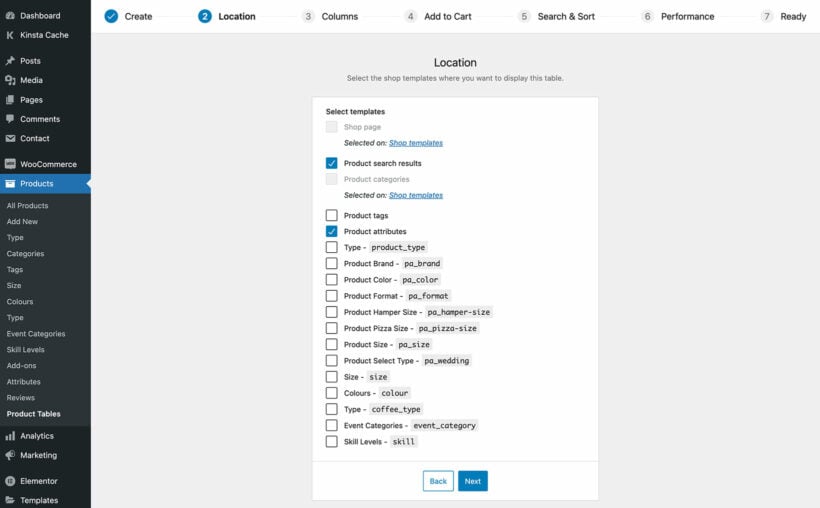

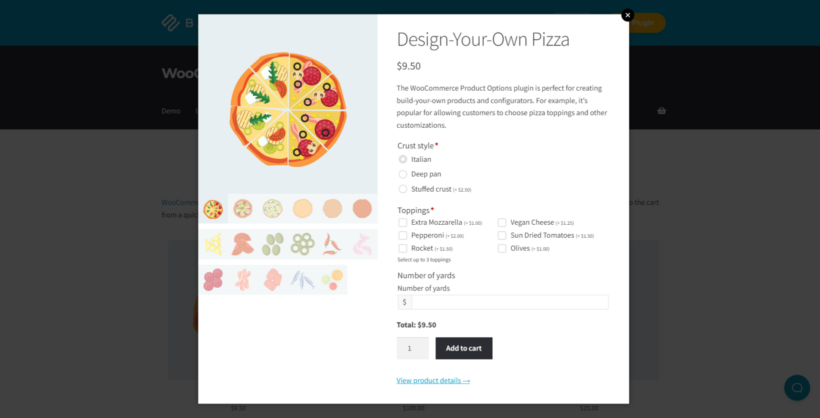
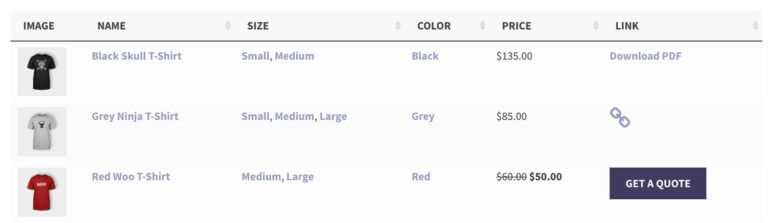
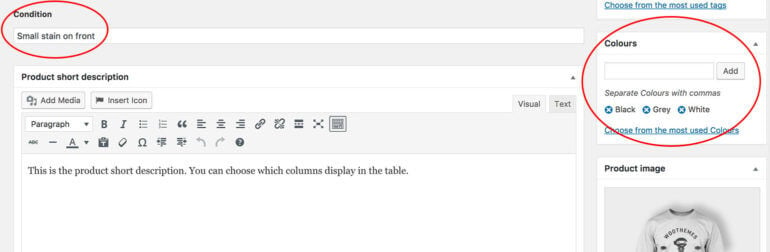
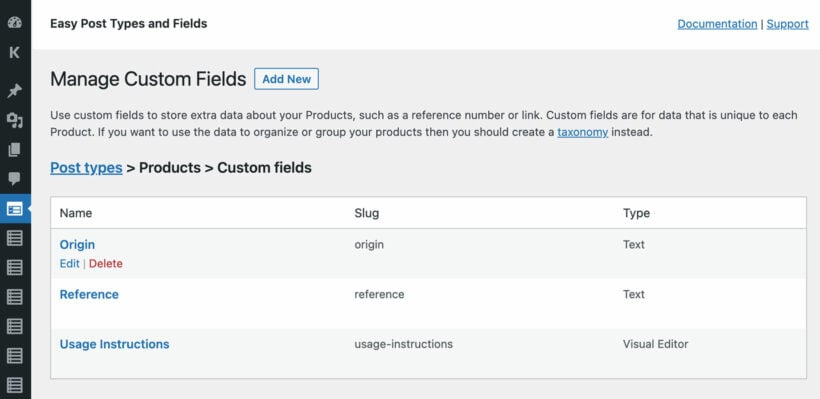
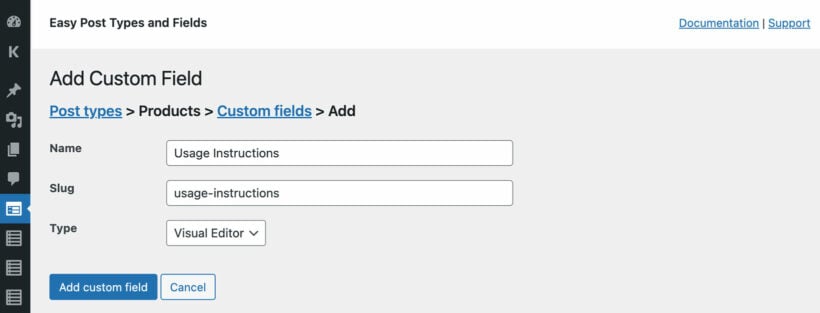
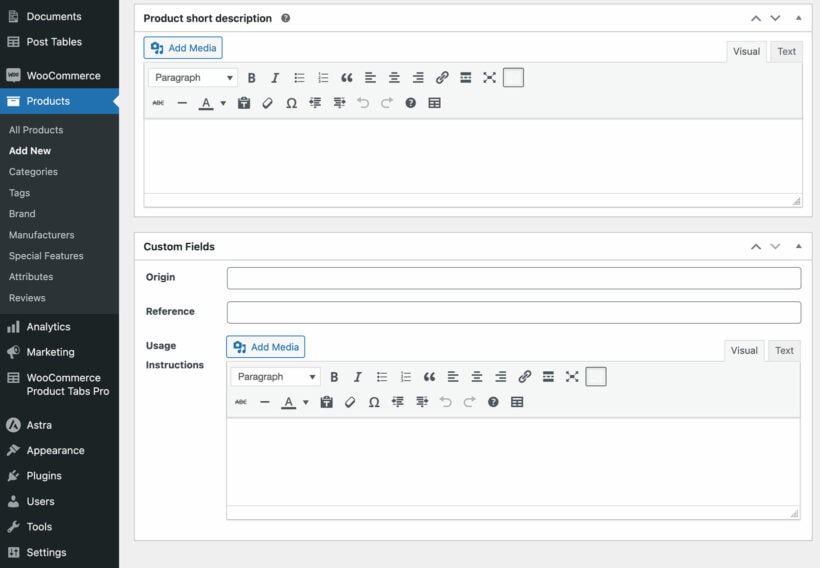
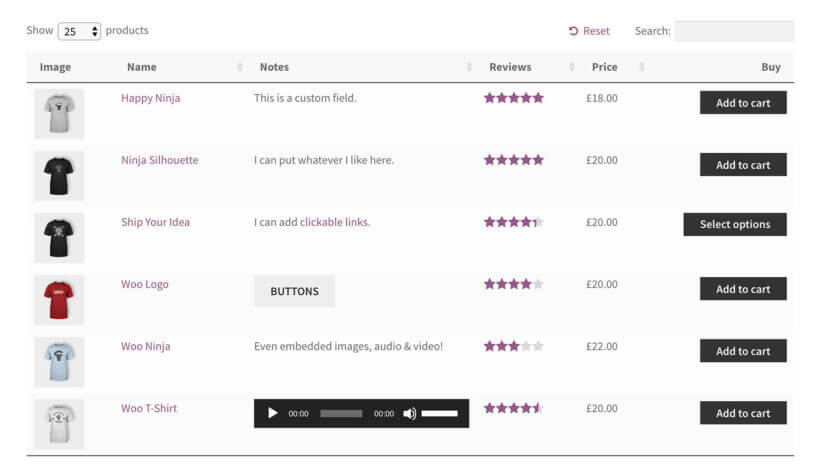

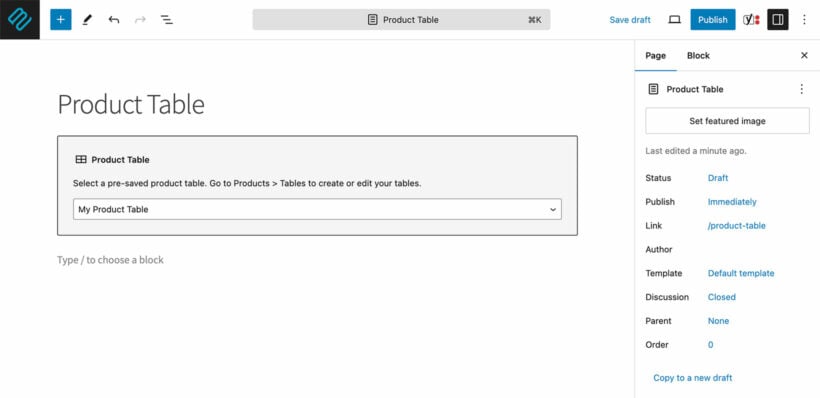
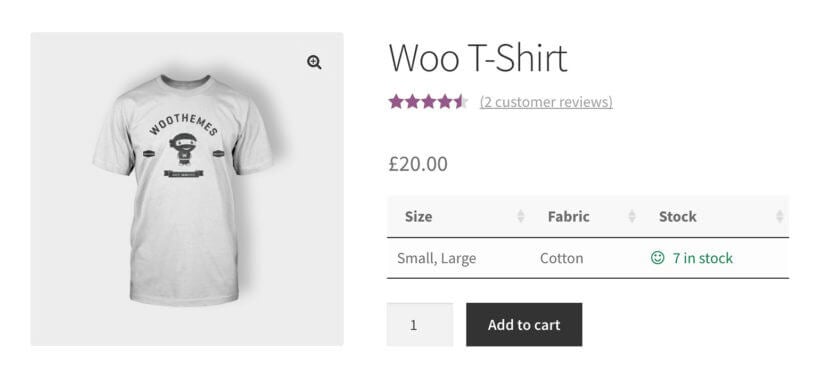

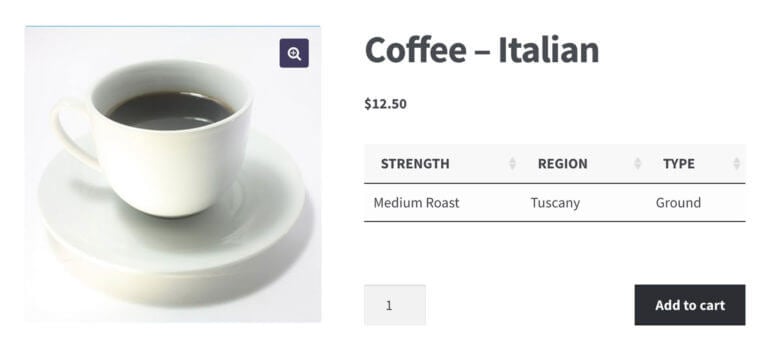
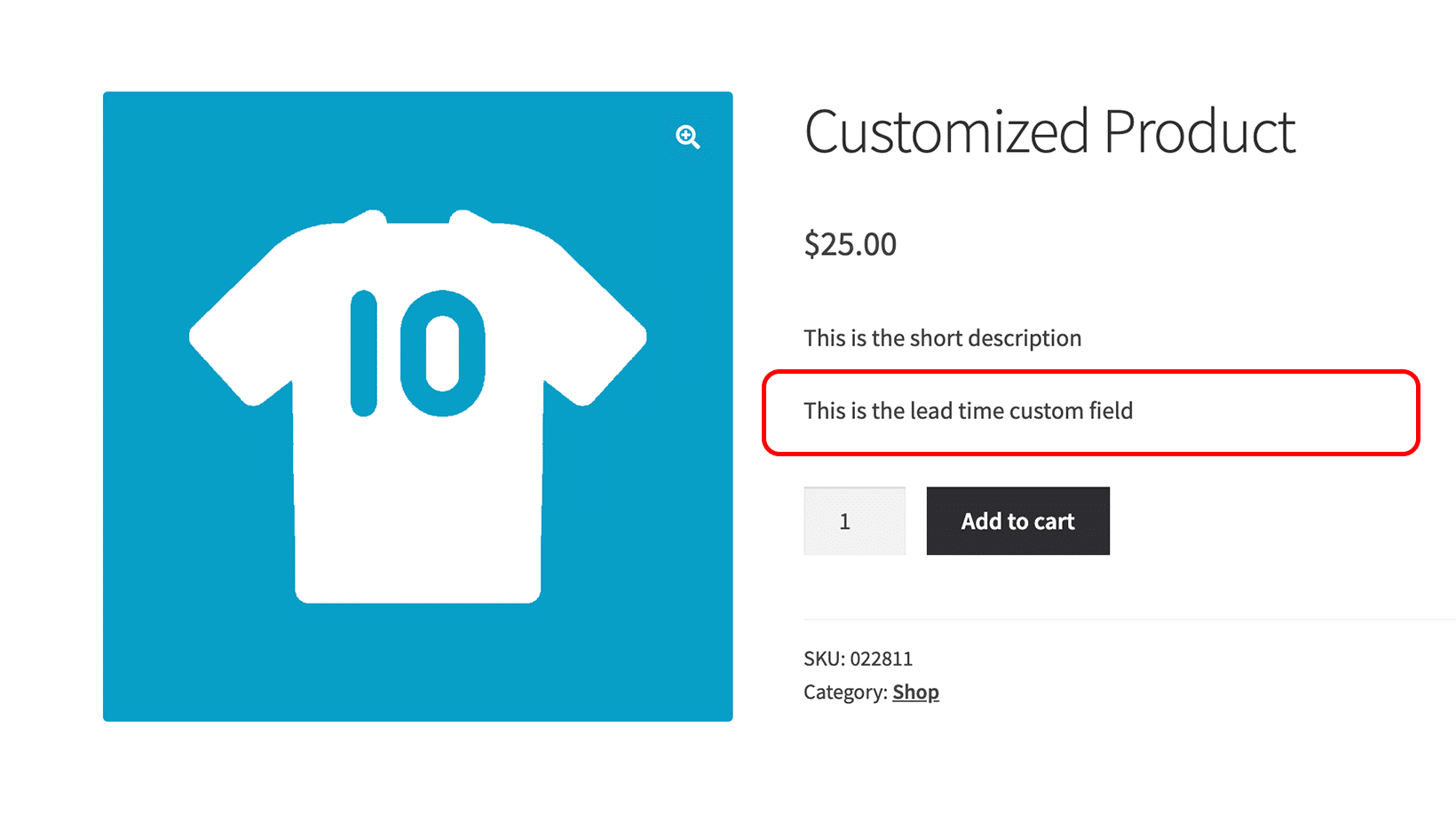
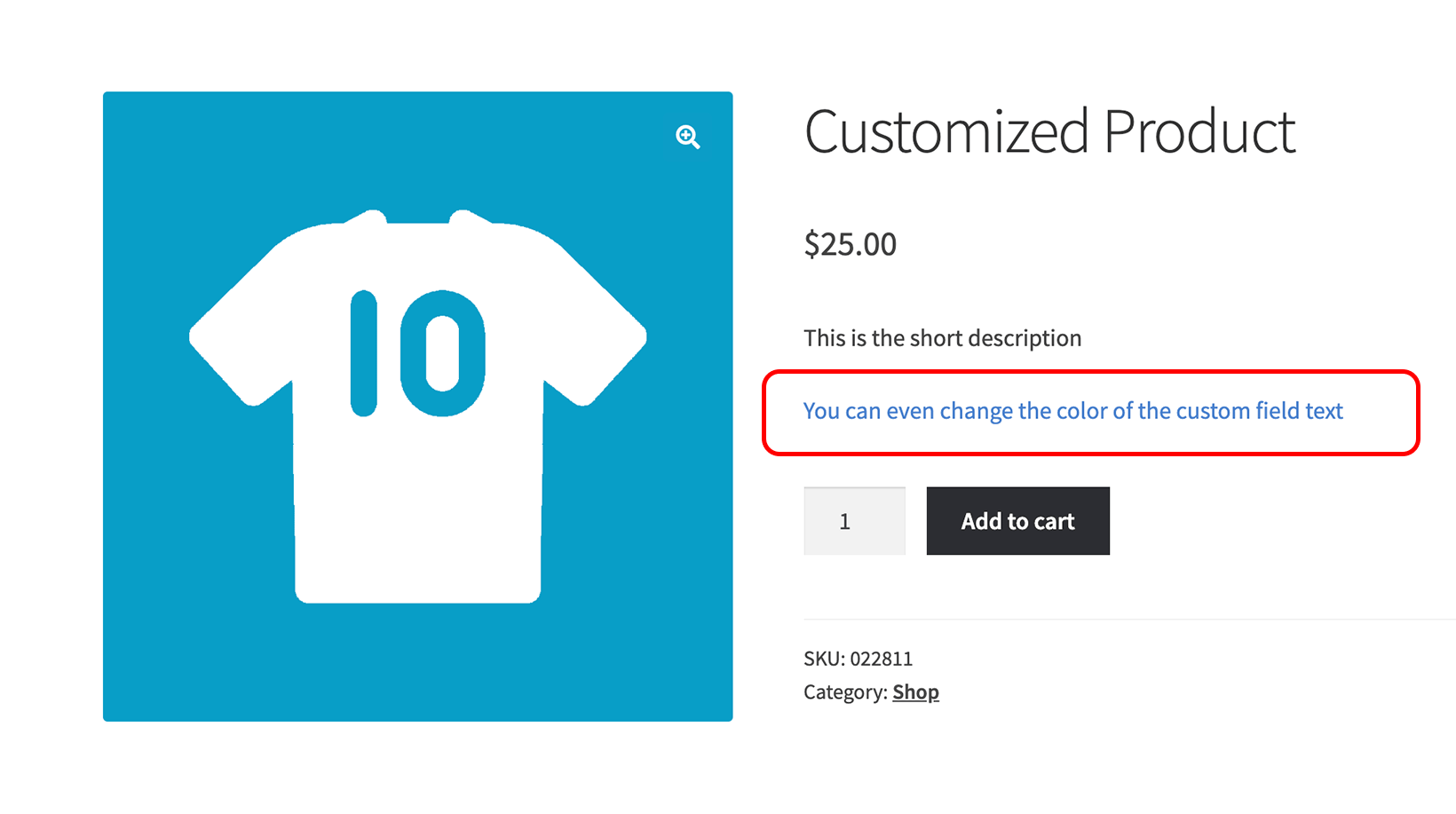

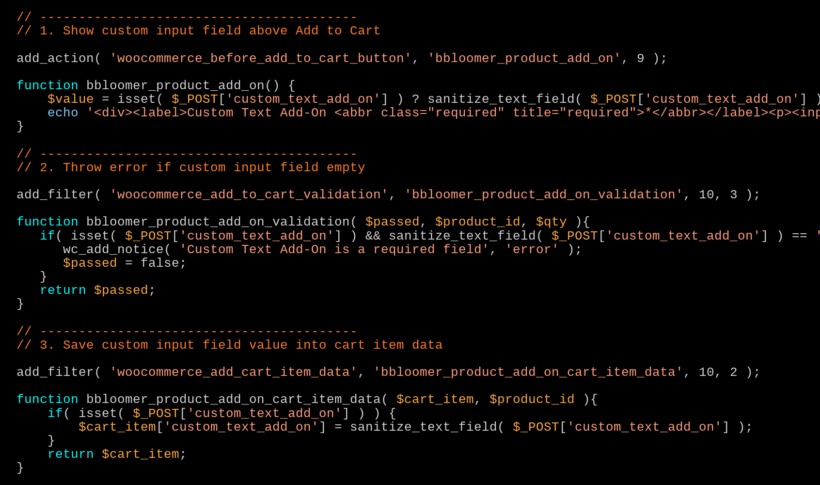

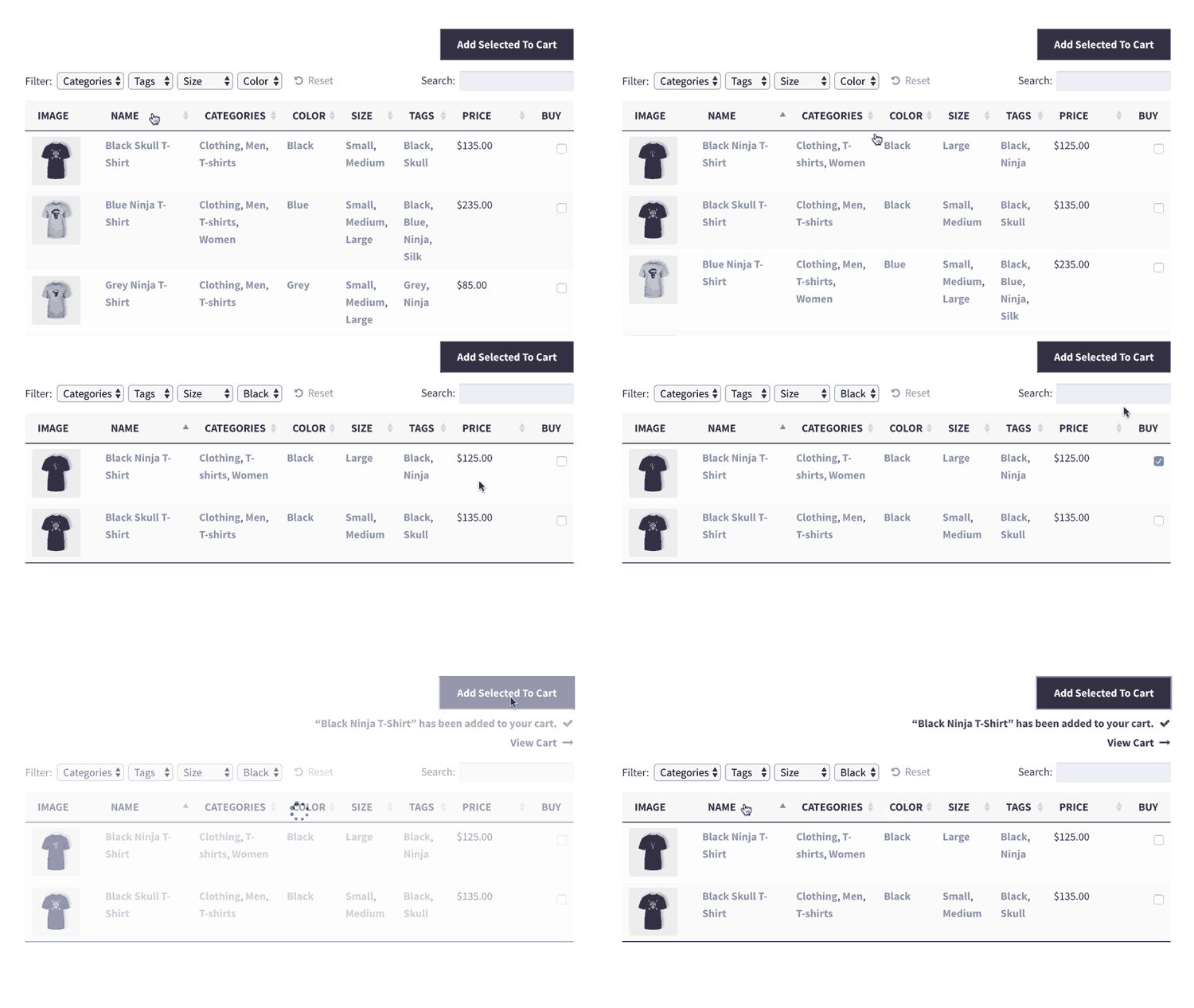
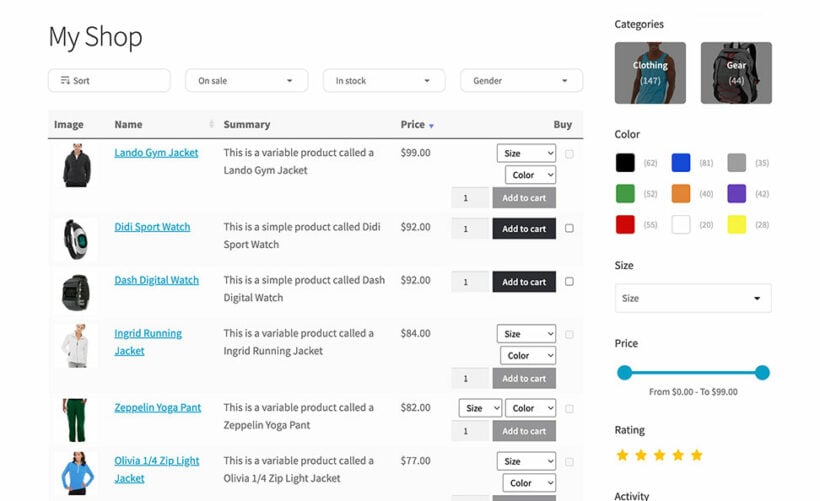
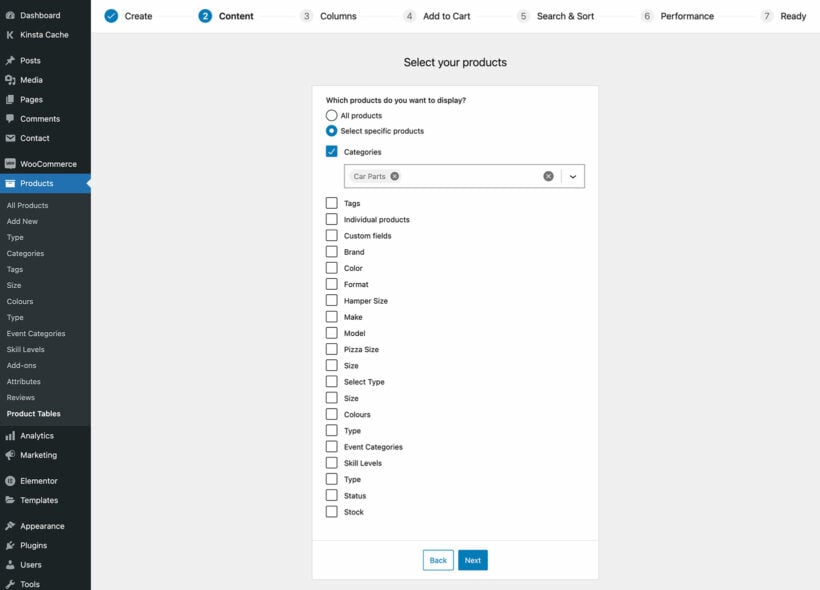
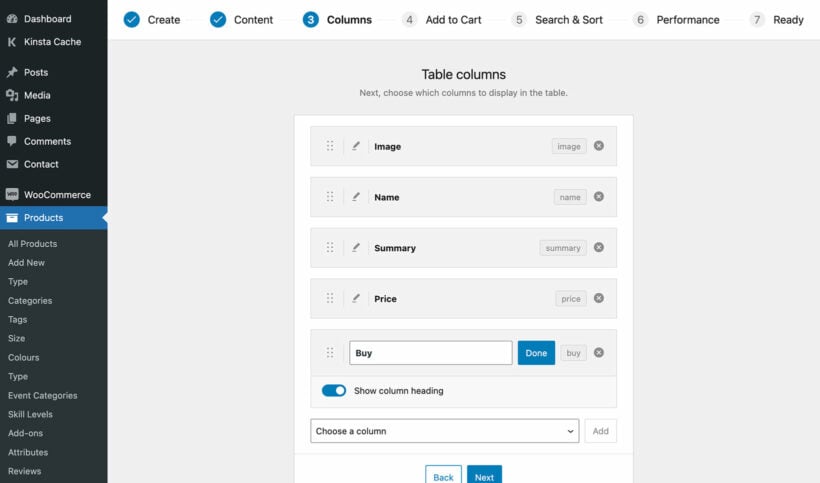
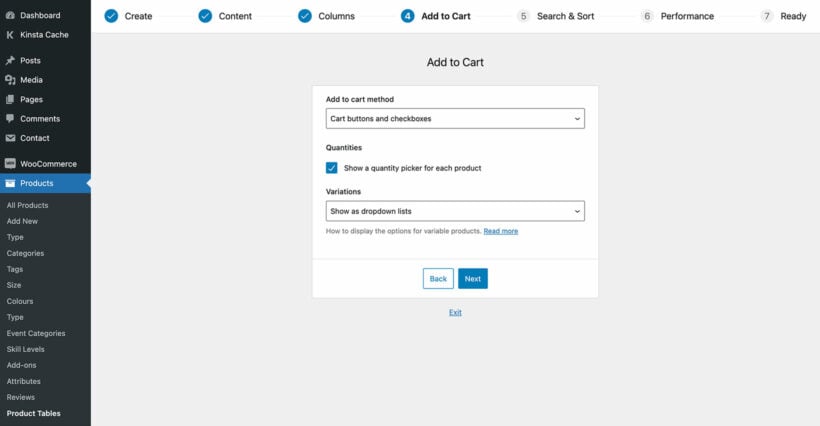
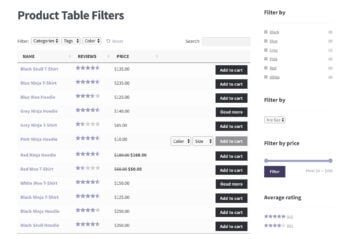
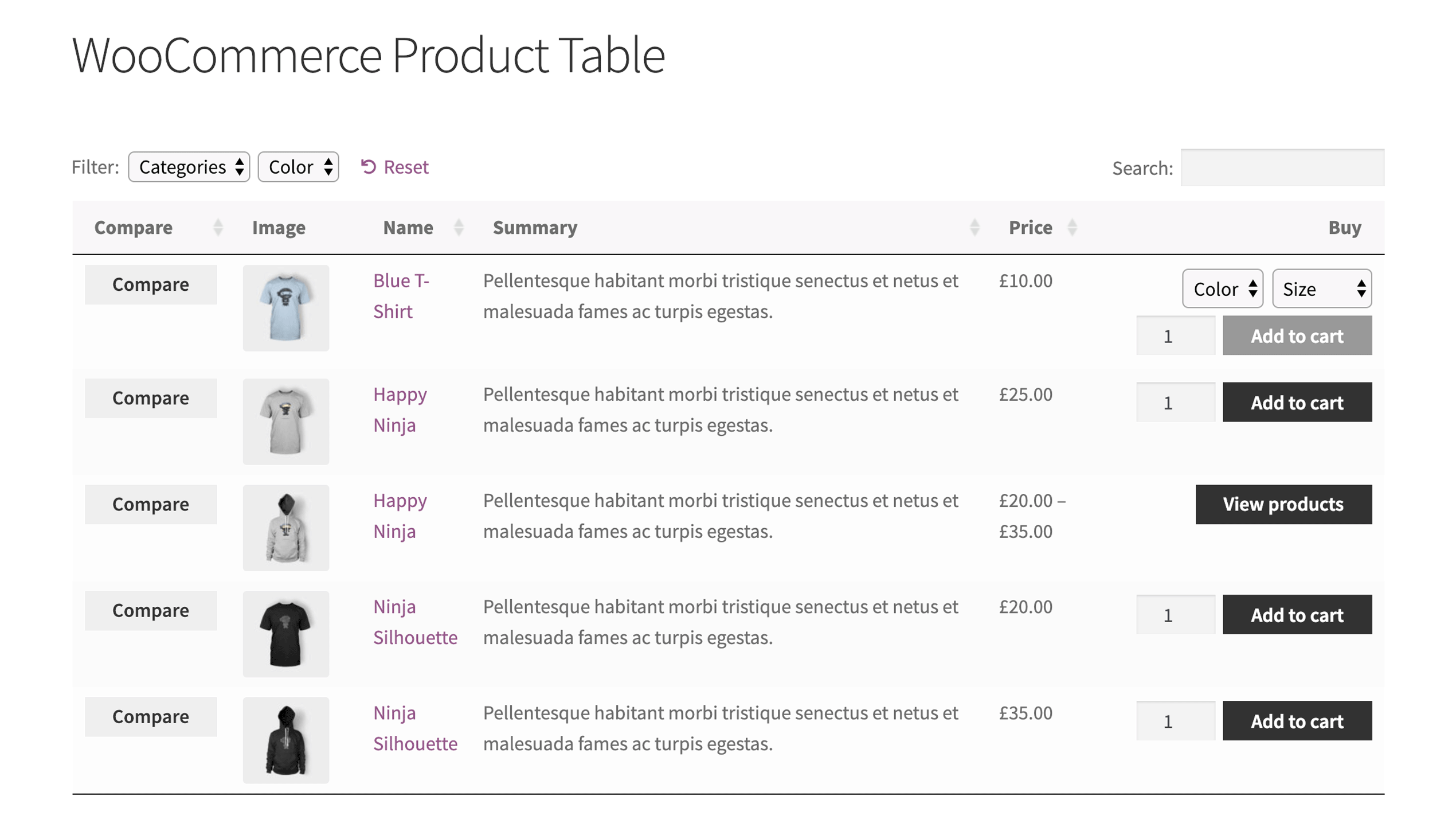
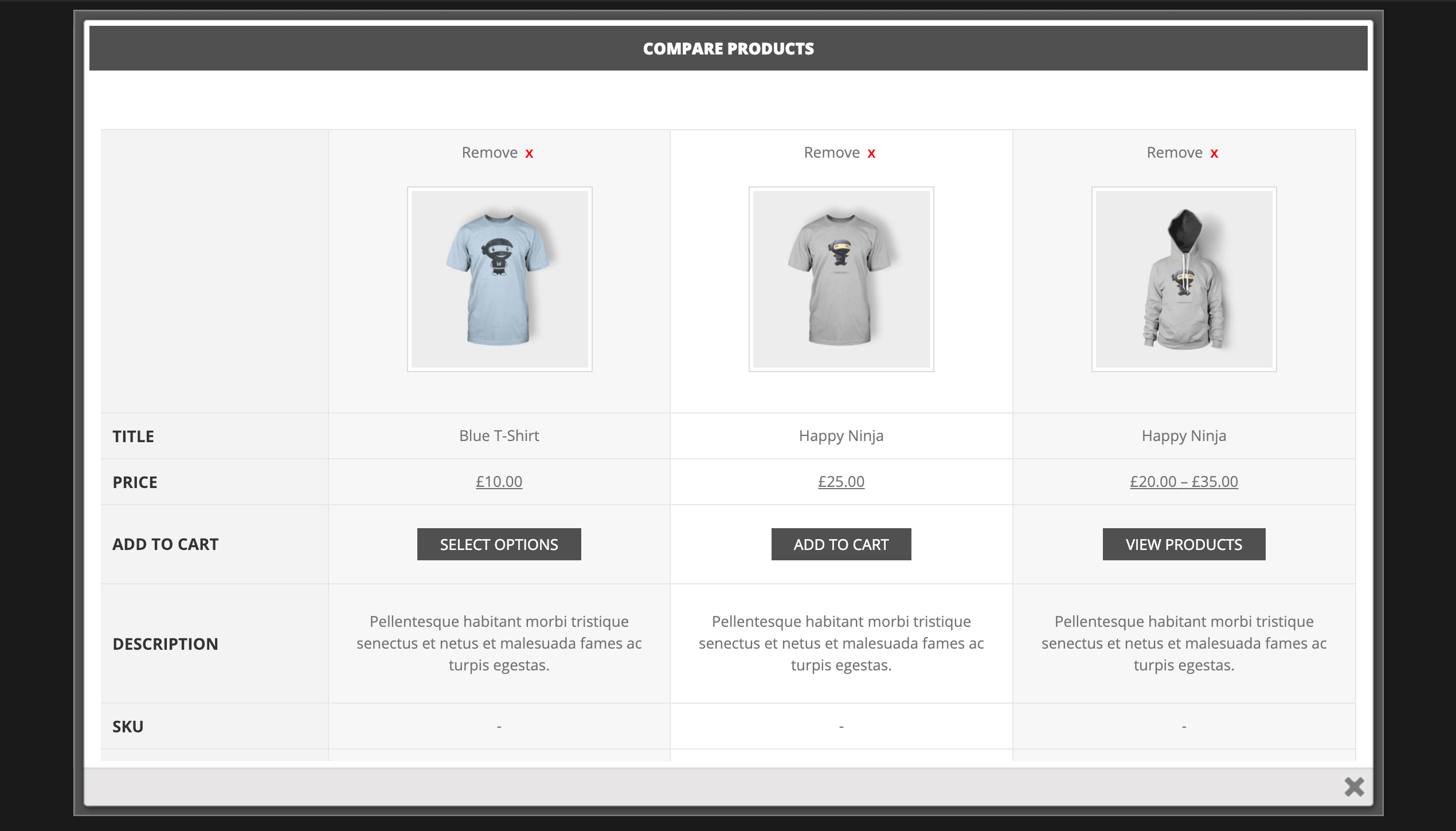
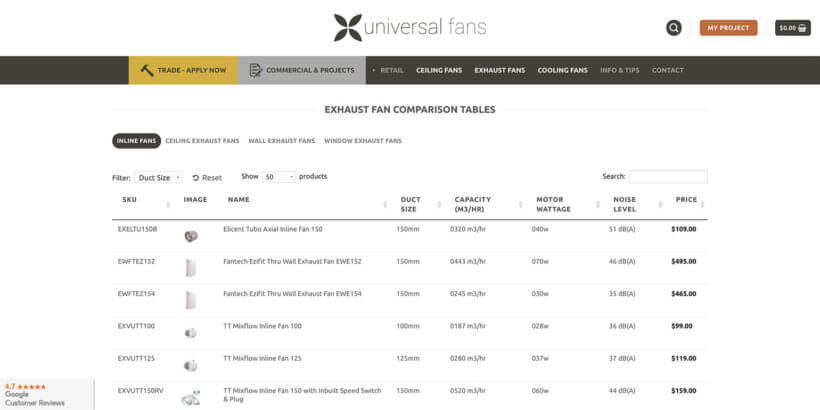
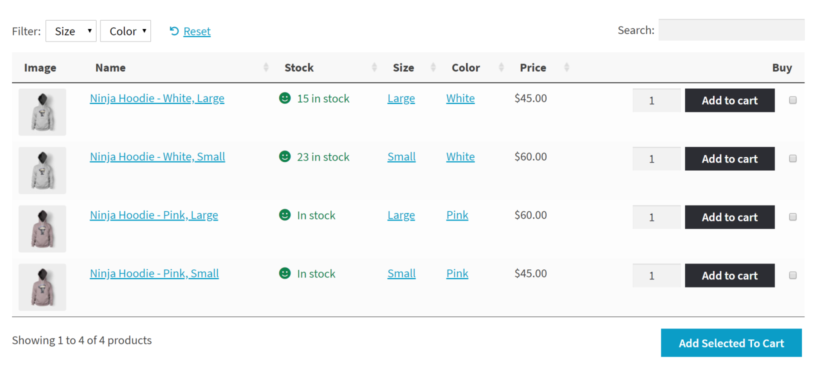
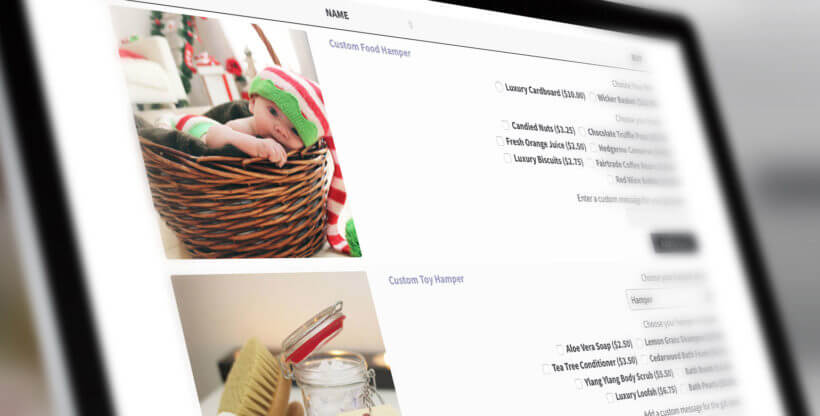
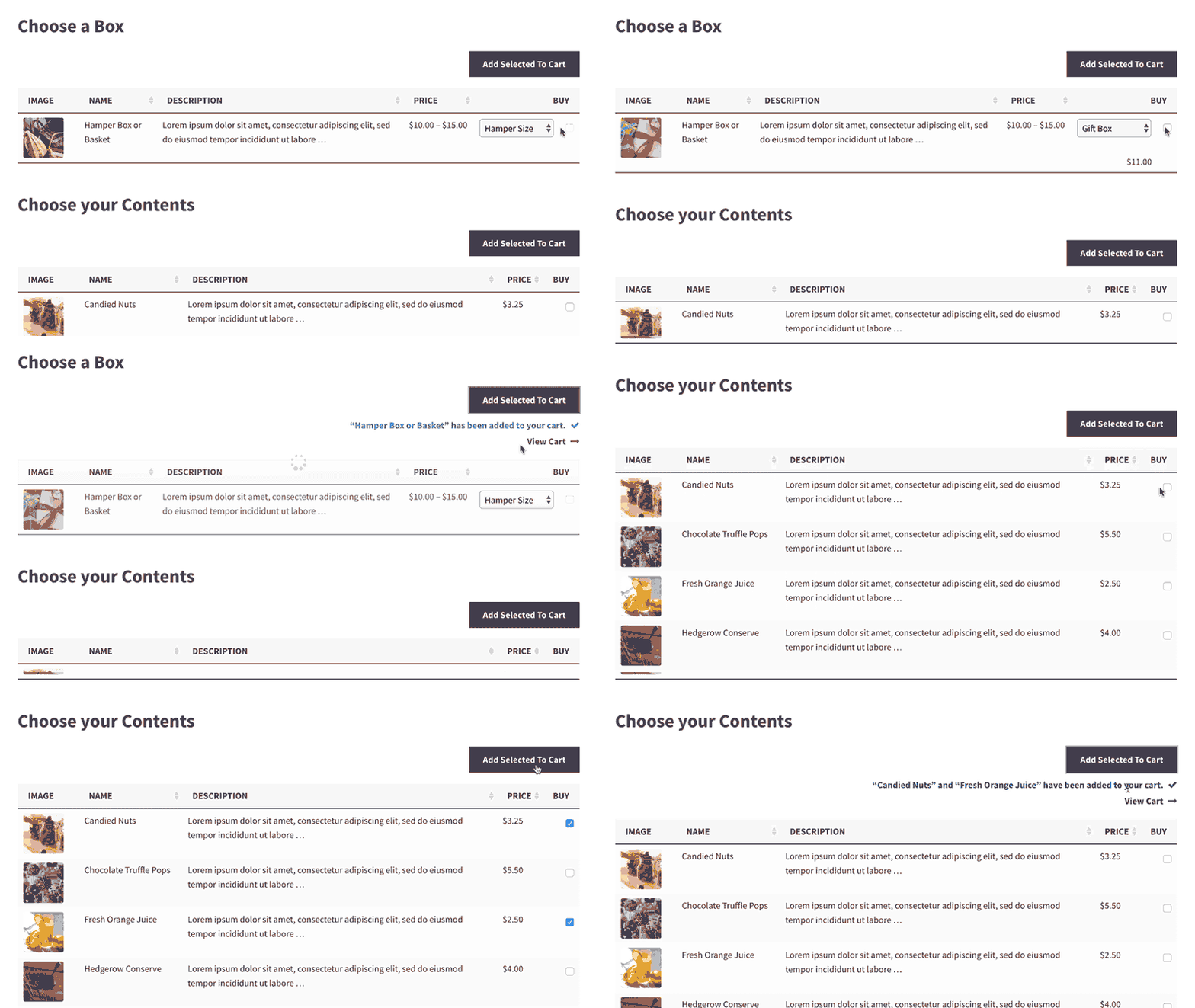

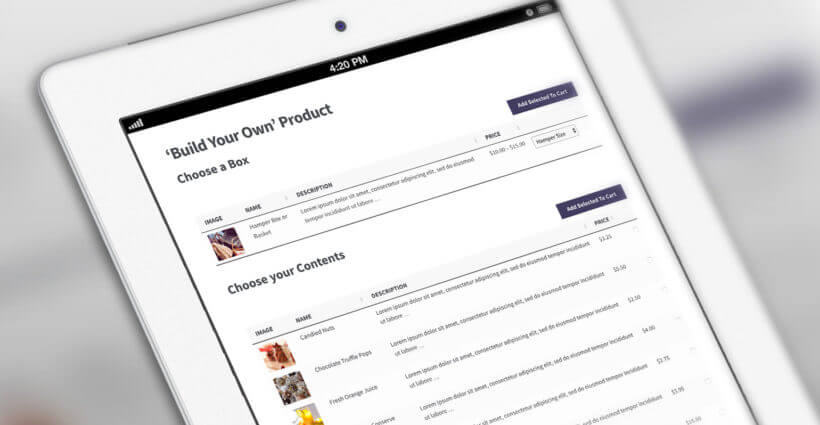
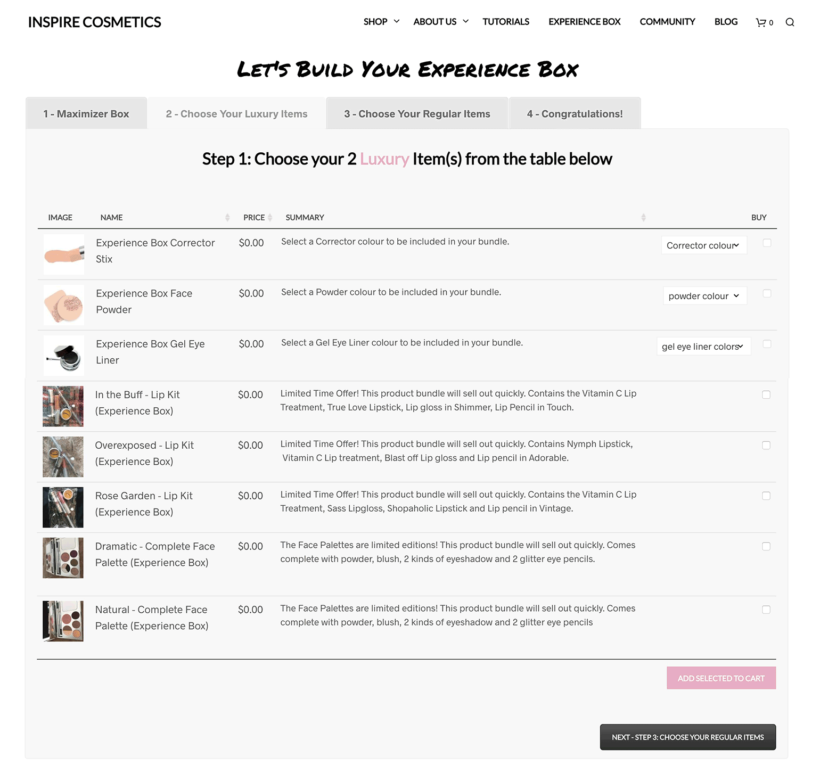
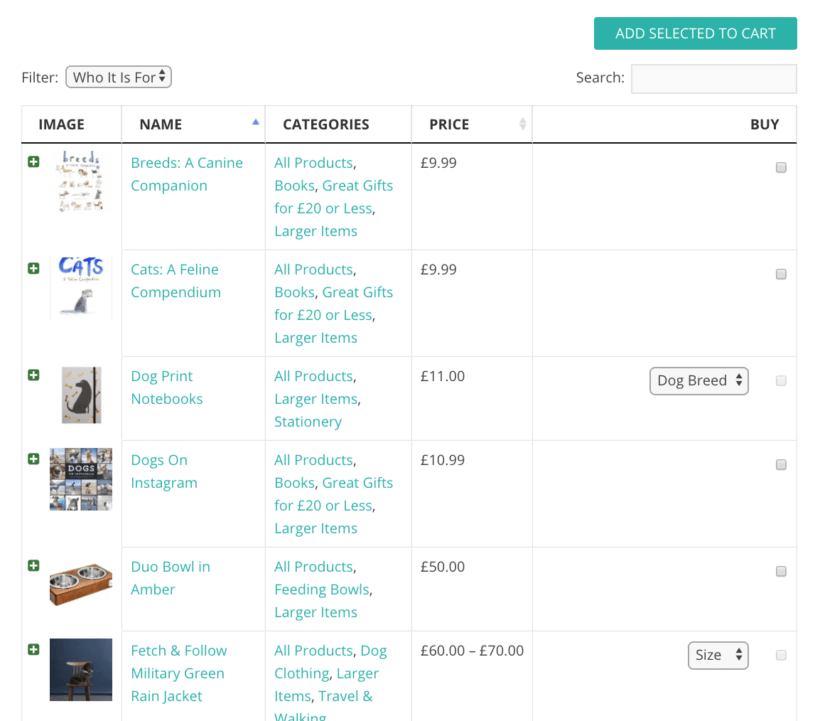
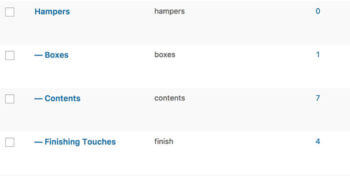
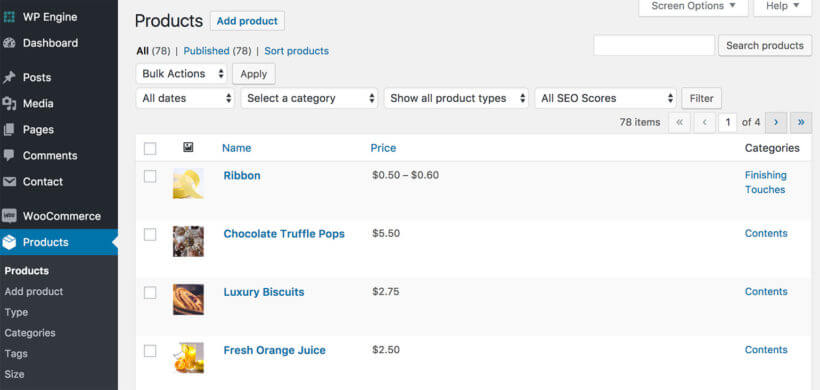
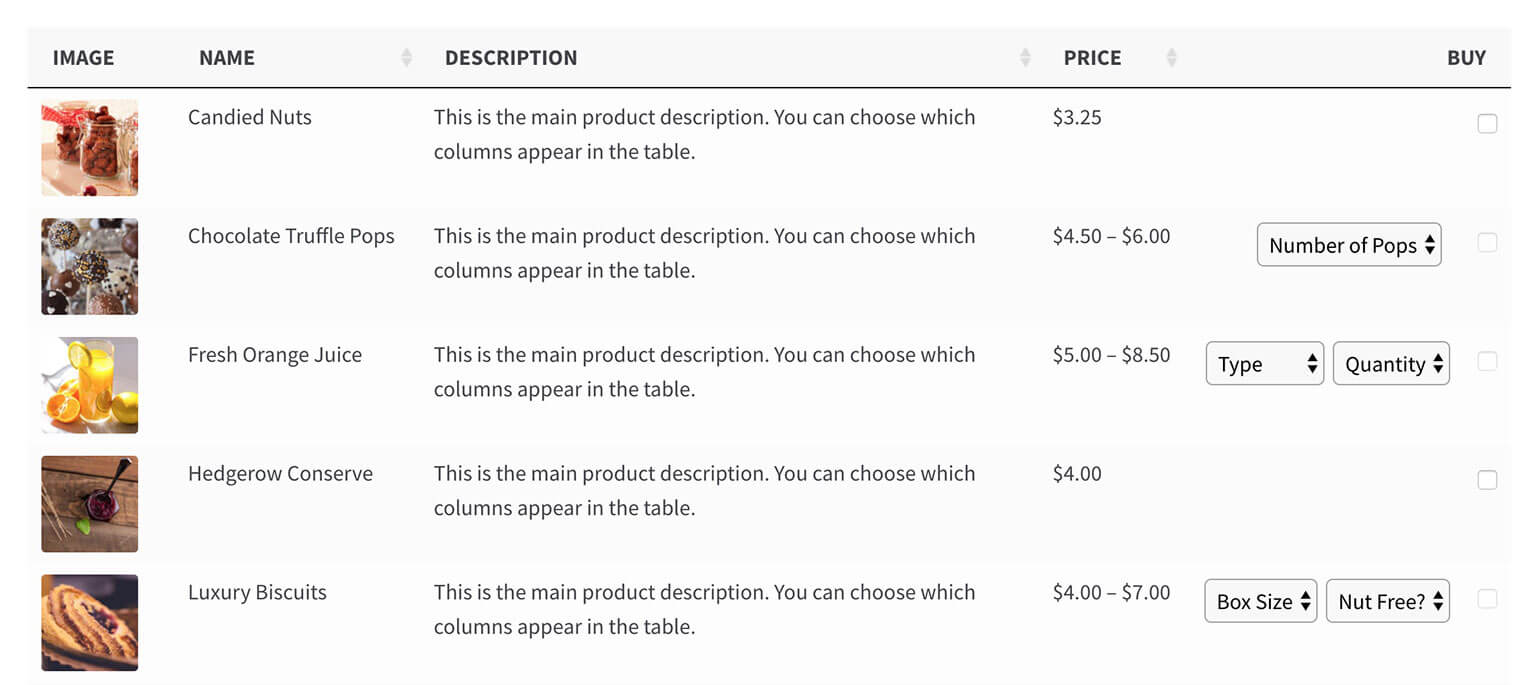
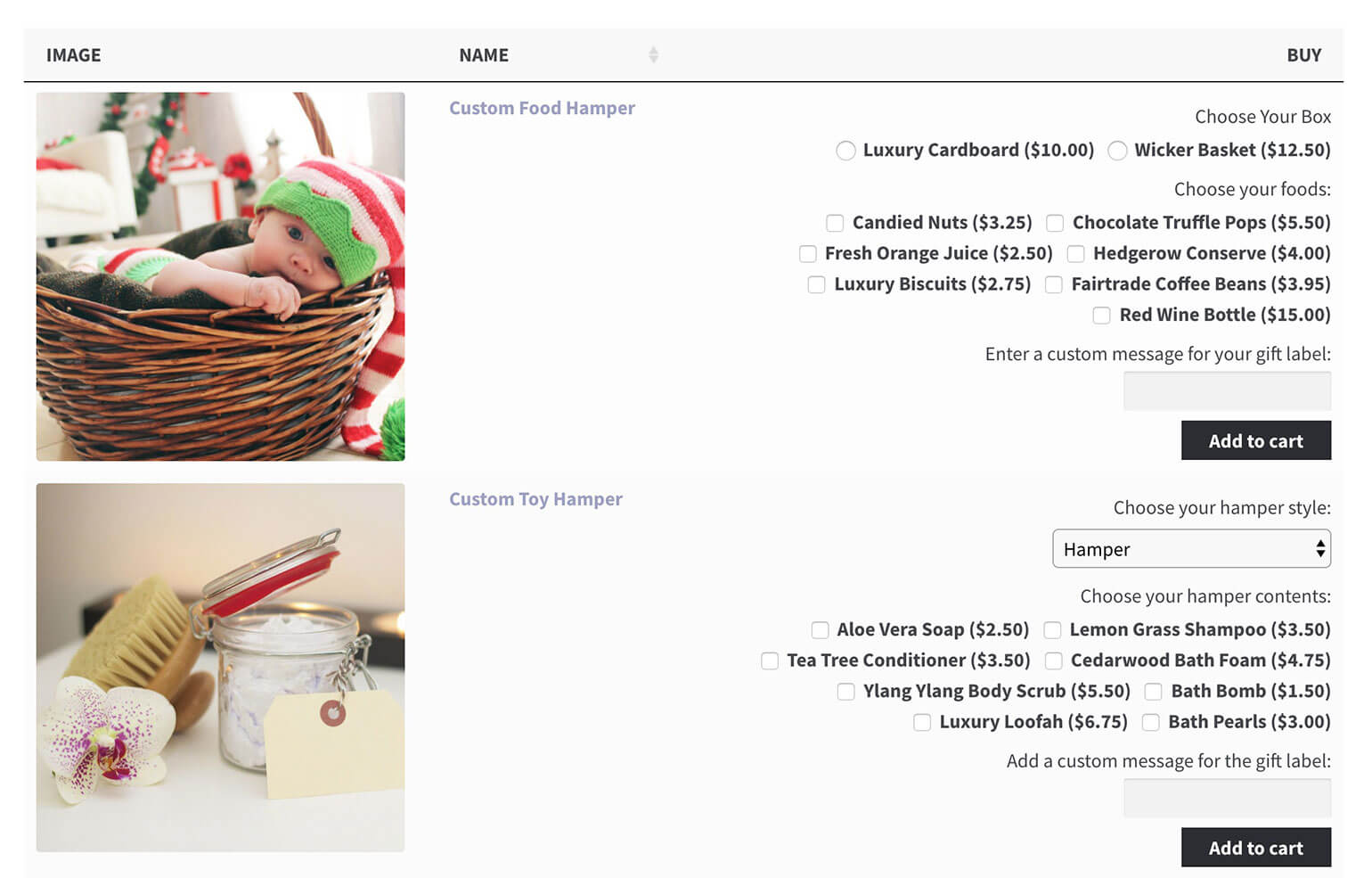
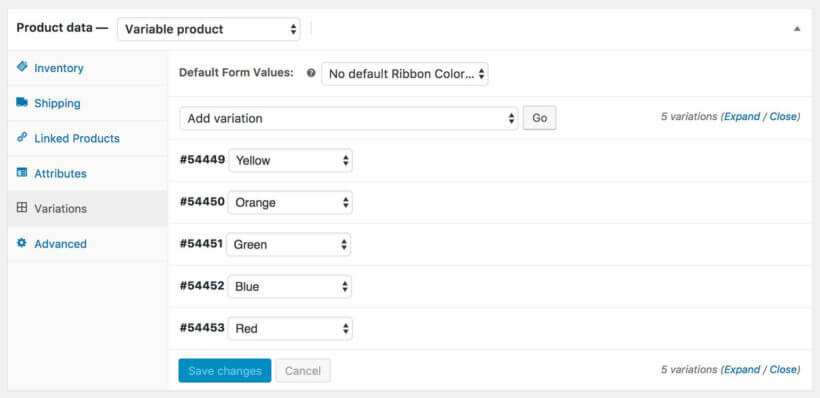
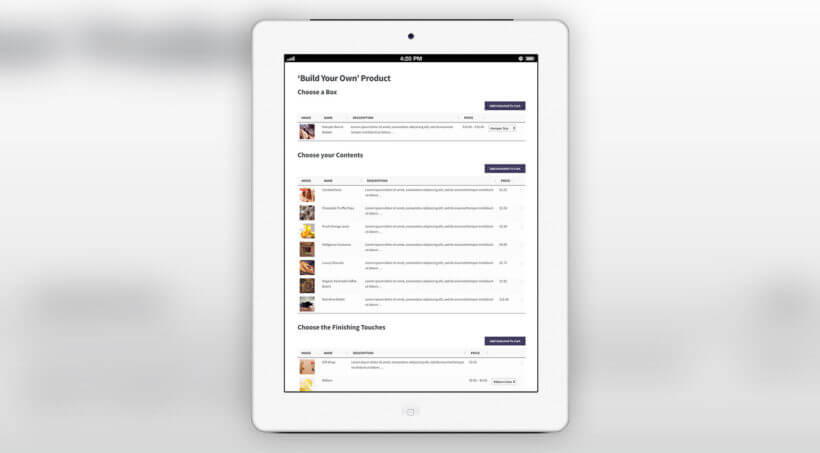
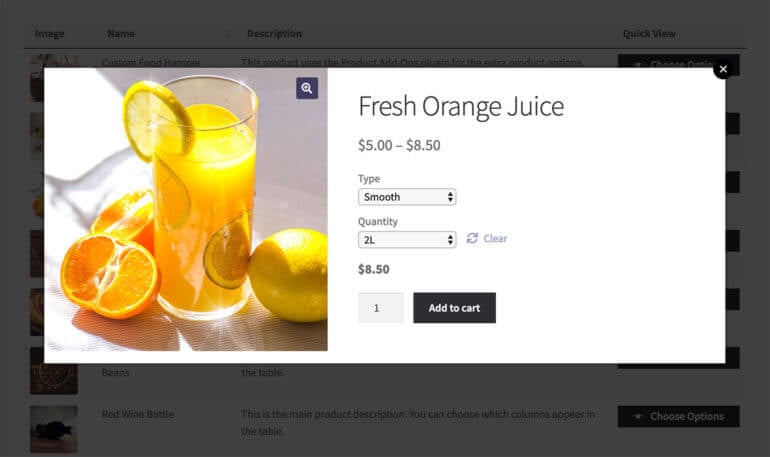
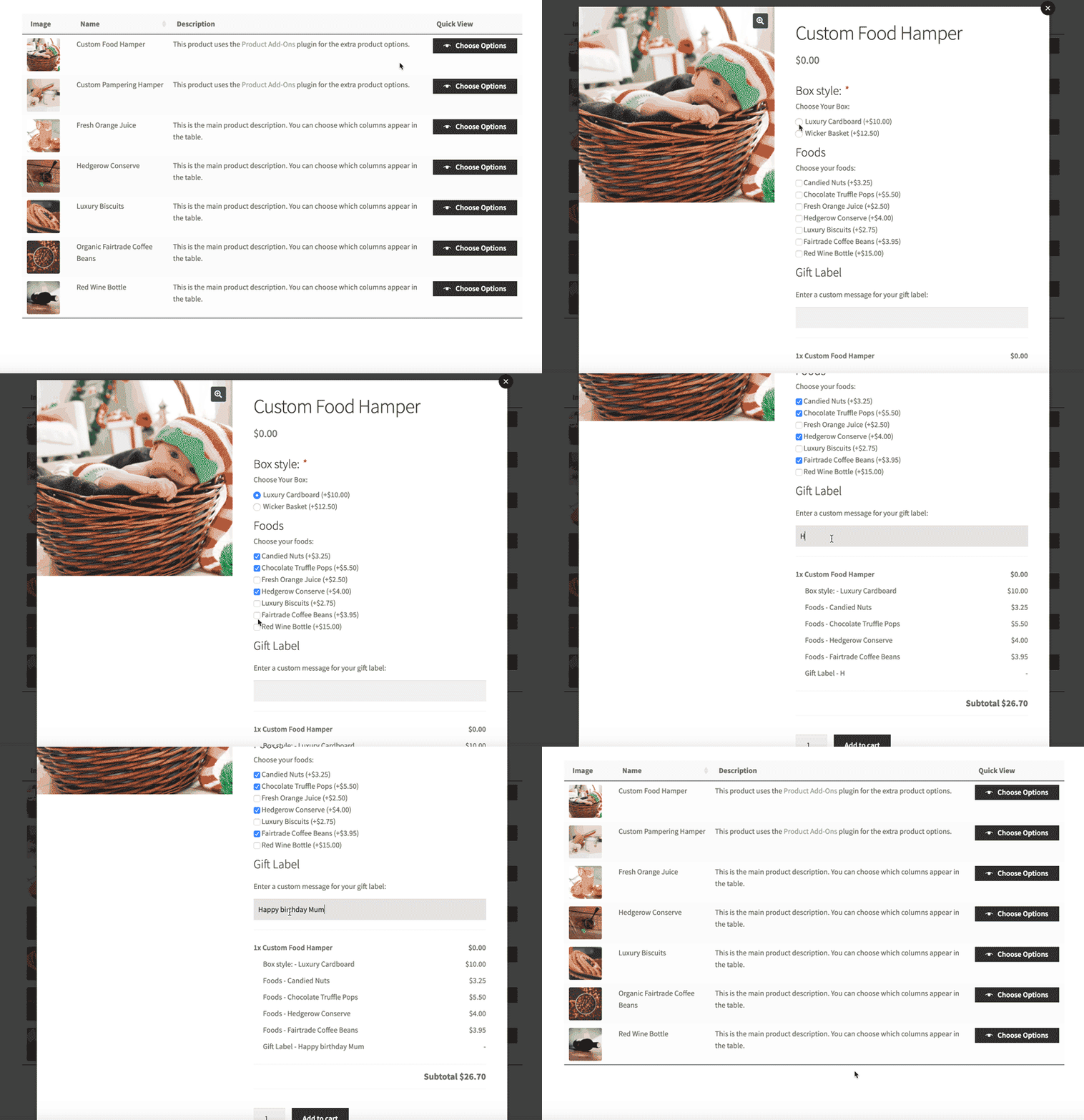
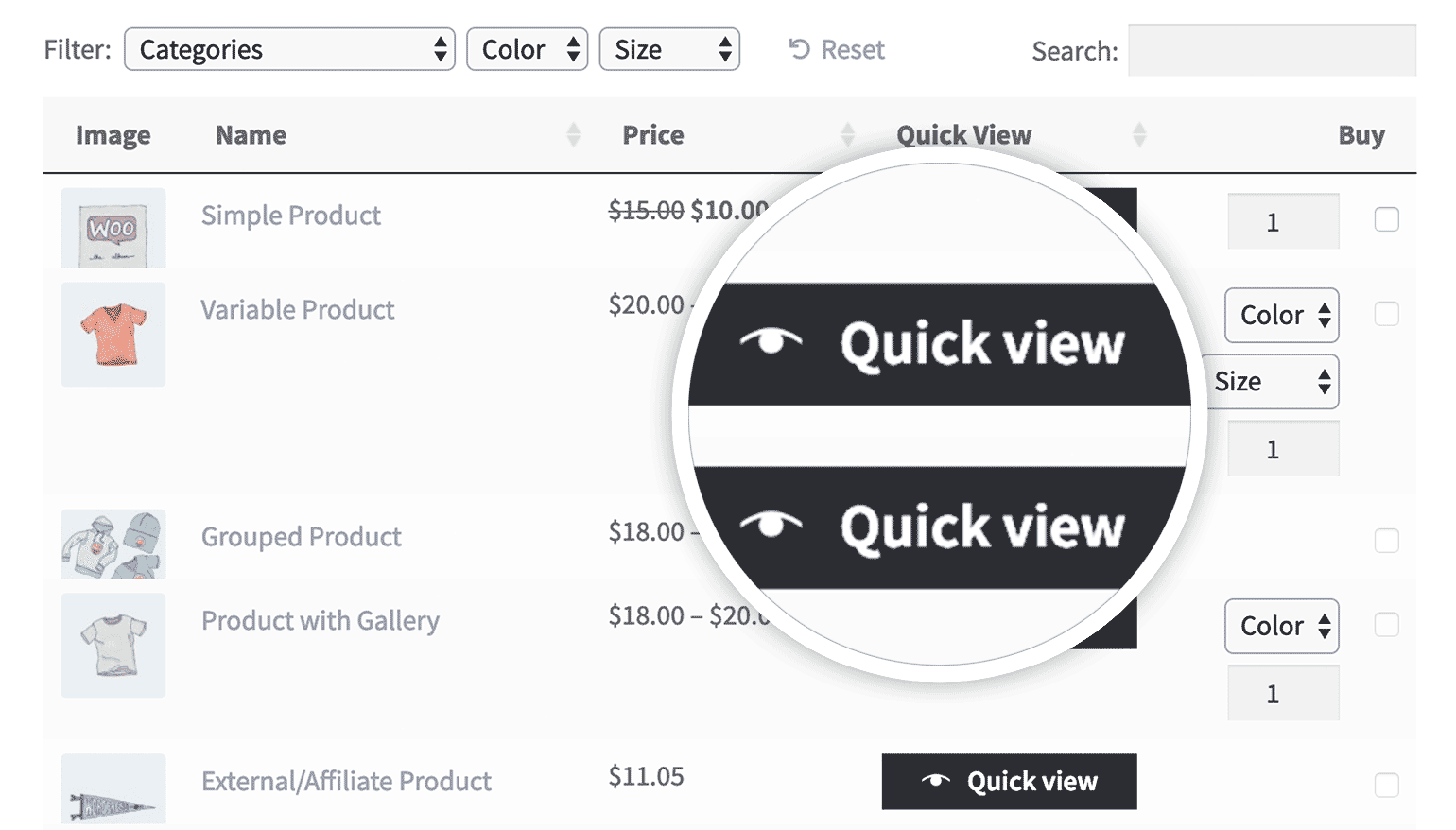
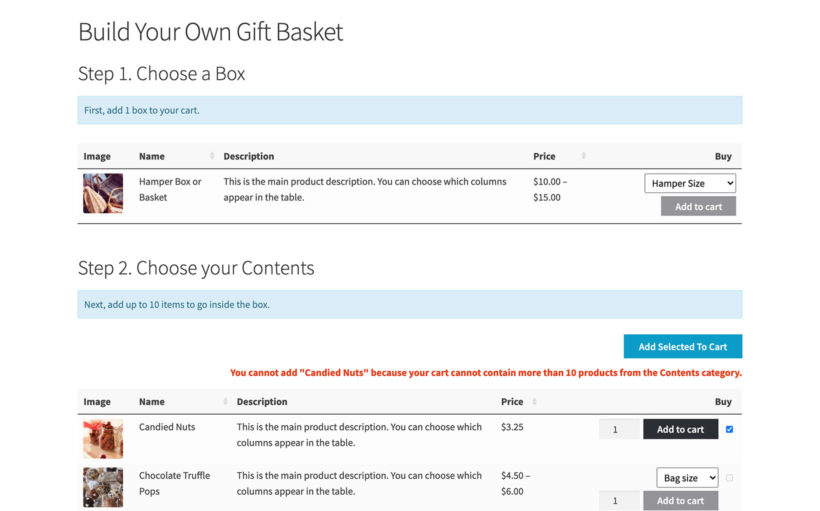


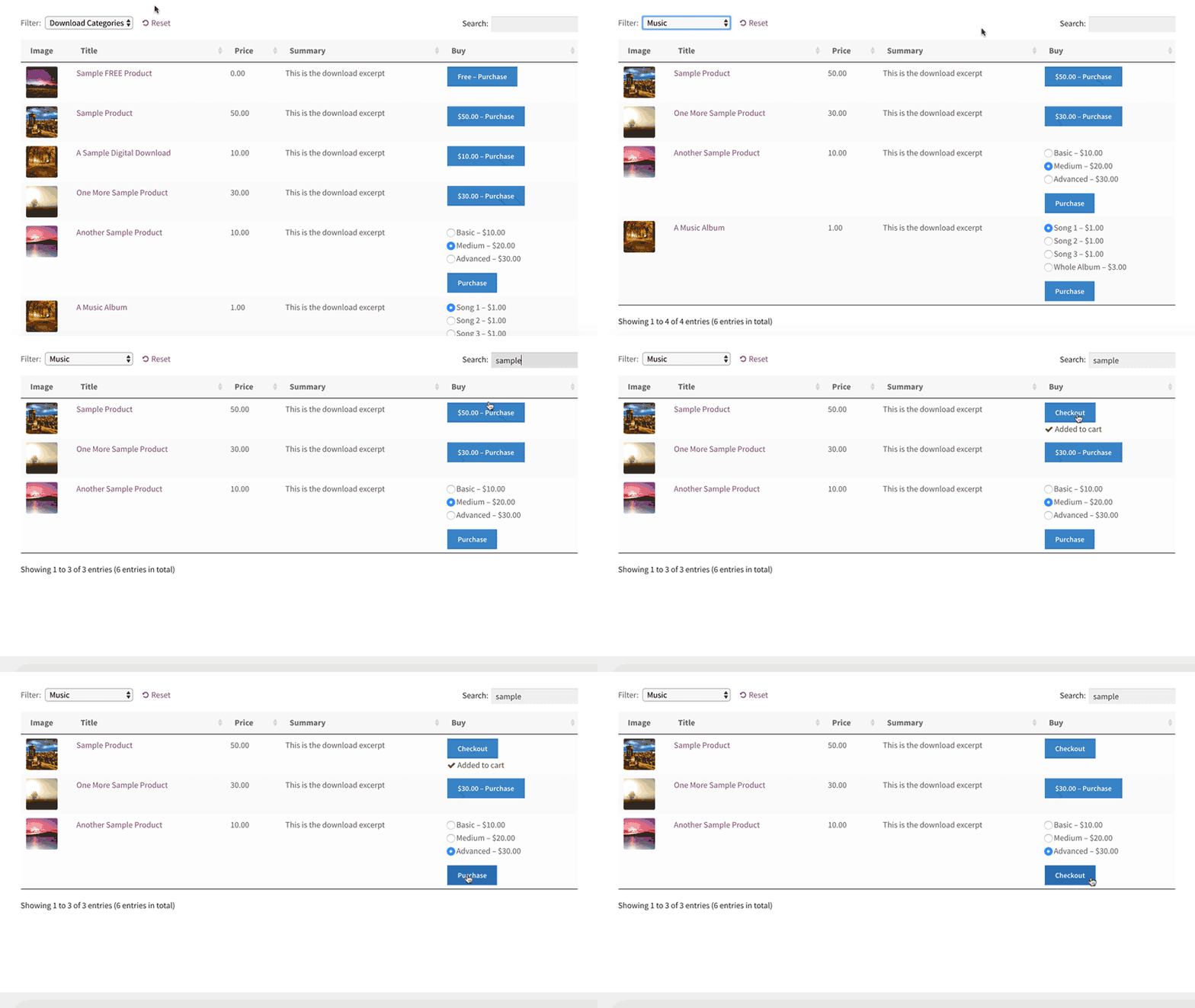
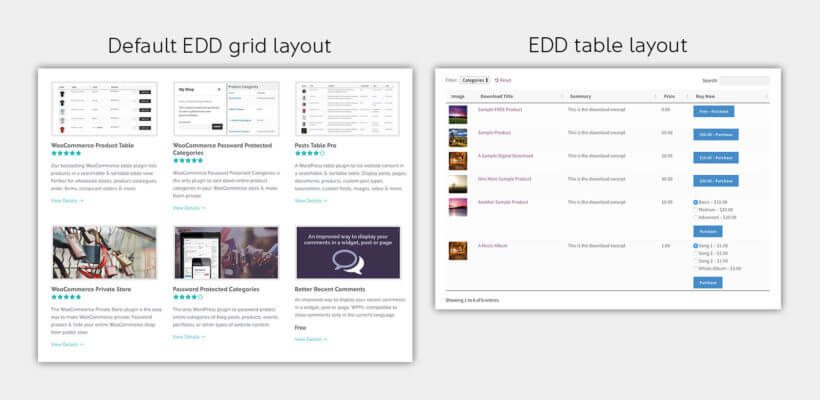


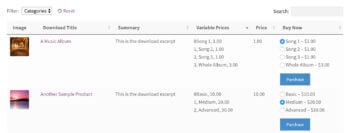
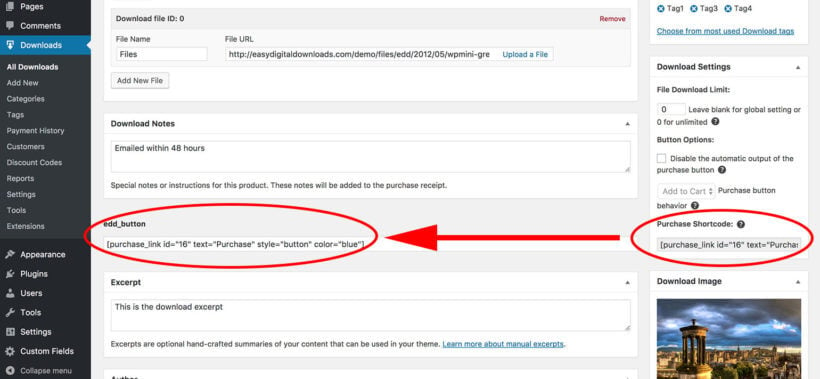
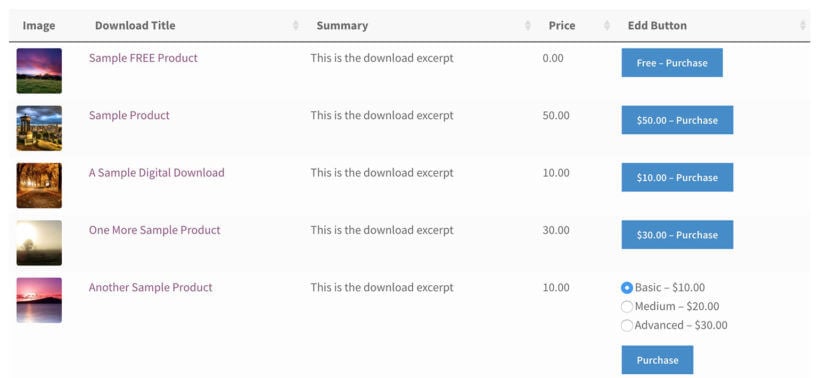
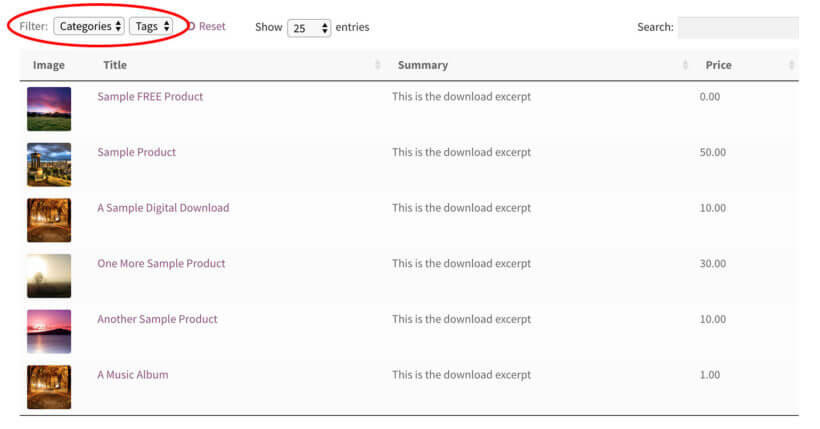
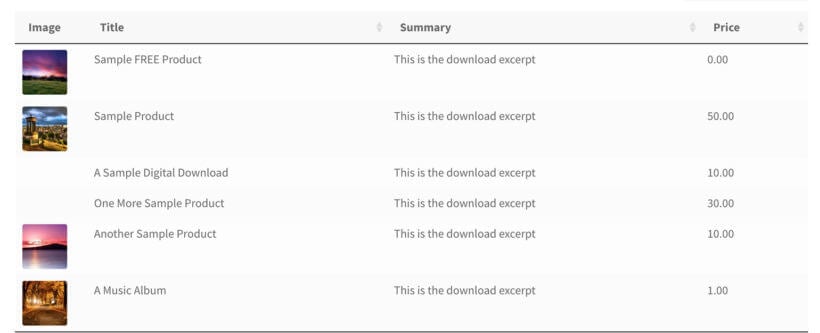


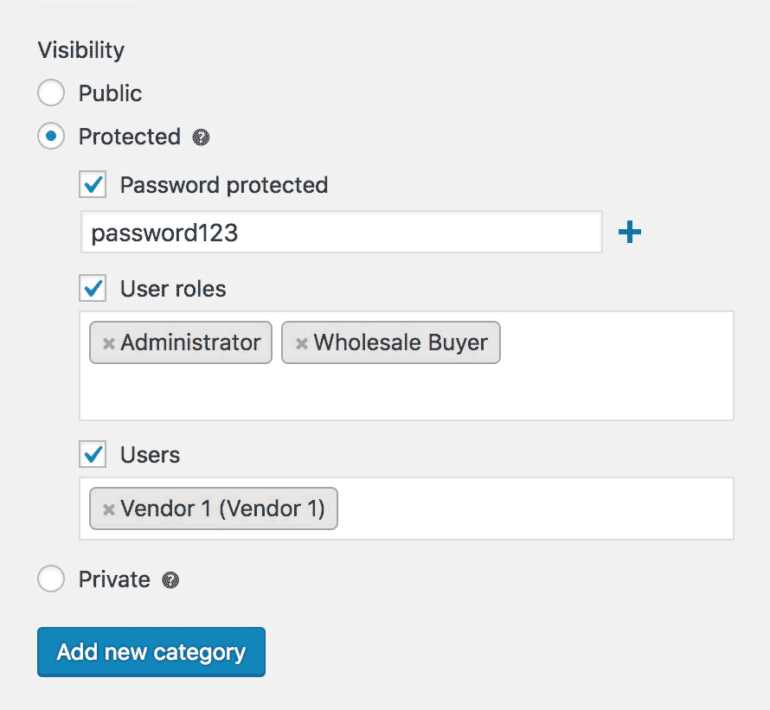

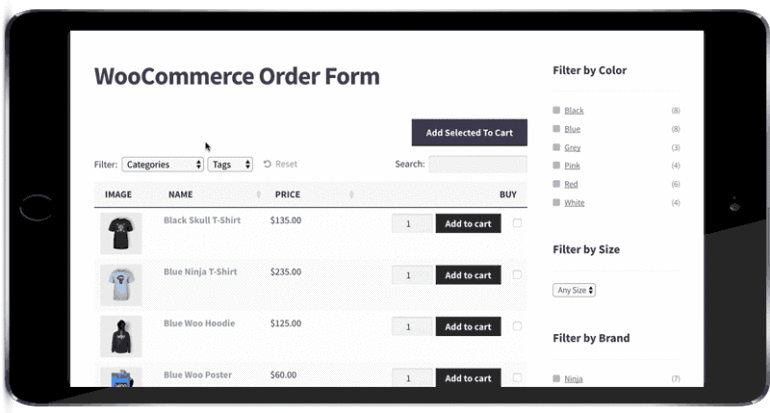 Before we finish, I'll tell you about another great plugin for selling WooCommerce customer-specific products.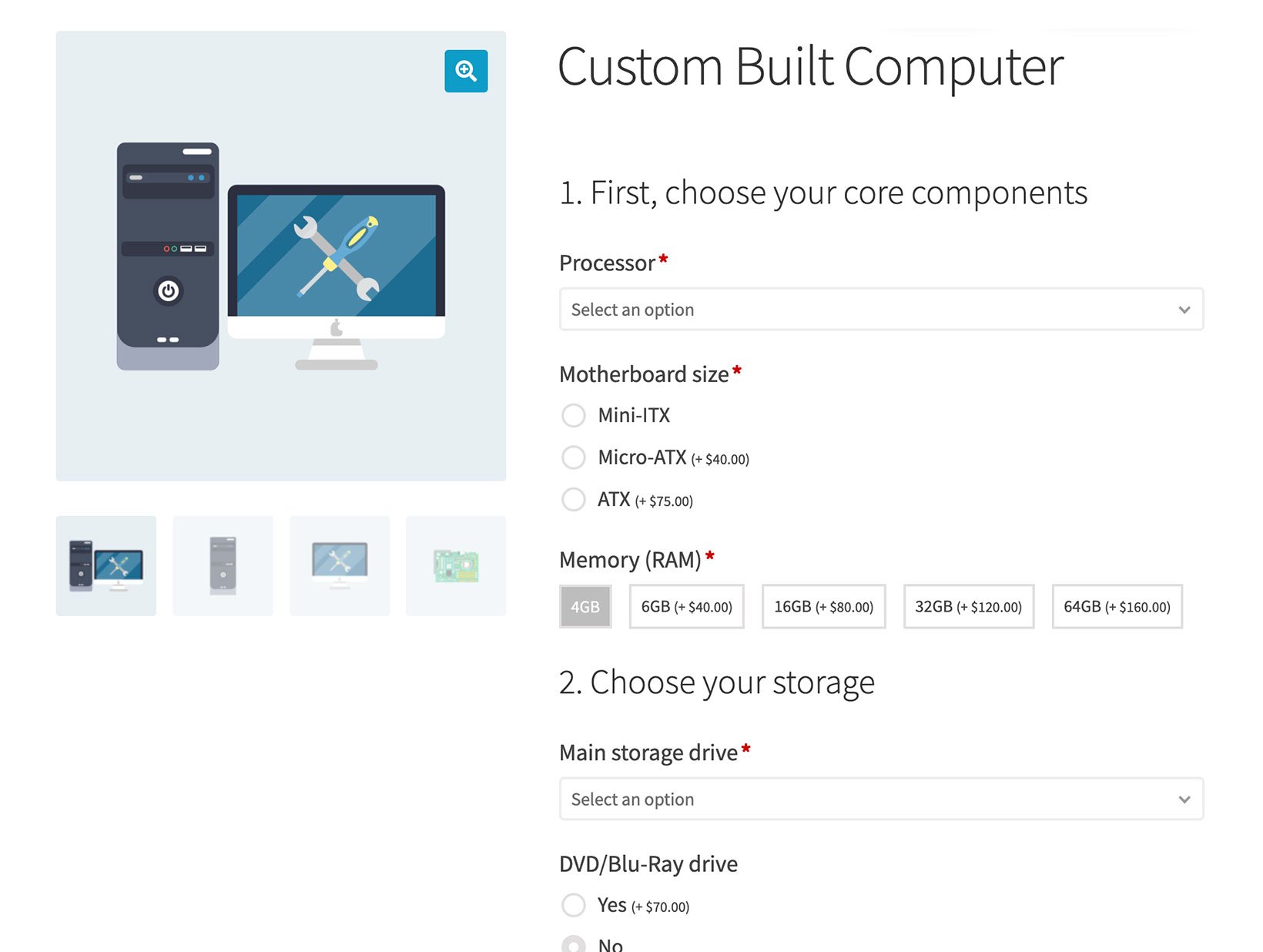

 You can password protect the sale category with 1 or more secret passwords. Give the password to everyone who needs to access the secret sale.
 The easiest option is to password protect the category that you're using for the WooCommerce secret sale. Go back to the Edit Category page (Products > Categories in the WordPress admin). Click to edit the category and click the 'Password protected' option in the Visibility section. Enter 1 or more passwords to protect the secret sale category.