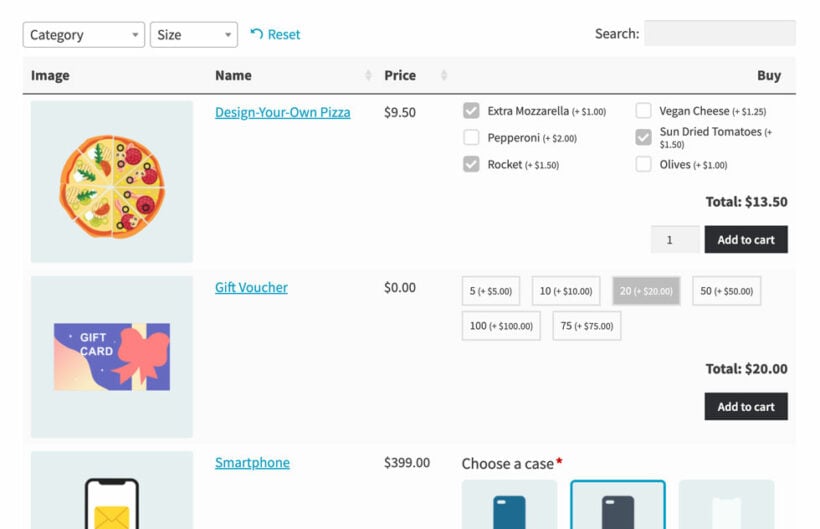
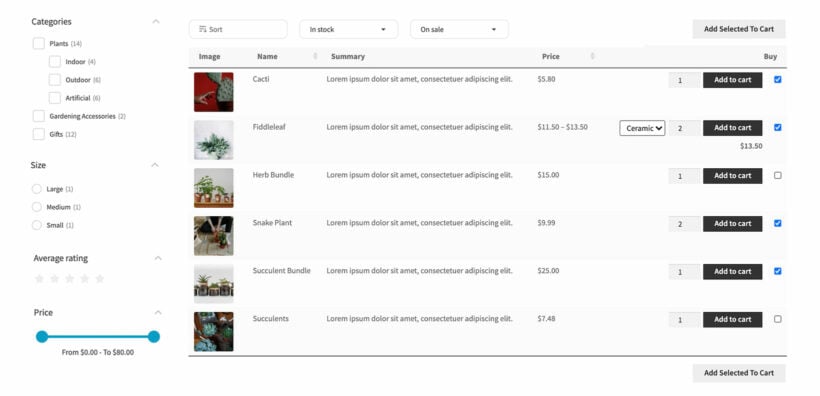
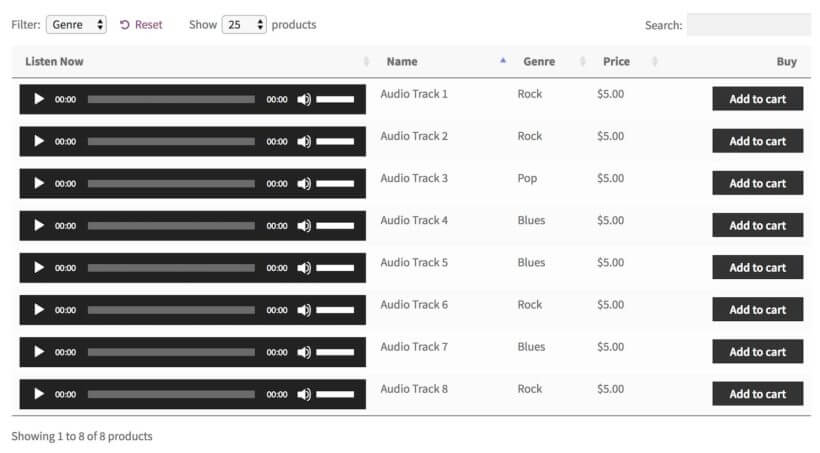
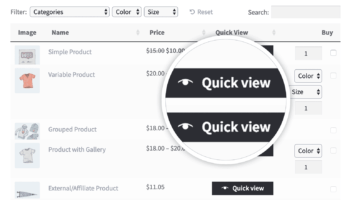
We're pleased to announce that WooCommerce Product Table now integrates with the free Print, PDF, Email by PrintFriendly plugin. Use the two plugins together to list products in a catalogue, list view or order form, with easy-to-use print, save as PDF, and email buttons.
What is WooCommerce Product Table?
WooCommerce Product Table is our bestselling table plugin for WooCommerce. It instantly lists products in an interactive table view with customisable columns and extra features such as search box and filters.
Product tables are popular for many types of online store, including:
It adds buttons allowing you to print any page or post in a print-friendly layout, save as PDF, and send a link via email.
The PDF and print plugin is quite customizable. The settings page lets you choose from a range of pre-designed button, or you can upload your own or add a text version.
There are some basic styling features such as text size for your print and PDF layouts, or you can further style them using CSS.
How do the 2 plugins work together?
Print, PDF, Email by PrintFriendly lets you automatically add the print/PDF/email options to the top of every page and/or post on your website. Or if you prefer, you can use a shortcode to manually add the buttons wherever you want them to appear.
Customers can click on the buttons to open a lightbox. This contains options to print the page, save as PDF or email the page URL to a friend.
When the customer prints the page or saves it as a PDF, this will print/save the entire page as it is shown on your website. So if your page contains a title, introductory paragraph and a product table containing 15 products (10 of which are shown on the current page, with pagination buttons to view the remaining 5), then the printed document and PDF will contain all of this information except for the hidden 5 products, as they're not currently visible.
How can I set it up?
It's easy to get the 2 plugins working together. These instructions assume that you already have a WordPress website with WooCommerce installed and some products added:
Install it and the table builder will open automatically. Use it to choose the options for your table.
Copy the shortcode from the final page of the table builder.
Add a product table to any page using the shortcode, or by inserting the 'Product Table' block if you're using the WordPress Gutenberg editor.
Now go to Plugins → Add New and search for 'Print, PDF, Email by PrintFriendly'. Install and activate the plugin, then go to the settings page at: [your-domain.com]/wp-admin/options-general.php?page=printfriendly.
Configure the plugin settings to choose the button styles etc. In the 'Display button on' section, choose whether to automatically add the print/PDF/email options to all pages or posts. Untick these boxes if you'd rather add them manually.
To manually add the print/PDF/email buttons to your WooCommerce product tables, go to the page containing your product tables. Add the shortcode [printfriendly] above and/or below the product table.
View the page with your product tables. Customers can now click on the button to open a print friendly layout. They can save the product table as a PDF. They can send a link to a friend.
Perfecting your product table print and PDF layouts
The default styles that come with the Print, PDF, Email by PrintFriendly are already pretty good. The plugin automatically strips out any elements of the product table that aren't appropriate in print/PDF format, such as the search box. (After all, you can't search a printout or PDF!)
If there are any remaining elements you don't want, you can click to remove these from the preview window.
PrintFriendly have provided guidance on where you can add your own custom CSS to style the print and PDF layouts. If you don't like the built-in styling, you can create a bespoke look that perfectly matches your website.
How to print other WooCommerce content such as the single product page and category pages
To provide these options for individual products as well as the product table, you will need to also add the PDF button to the single product page (which people can access by clicking on a product in the table). They can then click the button to print the product page or create a PDF.
Similarly, to print a WooCommerce category or create a PDF, you would need to add the PDF button to the category page and it will print all products on that page. If you're using WooCommerce Product Table to list all products from a specific category then you can set the number of rows per page to a higher amount, so that the PDF includes more products from the category.
In order for PrintFriendly to work with WooCommerce Product Table, lazy_load should be disabled. If not, the contents of the table are not displayed.
More integrations coming soon!
We're always on the lookout for popular plugins that integrate with WooCommerce Product Table. If you're using product tables with other 3rd party plugins, please let us know. We might even feature you as a case study on our website!
A customer recently told me that there are no WooCommerce location based pricing plugins. I didn't believe this, so I had a look - and I couldn't find one either!
I'm writing this step-by-step tutorial to show you how to set up WooCommerce zipcode based pricing using the WooCommerce Protected Categories plugin. You can use it to charge different prices depending on the customer's zip code, postcode, area, location, region, or country. And it only takes a few minutes to set up!
Importance of location based pricing in ecommerce
There are lots of reasons why location based pricing can be useful on an ecommerce platform:
Firstly, it allows you to customize your pricing strategies based on specific market conditions and consumer behavior in different geographical locations. By considering factors such as local competition, purchasing power, and demand patterns, you can optimize your pricing to remain competitive and maximize profits.
Secondly, location based pricing enables you to offer personalized pricing to customers, taking into account their specific location. This approach allows you to provide targeted discounts, coupons, or promotions to customers in certain regions, increasing customer satisfaction and loyalty.
Furthermore, location based pricing can help you effectively manage shipping rates and logistics costs. By adjusting the process based on the proximity of the customer's location to the warehouse or distribution center, store owners can ensure that the shipping costs are reasonable and aligned with the customer's location.
Examples of industries that can benefit from location based pricing
Several industries can benefit from implementing WooCommerce location based pricing strategies. Here are some examples:
Ecommerce store and retail: Online retailers can use location based pricing to account for variations in shipping costs. local competition, and customer preferences. By adjusting prices based on different zones, a postcode WooCommerce plugin lets them remain competitive while keeping each area profitable.
Travel and hospitality: Hotels, airlines, and travel agencies can implement WooCommerce location based pricing to reflect regional demand, seasonal fluctuations, and local competition. Pricing can be adjusted based on popular travel destinations, high-demand areas, or specific tourist seasons.
Food delivery services: WooCommerce location based pricing can be beneficial for food delivery platforms and services. Pricing can be adjusted based on the delivery distance, traffic conditions, and availability of local restaurants and food suppliers. This allows for accurate cost calculations and fair pricing for customers.
Insurance: Insurance companies can use WooCommerce location based pricing to account for different risk factors associated with specific locations. Factors such as crime rates, weather patterns, and accident statistics can be considered when determining insurance premiums for different postcode WooCommerce prices.
Subscription services: Companies offering subscription-based, such as streaming platforms or software providers, can implement WooCommerce location based pricing to adjust flat rate prices based on regional demand and market conditions. This approach allows them to optimize revenue and cater to specific customer segments.
Why use a WooCommerce zip code based pricing plugin?
In an ideal world, everyone would pay the same amount regardless of where they live. However, there are situations where you might want to change your product pricing based on the customer's zip code or location.
Here are some reasons why you might need location-based pricing:
If you offer free shipping, then your profitability will vary depending on the customer's location. There's no way to avoid this because shipping companies often charge different rates depending on the customer's zip code, area, or country. The easy solution is to set up WooCommerce shipping zones to charge zip code-based shipping and keep your product prices consistent for all customers. However, if free shipping costs are a big selling point for your WooCommerce site, then you could keep this while charging higher specific product prices for customers in more remote locations.
If your website sells worldwide then it's important to be aware that accepting payments from customers in different currencies may lead to higher fees for your business. A WooCommerce price based on country plugin can help with this.
There may be higher legal or administrative fees relating to selling in certain places. You might try to recoup some of this by charging higher prices to those customers. For example, different WooCommerce zip code validation may have different tax rules or legal requirements which make it harder to sell to that area.
If you provide local services then your prices may differ based on each customer's zip code area.
Perhaps you want to reward locals with lower pricing depending on their zip code.
If this sounds like you, then you may be able to increase profitability with WooCommerce location based pricing. Continue reading to find a step-by-step guide on how to set up a price by country WooCommerce plugin.
What is WooCommerce Protected Categories?
WooCommerce Protected Categories is a WordPress plugin developed by us at Barn2 Media. It restricts access to certain product types in your WooCommerce store so that only people with the password can see and buy them.
I'll talk you through how to achieve zip code based pricing in WooCommerce. You can also change product prices depending on postcode, zone regions, location, country - whatever you like.
In a nutshell, the plugin lets you create a separate product category for each of your price bands. Each category is password protected using one or more zip codes or area names. The customer visits a central login page and enters their area or zip code as the password. This unlocks the category for their area and instantly directs them to the products with the correct pricing. Each product page will then show the right prices.
Each password protected category will contain a different version of your products, with the correct pricing for that zip code area, region, or price by country WooCommerce .
Customers will only be able to see the pricing for their own zip code area (i.e. category).
How to set up WooCommerce zipcode based pricing
Setting up WooCommerce location based pricing gives you the flexibility to customizable product prices based on specific zip codes, countries, etc. Installing the WooCommerce Protected Categories plugin is a straightforward process. Let's dive into the installation and basic setup. You can do all this in the WordPress backend.
Installation and activation process
Get the plugin, and you will receive a confirmation email containing your license key and a download link to the plugin. If you don't find the email, please check your spam folder or contact support for assistance.
Download the plugin by clicking on the provided link. In your WordPress dashboard, navigate to Plugins → Add New → Upload plugin. Choose the downloaded file and click on "Activate". Note that you need to have the WooCommerce plugin already installed for the WooCommerce Protected Categories plugin to work seamlessly.
Enter your license key. You can find your license key in the email confirmation that was sent to you after purchase. The plugin will not work until you activate your license key. There are two ways to enter your license key: In the setup wizard - Once activated, the setup wizard will open. This walks you through each step of the setup process, including entering your license key. On the WooCommerce settings page - Alternatively, you can go to WooCommerce → Settings → Products → Protected Categories and enter your license key.
Finally, save changes.
Configuring the WooCommerce location based plugin
On the plugin settings page, choose the text that will appear above and on the category login form. For example, you will want to replace 'Enter your password' with 'Enter your zip code' or similar.
Create a separate WooCommerce product category for each area that requires its own pricing. For example, you might sell products to 15 local zip codes based on 3 price bands. You would put the 5 zip codes for Band 1 in one category, the 5 zip codes for Band 2 in a second category, and so on.
Password protect each category using the option in the 'Visibility' settings on the add/edit category page. Create a password using each area or zip code that you want to restrict the category to. For example, if you want customers in zip codes 123456 and 987654 to be able to access the category, then create 2 passwords: 123456 and 987654.
Next, create a separate version of each product - one for each of the categories you just created. (Note: You can't put the same product in more than 1 password protected category. To get around this, the Duplicate Post plugin provides one-click cloning of WooCommerce products. If you're cloning products and want to manage inventory across the retail and wholesale versions of each product then we recommend the Group Stock Manager plugin. This lets you share stock levels across multiple products.)
Put each product in the correct category.
Change the pricing of each product as required.
Create a category login page by adding the following shortcode wherever you want people to log in to the category for their zipcode or area: [category_login].
When customers enter the password (i.e. their zipcode or area) into the category login form, they will automatically be directed to a hidden category containing the products with their local pricing.
But I want the public to be able to see my products!
When you use a price by country WooCommerce plugin, the products will be hidden from the public parts of your website so that only customers with the password can view them. However, you don't have to protect all your products using this functionality.
Perhaps you want to list each product on your front end public site but also want a hidden version of each product for people from different zip code areas. You can achieve this by creating one or more public categories, which will not be password protected. These will appear in the public parts of your online store in the usual way.
The pricing of your public products will NOT change depending on the customer's location. The same price will appear for everyone. This means that you need to either show a standard cost that will always be visible in the public part of your site.
If this isn't appropriate for your site, then you can list the public products without prices. WooCommerce will automatically disable the checkout buttons for these products. People can view them but not buy them online. Customers will have to request the password to view pricing and buy.
How can customers request the password for their zip code?
There are various options for how you can give each customer the password for their zip code. This will depend on how private you want your area-based pricing to be, and whether you have regular or one-off customers:
If your pricing is not confidential then you could list all the passwords publicly, above the category login form. Customers simply need to find the password relating to their zipcode area and enter it to see their pricing.
You could use a WP contact form plugin such as Contact Form 7 to let customers request the password. This is a more secure option, as you can ensure that each customer can only access the prices for their own local WooCommerce zip code validation.
After setting up location-based pricing for your WooCommerce products, it's important to make sure that shipping will always be profitable for you regardless of the customer's location. Fortunately, you can easily do this using the built-in WooCommerce shipping methods.
WooCommerce lets you create an unlimited number of shipping zones and shipping classes. You can create different zones per continent or country, or make it fine-grained and charge different shipping based on city, zipcode, etc. Choose which areas get free shipping, local pickup, and which areas you won't ship to at all.
You can add one or more shipping options for each shipping zone. For example, each zone might have a free shipping option with a different minimum order amount to quality; flat rate shipping with a different cost, and so on.
To get full setup instructions, check out our complete guide to WooCommerce shipping. This covers how to add shipping zone or zones to your store, and how to add shipping methods. You can add a zone name for each one, and set multiple pricing options.
Let customers enter their location on the product page
Normally, WooCommerce stores only let customers enter locations on the cart page or single product page. That's no use - customers need to enter their location before deciding whether to buy a product!
It's much better to use the WooCommerce Product Page Shipping Calculator plugin to let customers enter their shipping location and view costs directly on the product page. That way, they can easily see if you will ship to their location and what it will cost. This is much more user-friendly and avoids disappointment while improving your conversion rates. After all, there's nothing worse than getting abandoned carts when customers get put off by seeing the shipping cost too late in the process!
Location-based payment gateways
The WooCommerce location-based pricing plugin described above will work with any WooCommerce-compatible payment gateway. However, you may need an extra plugin if you want to offer different payment options based on the customer's location. For example, maybe you offer PayPal as an option in some countries but not others.
For this, I recommend the Conditional Shipping and Payments plugin from woocommerce.com. This gives you full control over which customers see each shipping and payment option. You can Show different payment gateways based on the customer's billing country, shipping method, country, state or postcode.
Best practices for WooCommerce location based pricing
To effectively implement WooCommerce location based pricing, start by conducting thorough market research. Understand how prices vary in different areas by analyzing factors such as income levels, competition, and customer preferences. This research will help you segment your customers based on WooCommerce postcode and identify patterns in their behavior and purchasing power. By understanding these dynamics, you can develop a comprehensive pricing strategy that caters to the specific needs of each segment.
Use product data analytics to analyze historical sales data and identify trends across different postcode WooCommerce. This will enable you to adjust your prices dynamically based on real-time market conditions.
By implementing dynamic pricing, you can respond to changes in demand and stay competitive in the market. Keep a close eye on your competitors' pricing strategies to ensure your prices remain attractive while offering unique value-added features or services that differentiate your offerings.
It's time to add location pricing to your store!
WooCommerce Protected Categories provides a unique way to offer location-based pricing. Simply install the plugin and create a separate product category for each location, each with its own pricing.
I was really interested to hear that a customer was using it as a WooCommerce zip code based pricing plugin and thought that others might like to do the same.Please leave your comments below!
'WooCommerce is perfect for building any type of e-commerce website. That's why it's no. 1! One of its less obvious uses is to create a private, members only WooCommerce store, which restricts access so only pre-approved customers can enter. Read more on how to add a WordPress membership plugin with WoCommerce to create your membership website today.
I'll help you to choose the right WooCommerce members only plugin for your specific needs, and provide full instructions on how to set it up for your members.
Do I need a members only WooCommerce shop?
There are lots of reasons why you might want a private shopping club where members can buy exclusive products that aren't available to the public. Here are some examples:
Members buying club - Some stores offer membership plans in return for discounted access to their products. For example, you could use a WooCommerce extension/plugin such as YITH WooCommerce Subscriptions to sell membership on your public store with recurring payments. You can then use this tutorial to create a WooCommerce members only area containing the products.
WooCommerce wholesale store - A trade-only e-commerce store might have created a wholesale store to sell products to approved members at trade product prices. (Note: if you're building a B2B store then you might prefer our dedicated WooCommerce Wholesale Pro plugin, instead of one of the more generic plugins in this tutorial.)
Branded products for members only WooCommerce stores - A trade association or membership group might sell branded merchandise that is exclusively available to its members. This might include clothing with the logo of the membership organization.
Whatever your reason for needing a members only WooCommerce plugin, read on to find the right solution for you.
What sort of membership store do I need?
First, let's look at the different types of WooCommerce members-only extension plugins. There are a few methods for structuring a private area and membership store, depending on which customers need access to which products:
100% private WooCommerce store with 1 membership level With this option, your overall website will be public (e.g. the homepage, core pages, and any custom post types), but the WooCommerce shop will be hidden from public view. Members must log into the private shopping club to view the products and buy them. Once logged in, all members will have access to the same products. Setup instructions...
Method 1 - 100% private WooCommerce store with 1 membership level
This method uses the WooCommerce Private Store plugin. Use it to make all parts of WooCommerce private shopping club. Once a member logs into the hidden store, they can view and buy all your products.
Setup instructions for your private members only WooCommerce store
Before you start, I expect you to have a WordPress website with WooCommerce already installed and set up. Create all your products.
At this point, you will have a regular ecommerce store that is available to the public. Use the following instructions to transform it into a hidden WooCommerce members only store:
First, get WooCommerce Private Store. Download the plugin files from the confirmation page or email, and copy your license key.
In the WordPress admin, find Plugins → Add New and upload the plugin files. Activate the plugin.
Go to the plugin settings page at WooCommerce → Settings > Private Store. Add your license key, choose 1 or more passwords for your store, make any changes to the login page text, and Save.
Now create a page that clients will use to log into the WordPress portal. Use the shortcode [store_login] to automatically add a login form to the page.
Finally, link to the login page from your navigation menu, header, footer, or keep it hidden and just send the link to your members. (This depends on how you want people to access your private store.)
And that's it! That's all you need to do to lock down WooCommerce and turn it into a members only store.
Public visitors can visit your membership site, view your main pages, and access the login page. Your WooCommerce products, categories, etc. will be completely hidden from public view and won't show up in search results or anywhere else. On entering a correct password, members can unlock the WooCommerce members only store and view and buy the products within.
Using individual user logins to unlock the members store
By default, WooCommerce Private Store uses password protection to protect your WooCommerce members only shop. There's also a 'Logged In Users' box on the settings page. Enabling this option will replace the password protection with automatic access to the members' shop when customers log in to their WordPress user account on your website. However, if you want to limit access only to certain user roles, you can customize the settings accordingly.
If you use this option, then you don't need to use the store login page that comes with the plugin. Instead, members can access the entire store simply by logging into their account via the default WordPress login page. (Tip: You can also use any other WordPress login or social login plugin, such as Theme My Login.)
Method 2 - 100% private WooCommerce store with multiple tiers of membership
This method uses the WooCommerce Protected Categories plugin to restrict access to your shop. The shop part of your website is completely hidden from the public. Your WooCommerce members-only shop is divided into multiple sections. Each member can have access to 1 or more areas within the shop.
This is a great opportunity to sell different private products to different members. For example, if you have different groups or tiers of membership, then you can create a separate area of your store for each category.
Before you start, you should already have a WordPress site with WooCommerce and various products. At this point, your store will be fully public.
Use the following instructions to turn it into a multi-level WooCommerce members only store, with different product pages available to different groups of members.
(You can also use these instructions to sell user-specific products, such as branded clothing for a sports team or school. In this case, you will have a different category of products for each member.)
Setup instructions for a multi-level WooCommerce members store
First, buy WooCommerce Protected Categories. Copy your license key and download the plugin from the confirmation email or confirmation page.
In WordPress, go to Plugins → Add New and upload and activate the plugin.
Navigate to WooCommerce → Settings → Products → Protected Categories. Enter your license key, make any other changes (e.g. to the members' area login form), and click Save. DO NOT tick the boxes to show protected categories in public parts of the store.
Now, go to Products → Categories. Create a category for each membership level or group. For each category, select one of the 'Protected' options:
Password protected - Members must enter a password to access each members-only product category. This WooCommerce password protection is separate from WordPress user logins. It's a good option if you don't require separate accounts for each member.
User roles - Automatically unlock the members-only category for logged in users with a specific role. (Tip: The free User Role Editor plugin works great for creating additional WordPress membership plugin with WooCommerce levels, which you can then protect using WooCommerce Protected Categories.)
Users - Alternatively, select the individual member accounts that should have access to the members-only WooCommerce category. This option is probably best for smaller WordPress membership sites. I'd recommend the password protection or user roles options for WooCommerce stores with lots of members.
Next, add any sub-categories to your members' area categories. Leave these set to 'Public', as they will automatically inherit the same protection as the parent category.
Now add your protects and allow members to login
Next, go to the main Products page in WooCommerce. Put each product in one of your members-only categories. (I recommend using Quick Edit to categorize products more easily - hover over each product and click 'Quick Edit'.)
Finally, create a page that members will use to log into their area of the members only store. Add a 'Member Login' link to your navigation menu. This depends on what type of protection you're using for your membership plugin categories:
If you're using password protection, then use the shortcode [category_login] to add a login form to any page. You can link to this from the public parts of your website as needed. When someone logs into a members-only category, the plugin will instantly redirect them to the category matching the password entered.
If you're using user roles or user restrictions, then you should link to a user login page such as the main WooCommerce Account page. To make your WooCommerce members store more user-friendly, you can use a free plugin named Peter's Login Redirect to automatically redirect each user or role to the correct category page after logging in.
How the multi-level members store works
Once you have completed the above instructions, you will have a complete WooCommerce members only shop with multiple levels.
Customers can view the public parts of your website as usual. They can go to the members' store login page and either enter a password or log into their WP user account.
Members can only see the products that they have access to. The restricted products are hidden from everyone else.
You will need to set up a process for giving the password to your members or allowing new members to register for the store.
Giving the password to your members
For password protected membership areas, you might want to include the password for the appropriate product category in your members' welcome pack or 'new member' email. The WooCommerce members only plugin supports multiple passwords, or you can use the same one for each user.
Creating a user account for new members
The WooCommerce 'Account' page turns into a login and registration form for logged out users and guests. If you have enabled user registration, then you can let new members use WooCommerece shop only for registered users here. Once they have logged into their new WP user account, they can access the members-only store.
Alternatively, you can use any WordPress front-end registration/login plugin to create a fancy registration form. The Theme My Login plugin has a useful feature to hold new member registrations for approval by an administrator before they can access the members-only store.
If you'd rather sell membership via your website, then you can do this by creating a public product that everyone can buy. To find out how skip ahead now.
Can I sell the same product to more than 1 membership level?
Each product can only be in 1 protected members only category. If you want to sell the same products to 1 or more groups of members, then you should clone these products and put one version in each WooCommerce protected category. The Duplicate Post plugin makes it easy to clone WooCommerce products. (If you want to manage inventory across each product version, then we recommend the Group Stock Manager plugin. This lets you share stock levels across multiple products.)
Method 3 - WooCommerce store with public and WooCommerce members areas
This method also uses the WooCommerce Protected Categories plugin. It builds on method 2 by adding a public shop as well as one or more WooCommerce members only areas. Some products are available to everyone, while you can also have private members only products.
Setup instructions for a public and members only WooCommerce shop
The instructions for this use case are identical to method 2. The only difference is that as well as creating protected members-only categories, you should create some public product categories.
The next step is to create a user-friendly navigation structure for your public and WooCommerce members only store. We'll look at this now.
Store navigation
Think carefully about how to structure your WooCommerce store. It needs to be intuitive for both members and non-members:
Public store navigation - This bit's easy. Simply add links to your public store in the usual way. For example, you might add menu links to the main WooCommerce shop page and maybe your public store categories. You can also use the widgets that come with WooCommerce to help people navigate the public store.
Membership plugin: Members only shop navigation - The public shop will remain visible to logged in members, so you need to create navigation links that make it clear when they're in the members only WooCommerce shop. Some tips:
Create a page which members will use to log into the members only store. If you're using password protected categories, then use the shortcode [category_login] to add a login form to the page. If you're using role or user protection, use a front-end user login page such as the WooCommerce Account page. You can link to your members store login page from the public areas, such as a 'Members Store' link in the navigation menu. Or if you want to keep it hidden, don't link to it at all and just send the link to your members. Once someone enters a correct password, they will be redirected to the members only store category for that password.
If you add direct links to your WooCommerce members only categories to the navigation menu, then these will be hidden from public view. Once a member unlocks their hidden products via the category login page, these menu links will magically appear in the menu for them! This is a neat way of adding more complex structures within your members only WooCommerce store. Each member will only see the products that they have access to.
Can the same product appear in the public and members only areas?
If you've ticked the box on the settings page, then your members only WooCommerce products can appear in the public store. When people click on them, they will have to enter the password in order to purchase.
However, each single product page can only be in a public OR a password protected category. If you want to sell the same products to the public and use the WooCommerce shop only for registered users feature, then you will need to clone the individual products. The Duplicate Post plugin is a great add-on that makes it easy to clone WooCommerce products. Then, you can put 1 version of each product in the different parts of your store.
How can I sell access to my WooCommerce members only store?
Finally, I'll reveal how you can sell access to your members only WooCommerce store with this membership solution. Skip this section if you don't want to charge for membership.
First, create a public category under Products → Categories.
Now add a product to this category - Products → Add New. Call this 'Buy Membership' or whatever you like. Add a price and other information about joining your WooCommerce membership purchasing club.
Your membership product should be a normal simple or variable product if people have to make a one-off payment to join. Alternatively, if you want to take regular ongoing payments from members, then use the YITH WooCommerce Subscriptions plugin to create a subscription product. This can include free trials and different payment frequencies.
Create more than one membership product if you want to sell different paid membership tiers on this membership plugin.
Link to the membership products from prominent places on your public website, such as the navigation menu.
Lastly, consider how to give new members access to your WooCommerce members only store. This depends on the type of protection you're using:
Password protection - Use the Follow-Up Emails plugin as an add-on to automatically send an email containing the members' area login link and password to everyone who buys the membership plugin. This plugin provides fine-grained control, and you can create different emails for each membership product.
Role protection - The easiest way to do this is to automatically unlock the hidden membership plugin for all logged in Customers. Disable guest registration in the WooCommerce settings (WooCommerce → Settings). When someone buys a product, including membership, they will receive the logins for a customer-level account. They can log into this account to unlock the WooCommerce members only store.
Individual logged in user protection - Finally, is your members only store is restricted to individual logged in users? If so, then you will need to manually give each user access when they purchase a membership. Just head to the 'Edit' screen for the members only category, and select them under the 'Protection' options.
Use WooCommerce to create a members only store
Using the above methods and funtionality, you can use WooCommerce to create content restrictions and sell exclusive products to pre-approved customers. Whether you have a WooCommerce shop only for registered users or a separate public online store, there is always a best WooCommerce members only plugin that will suit your needs.
Customers often ask if our bestselling Product Table plugin works with any WooCommerce 'add to quote' plugins. In this article, I'll share an excellent Request a Quote plugin that allows customers to add products to their shortlist directly from the product table
If you're using WooCommerce Product Table to list products in a table, you might want customers to request a quote instead of buying online. This is essential if you provide bespoke services or custom pricing which varies for each customer.
A WooCommerce add to quote plugin provides 'add to quote' buttons, which you can use in addition to or instead of the usual add to cart buttons. Your customers can select as many products as they like, choose the quantity, and create a bespoke list. They can then view the list and submit the quote request to you.
Which WooCommerce quote plugin can I use with product tables?
Most add to quote plugins don't work with WooCommerce Product Tables straight out of the box. However, we have integrated with the YITH WooCommerce Request A Quote plugin so that you can easily add quotation buttons to your product tables.
This video shows the 'Add to Quote' buttons in the product table. When you add a product to the quote, it is added to a list.
When you create your product table columns, add the Request quote column.
Follow the documentation for both plugins to set them up as required.
That's it! When you view the product table, it will contain an Add to Quote column containing the buttons from YITH's plugin.
FAQ
Can I hide the add to cart button?
Some people like to use add to quote buttons alongside the usual add to cart buttons. Others like to remove the add to cart button completely so that the only option is to get a quote.
The YITH WooCommerce Request A Quote plugin has an option to hide the add to cart button. This does not work with WooCommerce Product Table and will remove the add to cart button from the single product page. You can easily remove the add to cart buttons from your product tables - simply don't include an add to cart column when you add columns to the product tables.
Where can customers see their quote request?
The YITH WooCommerce Request A Quote plugin comes with a 'Request a Quote' page. This lists the products you have added to the quote request, and includes a form to submit the request.
When a customer uses the product table to add an item to the quote, a link to the Quote Request page will appear in place of the button. This makes it really easy for them to add multiple products to the quote and then click to review the quote.
You can also link to this page from your navigation menu. Alternatively, you can add a button linking to the page above/below the product table.
The premium version of the YITH WooCommerce Request A Quote plugin also has many extra features. This lets you customize the quote features to your exact needs.
Can customers choose a quantity for their quote request?
It can be a bit tricky to make the quantity picker in WooCommerce Product Table work with the YITH Request a Quote buttons. This is because the quantity picker appears in a different column of the table from the 'Request a Quote' buttons, and the two columns don't relate to each other.
Here are two suggested workarounds:
If you've enabled the option to display the product tables on your main Shop page then you can follow these instructions to make the quantity picker work with YITH's Add to Quote buttons. This method will only work when you display product tables and quote buttons on your shop page templates, and not when you create tables using a shortcode.
Where you have created tables using a shortcode, your customers should use the 'Add to Quote' buttons in the product table to built their quote. This will add a quantity of '1' to the quote for each product. When they click through to the quote page, they can modify the quantity of each product as required.
Does it work with variations?
If you want people to be able to add variations to the quote, then you need to enable the option on the WooCommerce Product Table settings page to list each variation on its own row of the table. If you display the variations as dropdowns then YITH's plugin won't know which variation to add to the quote.
Conclusion
We hope you enjoy using YITH's Request a Quote plugin with WooCommerce Product Table to create table layouts with add to quote buttons.
All WooCommerce stores share a single aim: To increase conversions and get more sales. Whatever your wider business goals, that's what it all comes down to!
If you Google 'WooCommerce conversion rate optimization', you'll find lots of general advice on how to convert more visitors into paying customers. This usually focusses on improvements to the cart and checkout. These are important, but often forget that you need to convince customers to buy your products in the first place.
In this article, I'm going to do the opposite. I'll provide specific and actionable tips on how you can convince customers to add more productsto their cart using a specific tool: product tables.
WooCommerce product tables are an excellent tool for increasing your sales. By adding well designed table layouts to your store, you can present products in user-friendly ways that make it easier for customers to buy from you.
What is a WooCommerce product table?
A WooCommerce product tables lists products in a structured table layout. This will consist of rows and columns, with each product as a separate row in the table.
The WooCommerce Product Table plugin is the easiest way to create a table view for your store. It comes with dozens of options, and saves having to code complex table layouts from scratch.
Product tables sound simple, but they provide lots of opportunities to optimise your WooCommerce conversion rate. Read on to discover how to get more sales by listing products in a table layout.
#1 - Display sales-winning product data in the table
Most store owners don't stop to consider what product data to include on the WooCommerce shop pages. Big mistake!
WooCommerce and your theme will display pre-defined information on the shop and category pages. This typically includes the product image, title, price, ratings and add to cart button. But what if this isn't the data that will convince your customers to buy?
WooCommerce Product Table lets you choose exactly what data to provide on product listing pages. Each piece of information is displayed as a column in the product table. The plugin supports all the standard product data such as SKU, name, short and full description, categories, tags, featured image, reviews, stock, size, and price. If this isn't enough, you can also show custom product data by creating custom fields and taxonomies.
With so many possible columns, you have full control over the product information in the table. Think carefully about what data your customers need to see on each page. If your product tables have links to the single product page, the aim is to provide enough information to inspire customers to click through and learn more.
If your WooCommerce tables include add to cart buttons, they'll need to include enough data to decide to buy without clicking elsewhere.
Don't just add columns to your WooCommerce product tables because you can. Think carefully about all the available columns. Only use the ones that will actively convince customers to buy your products.
Examples - choosing the right product data for your store
A WooCommerce wholesale order form might use product tables to show as many products as possible per page. Wholesale customers already know what they want to order, so they don't need images or descriptions. The product table will therefore contain columns with factual data such as SKU or ID, name, attributes, and multi-select checkboxes.
A WooCommerce restaurant order system might use product tables with a small image of each dish, plus columns for name, short description, price, and add to cart buttons. It might also include custom fields and taxonomy to show extra information such as calorie count and meat-free labels.
See the knowledge base for a list of all the product data you can show in the WooCommerce table layout.
#2 - Make it easier to buy with add to cart buttons & checkboxes
Amazingly, WooCommerce Product Table comes with 3 options for adding products to the cart. Well, there are 4 options really, as you'll see below:
'Add to cart' button for each product.
Multi-select checkbox to add multiple products to the cart.
Use the add to cart button and checkbox together, giving customers a choice.
Perhaps you want customers to buy on the single product page instead of directly from the table. You can include a button linking to the single product page instead of (or as well as) having add to cart buttons.
Add to cart button
Add to cart checkbox
Button and checkbox
How to choose an add to cart button type
First, you need to decide whether add to cart buttons will help or hurt your WooCommerce conversion rate optimization.
There's no one-size-fits-all answer to this question. It depends on the type of products you sell, and how much information your customers need to convince them to buy.
Some tips
Do you sell high value products, where customers spend a long time reading and researching before deciding to purchase? If so, it's often best not to include add to cart buttons in your product table at all. Instead, add a 'Details' button linking to the single product page. Or don't bother with buttons at all, as customers can click on the title to access the product details. Once customers click through to view more information, they can spend more time reading full details, reviews, and other data that will convince them to buy. They will only click the 'Add to cart' button after they have read all the information, so there's no point including them in the product table view.
Do you want to disable online ordering, with different calls to action? This article is about optimizing your WooCommerce conversion rate. However, conversions don't have to be online sales. You might sell your products offline, for example via phone or in person. If this is you, then you can create a product table without add to cart buttons. You can disable all the links in the table so that customers can't click through to the single product page at all. Instead, create a custom field with a different call to action - for example, a 'Call us now' button. Show this as a column in the product table, encouraging customers to do whatever action counts as a conversion for you.
And what about multiple purchases?
Do customers buy one product at a time? If customers are likely to order single products only, then the best option is a single add to cart button for each product in the table. For example, if you're selling hot tubs then customers will only ever buy one, so there's no need for multi-select boxes.
Do you want customers to buy several different products? Lots of WooCommerce stores want customers to buy as many products as possible. This applies to all sorts of store including clothing websites, online food ordering systems for restaurants, and shops selling low-value products such as stationery. If this is you, then you can vastly increase your income by taking steps to increase the average order value. It's more profitable to increase your average order value than to attract more low value customers - for example, because it reduces advertising and support costs. Multi-select checkboxes are a great way to do this. Customers can quickly tick all the products they want, and add them all to their basket in a single click. Nice!
Use quantity pickers to sell more products
If your product tables have add to cart buttons, then it might also be worth adding a quantity selector. This is always worth doing if you want customers to buy more than one of each product.
For example, if you're selling pens then having 'add to cart' buttons without a quantity picker will encourage customers to buy one pen at a time. This isn't what you want! In contrast, adding a quantity selector will unconsciously prompt customers to stock up and buy more. This is another great way to increase the average order value, which can hugely increase your revenue.
#3 - Should the product table link to the single product page?
We've already touched on this, but let's delve deeper into the question of whether to use the single product page. The great thing about WooCommerce Product Table is that you can choose whether or not to have a separate 'Details' page for each product.
By default, customers can click on any product in the WooCommerce table to access the product details page. If you like, you can also add buttons linking to the product pages.
This is ideal if customers will want to see more information about your products than you can include in the table. However, not all stores will benefit from using the single product page.
Some examples
WooCommerce quick order forms simplify the buying process by keeping everything on the product table page. There's no need for customers to click through to separate pages.
Read-only product catalogues provide information about each product, without an option to buy. The single product page includes Buy buttons, so you may want to remove access to these pages.
WooCommerce wholesale stores are for regular trade customers who already know what they want. They want to order quickly from the wholesale order form, without having to click elsewhere.
To stop customers accessing the product details page, you can disable these links in the product table. When they view the products in the table, the only action they can take is to buy!
#4 - Use quick view to give your conversions an added boost
As you can see from these top 13 tips, product tables are a fabulous way to convert more customers into paying customers.
In many ways, it boils down to using one-page shopping as an alternative to sending customers to a separate page for each product. This in turn speeds up the buying process and encourages customers to buy multiple products at once.
But what happens if your customers need more information than you can fit into the product table layout? Sure, you can add extra columns to show information in the table view. However, some types of product do need extra information. Or they may have too many variations to fit into one-page shopping. So how do you provide extra information without requiring extra page loads?
The answer is to add WooCommerce quick view to your product tables.
The Quick View Pro plugin adds quick view buttons or links to WooCommerce Product Table. Customers use these to view the full product image gallery and read extra information such as the short description in a lightbox popup. They can even choose variations, quantities and add to the cart directly from the lightbox.
This is the perfect way to provide extra product details without taking customers away from the product table page. Customers remain on the list of products throughout the process, offering true one-page shopping with an extra boost.
#5 - Use variations & add-ons to optimize your WooCommerce conversion rate
Do you sell product options or variations? WooCommerce Product Table fully supports variable products, and add-ons creating using the WooCommerce Product Options plugin.
There are 3 user-friendly ways for customers to choose a variation before adding a product to the cart. If you're using the add-ons plugin then you can also add various combinations of check boxes, text input fields, radio buttons and more. To increase your WooCommerce conversion rates, present options in a way that will make customers more likely to buy:
Option 1 - List variations as dropdown lists before the add to cart button.
Option 2 - List each variation on its own row in the product table.
Option 3 - Customers select variations and add to cart from the single product page.
Extra options added using the Product Options plugin.
Think about which option will maximise your WooCommerce conversion rate optimization. Again, different types of store will benefit from presenting variations and add-ons in different ways.
For example:
Show variations as dropdown lists if you have lots of products. The dropdowns let you save space by listing as many products as possible per page.
List variations on separate rows if you have a small number of products and want to draw more attention to each variation. For instance, you might sell a single product but offer it in several variations. The best way to sell this product using a table view is to list each variation as a separate row in the table.
Use add-on fields if the logic of variations doesn't meet your needs - for example, if you want customers to be able to select multiple options.
#6 - Use image sizes that will sell your products
The great thing about WooCommerce product tables is that you have full control over the images. Most WooCommerce themes display product images in a standard size. This may not present your products in a way that will show them off and maximise conversions.
When creating product tables, think about what image size will sell your products most effectively.
How to get your product images right
Do you need product images at all? Lots of WooCommerce websites upload an image for each product, just because the theme expects them to. This leads to some strange results, such as huge images to promote non-visual products such as e-books. Think about whether images will attract customers to your products, or whether they'd prefer a text-based layout with more products per page.
How big should the images be? Again, most WooCommerce stores use big images because the theme automatically sizes them. Images take up a lot of space and reduce the number of products that will fit on each page. Only use big images if they actively help to sell your product. Many types of product will benefit from an image, but a small thumbnail is enough. For example, a WooCommerce website selling spare automobile parts need product images to reassure customers that it's the right part. However, customers aren't buying based on what the part actually looks like, so it's best to keep the images small.
What about the image proportions? The most popular WooCommerce themes require square images. This may not be ideal, for example if you're selling a tall and thin product such as clothes.
By listing products in a WooCommerce table layout, you can choose whether or not to include an image column. If you add featured images, you have full control over the image size and dimensions. This is an opportunity to improve WooCommerce conversion rates by making your images more appropriate and ensuring they will actively sell your products.
Experiment with the image size option to get the perfect balance to sell your products. Try to achieve a balance between creating images that will make customers want to buy, and fitting the optimal number of products onto each page.
#7 - Use social proof to convince customers to buy
Research shows that almost 70% of customers read reviews before making a purchase, and having customer reviews on your website can increase conversions by nearly 75%.
This highlights the power of social proof as a tool for WooCommerce conversion rate optimization.
There are several easy ways to include social proof in your WooCommerce product tables. Think about the best way to use them to sell your products:
Product reviews Include a 'Reviews' column in the product table. This is built into the table plugin and shows each product's average star rating. Customers can click to read full reviews on the single product page.
Product audio & video reviews Word of mouth is the best sales tool. Leverage this by adding audio or video testimonials from happy customers, with embedded players in the product table. People can click the 'Play' button to watch or listen to customers talking about why they should buy each product. What better way to convince them to buy?
#8 - Find creative ways to bring your products to life
With WooCommerce Product Table, you can think of exciting new ways to bring your products to life. This can have a big impact on your conversion rate.
You can be really inventive here, as the WooCommerce table plugin supports shortcodes from your theme and other plugins. This means that you can add content provided by other shortcodes and display them in the product table.
For example, you might have promotional videos or 360 degree tours to promote your products. You can embed them directly in the product table. Customers can see the product in action without having to click elsewhere.
#9 - Make your products easy to find
So far, we've looked at some conversion-winning ways to display products with WooCommerce Product Table. That's all well and good, but your sales will only increase if it's quick and easy for customers to find the products they want in the table.
If customers have to scroll through lots of products to find what they're looking for, they'll quickly give up and look elsewhere. This increases your bounce rates and reduces conversions.
To get the most benefit from your product tables, you need to design them in a way that makes it super-easy for customers to find products. If you only have a few products, this isn't really an issue. But if you have a large product catalog, then it becomes incredibly important.
How many product tables do you need?
First, decide how many product tables you need. You can list your entire inventory in a single product table. Or, you can create multiple tables, each containing different products.
There are several ways to use multiple product tables on your WooCommerce site:
Multiple product tables on a single page One option is to divide up a single page with multiple product tables. For example, a WooCommerce restaurant might create a single page for ordering their foods online. They would structure the page with a heading for each section of their menu (Starters, Main Courses, etc.), followed by a product table listing foods from that category. Alternatively, they can create a tabbed layout or accordion with a product table in each section. Customers can select their foods and place an order from this one-page order form.
Product tables on separate pages Alternatively, you can add product tables to different pages across your site. The tables might replace your standard WooCommerce product category page layout. Customers can navigate between pages via the navigation menu, sidebar links and other internal links.
How will customers search, sort and filter the WooCommerce table?
WooCommerce Product Table comes with lots of ways to help customers find products in the table. To optimize your WooCommerce conversion rate, don't just activate them all! Think about the number of products in the table and how customers will use it. Armed with this knowledge, you can add search and filter options that will be most useful to your customers.
First, think about whether you need to make it easier to find products. If you only have a few products, then there's no need to clutter up the table with a search box or filters. Instead, keep it minimal - this draws more attention to your products.
If you have lots of products, then you can definitely improve your WooCommerce conversion rate by adding extra search and filter options.
Search & filter options
Sort columns Customers can click on any column to sort the table by that column. The sort arrows appear automatically and make it easier for your customers. You can also change the default sort order for when the WooCommerce table first loads.
Keyword search box By default, a search box appears above the table. There are options to hide or reposition this. Keep it if customers might want to search for a product by typing a particular keyword. For example, this can be a life-safer if customers already know the name, ID or SKU of the product they're looking for.
Filter dropdowns You can show filter dropdowns above the table to let customers filter by category, tag, attributes, variations, etc.
WooCommerce filter widgets The product table plugin comes with its own version of the built-in WooCommerce filter widgets. These let you filter the table by selecting a product attribute, price, or rating in the sidebar.
Add even better filters with WooCommerce Product Filters
As you can see, WooCommerce Product Table comes with lots of options for adding filter dropdowns and widgets. For even more flexibility, you can use it with its sister plugin - WooCommerce Product Filters.
This comes with a huge range of filter styles and the ability to filter by any type of product data.
Using WooCommerce Product Table with the Product Filters plugin
#10 - Let customers sample products before deciding whether to commit
Lots of products - e.g. curtains, make-up or paint colors - are difficult to sell online. Customers simply can't tell whether the product is suitable based on pictures on a screen. That's when you need WooCommerce Product Sample to improve your conversion rate.
When you use WooCommerce Product Table with product samples, it works like this:
The customer views the products in the product table. Each product or variation has an 'Order Sample' button as well as the usual 'Buy' button.
If the customer wants to compare sample items in their own home, then they simply order a sample of each product.
The WooCommerce Product Sample plugin sends them a friendly email a few days later to ask which was their favorite and remind them to order the full product.
Product samples give customers 100% certainty that they're ordering the right thing, removing the risk factor - and therefore improving your WooCommerce conversion rate. You can choose whether or not to charge for samples or delivery, so it's a great opportunity to boost conversions at no cost to you. The product table is particularly useful for ordering samples because customers can see all the options on one page.
#11 - Let customers complete their order without leaving the page
WooCommerce Product Table with Fast Cart popup checkout
As we have seen, WooCommerce Product Table makes it super-fast to find and add products. After that, customers complete their order using the standard WooCommerce cart and checkout pages.
To supercharge the customer journey even more, you can replace the multi-page checkout process with an on-page cart popup. WooCommerce Fast Cart lets customers view their cart, pay and complete their order from within the popup cart. This all happens directly on the product table page, so there's zero chance that your customers will get bored and give up. That can give a nice boost to your WooCommerce conversion rate.
#12 - Increase the WooCommerce conversion rate for mobile users
WooCommerce Product Table is responsive and mobile-friendly straight out of the box. Resize your browser to see the table resize before your eyes.
Even so, you can take further steps to increase your WooCommerce conversion rate for mobile users. This is definitely worth doing, as most stores have higher bounce rates for mobile users. It's more of a challenge to create a good buying experience on mobiles compared to larger screens.
How to perfect your product tables on mobiles
By default, the WooCommerce table plugin will automatically prioritise which columns are visible on mobiles. If you have too many columns to fit onto smaller screen sizes, then some columns will be hidden. Customers can click a small cross icon to view the hidden columns.
This may or may not be the best way to maximise your mobile conversion rates. WooCommerce Product Table has several responsive options to control how the table works on mobiles. This includes:
Priorities Choose which columns are visible and which are hidden on mobiles. Use this option to make sure the most important columns are always visible, such as the product name and add to cart buttons.
Responsive Display Choose what happens when not all the data in the table will fit on the screen. Instead of hiding columns behind the cross icon, you can show it all by default, or let it appear in a modal window.
By perfecting your store's user-experience on mobiles, you can optimize your WooCommerce conversion rates for mobile users and get more sales.
#13 - Measure the impact of your WooCommerce conversion rate optimization
If you're making improvements designed to increase conversion rates, it's important to make sure they actually work! Conversion tracking lets you monitor your conversions in an evidence-based way. Make each improvement one at a time, and track the impact on your WooCommerce conversion rate. Use this information to do more of what works best, and less of what doesn't.
Google Analytics is the best tool to track conversions in WooCommerce. You can easily set it up using a free WordPress plugin such as WooCommerce Conversion Tracking. Once it's in place, check your Google Analytics regularly. Dive into the data and learn about where your best referrals come from, who your best customers are, and much more.
You'll also want to discover how the product tables are affecting your WooCommerce conversion rate. By default, Google Analytics doesn't record data about changes you make to your website. However, you can use a little-known option to record the improvements you make, and view them alongside the conversion rate tracking data.
How to record website edits in Google Analytics
Go to any screen in Google Analytics that has an Overview chart (similar to the line graph shown below).
Click on the tiny up arrow underneath the chart.
Click 'Create new annotation'.
Select the date when you made each change to your website (e.g. adding product tables), and add some text describing the change.
Remember to create an annotation every time you do something that might affect your conversion rate optimization. The date of each animation will appear as a dot on the chart. When you're viewing your WooCommerce conversion rate data, if there are any major changes in the graph then you can easily see which change/annotation they were caused by.
For example, adding product tables should increase your WooCommerce conversion rate. If you see a sudden spike in the conversion rate tracking chart, you can easily see if it happened after you added the product tables.
It's time to optimize your WooCommerce conversion rate!
Conversion rate optimization is a cost-effective way to invest in improving the success of your store. With a bit of time and the cost of a plugin, you can see an immediate increase in your sales which will continue well into the future.
The amazing thing about improving the conversion rate is that you can increase your WooCommerce store's revenue without spending any extra on marketing or customer acquisition. If you're already getting a decent amount of traffic, then conversion rate optimization increases your sales for very little effort.
As you've seen, WooCommerce product tables provide lots of opportunities to increase conversions. Of course, you'll see the greatest success if you combine WooCommerce conversion rate optimization with other ways to increase revenue.
How to get even more conversions
Make sure nothing else is putting customers off buying from you. For example, is your pricing competitive?
To start increasing your WooCommerce store revenue, get WooCommerce Product Table today and follow the tips in this article. Combine it with excellent products at the right prices, and enjoy healthy sales well into the future.
Our bestselling plugin, WooCommerce Product Table, has a new option to display product variations on their own row in a table. We've also added support for individual variation images.
This means that there are now 3 ways to display product variations in a table:
The original method of displaying variations as dropdown lists in the add to cart column.
The new method of listing each variation on its own row.
Or alternatively, customers can click through to select variations on the single product page.
Option 1 - List variations as dropdown lists before the add to cart button.
Option 2 - List each variation on its own row in the product table.
Option 3 - Customers select variations and add to cart from the single product page.
Lots of customers have asked for an option to separate variations and list them as individual rows in the table, as if they were unique products. So we're pleased to have added this feature, and hope you find it a useful way to display variable products.
Keep reading to learn all about this exciting new feature.
How does the new option to display product variations work?
WooCommerce Product Table has a new option which breaks out variable products into their individual variations. It lists each variation as a separate row in the product table. This is perfect for many use cases, for example:
Change variation dropdown to checkbox in WooCommerce - just list each variation on a separate row in the table, and use the add to cart checkboxes that come with the plugin.
Display variations as individual products - maybe you've added your options as variations, but want to list them as separate products. Just list them individually in the table, and you're sorted!
Either way, you can list variations as individual products even though they're actually variations of a single product. This means that you can list them alongside standard products in a single table, with a separate row for each product or variation.
Note: Since this article was published, we have also added support for Product Add-On Options. This lets you add even more product options in your Woo tables.
Example: separated variations in a WP table
Let's say that you have a product called 'Hoodie' with 2 attributes: Color and Toggles. Each attribute might have 2 options, giving you 4 product variations in total:
Red - Yes
Red - No
Blue - Yes
Blue - No
There are now 3 ways to display these variations in a product table:
With the default variations option in WooCommerce Product Table, the T-Shirt product will use a single row in the table. The variations will be listed as 2 dropdown lists before the add to cart button: 1 for size, and 1 for colour. Customers can use the dropdown lists to select any combination of attributes before adding their chosen variation to the cart.
The new separate variations option works differently. It displays product variations on individual rows in the table, each with their own add to cart button. By displaying variations as individual products, you would think they are separate rather than options for a single product. In this example, the T-Shirt product takes up 4 rows in the table - 1 for each variation. The product name column contains the full details for each variation so that customers can see the difference and choose which ones to buy. If you're using separate variation images then each variation will show its own unique image.
Instead of displaying product variations in a table, you can let customers click through to the single product page. Then, they can view and select variations, and add to the cart as usual.
Case studies: Real sites using a WooCommerce variations table
Mechanical Air Supplies used our code snippets to dynamically list product variations on separate rows in a table on individual product pages. It's a fantastic way of listing large numbers of variations in a user-friendly format:
Similarly, First Kitchens use the Woo Product Table plugin to list variations as separate products in a table. This is a fantastic way for them to sell different parts for their kitchen door ranges:
Does it work with lazy load?
WooCommerce Product Table comes with a lazy load option for stores with large product databases. This improves performance and page load times by loading the results 1 page at a time.
At the moment, the new option to display product variations separately only works with the default version of WooCommerce Product Table, and not lazy load.
Please let us know if you'd like to use it with lazy load. If enough people ask, then we will add it to the plugin.
Individual Woo product variation images
The new version of WooCommerce Product Table also includes support for individual variation images.
Previously, if you were displaying dropdown lists for variable products, the 'Image' column would always show the main product image.
Now, if you have separate images for each variation, then the image in the table will change according to which variation is selected.
How can I display variations as individual products in a table?
Existing WooCommerce Product Table customers can update to the new version of the plugin from Dashboard > Updates. If the update doesn't appear, check our article on update problems.
Or if you haven't bought the Woo Product Table WP plugin yet, you can get it here.
Once you've got the latest version of the plugin, there are full instructions for how to display product variations on their own row. Check out our Variable Products knowledge base article.
Passive income is the holy grail for modern online entrepreneurs. The Internet - and WordPress in particular - has created unique opportunities to earn money online without having to work for each sale. A little known way of earning passive income is to create a WooCommerce affiliate website which compares and reviews products from other companies.
Most WooCommerce affiliate review websites are started on a shoestring budget. With that in mind, I will teach how you to build a website to earn commission through publishing product reviews and comparisons, for minimum cost. We'll focus on free tools and plugins where possible, and I will only recommend paid options if there's no free alternative.
The website will be built using the free WordPress content management system, which gives you full control over your website content. The products and reviews will be listed using the free WooCommerce plugin, which powers over 41% of all online shops worldwide.
To improve on the rest of the 41%, I'll show you how to use the WooCommerce Product Table plugin to list products and reviews in a user-friendly product comparison table, with extra features such as search, sort and filter. This will make it easier for customers to compare the products reviewed at a glance, make quick buying decisions and click on your affiliate links.
How can I earn affiliate income by publishing product reviews?
It works like this:
You develop a genuinely useful website with comparisons and reviews of companies other companies' products. These might be reviews you have added yourself, and/or reviews that other visitors to your website have written.
Each product is added to your website using the WooCommerce plugin. However, instead of selling the products directly on your website, the 'Buy' buttons are affiliate links to the website that sells them (e.g. Amazon).
When a customer reads a review and clicks on the Buy button, they are taken to the other companies' website. A cookie is stored in their browser to record that they clicked on your affiliate link. If they buy the product, you will earn a percentage commission of the total sale price.
It's that easy! With this method, you can list products and product reviews and ratings on your website. This provides useful information to your visitors, giving them an incentive to use your site. Once they find a product they like, they can click on your affiliate link and buy from the other website.
Most major e-commerce stores have affiliate schemes. The easiest option is to sign up with Amazon Associates, since Amazon sells a huge range of products and offers generous commission. However, you can implement this tutorial using any store that provides referral links that will pay you affiliate commission.
Can I really earn affiliate commission that easily?
Ok, no. Did you notice the phrase 'genuinely useful' in the previous suggestion? That's the key.
Your WooCommerce affiliate reviews website will only be truly successful if you offer something useful that people will benefit from.
If you're lazy and publish content that is already available elsewhere, then your site won't get a good search engine ranking and no one will visit it. That means that you won't earn any affiliate commission.
However, if you work hard at finding a niche, and spend time adding and promoting unique content, then this is a good business model that could work well for you.
Case study - Best Toys for 2 Year Olds Amazon affiliate site
For example, my reviews website Best Toys for 2 Year Olds is a WooCommerce Amazon affiliate website. It's a very simple blog-style website that provides parent-friendly advice and reviews on the best toys for 2 year old children. It's intentionally non-corporate and speaks from one parent to another. Parents read the advice and click through to buy the products on Amazon, which generates affiliate commission in the process.
To do this, I publish a blog post reviewing a range of products. Next, I add each product to WooCommerce with my Amazon affiliate link. Finally, I use the WooCommerce Product Table plugin to list the products directly in my blog post. This makes it really easy for customers to compare products and click through to buy - using my affiliate links, of course!
In this tutorial, I'll show you how to use WooCommerce to create an affiliate reviews website just like this.
What types of products can I include in my WooCommerce reviews website?
You can use WooCommerce to review almost any type of product. In terms of earning affiliate commission, it's best to focus on products that can easily be compared with similar products.
Here are some examples, but do your research and find an area that interests you personally! For instance, I founded Best Toys for 2 Year Old because I had a daughter this age and had been struggling to find developmentally age-appropriate toys. Think about what interests you, start Googling, and look for gaps in the market.
Generic affiliate websites reviewing a wide range of products
If you're an affiliate for a diverse website like Amazon, or for a range of different companies, then it's tempting to review many different types of product. While this is a chance to get a nice variety of traffic to your website, it's hard to find success by trying to be all things to all people.
Instead, I'd recommend finding a niche industry or even focus on a specific type of product.
Affiliate websites focusing on a specific industry
Another option is to choose a specific industry and feature a range of products for that market sector. This could be anything from lightbulbs, spare parts or tools, to electronics, appliances or WordPress plugins.
By reviewing lots of products from a specific industry, you can create a website with plenty of high quality, keyword-rich content. This is a good opportunity to establish your affiliate reviews website as an authority in your industry, which will reward you with a good search engine ranking. This will drive more traffic to your website and more people are likely to use your affiliate links.
Niche websites reviewing one type of product
As anyone in the SEO (search engine optimisation) industry will tell you, it's better to be no. 1 in Google for a less competitive keyword than to be no. 30 for a popular one. With that in mind, look for a specific type of product where you have a reasonable chance of success.
For example, I was recently researching hot tubs and discovered an affiliate reviews website which reviewed all the main hot tubs on the market. It provided unique and genuine comparisons of the options, with plenty of advice. By adding extra value and information that wasn't available elsewhere, their website was ranking nicely in Google and was probably attracting enough traffic to earn affiliate commission.
What will it cost?
There are very few upfront costs. These are the main financial costs:
Domain name All websites need a domain name, e.g. barn2.com. These aren't expensive and cost a few pounds per year, depending on the type of domain name you choose. A local domain (e.g. .co.uk) is cheaper than a generic domain such as .com.
WordPress web hosting All websites need a good host. I recommend an optimised WordPress host such as Kinsta. Don't use cheap web hosting because your website will be slower and less reliable. This will harm your search engine ranking, reduce visitor numbers and increase bounce rates - all of which will reduce your affiliate commission. Investing in good hosting is money well spent.
WooCommerce Product Table plugin This is the only paid plugin needed for this tutorial. You need it to display your products, ratings and affiliate buttons in a user-friendly comparison table or grid which will maximise your affiliate income.
This tutorial will show you how to save money by using free options where possible. For example, we'll be using the free WordPress content management system (CMS) and the free WooCommerce plugin. The screenshots in this tutorial use a free WordPress theme, so there are no design costs. I'll even tell you how to add affiliate links in WooCommerce without needing any dedicated WordPress affiliate plugins. (Special affiliate plugins are available and they all work with the methods in this tutorial, but they're not essential.)
As you can see, you can launch a WooCommerce affiliate reviews website with very little upfront cost. The main investment is your time. While the overall website setup won't take much time, you need to invest more time in your website content. If you're prepared to do this, let's get started!
#1 - Sign up to 1 or more affiliate programs
Before you start setting up your WooCommerce product reviews website, you should register for one or more affiliate schemes.
If you're just getting started, then I recommend signing up to Amazon Associates as a minimum. This is a good starting point because Amazon sells nearly every type of product. They probably have the biggest affiliate scheme in the world and pay fairy generous commission.
You can also sign up to any other websites that offer an affiliate scheme. (If you're reviewing WordPress plugins, sign up for our own affiliate scheme and earn 30% by writing about Barn2 Media's plugins!) The important thing is that the scheme provides referral links or affiliate links that you can use online.
Once you've done that, get the affiliate link for each of the products that you're planning to review or compare on your WooCommerce website.
Next, sign up to a good WordPress hosting package (we use and recommend Kinsta). They should provide a tool to install WordPress and help you get up and running with a domain name.
You need to install a theme for the design of your website. Since you'll be using WooCommerce, I recommend using a theme that is designed to work with WooCommerce. This will avoid a lot of problems later on.
The best free WooCommerce theme is Storefront - you can find it by going to Appearance → Themes in the WordPress admin and searching for it. This is the official WooCommerce theme and is the theme I used for the screenshots in this tutorial. If you don't like the design, you can use one of the Storefront child themes which provide a nice choice of skins. The child theme designs are either free or $39. They all come with full instructions and documentation on how to set them up.
If you want a more versatile theme, there are plenty of WooCommerce-ready themes on ThemeForest. These typically have significantly more features than Storefront and its child themes, and are a lot more work to set up. There's also a greater potential for things to go wrong, due to the extra complexity. You should only choose a more flexible/complex theme if there are definite benefits in doing so.
#4 - Start blogging or writing reviews
This section depends on how you're planning to structure your WooCommerce reviews website.
If you're planning to publish your reviews as comparison-style blog posts, then you can start writing posts. This is easy - just log into the WordPress admin and go to Posts → Add New. Each post should compare multiple products.
Alternatively, perhaps you're adding your reviews in a more permanent format. You can use pages for that (Pages → Add New).
Either way, you can write about the products that you're reviewing and add your reviews in whichever format you're like. Then, use the following steps to add a product comparison table to boost your affiliate commission.
#4 - Install WooCommerce
Now it's time to install WooCommerce. This is the world's leading e-commerce plugin and is 100% free. While your affiliate reviews website won't be selling products directly, you need this to create your affiliate products, add information and reviews about them, and add your referral links.
Still in the WordPress admin, go to Plugins → Add New and search for 'WooCommerce'. Install and activate the free plugin.
You'll be taken to the WooCommerce Setup Wizard. This is the quick way to get your affiliate store set up. Follow the steps in the wizard. They won't all be relevant to your affiliate product reviews website, but don't worry about that.
#5 - Add your affiliate products, with descriptions or reviews
Next, go to Products → Add New and add your first product:
Add the various information for the product, e.g. title. Most fields aren't compulsory (e.g. categories and tags) - just use the relevant ones.
Upload a product image. I recommend using images for a WooCommerce affiliate review website because images will attract customers and make them more likely to click your affiliate links.
For the main product description, add one of the following:
Information about the product, such as the specification. I strongly recommend writing unique content here. Don't copy and paste text from the manufacturer's website because if you do this, your website is very unlikely to get a good ranking for that product in the search engines. While you probably won't be penalised for duplicate content (although this is a danger and there are copyright issues), the search engines will reward you for unique content.
Your own review of the product.
Add the product data
Next, find the 'Product Data' section. Select 'External/Affiliate product' from the dropdown list. Add the following:
Product URL - Add your affiliate link for the product here.
Button text - Enter the text that will appear on the button with your affiliate link. This might be 'BUY', 'BUY NOW', 'Buy on Amazon' or similar.
You can also add a product price and sale price below. This will display the price on your website so that people can see what it costs before clicking through. However, if you do this, I recommend that you regularly check the price on the website selling the product. You don't want to advertise the wrong price!
In the 'Advanced' tab, tick 'Enable reviews'. This will allow visitors to review the product. It's an excellent opportunity to increase your affiliate clicks by providing 'social proof', which makes the products more credible. Customer reviews add keyword-rich content to your website and can boost your search engine ranking. WooCommerce will collate the product ratings and you can display these as a column in your comparison tables (see next section).
Click the blue 'Publish' button.
Repeat the steps in this section to create each of your affiliate products.
#6 - Create your affiliate products table
The next step is to install the WooCommerce table plugin, which you need to list your products and their ratings in a comparison table layout:
After activating your plugin license key, the table builder will launch. Use it to set up the affiliate products table, for example by adding columns and filters.
You can also choose exactly which products to display in the table.
Copy the shortcode from the final page of the table builder.
Next, go to the page or blog post where you want to add a product comparison table with affiliate links. Either insert the 'Product Table' Gutenberg block, or the shortcode that you copied a minute ago.
This will create a default WooCommerce table listing your products. As your WooCommerce reviews website grows over time, you'll probably want to list different products on different pages. You can do this by creating multiple tables, each containing different affiliate products. For example, you might want to create a different product category for each type of product, or use tags too control which products to show in each table. Play around with all the options and create as many WooCommerce comparison tables as you like, each listing different affiliate products.
Add extra product data to the comparison table
When you added your products earlier, you added various types of data such as title, description, price, categories and tags. All of this can be displayed in the WooCommerce product comparison table.
If you need to store and display even more data about the products, then you can do this by creating WooCommerce custom fields and taxonomies. Each of these can also be displayed as columns in the table. For example, you can use these to store technical data that will help customers to check the suitability of each product.
Add product quick view popups
You can choose which columns of product data to include in the list of products reviewed. But what if you want to show more data than will fit in the table, or you've added multiple images of each product? In that case, you'll need to provide extra information outside of the comparison table. There are a couple of ways to do this:
You can add the extra information to the main product review. For example, if you've published a blog post reviewing the best 5 smartphones then you can add extra information to the main content of the post. You can then keep the product table simple, with more basic information.
WooCommerce automatically creates a separate page for each product. Visitors can access by clicking on the name of a product in the table. However, this means loading an additional page for every product, which isn't very user-friendly.
A better option is to use WooCommerce Product Table with its sister plugin - WooCommerce Quick View Pro. This adds user-friendly quick view buttons to the list of products. Visitors can view the full image gallery for each product and extra information in a popup lightbox, without having to visit a separate page. The lightbox also includes a button with your affiliate link, so customers can learn more about the product and immediately click through to buy. (Tip: If you add quick view to your WooCommerce reviews website, then you should enable the option to replace all links to the single product page with quick view links.)
Add filters to the product table
If your tables are just comparing a few products, then you don't need to worry about filters. After all, visitors will be able to see everything on one page!
If you're comparing lots of products, then filters can make it easier for visitors to find the products they're looking for. WooCommerce Product Table has 2 types of filters: dropdown lists above the comparison table, plus sidebar widgets. These can be used to filter by various types of product data, price, or average rating.
Creating a successful WooCommerce affiliate reviews website
If you follow the steps in this tutorial, you'll be well on your way to creating a successful product reviews website that will generate affiliate commission.
Once your website goes live, it's important to continue adding search-engine-friendly content to it. This will build your search engine position over time. To give you website the best possible chances, check out our WordPress SEO packages and discover how we can promote your website.
Do you already earn affiliate income by publishing product reviews and comparisons in WordPress and WooCommerce? Please share your tips and advice with our other readers by adding your comments below.
We're pleased to announce that our bestselling Product Table Plugin now supports all the WooCommerce product filter widgets. Keep reading to learn all about them.
What are the new product filter widgets?
WooCommerce Product Table now works with the filter widgets that are included with WooCommerce. You can use them in addition to - or instead of - the product table dropdowns that were already available to filter by category, tag, custom taxonomies, attributes or variations.
Here's the official overview video from WooCommerce. (Just bear in mind that to use the widgets with product tables, you need to follow the instructions below and not the ones in the video! I've provided a dedicated vide on how to use the WoCommerce Product Table filter widgets below, so this is just a general overview.)
WooCommerce Filter by Rating
This filter widget displays a graphic of 5 stars, which customers can click to refine the product table to view products based on the star rating. They can select 1 or more stars to find products with the exact ratings they want.
WooCommerce Filter by Attribute
This filter lets customers refine the products shown in the table by selecting one or more attributes. It offers a quick way to narrow down the product table's contents to find products with a specific feature or combination of attributes.
WooCommerce Product Table fully supports product attributes, so this feature will be really useful to our customers. You could already display attributes as filter dropdowns above the product table, but the dropdowns did not interact with one another. The attributes filter adds more sophisticated ways to refine the table.
WooCommerce Active Filters
This WooCommerce active filters widget works with the other filters. It displays the active filters so customers can see which filters are already in place. It's a quick way to revert the table to the full list of products.
WooCommerce Price Filter Widget
The WooCommerce price filter widget adds a neat-looking price slider. Customers can drag it to set a budget and refine the product table to view products within their price range. You can set a lower price range, upper price range or both - all within a single price slider.
The price slider works nicely with the other features of WooCommerce Product Table. For example, if customers click on the 'Price' column header then they can sort by price in ascending or descending order. If they have an exact budget in mind then they can use the WooCommerce price widget instead.
Why have you added product filter widgets?
Adding support for the WooCommerce product filters is the most asked-for item on our feature request list. Dozens of you have asked for more flexible ways to filter the product table, in addition to the existing filter dropdowns above the table.
The process for using product tables with WooCommerce product filters is slightly different from how to add them to your main shop page and category pages. This is because the built-in WooCommerce widgets are only designed to work on the shop page and category archives. Product tables are normally added to standard pages (although you can add them to category archives if you prefer), so we've created a special WooCommerce Product Table version of each widget which works perfectly on pages:
Get WooCommerce Product Table and use the documentation to create your first table. Add the table to any page on your WordPress website. Make sure the page has a widgetized area such as a right or left sidebar. (Most WordPress themes come with a page layout that includes a sidebar. Ask your theme developer if you're not sure.)
Go to Appearance > Widgets.
On the list of available widgets on the left, look for the ones that start with 'Product Table'. Drag one or more widgets to your sidebar area on the right.
Choose the options to configure your product filter widget(s) as needed.
Click 'Save' for each widget.
Now view the page with your product table. Test the WooCommerce filter widgets and watch the list of products in the table update with the filters you choose.
Bonus: Add even more advanced filters to your product tables
Update: Since adding the above filters to the WooCommerce Product Table plugin, we have released a brand new plugin - WooCommerce Product Filters. This builds on the filters in WooCommerce Product Table and lets you add even more impressive filters to your store. It either works with the default store layout, or - you guessed it - with the product table view.
By using the two plugins together, you can filter by absolutely any type of product data. The filters can appear either above or alongside the list of products. And even better, you can choose from a wide range of styles for them. This includes filter checkboxes, radio buttons, images, color swatch filters, and more.
Here's an example:
A WooCommerce Product Table being used with the WooCommerce Product Filters plugin
Where to get the filters
If you're already using WooCommerce Product Table, you can update to the latest version via Dashboard → Updates in the WordPress admin. The new version comes complete with the new WooCommerce product filter widgets. Add them by following the instructions above.
If you haven't got WooCommerce Product Table, buy the plugin today and start creating your product tables with filter widgets.
And if you like the plugin, sign up as an affiliate! We offer a generous 30% commission for reselling it, so it's a good chance to earn some extra pocket money.
I'd love to hear about how you use WooCommerce Product Table with the new filters. Please try it out and add your comments below, ideally with a link to your site!
As the number of WooCommerce websites continues to grow, more and more people are using it for large product directories. A WooCommerce directory plugin lists products on a much bigger scale than typical online stores. Products are listed in a logical structure with extra data to help customers find what they're looking for.
In this article, I'll explain the main features needed in a WooCommerce directory plugin. I'll then provide full instructions on how to use WooCommerce Product Table to create an online store directory.
Your WooCommerce directory will include all the features you need to display large numbers of products. This includes searching, sorting and filtering to help customers find your products more easily. I'll show you how to display different types of product data including all the standard WooCommerce data, plus custom fields and taxonomies. Customers will be able to click from the directory listings to the single product page and/or buy straight from the table.
There are several things that make WooCommerce directory sites different from other types of e-commerce store. Directories need some extra features to list products in a suitable layout, often with extra information.
Essential directory features
Table-based product layout WooCommerce product directories list many products per page in a less visual way than traditional online stores.
Extra product data Directory databases list various product information. Most WooCommerce stores just list basic data such as name, image and price. A WooCommerce directory can display far more product data. This can include descriptions, embedded audio/video, custom fields, product attributes and variations, prices, reviews, stock and more. You can even include extra options created with the WooCommerce Product Options plugin.
Easy to search & filter With a WooCommerce directory plugin, customers aren't forced to scroll through many pages of products to find what they need. Instead, should be able to use advanced search, sort and filter options to find products matching their criteria.
One-page ordering A lot of product directories function as a one-page WooCommerce order form. This means that customers can view all the directory listings and add products to the cart from a single page. Some WooCommerce directories will disable the add to cart buttons and let customers click to the single product page in order to view more information and purchase. However, one-page ordering is an important feature for many directory sites.
Ability to handle large numbers of products A directory-based e-commerce store may have 100's or even many 1,000's of products. A WooCommerce directory plugin needs to be able to handle large amounts of information without server crashes or performance issues.
See information quickly without multiple page loads Many online directories are frustrating to use because you have to visit a separate page for each product. It's better to be able to view extra information in a quick view lightbox, without being taken away from the directory listings. You can do this by using WooCommerce Product Table with its sister plugin, WooCommerce Quick View Pro.
What sort of websites need a directory structure?
WooCommerce bookstore
Many WordPress websites sell large numbers of books. A good directory plugin can be used as a WooCommerce bookstore plugin.
Books for sale can be listed in a table with relevant data such as title, author, publisher, date, price and add to cart buttons. It's even possible to display a small image of the front cover in the book directory listings.
You can sell both printed books and digital e-books in WooCommerce. By adding each book to the directory as a variable product, each version can be sold at a different price. Customers can choose from the directory results page and buy one or more books.
WooCommerce audio directory
If your WooCommerce directory plugin supports embedded audio players then you can use it as a music or audio directory.
Lots of audio stores display 100's or 1,000's of CD's or audio products. Since large images aren't relevant to selling music online, the best layout is a table-based directory view. Many more products can be displayed per page. Customers can use the keyword search, sort options and product filters to quickly find the music products they're looking for.
The best WooCommerce directory plugins support embedded audio players. This is a good opportunity to sell more music by including audio samples, embedded directly into the music directory. You can include sample tracks alongside other information about each product such as CD name, track name, artist, length and more.
If you sell physical CD's and downloadable versions of your audio products then you can add each one as a variation. The variation options can be listed a dropdown on the directory page, or customers can click to the single product page to view the options and buy online.
WooCommerce business directory
Like all WordPress sites, WooCommerce is hugely popular as a business directory. This is less common than a more generic business directory in WordPress because not all business directories need to sell online. However, this is an option with a WooCommerce directory - for example, if you need to sell products for each business via the directory.
(Tip: If you want to create a WordPress business directory without the ability to buy online, check out our other plugin Posts Table Pro. This lets you create a custom post type for your businesses and display these in a tabular directory structure with search, sort and filters.)
Directory of telephone numbers
WooCommerce directory with phone numbers for sale
Directory structures are excellent for selling data-base products such as phone numbers. For example, Numbergroup uses WooCommerce Product Table to create a telephone number directory. Customers can browse the phone numbers and buy using WooCommerce.
You can search the directory for a specific number, change the number of products per page, and sort by telephone number or price. Once you've found the number you want, you can add it to the shopping cart and buy through the usual WooCommerce checkout.
The WooCommerce Product Table plugin is perfect for creating any type of directory like this. Check out our demo of a WooCommerce book directory in action!
How to create a WooCommerce directory to sell absolutely anything!
As you can see, there are lots of reasons to use a WooCommerce directory plugin. Next, I'll show you how to use WooCommerce Product Table to create a directory selling books, music or other types of product.
1. Plan a logical WooCommerce directory structure
The first step is to plan your WooCommerce directory. It's worth doing this beforehand to make sure it's logical and intuitive to navigate.
These questions will help you to plan your store's directory structure:
Will you have a central directory page listing all the products?
Would you be better off with multiple pages, each listing different products based on their category, tag or custom taxonomy term?
Will each page of directory listings contain a single table of products? Or will you add multiple tables to each page, listing different products?
Is your server powerful enough to support the number of products per page in the directory? Later, I'll tell you about the lazy load plugin option which boosts performance for large WooCommerce directories. However, if you want to list 100's of products on a single page without pagination, performance could be an issue and you'll need a fast server.
2. Add products to the directory
Next, you need to add the content for your WooCommerce store directory:
Add all your products to the directory in WooCommerce. You can do this manually via Products → AddNew. Or if you have a large product directory, use a WooCommerce listing plugin such as Product CSV Import Suite to import products from CSV to WooCommerce.
3. Set up WooCommerce Product Table
Now you're ready to display your WooCommerce products in a directory structure. You'll need the WooCommerce Product Table plugin for this:
Go to Products → Product Table → Add New, or just use the table builder which opens automatically on activation.
Choose the settings for your WooCommerce directory as required.
Either choose which shop page templates you want to display the directory listings on, or opt to add the directory to a page manually. If you choose to add it manually then you can then choose which products to include.
If you selected to show the directory on shop pages then you don't need to do anything else. If you chose the manual method then add a page and either insert the shortcode from the final page of the table builder, or insert a 'Product Table' Gutenberg block.
This will create a basic directory listing your WooCommerce products in a table-based grid layout.
Use the product table knowledge base to customize your directory. It's hugely flexible and there are many different personalization options. Here's a summary of the main options you're likely to use to perfect your WooCommerce directory plugin.
Choose the product data & directory headings
WooCommerce Product Table supports all the standard product data such as name, short and long description, price, dimensions, stock, reviews, and attributes. It also supports custom data via WooCommerce custom fields and taxonomies.
You have full control over which columns appear in the directory. It's also possible to rename or remove the column headings - just click on the pencil icon.
Turn your directory into an order form with add to cart buttons, variations & quantity selector
Transform the store directory into a one-page WooCommerce order form by letting customers order straight from the directory page. You can do this by including an 'Add to Cart' column in the table.
Choose between 3 styles of add to cart buttons, including standard boxes and multi-select check boxes. It's also possible to display variable products and a quantity selector directly in the table. Customers can select variations, choose quantities and add multiple products to the cart without having to visit the single product page. You can even disable links to the single product page - to do this, edit your table and then using the advanced options to disable the link for each column.
And if you're using the WooCommerce Product Options plugin, then you can also display your add-on options in the product directory. For example, you might want to add checkboxes or text fields to your products and have them appear on the directory page.
A product table with extra options added using the WooCommerce Product Options plugin
Search, sort & filter
You can choose how customers can interact with the WooCommerce directory to find products quickly and easily. Customers can click on a column heading to sort by that column. You can also add product filters so that customers can narrow down the directory listings by category, tag, price, custom taxonomy, etc.
One plugin that can be particularly useful for adding advanced product filtering options to your directory is the WooCommerce Product Filters plugin. With this plugin, you can add a range of different filters, including categories, attributes, tags, custom taxonomies, price, ratings, and stock status, and display them as dropdown lists, checkboxes, radio buttons, labels/tag cloud, images, or color swatches.
By adding these advanced filters, you can help customers quickly and easily find the products they're looking for in your directory, which can ultimately lead to increased sales and customer satisfaction. Plus, with the ability to customize the placement and appearance of the filters, you can create a user-friendly browsing experience that encourages customers to spend more time exploring your product offerings.
Lazy load/AJAX option for large WooCommerce directories
As your WooCommerce directory grows, the plugin needs to grow with it. Fortunately, WooCommerce Product Table has a lazy load option to boost performance as your store grows.
By default, all the product listings in your directory load straight away. This is fine for small directories but can cause a performance hit if you have many products. With lazy load, only 1 page of the directory is loaded at a time. This means that you can have an unlimited number of products in the directory. Even if you have many thousands of WooCommerce products, lazy load keeps everything running smoothly without slowing down your site.
There are further options to boost performance, such as setting a limit for the number of products in the directory. This is available on the plugin settings page. You can also change the number of products shown on each page of the directory.
Embed audio & video in the directory
WooCommerce Product Table supports embedded audio and video. If you're creating a music or video directory then customers can watch or listen straight from the directory listings page. This is ideal if you use audio or video snippets to convince people to buy your products.
Add multiple tables to your directory
Most WooCommerce directories list all their products in a single directory, with easy search options such as the keyword search and filter.
If you prefer, you can add multiple directories to your WooCommerce store. For example, you might want to create a different directory table for each product category.
The plugin supports adding as many directories as you like. Simply create multiple tables at Products → Product Tables and display different products in each one. You can quickly do this by duplicating an existing table. For each one, you can then choose which products to include based on category, tag, ID, custom taxonomy term, custom field, date, etc.
Create an A-Z directory
You can also use a directory planning to create A-Z listings. Simply use the tabs that come with your theme or a plugin such as Shortcodes Ultimate to create a tabbed layout with a tab for each letter. Include a separate product table to each tab containing a directory of products for that letter.
Add quick view buttons to your WooCommerce directory.
If you use WooCommerce Product Table on its own, then customers can click through to the single product page to view more information about each product.
That's fine if you only expect each customer to buy one product. But most WooCommerce directory websites want to increase the value of each sale. And that requires buying more than one product.
That's why you can significantly increase revenue by adding the WooCommerce Quick View Pro plugin. This lets you add a 'quick view' column to the WooCommerce directory (which you can rename to anything you like). Customers use this button to view more information about each directory product in a handy lightbox popup.
You can choose what information to show in the lightbox. This might be more product images, variation and add to cart options, the short description, meta information such as categories and tags, or something else.
This is a perfect way for customers to learn more about each products without being taken away from the main WooCommerce directory listings. That way, there's no chance they'll get lost. They remain on the list of products at all times. As a result, they spend longer browsing the products in the directory, and are likely to buy more and more.
4. Launch & promote your WooCommerce directory
Your store directory is now complete and ready to launch:
Test everything thoroughly to ensure your WooCommerce directory is running smoothly. You need to be certain that customers can order from you from different browsers, mobile devices etc.
I hope this tutorial has provided everything you need to create a fully functioning store directory using WooCommerce Product Table. The plugin comes with full support from our UK WordPress experts at Barn2 Media.
Get in touch if you have any questions about how it works that aren't covered in the knowledge base, or if you need any advice on setting it up to create the perfect directory. Or if you like the plugin, sign up as an affiliate and we'll pay you 30% commission for reselling it!
I'd love to know which method you use for your own product directory. What do you sell in your WooCommerce directory? Please leave your comments below.







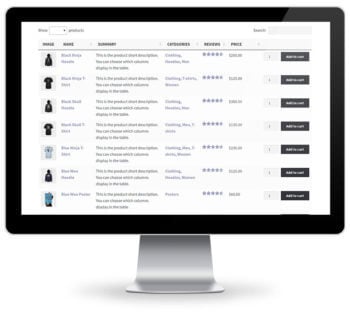 WooCommerce Product Table is our bestselling table plugin for WooCommerce. It instantly lists products in an interactive table view with customisable columns and extra features such as search box and filters.
 Print, PDF, Email by PrintFriendly is a free WordPress plugin used on over 60,000 websites worldwide.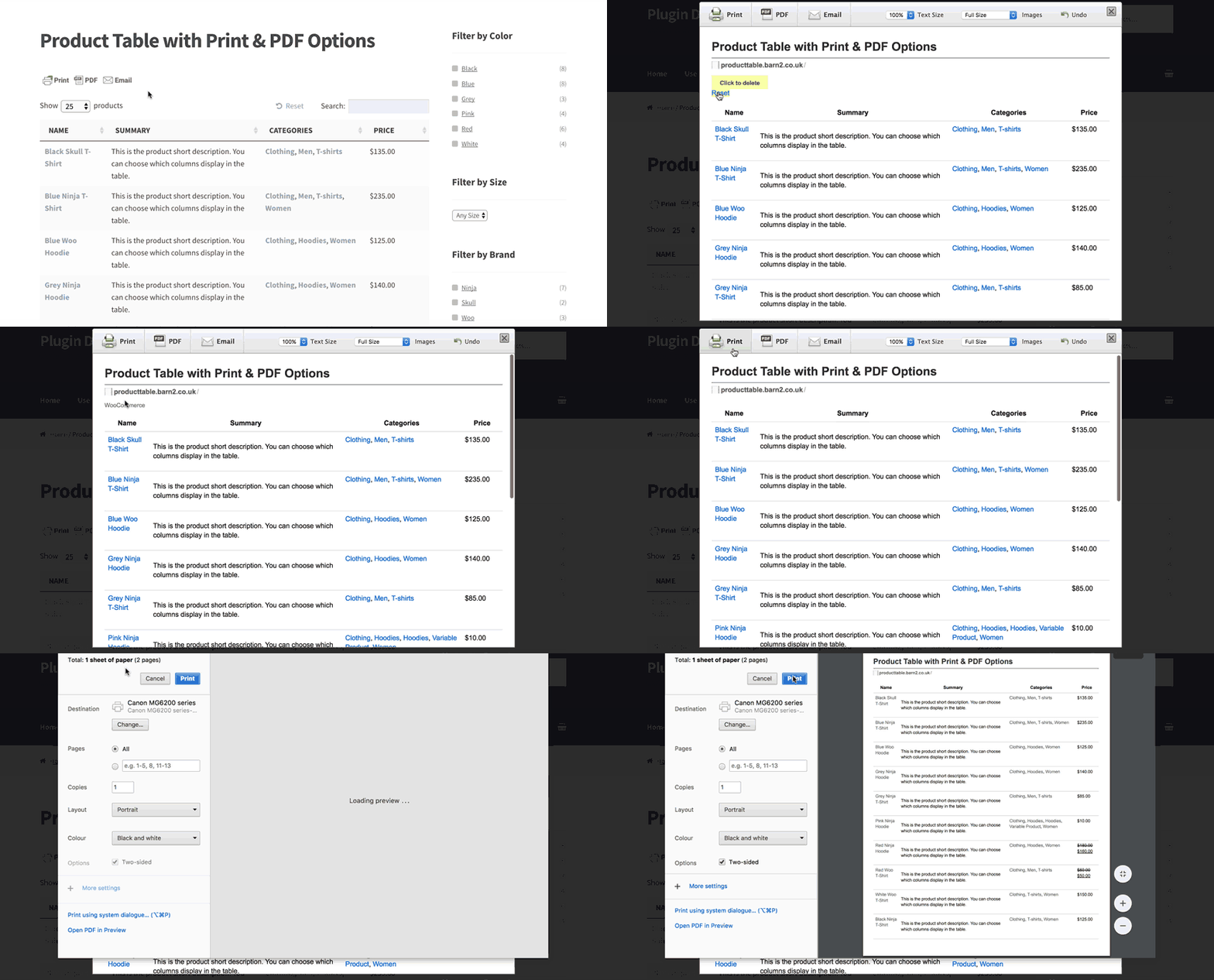
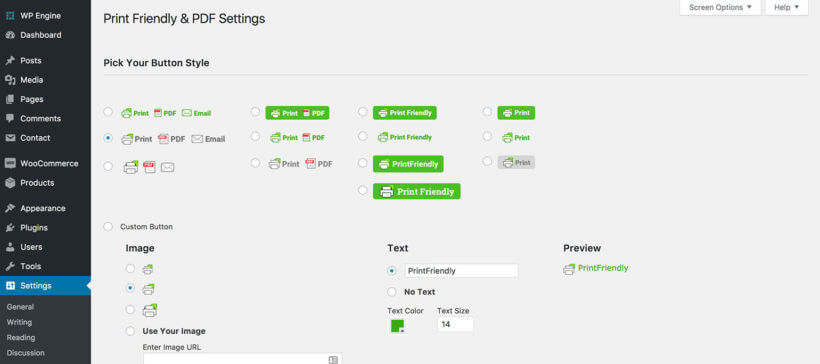


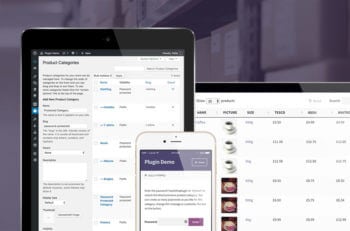 Members buying club - Some stores offer membership plans in return for discounted access to their products. For example, you could use a WooCommerce extension/plugin such as
 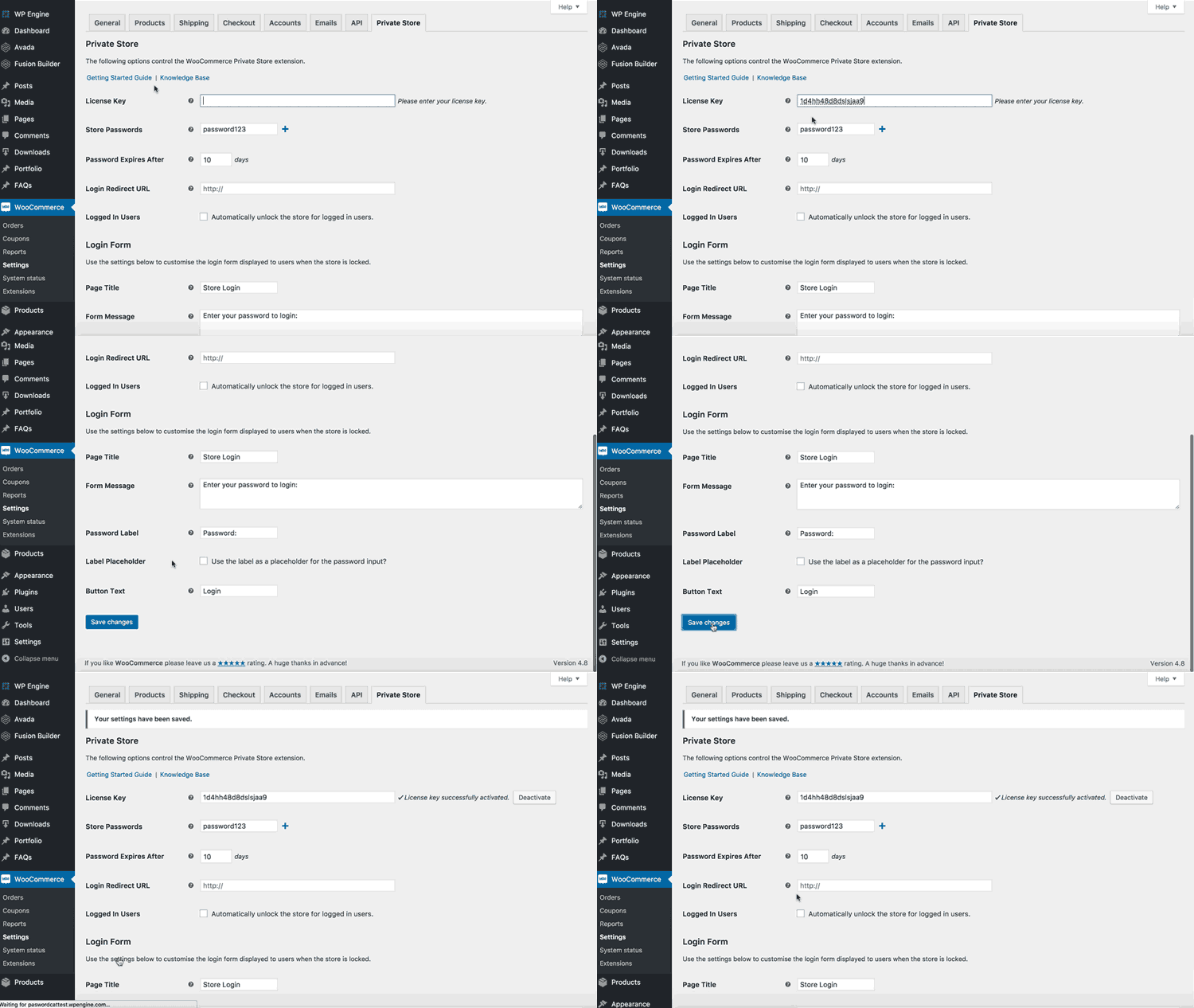 Go to the plugin settings page at WooCommerce → Settings > Private Store. Add your license key, choose 1 or more passwords for your store, make any changes to the login page text, and Save.
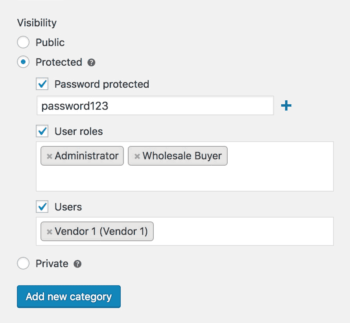 Now, go to Products → Categories. Create a category for each membership level or group. For each category, select one of the 'Protected' options:
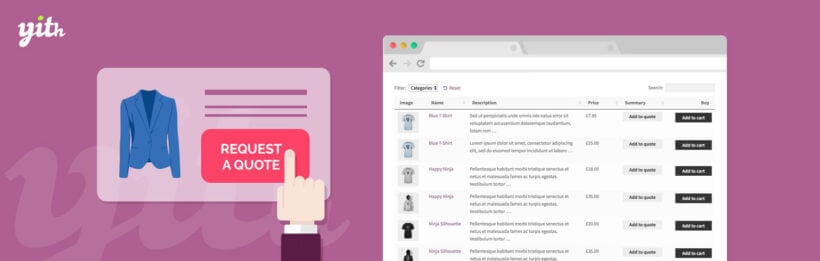



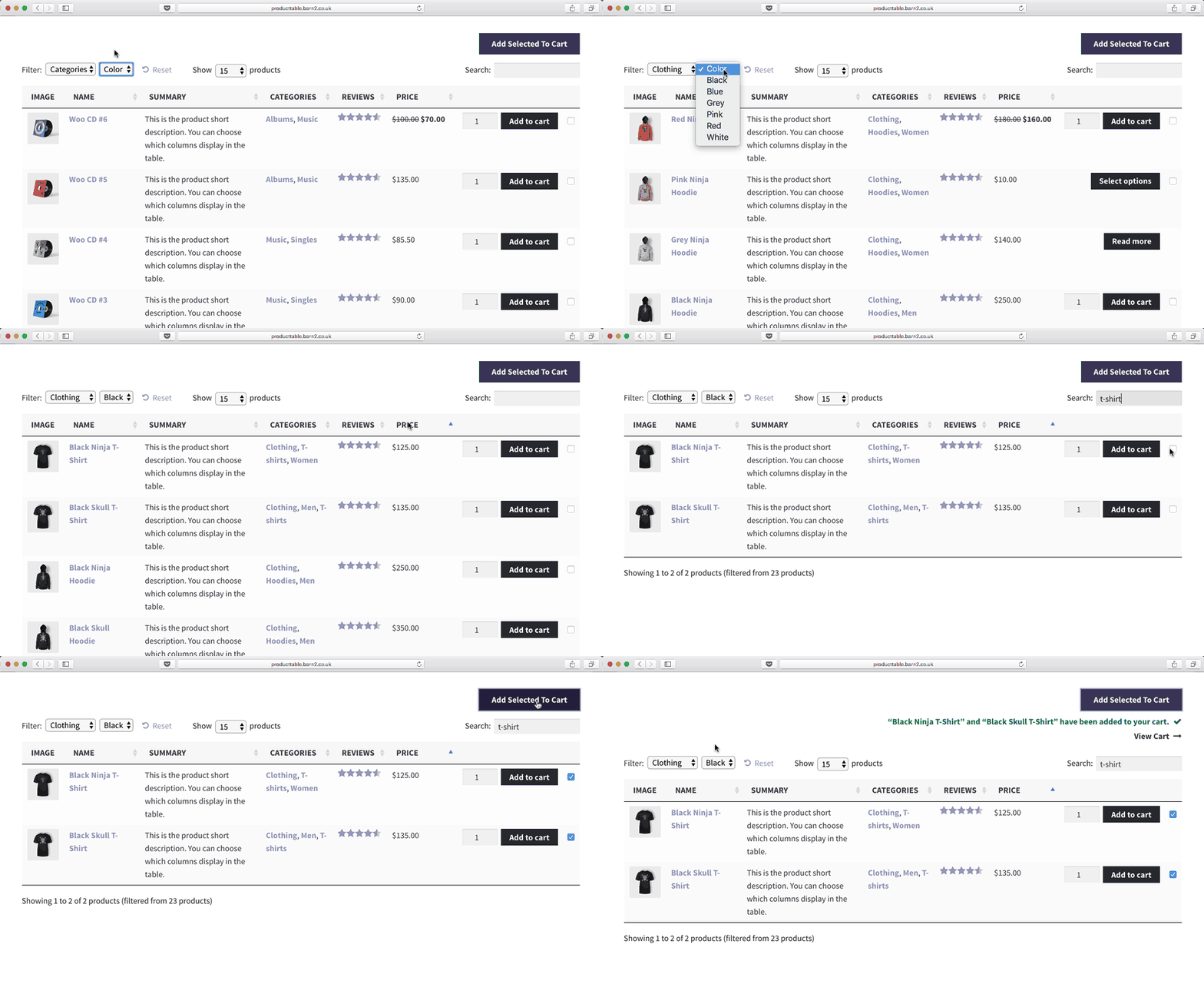

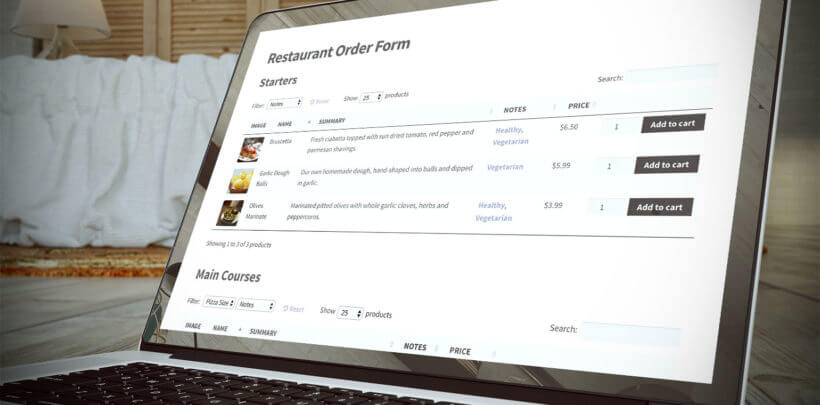


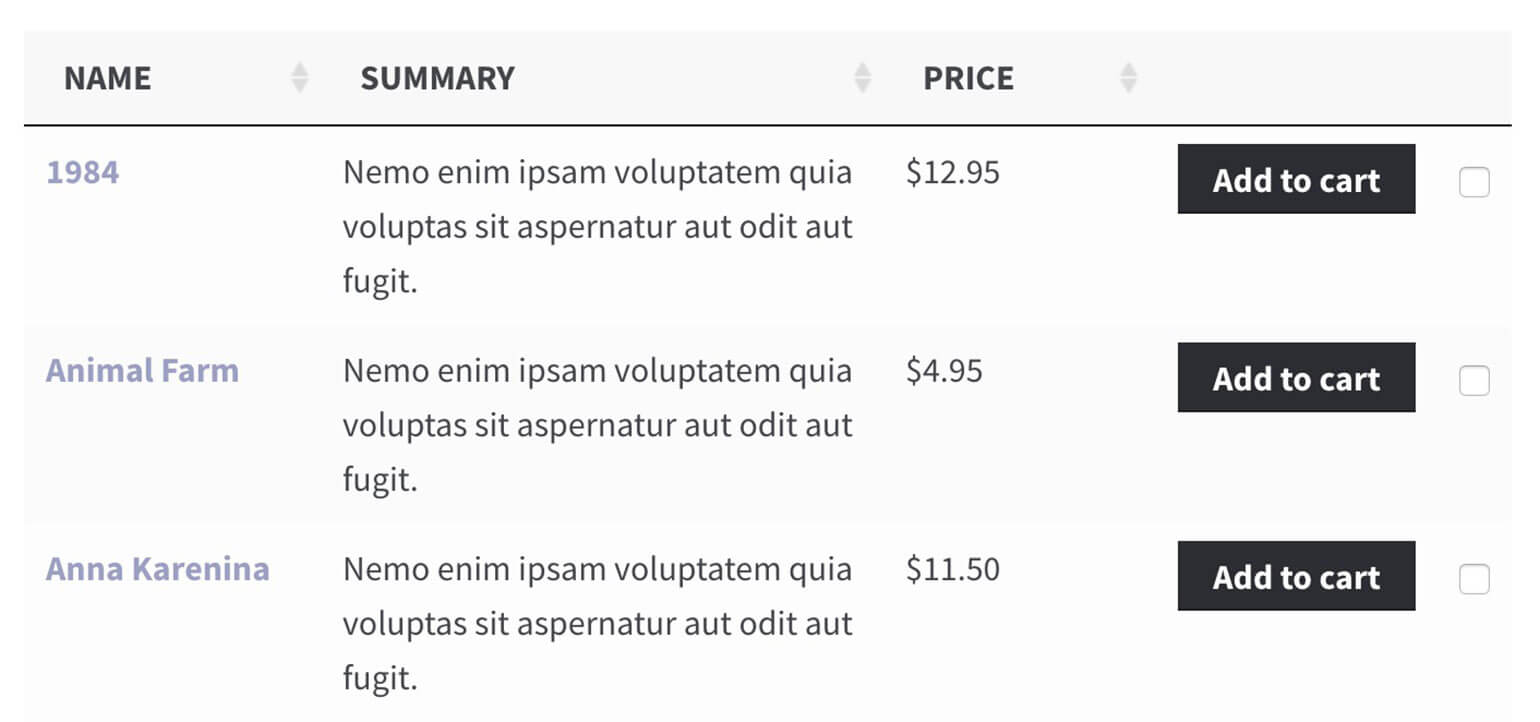
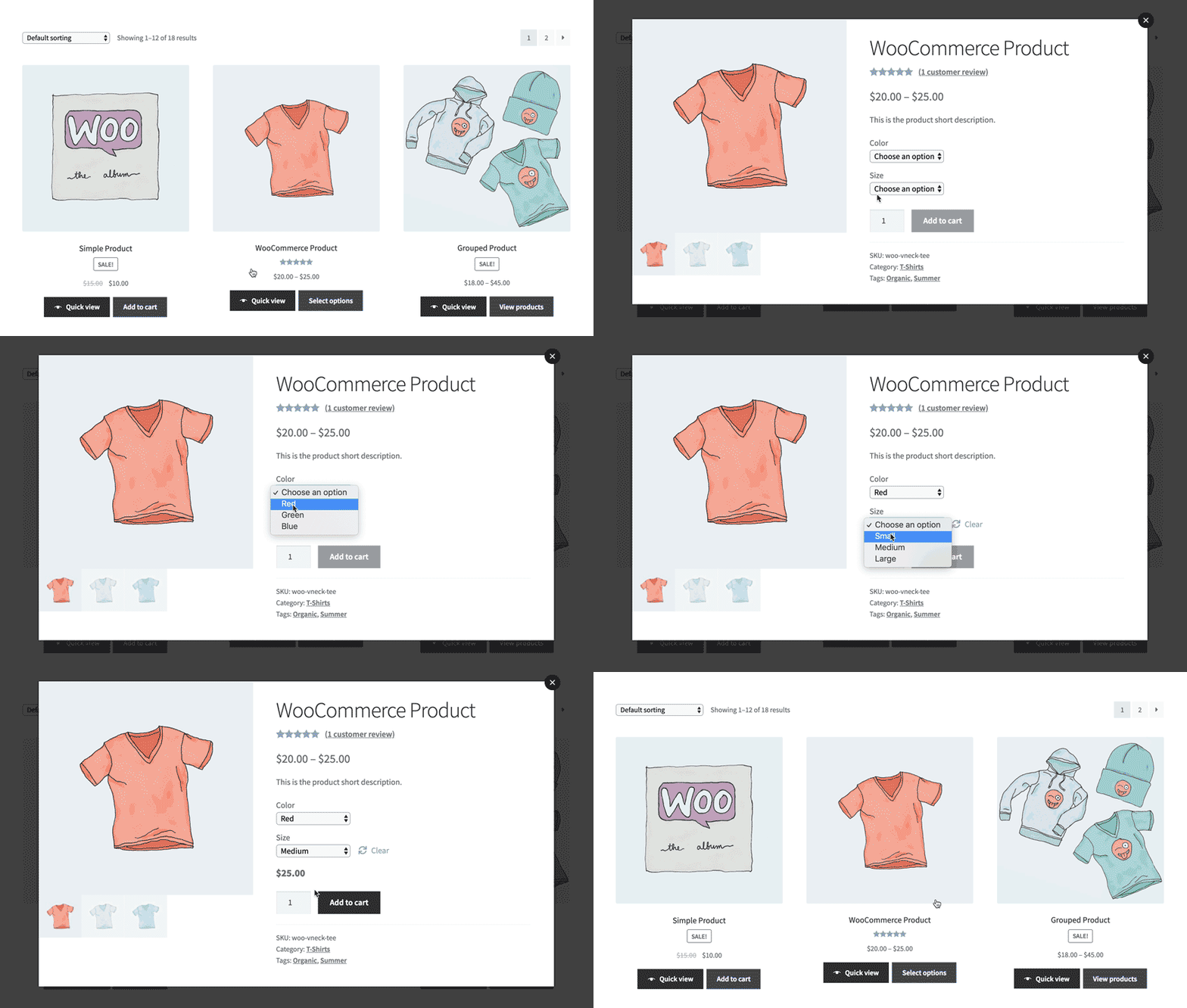
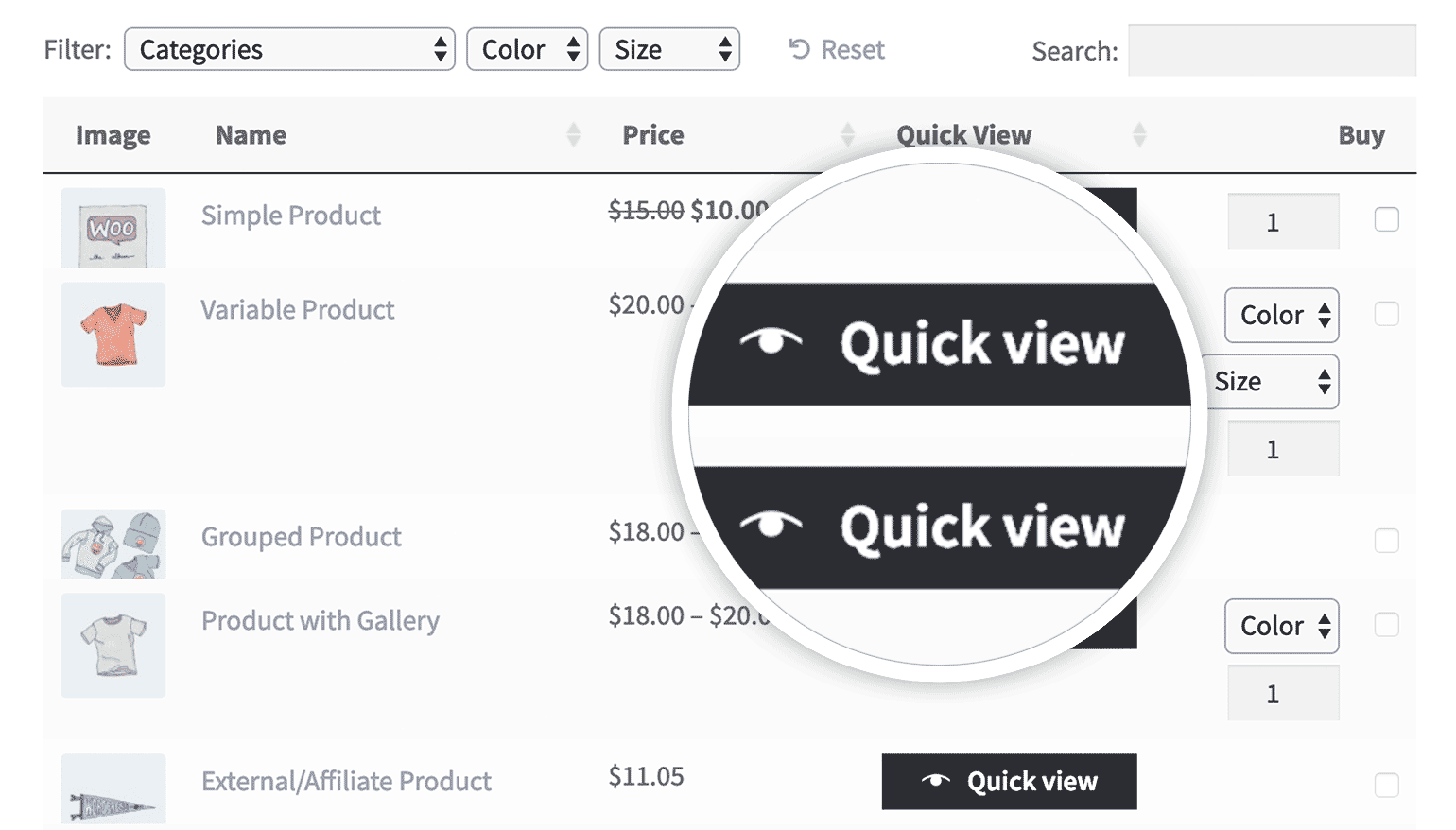
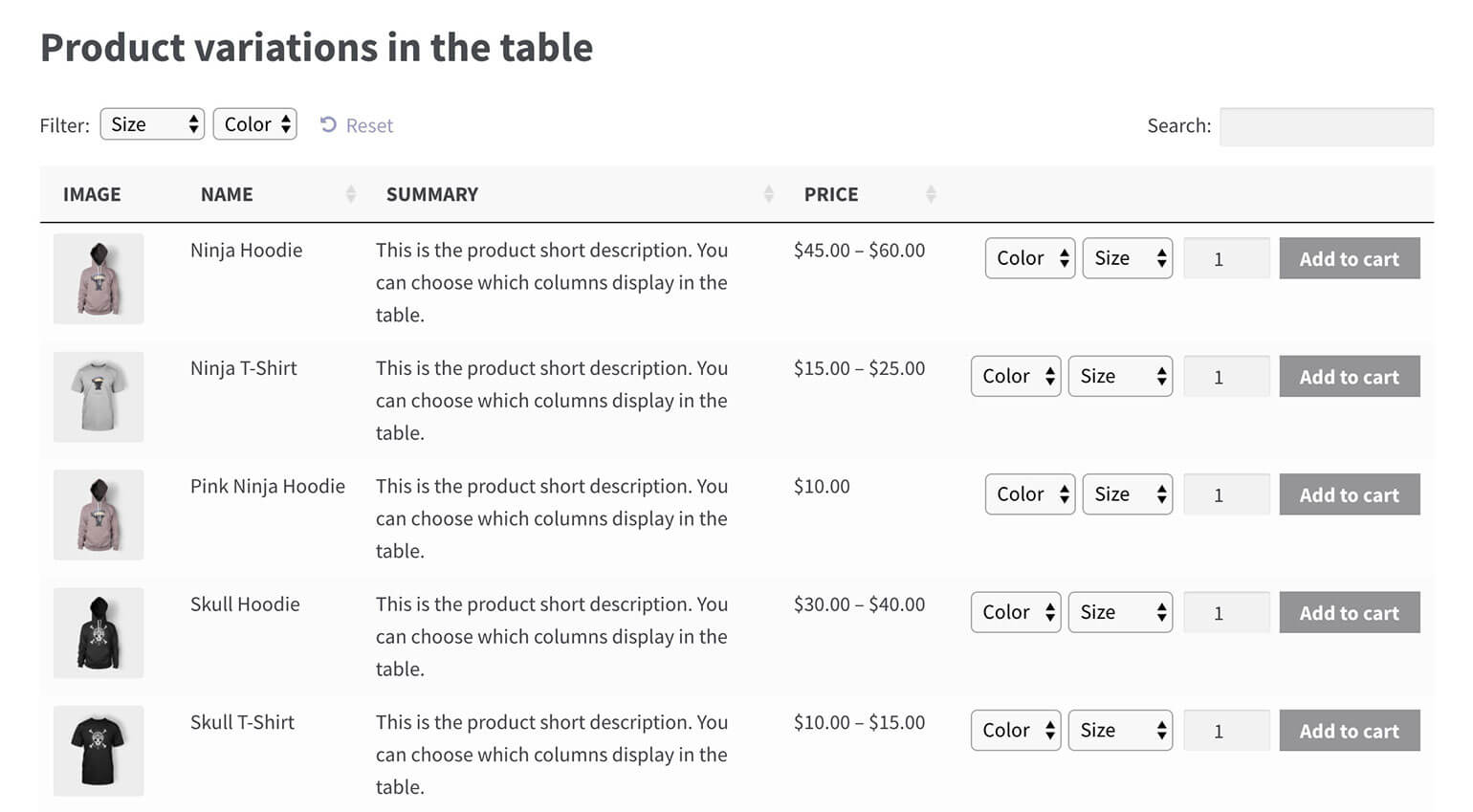
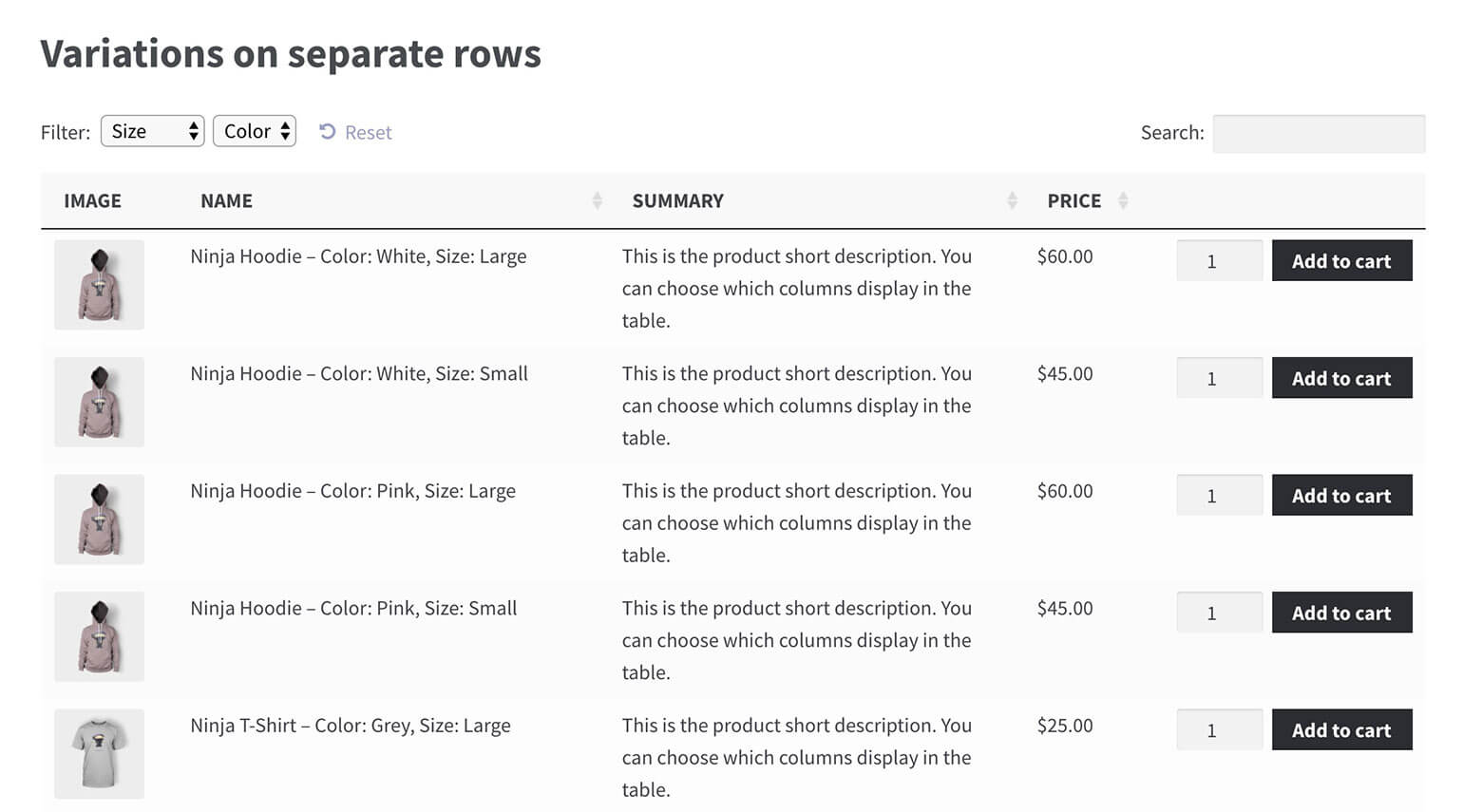
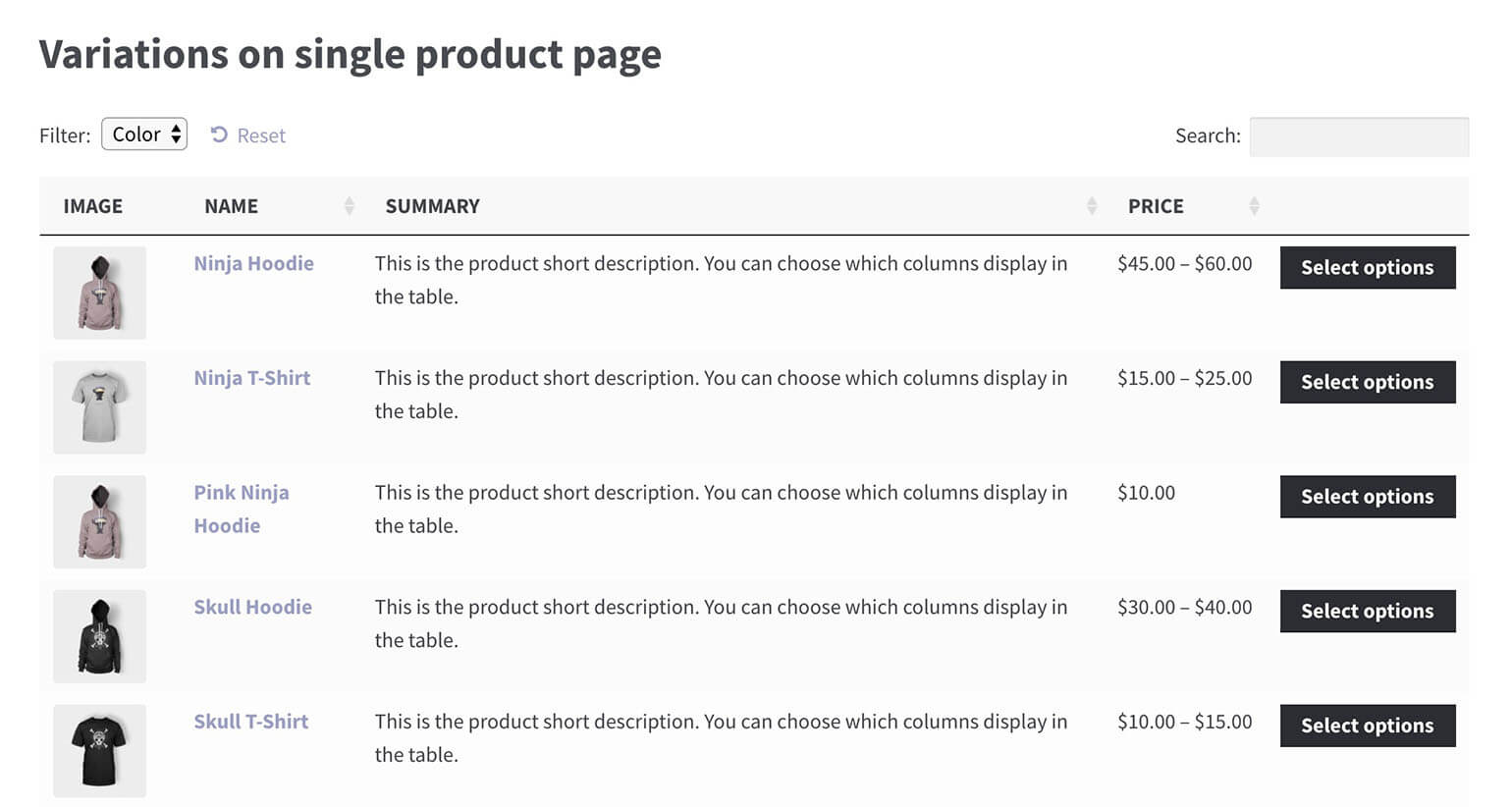

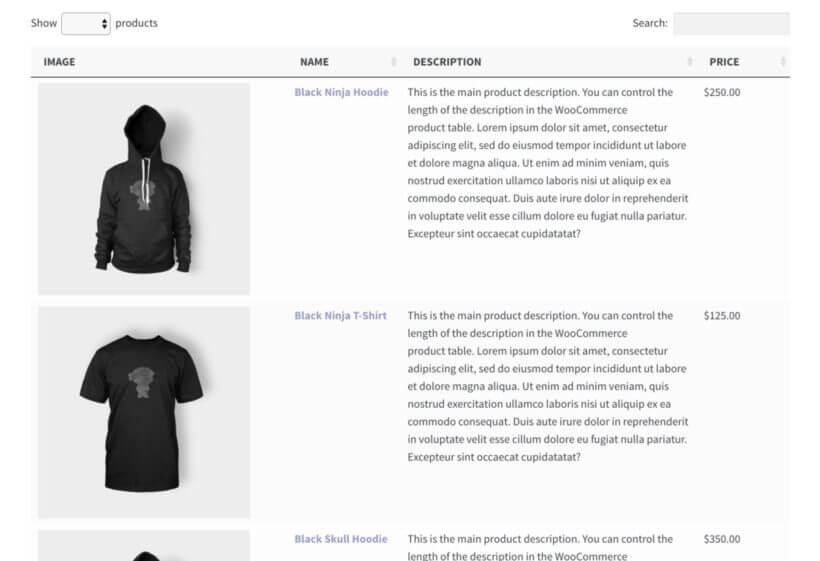
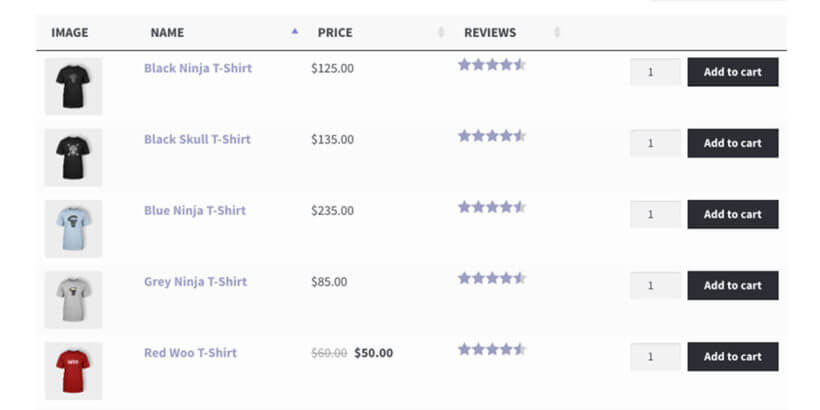
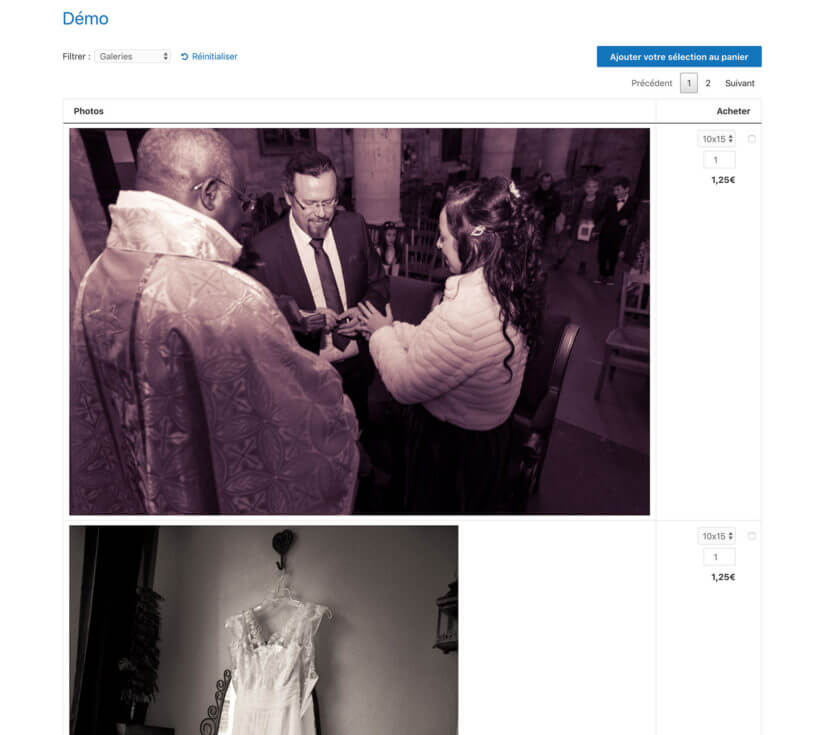
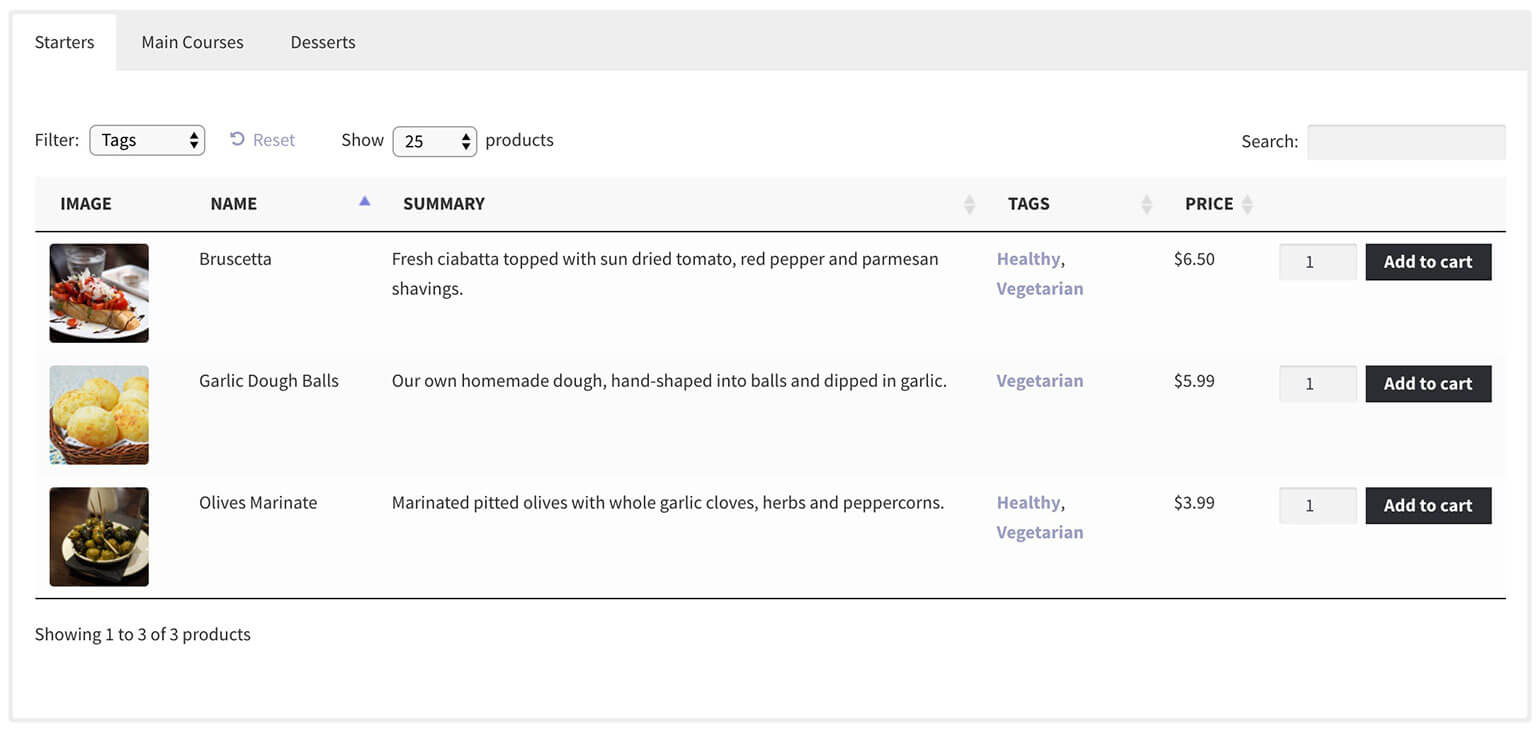
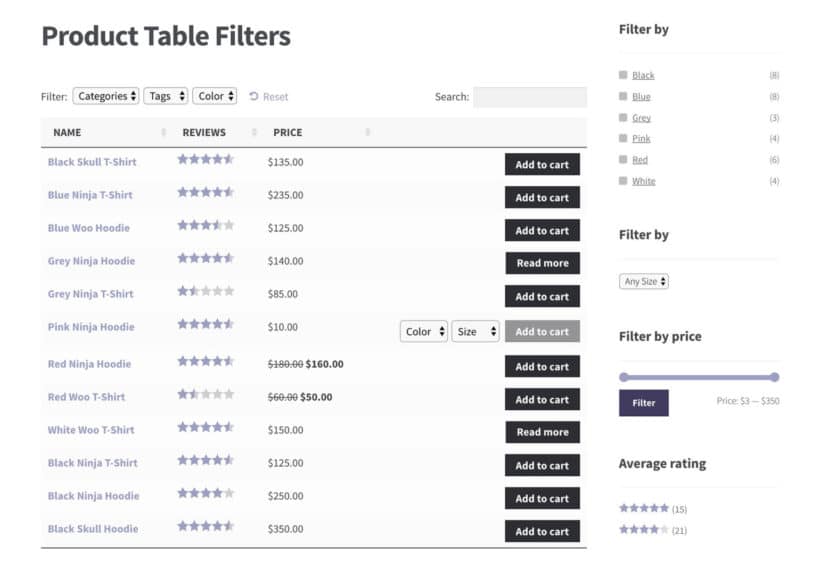
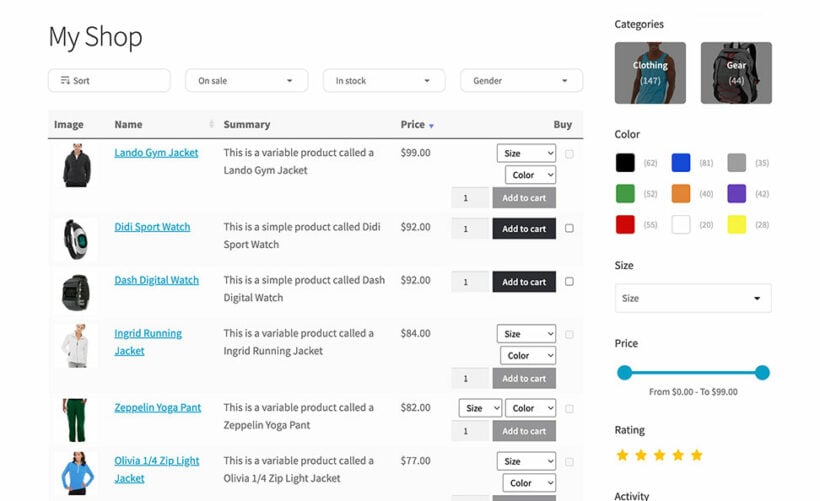
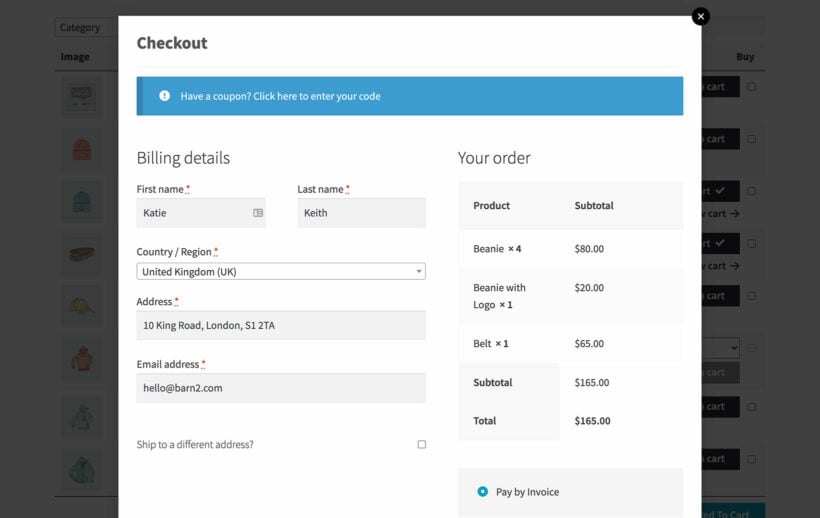
 WooCommerce Product Table is responsive and mobile-friendly straight out of the box. Resize your browser to see the table resize before your eyes.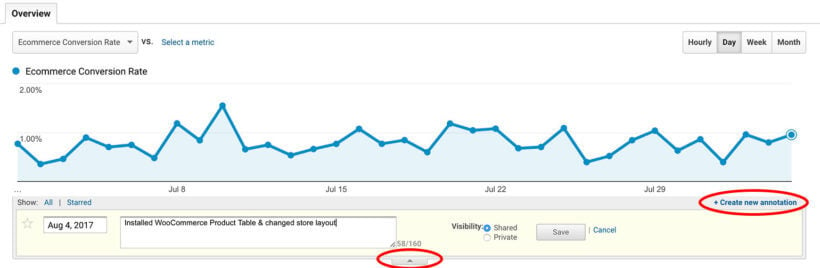
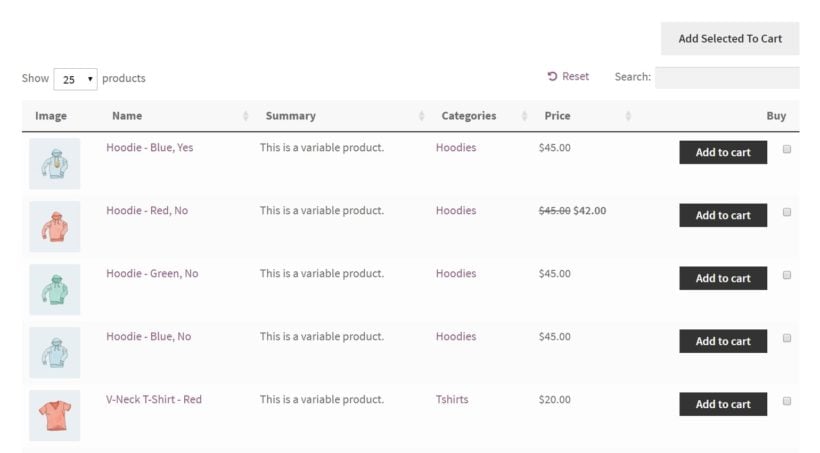
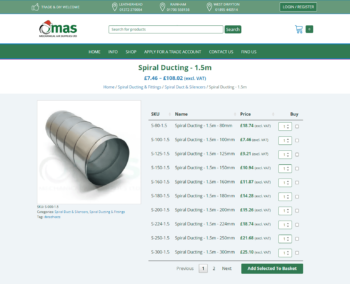
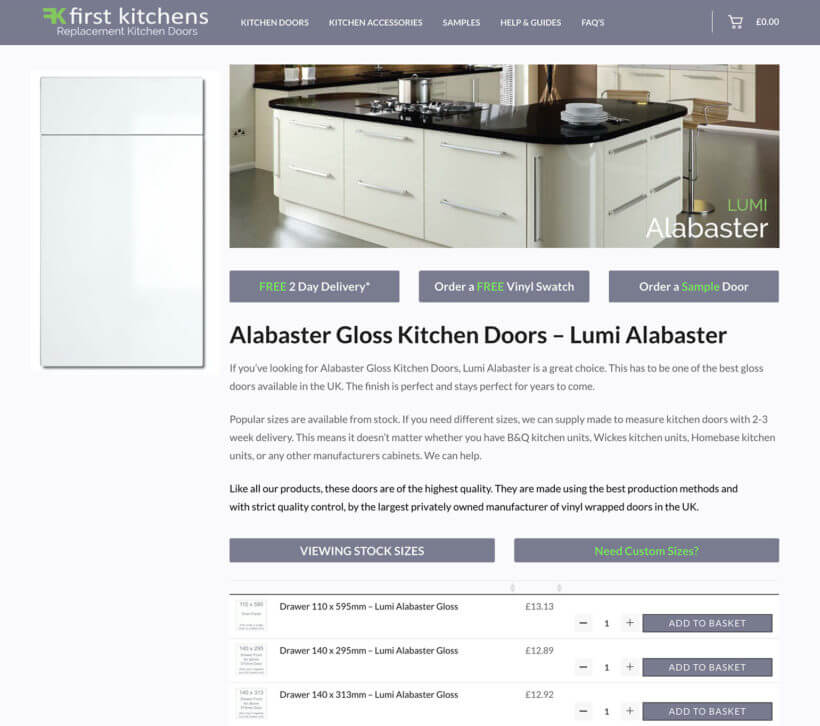


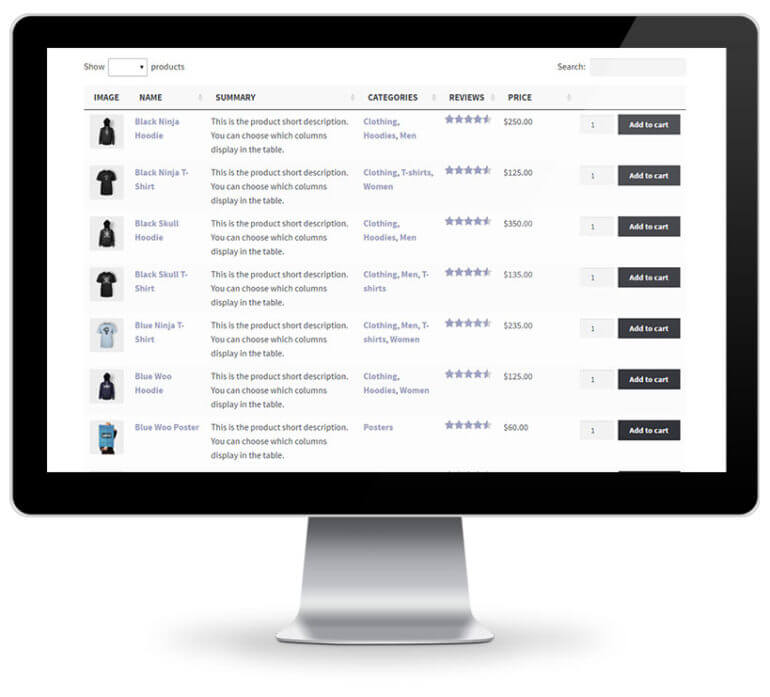
 Ok, no. Did you notice the phrase 'genuinely useful' in the previous suggestion? That's the key.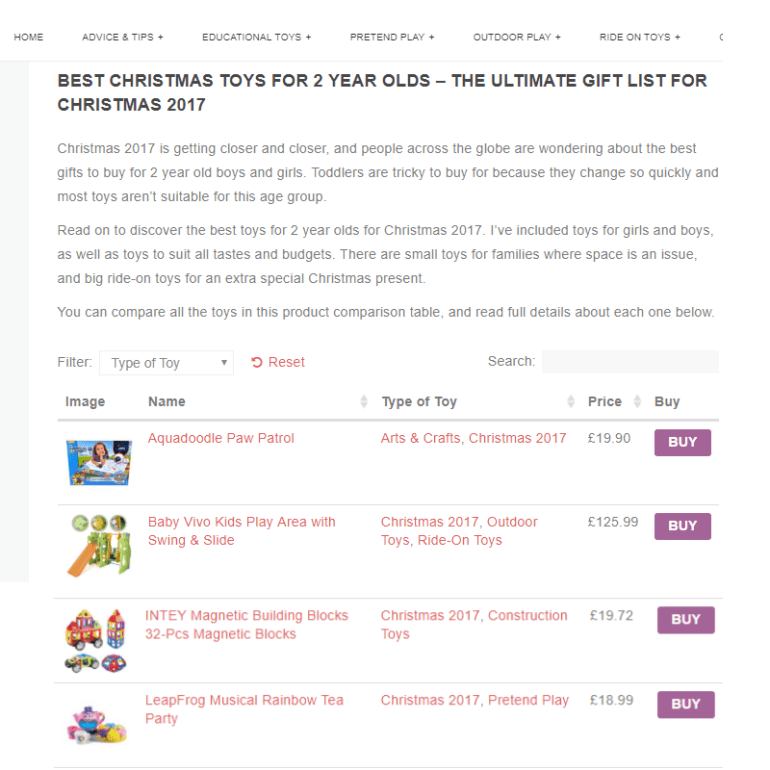
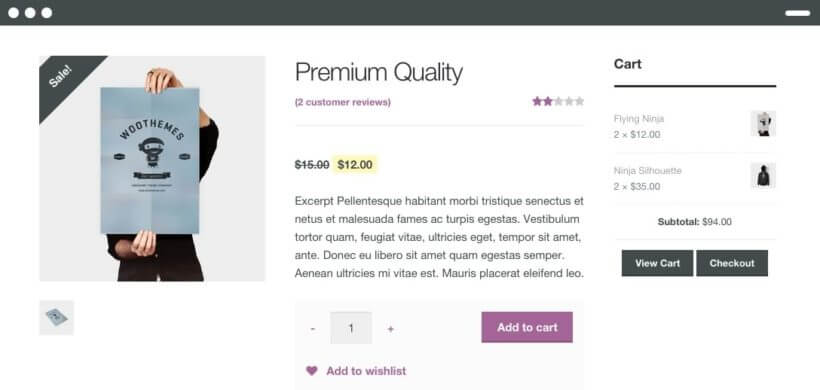
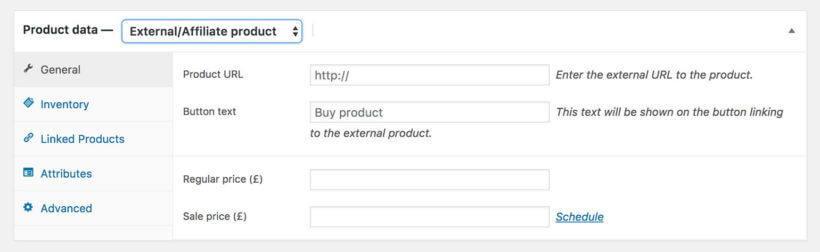
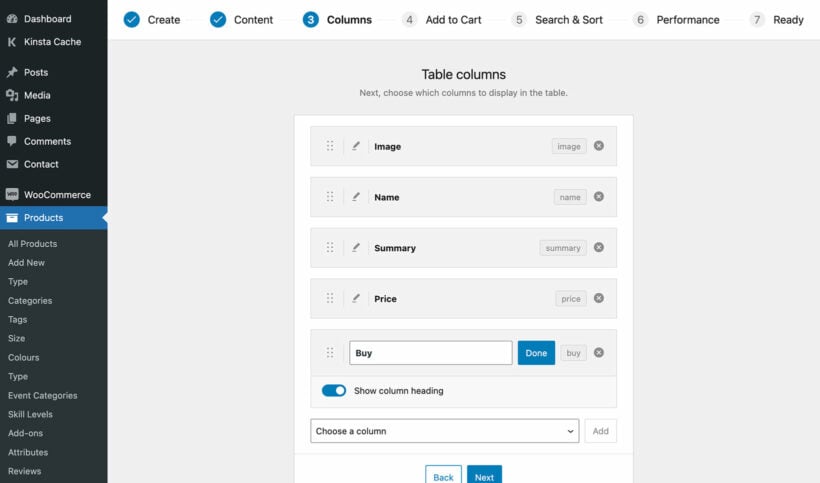
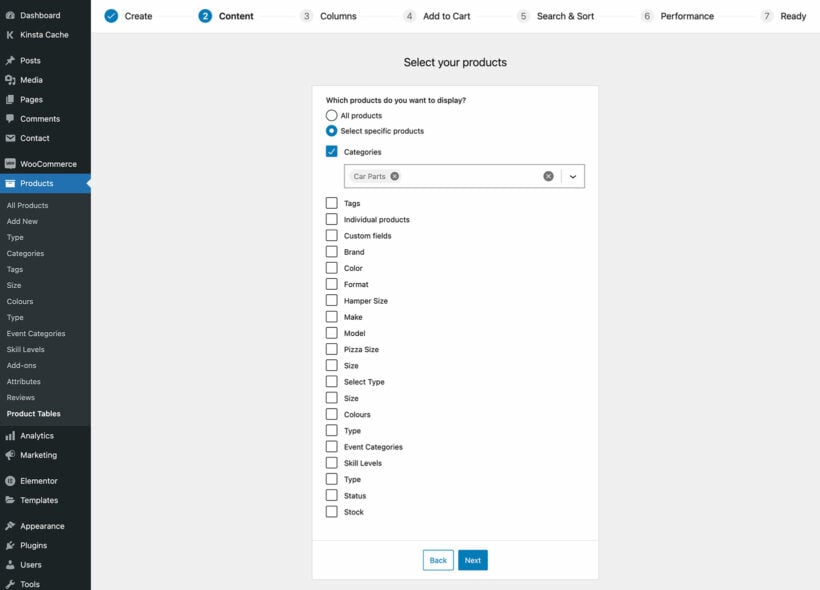
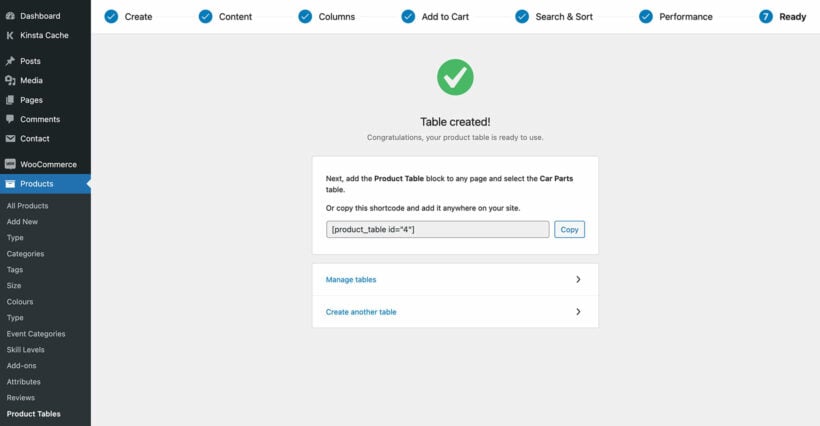
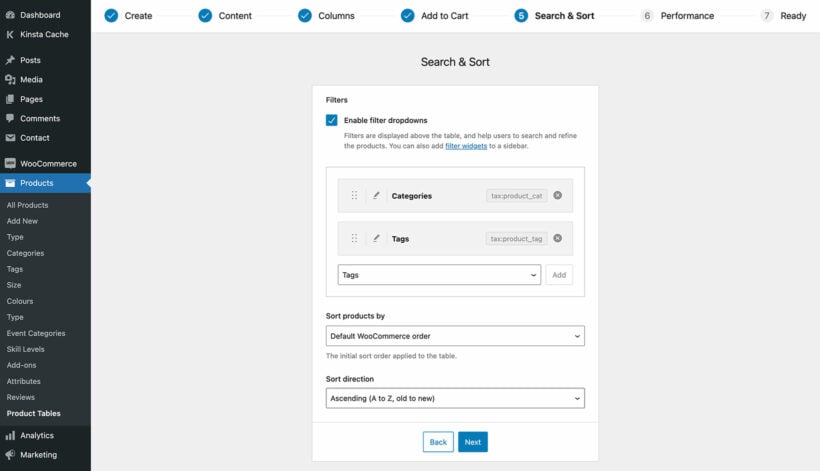
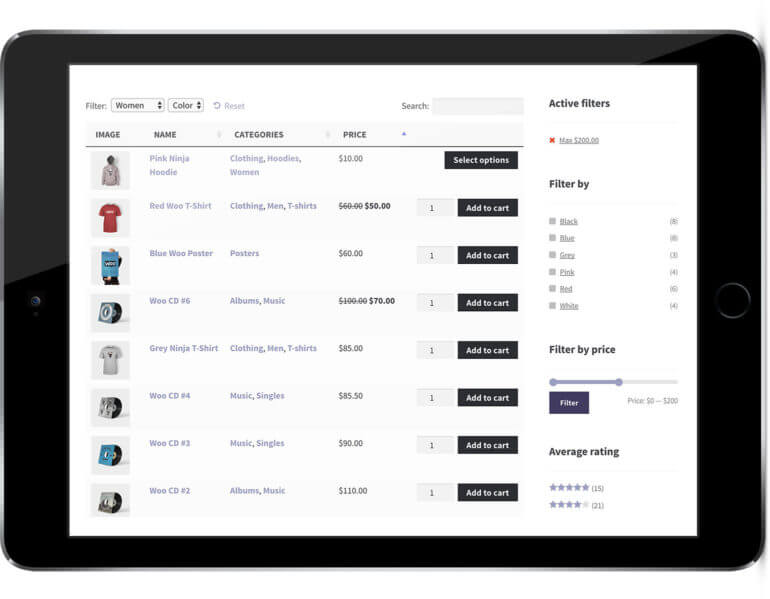
 This filter lets customers refine the products shown in the table by selecting one or more attributes. It offers a quick way to narrow down the product table's contents to find products with a specific feature or combination of attributes.
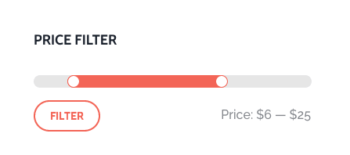 The
The 
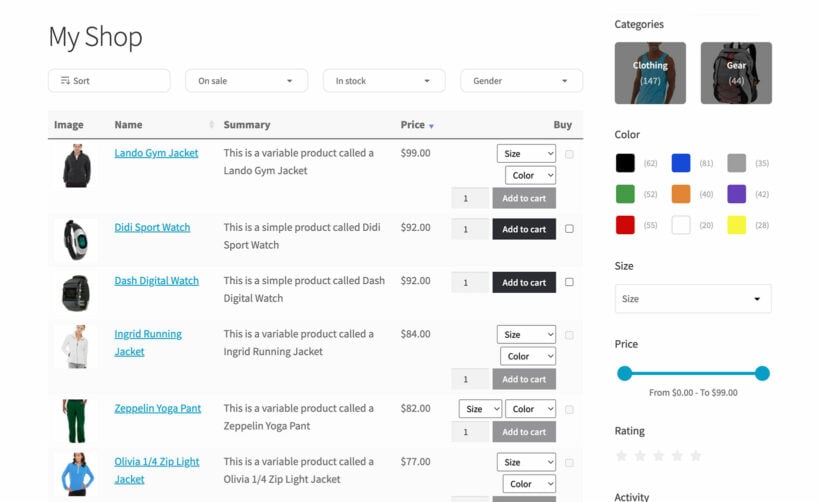
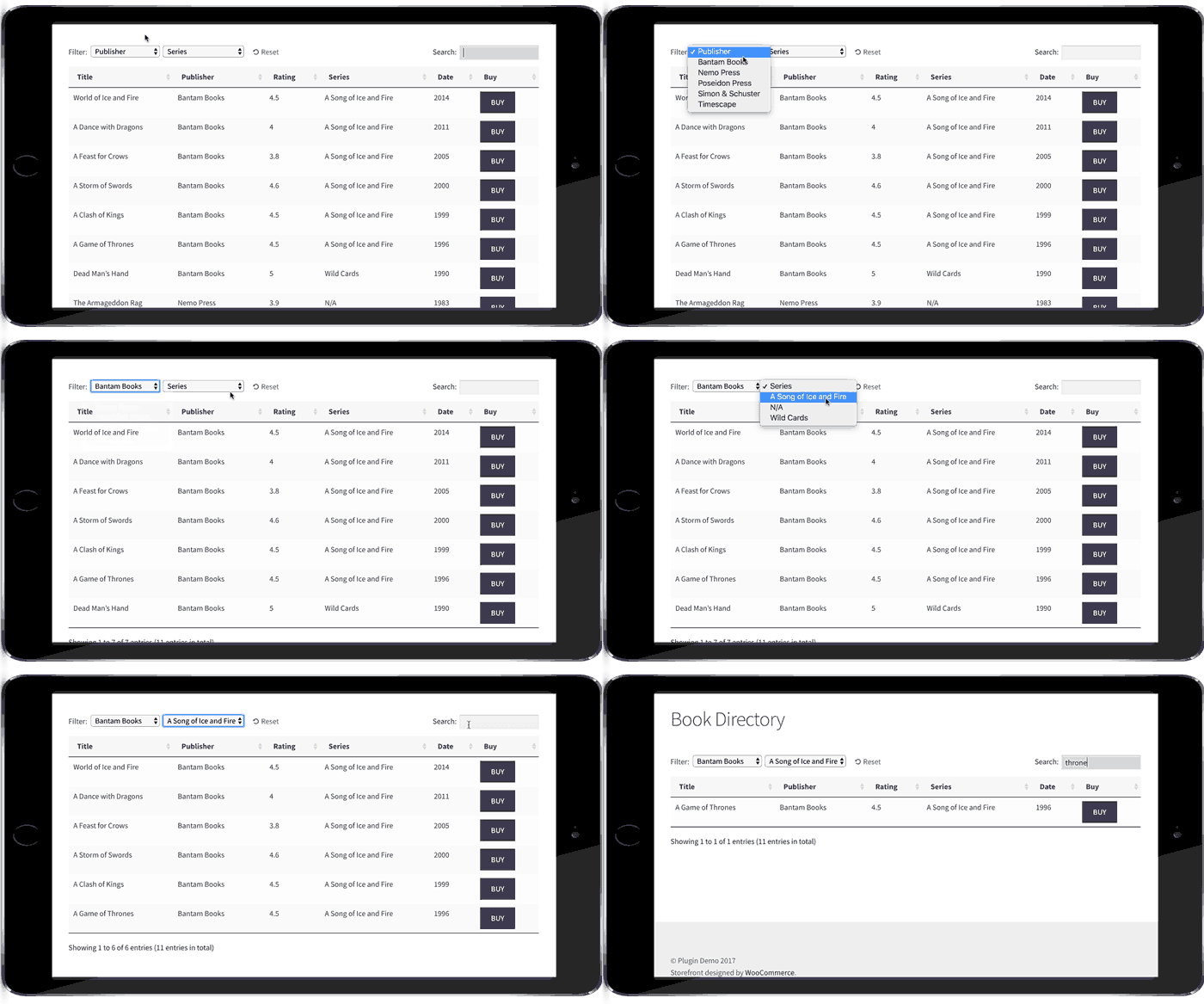
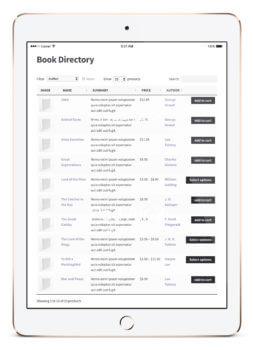 Many WordPress websites sell large numbers of books. A good directory plugin can be used as a WooCommerce bookstore plugin.
 If your WooCommerce directory plugin supports embedded audio players then you can use it as a music or audio directory.