5 real reasons to use WooCommerce over Shopify (+ 3 myths we should stop spreading)


After a year spent diversifying Barn2 into Shopify, I discovered that many of the reasons we use to promote WooCommerce are myths and don't fit with what merchants actually care about. Let's talk about the things that truly make WooCommerce the right choice, and when we should accept that Shopify fits better.
I have lived and breathed WooCommerce for more than a decade. Most of our 19 WordPress plugins are extensions for WooCommerce online stores. Naturally, I have always been convinced that WooCommerce is the best ecommerce platform in the world.
Just over a year ago, I deliberately stepped outside that bubble. I led Barn2's expansion into Shopify, built our first Shopify app, attended Shopify events, and shared everything in my #ShopifyDiary. The goal was not to switch sides, but to diversify the business and build success on both platforms.
What I discovered surprised me. I found that many of the arguments that the WordPress community (me included) use to promote WooCommerce are weak or outdated. At the same time, WooCommerce has many real advantages - but as a community, we don't really understand what they are. And as a result, we're doing a terrible job at promoting WooCommerce in the way it deserves!
I'm writing this post to share what I've learned about how we should - and shouldn't - be advocating for WooCommerce. This includes busting the common myths that we need to stop repeating; identifying the areas where WooCommerce truly does win; and learning to accept the situations where it may not be the best choice. The goal is to help everyone who loves and recommends WooCommerce to promote it more effectively in a consistent way that appeals to what merchants really want.
The myths the WooCommerce community needs to stop repeating
Myth 1: Shopify is inflexible
WordPress people often describe Shopify as a simple, locked-down system which provides an easy way for merchants to build their own store in minutes. That is simply not true. The majority of serious Shopify stores are built by developers or agencies and rely heavily on APIs, apps, and custom work. You can use these APIs to make a huge number of customizations and adapt Shopify to specific requirements.
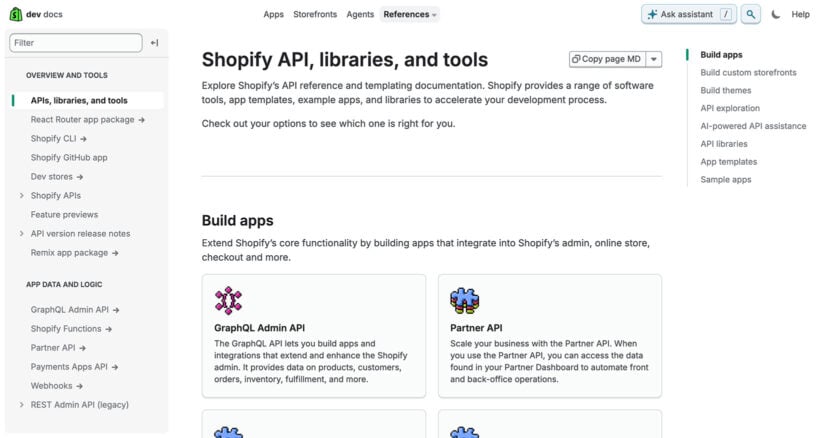
Apart from the admin being more centered around ecommerce, Shopify stores aren't much more beginner-friendly. They run into just as many complexities, theme conflicts etc. as WordPress sites.
This ties into a related myth: That WooCommerce is infinitely flexible because it's open source. That's not true either.
While you have access to WooCommerce's source code, it's not good practice to edit it. Instead, you're dependent on hooks and filters for making customizations - very similar to relying on Shopify's API. In both platforms, sometimes you need to make a change that isn't possible due to limitations in the available hooks/filters/API. My developers run into this problem a similar amount with both WooCommerce and Shopify.
So please, stop telling people that Shopify isn't flexible or that WooCommerce is infinitely flexible. They're both pretty customizable, and both have boundaries.
Myth 2: Merchants care about principles and ideals
Whenever I hear high profile people in the WordPress community recommending WordPress or WooCommerce, they usually refer to principles such as open source or the importance of owning your own data. They're generally vague about how these principles will directly benefit the merchants' business, and seem to think that these values are enough to convince people on their own. I disagree.
While these are important values, I think we need to accept that they are rarely the deciding factors for a typical store owner. Merchants care about:
- Whether the platform supports their business model.
- How much it will cost over time.
- How easy it is to operate.
- Whether it will integrate with the rest of their company.
- And other practical considerations that directly affect their business.
Quoting philosophical principles reduces our credibility and suggests that we're out of touch with real merchants' priorities. Instead, let's emphasize what merchants really want.
Myth 3: Shopify lacks community
Many times, I have seen WordPress community members express prejudice and judgement about non-open source communities. The general assumption seems to be that only open source communities can be nice, caring and mutually supportive, while everyone else is cutthroat and only cares about themselves.
After immersing myself in Shopify events and online spaces, I discovered that this is completely incorrect. I attended three Shopify events in 2025 and turned up as an outsider who didn't know anyone - or even worse, I was an imposter from WooCommerce! Despite this, the Shopify community welcomed me with open arms. They were incredibly supportive, keen to collaborate, happy to share their advice and experience with me for free, and I don't have a bad word to say about them.



This taught me that community is not a differentiator we can rely on. The WordPress community is awesome and I love it, but other communities can be awesome too ❤️
The real reasons WooCommerce often wins
After busting the above myths, I started thinking about when and why people should choose WooCommerce over other platforms.
1. Ecommerce plus everything else
This is the single biggest advantage.
WooCommerce is not just a store. It is part of WordPress, the most flexible website platform in the world. It's the perfect fit for businesses that need ecommerce along with extra functionality, such as:
- Membership areas
- Learning management
- Directories
- Events
- Intranets
- Complex content structures
- Multisite networks
Shopify is excellent at running stores, whereas WordPress and WooCommerce are excellent at running websites where commerce is one piece of a bigger strategy.
2. Independence from a single vendor
With Shopify, you are trusting your business to one company. If Shopify ever go out of business or decide to suspend your account, then your sales stop immediately. Even if this is extremely unlikely, it's a real existential risk to any business who relies on them.
WooCommerce distributes that risk:
- You can change hosts.
- You can change payment providers.
- If Automattic disappeared tomorrow, your website would remain online, and WooCommerce would be forked and continue.
I think this is a big deal. It effectively means that using a distributed platform like WooCommerce is an insurance policy for your business. I'm confident that highlighting this specific risk will appeal to merchants much more effectively than general claims about open source ideals.
3. Total cost over time
WordPress people often say "Shopify is expensive". However, this argument can sound unconvincing because on the face of it, Shopify is very reasonably priced - at least for small stores. Merchants are aware that while WooCommerce itself is free, you have to pay for extras like hosting and often developers to maintain the infrastructure, which can make the price look similar to Shopify.
To promote WooCommerce based on cost, we need to understand why it can be cheaper and explain this properly.
While Shopify entry plans are reasonable, costs can grow over time:
- You're forced to upgrade your plan as business grows.
- You can't save money on infrastructure such as moving to a cheaper host or using less expensive backups. In contrast, WooCommerce services are subject to the laws of competition which means that companies compete on price and merchants can save money by shopping around.
- If you don't want to use Shopify Payments then there are surcharges for third party gateways.
- Shopify apps are generally more expensive than WooCommerce plugins because they bill monthly and cost more overall, and often have usage fees. If you stop paying for a Shopify app then it disappears immediately, which doesn't happen if you choose not to renew a WooCommerce plugin.
- Enterprise pricing costs over $2,000 for Shopify Plus. While enterprise WooCommerce stores aren't cheap to run, this is more than you would typically pay for enterprise-level hosting and infrastructure.
As a result, many stores find WooCommerce significantly cheaper to run in the long-term. However, each store should do its own calculations because this may not always be the case.
4. WooCommerce is more flexible in some ways
Earlier, I said it's a myth that Shopify isn't very customizable. However, there are some major exceptions to this that might make WooCommerce a better option for stores with specific needs.
Checkout and payment freedom
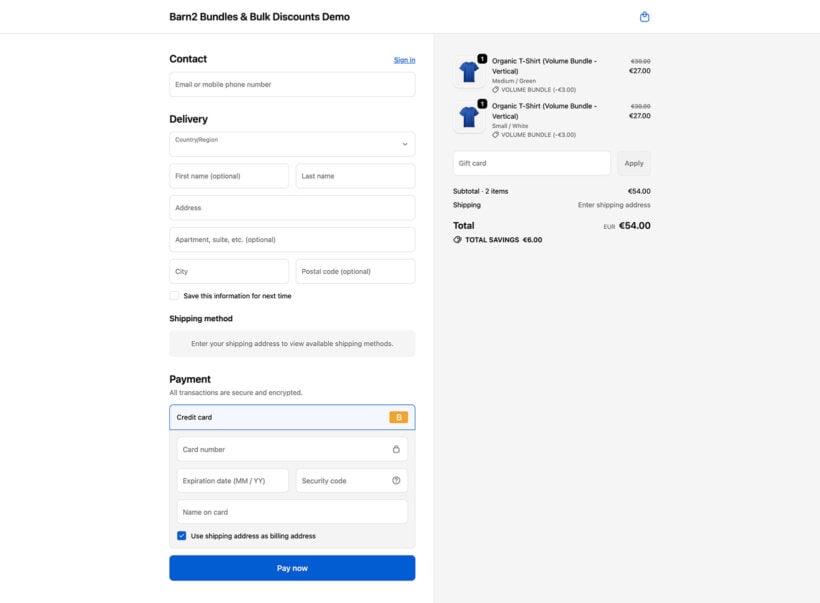
Shopify's checkout is polished and conversion-focused. But this comes with a big compromise - it is very restrictive unless you pay for Plus.
While WooCommerce's block checkout still isn't as extensible as I'd like it to be (don't get me started... 😅), it is very customizable. You're also not forced to use the block checkout - you can create your own completely bespoke checkout flows.
This is a big selling point for stores that need highly custom checkouts. Just bear in mind that this is only a minority of stores, and Shopify's checkout is excellent for those with standard needs.
B2B
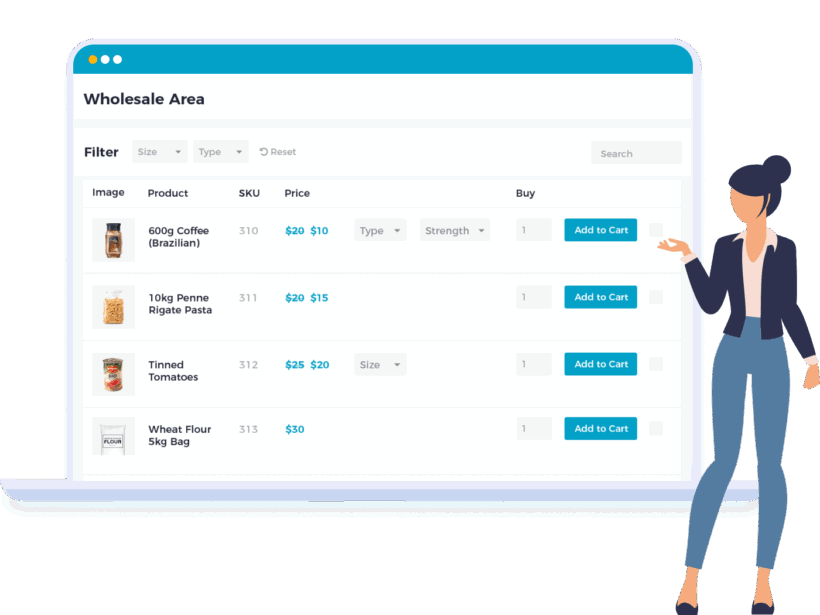
WooCommerce is generally accepted to be far superior to Shopify for B2B and wholesale stores. while Shopify now offers B2B features on all plans, these are very limited while also being unnecessarily complex to set up and manage. As a result, most stores are better off with a Shopify wholesale app. However, the choice and overall standard of apps is less good than WooCommerce wholesale plugins like Wholesale Pro.
We're currently building our own Barn2 wholesale Shopify app aiming to overcome these challenges and provide better B2B options for Shopify stores. However, WooCommerce definitely has a better reputation for B2B.
5. Control over infrastructure
Shopify handles hosting, backups, and staging for you. For many merchants, that's perfect and frees them up to focus on growing their business. However, if you're not happy with any aspect of Shopify's infrastructure then there's nothing you can do about it. For example, Patrick Rauland blogged that Shopify isn't always as performant as people think.
Some businesses have specific requirements like bespoke performance setups, custom security policies, integration with internal systems, or control over release processes. WooCommerce lets you design your stack around the business instead of fitting your business around the stack. For example, you can endlessly fine-tune and optimize WooCommerce to achieve optimal performance.
This isn't relevant for everyone, but it's particularly helpful for large or enterprise ecommerce stores.
WordPress: A strength and a challenge
Being part of WordPress is WooCommerce's greatest asset - and also its biggest obstacle 🙃
Many people are put off by having to arrange their own hosting, or use WordPress more generally. I discovered this when I did a survey on X asking what put people off using WooCommerce. The majority of responses were to do with WordPress, and weren't something that WooCommerce can control.
These are legitimate concerns because WooCommerce can only be used on top of WordPress. If a merchant chooses WooCommerce then they are choosing WordPress too.
This affects the messaging that we should use when we recommend WooCommerce. We should:
- Highlight the benefits of WordPress (suitable for your company's entire website and not just the shop; perfect for adding extra features beyond ecommerce; world's biggest CMS, etc.).
- Directly address the potential pain points, turning them into positives where possible. This might include:
- Recommending simple setups such as managed WooCommerce hosting or wordpress.com which makes WordPress feel less overwhelming. Plenty of these are available.
- Offering to simplify the WordPress admin, for example via user roles; hiding sections the user doesn't need to see; and installing front end editing options (e.g. the Setary spreadsheet editor for WooCommerce). For example, if you're quoting for a project then include this in the quote depending on the user's comfort with using WordPress.
- Reassuring users that WordPress plans to overhaul and modernize the admin in the next few years.
Promoting WooCommerce does not mean ignoring the potential downsides. Instead, we need to face these head on.
5 real reasons to use WooCommerce
With that in mind, these are what I think are the 5 key reasons to recommend WooCommerce:
- To build multi-functional websites where ecommerce is part of something bigger.
- As an insurance policy to avoid dependence on a single company.
- To get full control over hosting and infrastructure.
- To enable specific checkout customizations.
- To keep total, ongoing costs lower as you grow.
Whenever you're recommending an ecommerce platform to someone, consider whether any of these are priorities and recommend accordingly.
But hang on, aren't all these consequences of WooCommerce being open source?
Well spotted! I started this post by saying that we shouldn't rely on open source philosophy to convince people to use WooCommerce, and ended up listing 5 points which are a direct consequence of open source 🙃
My point is that talking about philosophical ideals, we should recommend WooCommerce to merchants by focussing on the specific ways in which it meets their business needs. These might be because it's open source, but the focus should be on the practical benefits for their store.
When Shopify is the right choice
Part of promoting one platform means accepting when it's not the best choice for a particular project. In my year learning Shopify, I've discovered that it's naive to insist that WooCommerce is always best. There are plenty of situations when Shopify is the best option, such as when:
- Ecommerce is the primary focus of the website, and the requirements for other areas such as pages and blog posts are straightforward.
- The business isn't concerned about their online store being dependent on one company.
- The merchant doesn't want to manage or customize the infrastructure.
- Speed and simplicity are required without custom configuration.
- The store uses standard checkout flows and doesn't need to choose their own payment gateways.
For businesses with these priorities, it makes perfect sense to recommend Shopify.
For businesses that have already outgrown WooCommerce or find Shopify to be a better long-term fit, planning a smooth WooCommerce to Shopify migration is often the next logical step. A well-executed migration helps preserve product data, customer accounts, SEO value, and order history while minimizing disruption to daily operations. Choosing the right migration approach ensures the transition is as seamless as possible.
A more honest way to grow WooCommerce
Expanding into Shopify did not make me less positive about WooCommerce. Instead, it made me more precise about its benefits.
We need to stop relying on vague philosophical principles to convince merchants to choose WooCommerce. Its advantages are practical and powerful: more fully featured websites, independence, cost control, customization, and infrastructure freedom.
If we promote those honestly, and accept that other options like Shopify are sometimes the better fit, we will earn trust from merchants and help WooCommerce grow for the right reasons. Let's all work together to do this.
If you have other concrete reasons that belong on this list, tell me in the comments. I would love this to become a shared resource for how we explain WooCommerce as a community.