11 tips to boost conversion rate on your WordPress site


Most websites convert only a small share of their visitors into customers, leads or subscribers. The good news is that small, deliberate changes to your pages can lift your conversion rate, often by a lot.
Whatever your conversion goal - more sales, leads, sign-ups or downloads - the same core tactics apply. I've pulled together 11 practical ways to lift your conversion rate, and along the way I'll point you to the tools and deeper guides that make each one easier. Here's what I'll cover:
- Market research
- Assessing your ads
- Improving website performance
- A distraction-free UI
- Social proof
- Pop-ups and opt-in forms
- Live chat
- Making it easy to buy
- Follow-up and abandoned cart emails
- Sales funnels
- A/B testing
What do you mean by conversion rate?
Conversion rate is the percentage of people that took the action you wanted them to take.
If we put this into an equation, the conversion rate equals the percentage of prospects who become leads or customers divided by the number of visitors.
For example, let’s say you use a webinar platform to host educational and informational webinars for prospective customers.
Assuming that you have 100 people attend the webinar, and 5 of those convert into a customer, you now have a conversion rate of 5%.
The industry average conversion rate is 2.5%. However, the top 25% of the companies are converting at 5.2% or higher.
If you see conversions dropping, you need to make specific assessments and implement new strategies to increase them.
Goal setting for conversions
The first step of any improvement in conversions is tracking how many conversions you are getting right now. The primary traffic sources are also important.
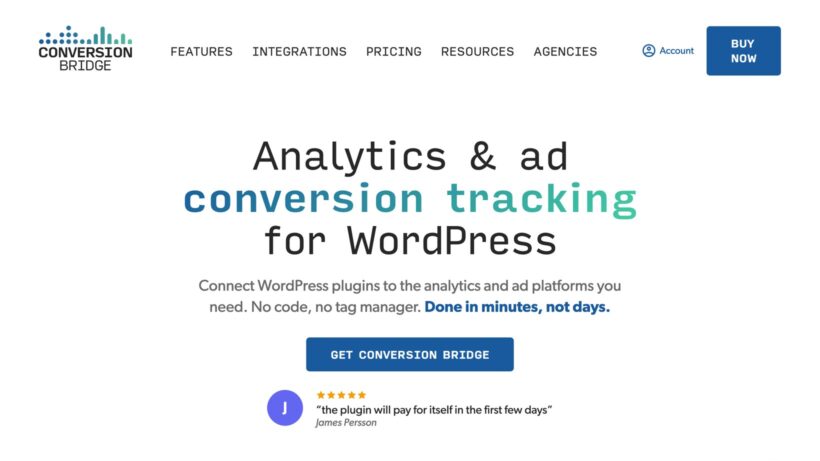
A plugin like Conversion Bridge makes this easy. It connects WordPress to the analytics and ad platforms you already use, with no code or tag manager, so you can track conversions across them and see which traffic turns into sales. Once you start measuring, you can set clear goals for the conversion rate optimization process.
To set a conversion goal, you need to figure out what exactly your website needs. It might be lead generation, email subscribers, or direct purchases.
Everyone’s goal is different and websites and businesses at different stages of their development may have different conversion goals. Setting your goals upfront is essential for everything else that follows.
Once these goals are set, you can formulate a plan to achieve them.
Types of conversion goals
Here are five different types of conversion goals you can optimize your website for.
Clicking a button
Conversion goals can be pretty simple. As simple as clicking a button. Most of the time, we see such conversion goals in pre-sales or launch pages of a product.
A button can be dedicated to any kind of action. Examples can be, applying a coupon code, downloading a guide, redirecting to another page or buying a product.
Email submission
If you want to build your email list through your website, you need to optimize it for email submissions. Email marketing is arguably the most powerful way of digital marketing and is useful for almost every type of website.
Lead generation
If you are in the service industry, your business will depend on leads. Once a lead is generated, the sales team connects and converts the lead into a paying customer.
Capturing a lead can be a conversion goal, as can converting them into a paying customer.
A popular method of generating leads is through a form or questionnaire. You can then use the information provided to reach out and hopefully, turn that lead into a customer.
Purchase
If you run an ecommerce store, then your conversion goal would be a purchase. That requires attracting customers, guiding them through your store, optimizing sales pages to encourage the purchase, and streamlining checkout as much as possible.
If you’re using WooCommerce then check out our 10 top tips for improving your WooCommerce conversion rate.
App downloads
If you have built an app, you need to optimize your website pages for app downloads. Each download is a conversion and, if you use lead capturing as part of the download process, you can also use those leads to convert further down the line.
11 ways to increase your conversion rate
Now that you understand some of the many types of conversion, you need to start optimizing your website to increase your own conversion rate. This is also known as conversion rate optimization (CRO).
Here are the 11 best CRO techniques for WordPress websites.
1. Market research
The most important part of any optimization is understanding your market first. If you don’t know what’s stopping people from buying, you’re just guessing at fixes.
The fastest sources of insight are already on your site:
- Your support tickets and product reviews - the same objections tend to show up again and again.
- A one-question on-site poll ("What nearly stopped you buying today?") using a tool like Hotjar.
- Session recordings, which show exactly where people hesitate or drop off.
- Your analytics, to see which pages lose the most visitors.
Once you know the real objections, you know which of the tips below to prioritize, rather than guessing.
2. Assess your ads
If you run paid ads, the click is only half the job. The page people land on has to deliver exactly what the ad promised, or they bounce and your spend is wasted.
The biggest quick win here is message match: the headline, offer and image on your landing page should mirror the ad that brought the visitor. Send paid traffic to a focused landing page rather than your homepage, and keep one clear action on it.
Average click-through rates run from 0.35% to 1.91% depending on the industry. For the fundamentals of paid search, WordStream's PPC guide is a solid place to start.
3. Improve website performance
Even if you have a great CTR, and still do not get results from your website, you need to check your website performance.
Your WordPress website performance metrics would include loading times and mobile responsiveness.
Reduce your page load speed, as no one likes a slow website. A report by SimilarWeb reveals that an average internet user has an attention span of 8 seconds. If your website is slow, it increases your bounce rate.
Fortunately, there is an easy fix for this.
Install a fast-loading theme on your WordPress website. I recommend the Astra theme because it is very lightweight in terms of code and loads fast.
On top of adding a fast theme, optimize your media, especially images. Compress all images before uploading them.
With a good server, you should have a fast-loading website that delivers instant gratification.
4. Have a distraction-free UI
One of the biggest mistakes that most businesses make is to make their website like an online brochure.
Unless the goal of your website is to display your business information, do not add too many links.
You want people to focus on the conversion action and not get distracted from it. Typically any link other than the conversion action distracts the customer and can cause you to lose a conversion.
If something is not contributing to conversion, remove it.
Here are a few steps that you can take to remove any noise in your UI:
- Remove the menu if it is not necessary on the landing page
- Reduce header size.
- Get rid of the sidebar
- Do not use stock images unless they are contextual and necessary
You also need to have a beautiful design that appeals to the audience. I recommend using the Starter Templates plugin. This plugin includes hundreds of prebuilt templates created by expert designers.
All you need to do is install the starter templates and import a website and you’re good to go!
5. Include social proof
Social proof adds credibility. A huge number of people make their buying decision after listening to their family and friends and social proof delivers a version of that.
How huge, you ask?
This survey revealed that consumers trust social proof 12 times more than product descriptions written by manufacturers.
Here are a few things that you can add to your website to improve trust through social proof.
- Photos and testimonials from customers
- Consumer case studies
- Awards and accolades
- Familiar brand associations
- Purchase counts
- Star ratings and reviews
Another way to build confidence is to let customers try before they buy. The WooCommerce Product Sample plugin lets you offer free or paid samples, which reassures hesitant shoppers and nudges them towards the full-price order.
6. Add pop-ups and opt-in forms
If your conversion goal is to build your email list, opt-in forms with a good lead magnet will work wonders.
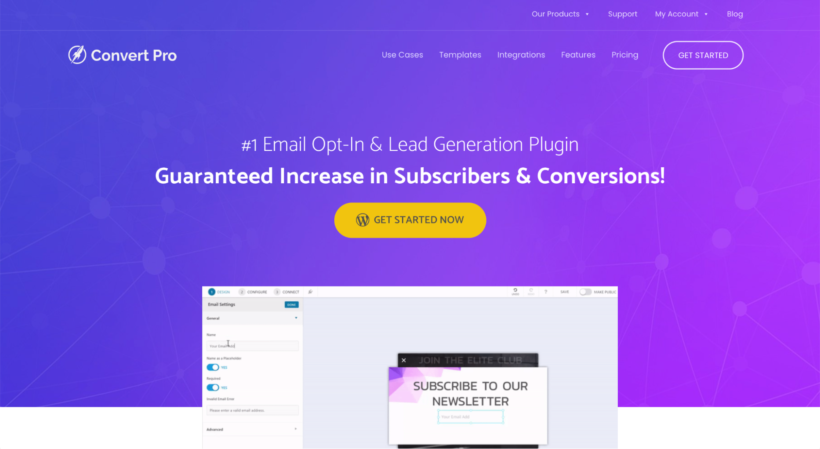
A lead magnet is a way of delivering high-value content in exchange for a name and email address. You can use opt-in plugins such as Convert Pro for the job.
With Convert Pro, you can also add pop-ups. You can also add different triggers to this pop-up, such as on scroll, exit intent, and after a particular page load time.
Another good option is ConvertForce, a lightweight WordPress popup builder that works inside the block editor. It lets you create notification bars, lightbox popups, and slide-ins using the same blocks you already use for pages and posts, so you can add your own copy, images, buttons, shortcodes, or opt-in forms without learning a separate builder.
This makes ConvertForce useful for promoting lead magnets, coupon codes, limited-time offers, product announcements, and newsletter signups. The free version works well for simple campaigns, while ConvertForce Pro adds more advanced triggers such as exit intent, scroll depth, and user inactivity.
7. Add live chat
A lot of lost sales come down to one unanswered question. Live chat lets you catch those visitors before they leave to look elsewhere.
Put it where buying decisions happen - product and checkout pages - rather than on every page. A tool like Tidio or LiveChat is enough to start, and most let you set up an automated reply or chatbot to cover questions when you're offline.
8. Make it easy to buy
A long or confusing checkout is one of the biggest conversion killers in ecommerce. Every extra step, field or click is another chance for the customer to change their mind. The aim is to get them from "I want this" to "order placed" in as few moves as possible.
Here are the changes that make the biggest difference on a WooCommerce store:
- Turn on guest checkout so people don't have to create an account to buy.
- Cut optional fields and ask only for what you need to fulfil the order.
- Offer express payment (Apple Pay, Google Pay and PayPal) so returning customers can pay in one tap.
- Let customers add to cart and check out without loading a separate cart page.
For the full breakdown, see my guides to improving your checkout conversion rate and speeding up the WooCommerce checkout, plus how to design a custom checkout page.
A few of our own and Kestrel's plugins remove specific points of friction at the checkout. Here's how each one helps.
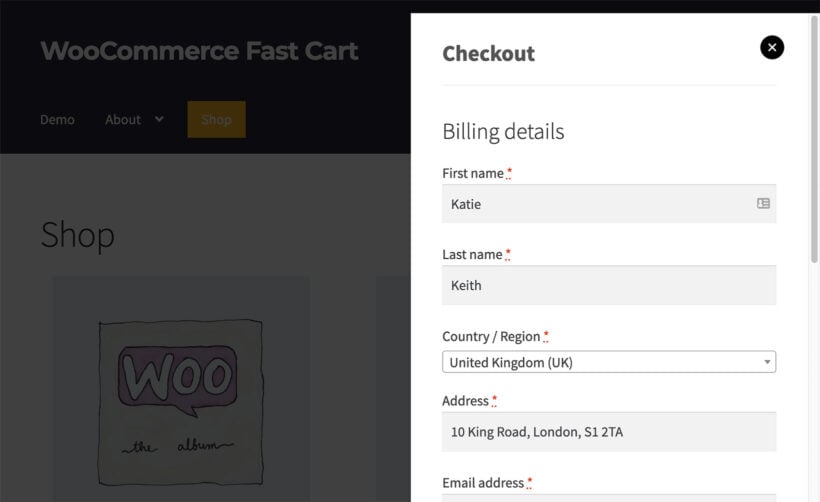
Speed up the checkout with WooCommerce Fast Cart
Our WooCommerce Fast Cart replaces the slow cart-page load with a slide-out cart and a one-click checkout. Customers can review their order and pay without ever leaving the page they're on.
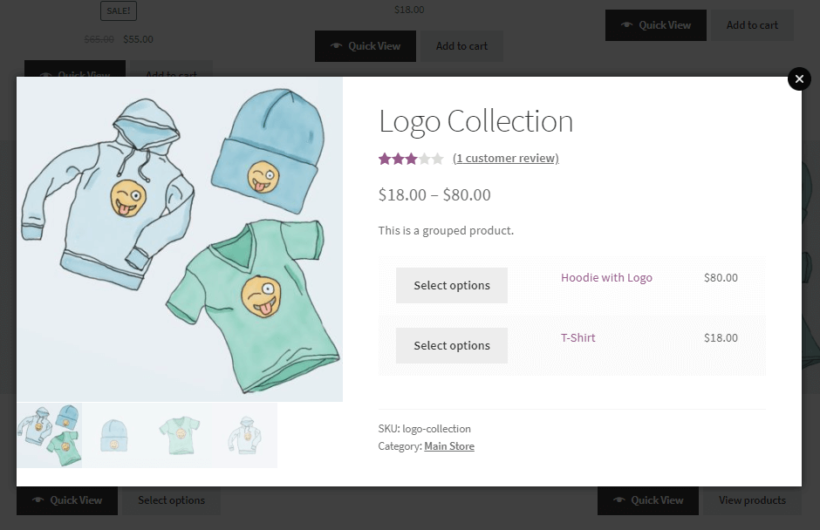
Let shoppers buy from a lightbox with WooCommerce Quick View Pro
Our WooCommerce Quick View Pro lets shoppers open a product in a lightbox, check the details and add it to the cart without loading a separate product page. That cuts a whole step out of the journey from browsing to buying.
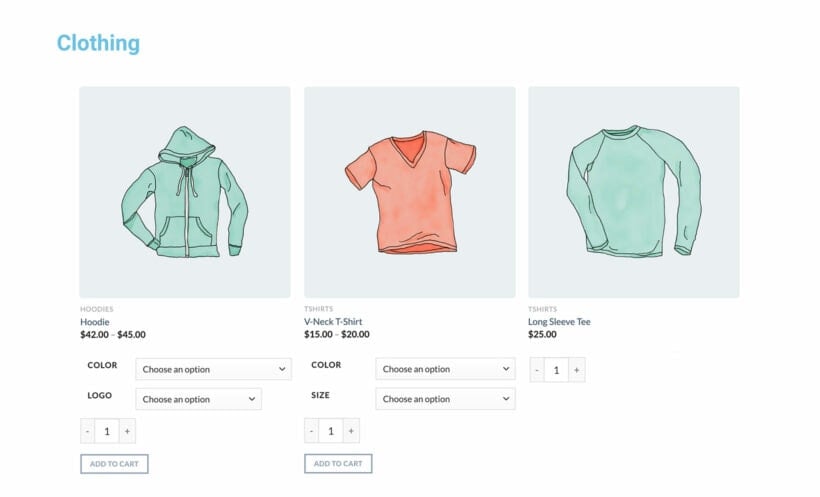
Sell straight from the shop page with WooCommerce Express Shop Page
If you sell from a large catalog, WooCommerce Express Shop Page adds quantity boxes and variation dropdowns directly to your shop and category pages. Customers can order several items at once without clicking into each product.
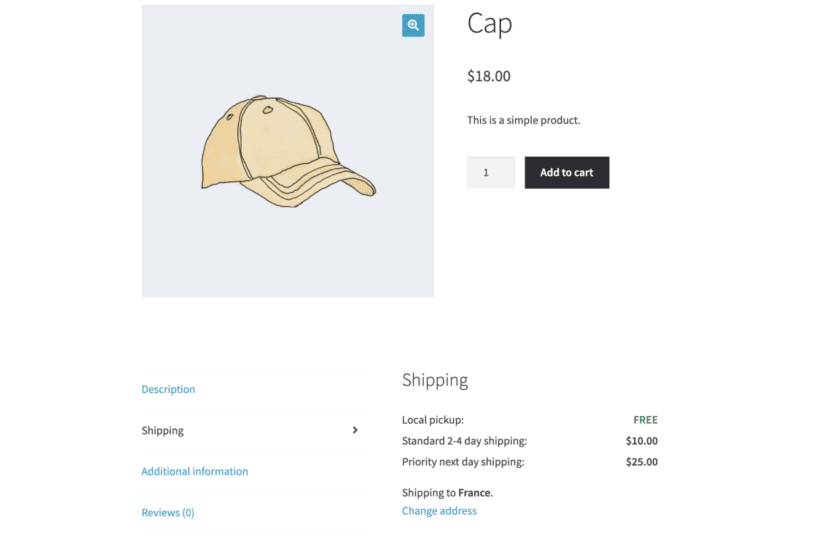
Show delivery costs upfront with WooCommerce Shipping Calculator
Unexpected shipping costs at the checkout are one of the most common reasons people abandon their carts. WooCommerce Shipping Calculator shows the delivery cost on the product page, so there are no nasty surprises at the till.
9. Use follow up or abandoned cart emails
Most people who add something to their cart don't buy on the first visit. A good follow-up sequence wins a chunk of them back.
Capture the email early - at the start of checkout, or through an opt-in form - so you can reach people who leave. Then send a short recovery sequence: a reminder within an hour, a nudge the next day, and a final email a couple of days later with a small incentive if your margins allow.
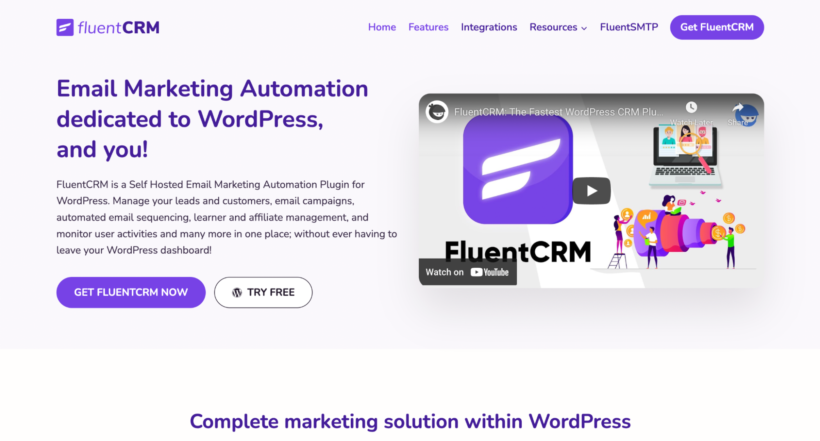
For the tools to set this up, see my roundup of the best WooCommerce abandoned cart plugins. A plugin like FluentCRM also handles follow-up sequences inside WordPress, without paying for a separate email service.
10. Use sales funnel
A sale doesn't have to be the end of the conversion. It's also a chance to increase the order value, and well-placed upsells and cross-sells lift revenue without any extra traffic.
A few that work well on WooCommerce:
- An order bump at checkout ("add a matching item for $9?").
- A one-click upsell on the thank-you page, after the customer has already paid.
- Cross-sells of related products on the product and cart pages.
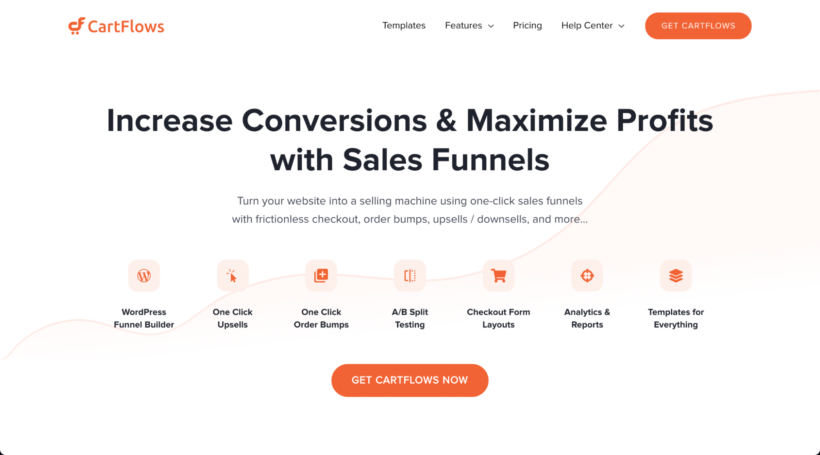
See my guides to WooCommerce upsell and cross-sell plugins and cross-selling examples for the specifics, and to raising your average order value for the bigger picture. To build full funnels with one-click upsells, CartFlows is a solid WordPress option.
11. Always be A/B testing
You cannot be certain of any aspect of optimization unless you perform A/B testing.
A/B testing, also known as split testing, is a method of testing two distinct versions of your website, emails, ad campaigns, or any marketing method.
You never know which element is helping you convert and which one is quietly reducing conversion.
Hence it is always important to perform A/B testing on each element. That way, you can continually refine your methods while gradually increasing conversion.
Optimize your conversions today
Conversion rate optimization is never really "done" - it's something you keep refining as you learn what your visitors respond to.
The eleven techniques above are well-established CRO practices. Put them into practice on your existing site and test what works for your own audience.
For most WooCommerce stores, the fastest wins are at the checkout. Our WooCommerce Fast Cart and WooCommerce Quick View Pro strip out the steps that lose sales, so shoppers can buy in a couple of clicks. Pair them with the opt-in, funnel and email tools above, then pick the tactics that fit your conversion goal and build from there.
If you want to go deeper, our free WooCommerce conversion rate course walks through the whole process step by step.
Let us know in the comments. Have you started optimizing your website yet?