Every self-hosted ecommerce platform is shrinking except one


Of 29 self-hosted ecommerce platforms, only WooCommerce and OpenCart gained over those three years, and WooCommerce has been shrinking for the last 12 months. So why are these platforms struggling while Shopify surges ahead?
Self-hosting was once the default way to build an online store, with WooCommerce leading the way. More recently, it is becoming a more a specialist choice and merchants are choosing hosted solutions more and more.
Below, I'll go through all 29 of them, where Shopify's growth has really came from, and why WooCommerce has lost three years of growth in the last 12 months. The real reason has nothing to do with licenses, and everything to do with a decision that self-hosted ecommerce software forces you to make before you can even try it.
The 29 self-hosted platforms I measured
Over the last three years, 27 of these 29 self-hosted ecommerce platforms lost share of the web. Spree lost 72.1%, Ubercart 59.1% and VirtueMart 55.6%. Shopware, the platform most often named as Europe's enterprise answer to Magento, lost 46.5%.
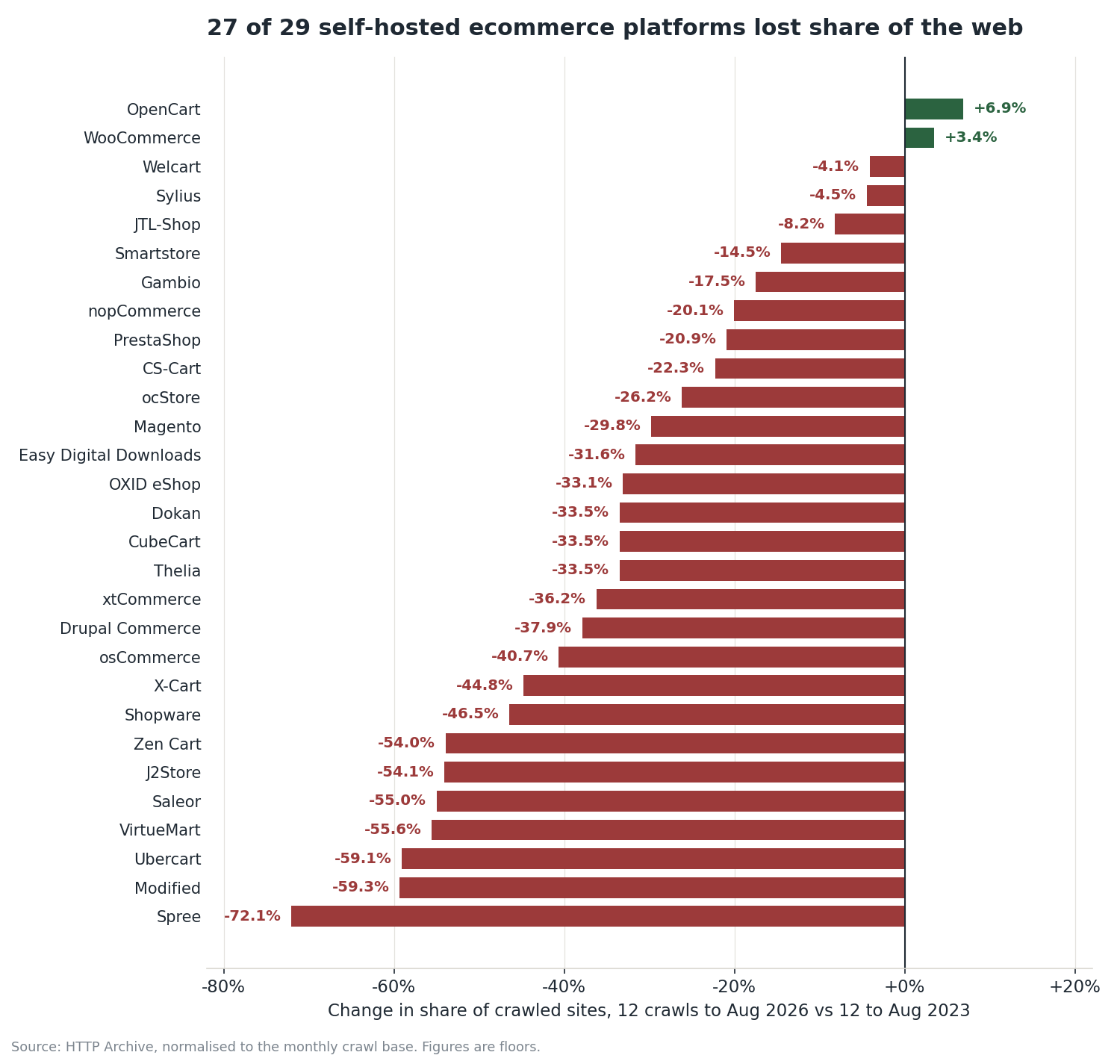
Two platforms came out ahead over those three years - OpenCart gained 6.9% and WooCommerce gained 3.4%.
It's a bit misleading to compare percentages given that today OpenCart runs on 27 times fewer sites than WooCommerce. However, the key is that neither of them grew in absolute terms. Across those 12-monthly crawls, WooCommerce's own site count fell 3.8% and OpenCart's fell 0.5%, while the number of sites being crawled fell 7.0%. Both gained share by shrinking more slowly than the web around them, which you could view as a success given that the category around them was shrinking.
The last 12 months are even worse
Narrow the window to the last 12 months and both of the three-year winners go into reverse. WooCommerce lost 7.9% of its share of the web and OpenCart lost 4.6%, so Shopware is the only self-hosted platform of any size still gaining, and they're very small.
The contrast with the hosted platforms stands out even more. The median self-hosted platform lost 16.4% of its share between August 2025 and August 2026, while the median hosted platform only lost 3.4%.
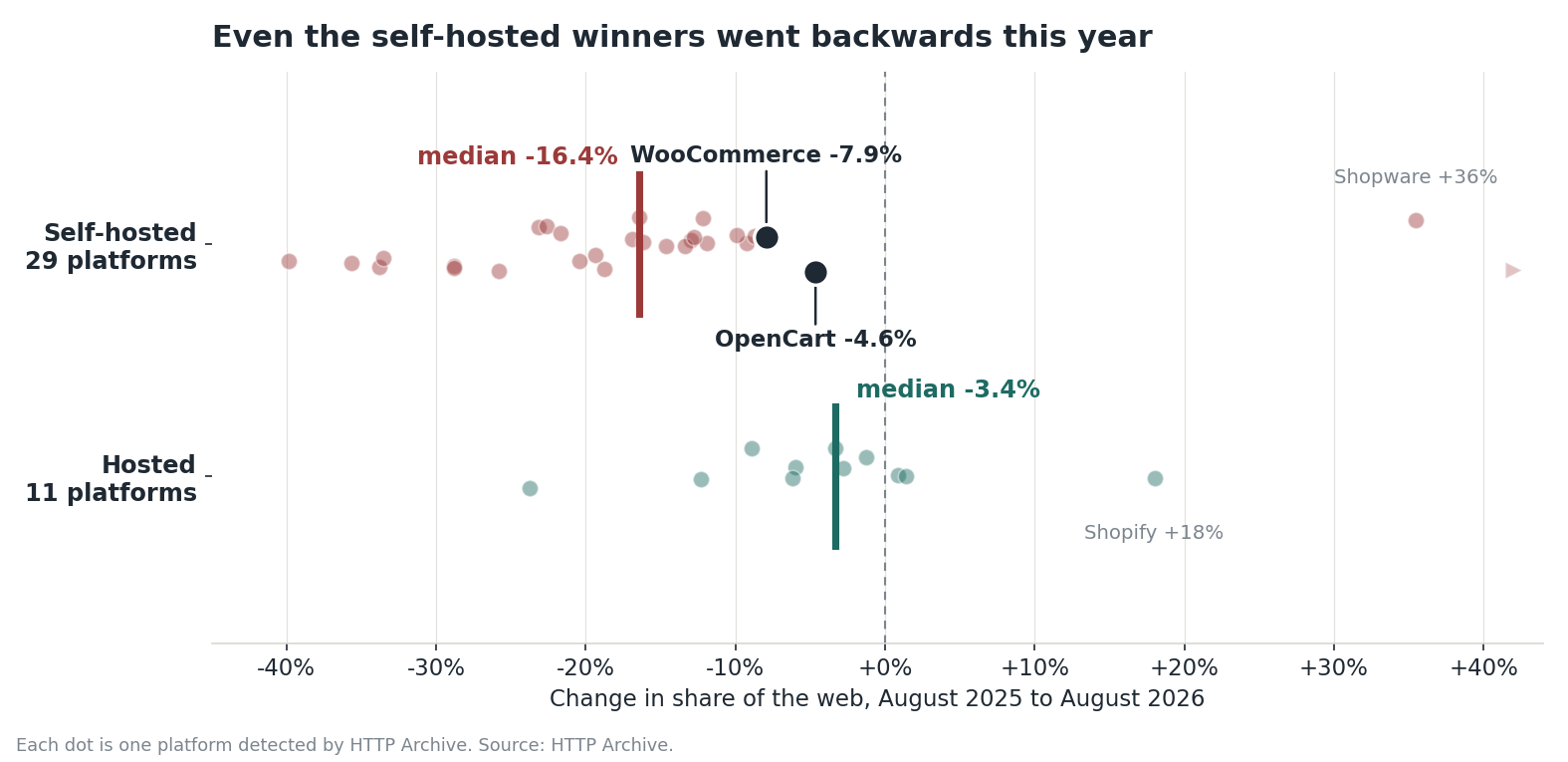
Self-hosted platforms are falling five times faster than hosted ones. That's such a clear pattern that it suggests the problem is the hosting model rather than any one product.
WooCommerce is in that first group, and it is shrinking at roughly half the rate of the other self-hosted platforms. Later in this post, I'll come back to what that means for WooCommerce specifically.
Self-hosted and open source aren't the same thing
First, let's clear one thing up before we get to the full analysis. People use these two words as if they mean the same thing, but they describe different things:
- "Self-hosted" is about where the software runs: On a server you rent and control, or run yourself.
- "Open source" is about the license: Whether you can read, change and redistribute the code.
Most of these platforms are both, so the two ideas blur together. However, some platforms are one but not the other.
CS-Cart sells on-premises licenses for software you install on your own server. That makes it self-hosted and commercial. CubeCart is free and GPL v3. Both of them lost ground, at 22.3% and 33.5%.
The reverse is just as messy. Volusion, Weebly and Big Cartel are all hosted and proprietary, and they've lost 48.0%, 27.4% and 22.8%. Umbraco, Ghost and OpenCart are all open source, and all three have grown.
So, this isn't an open source vs. proprietary issue. Self-hosted ecommerce platforms in either category are seeing the same decline.
WordPress and WooCommerce are consolidating, not winning
WordPress lost 5.0% of its share of the web over the three years. Joomla lost 35.8% and Drupal 23.2%. WooCommerce gained 3.4% while Magento lost 29.8%, PrestaShop 20.9% and Shopware 46.5%.
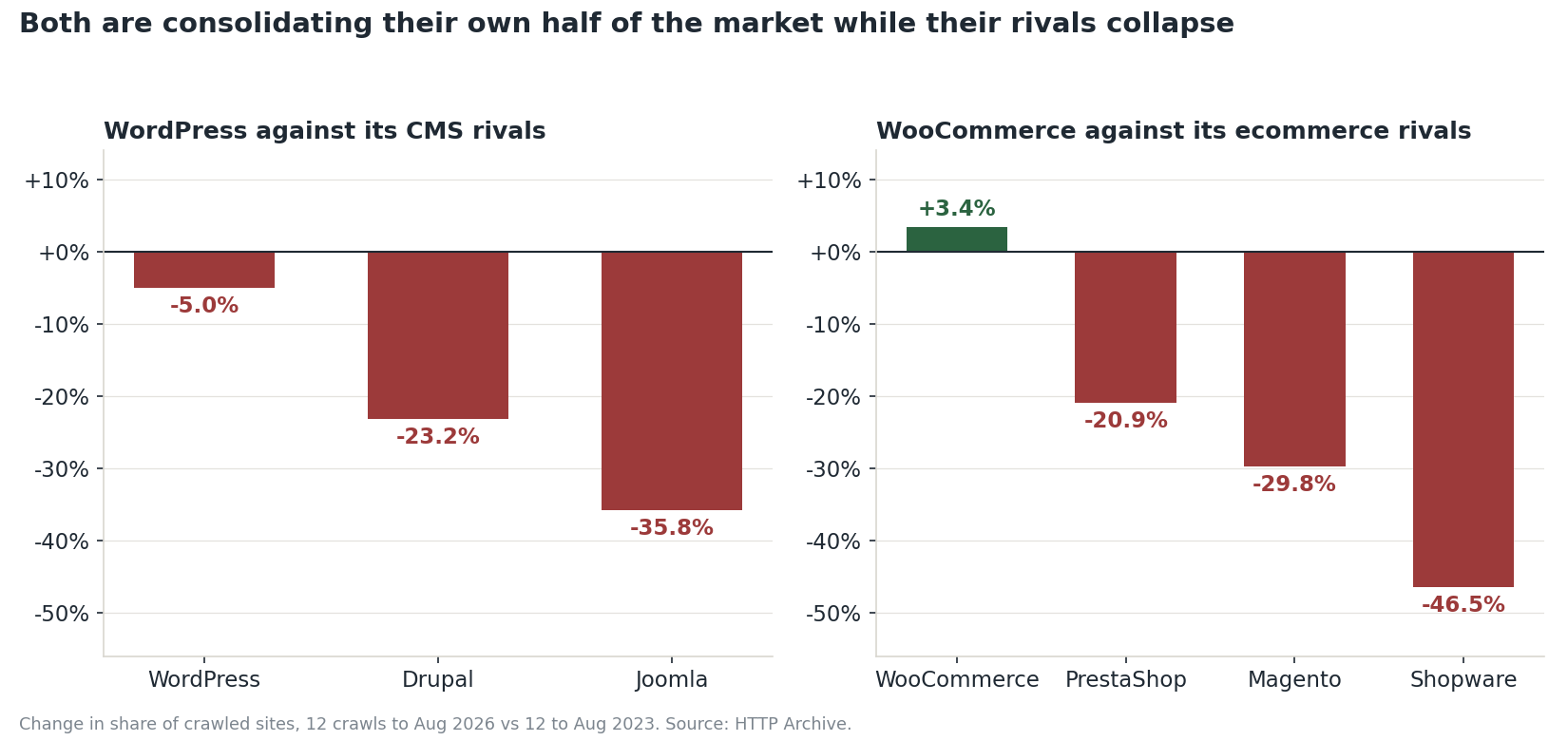
Both are consolidating their own half of the market rather than taking the web as a whole. Anyone who was going to self-host has increasingly picked WordPress, and anyone who was going to run a self-hosted store has increasingly picked WooCommerce. Meanwhile, the self-hosted half of the market keeps getting smaller. This fits with other evidence I've found that the leaders in each category are forcing further ahead, while smaller players are struggling. (I'll publish a dedicated post about this soon.)
WooCommerce's share of WordPress sites tells the same story. It went from 18.75% to 20.43% over the three years, so WooCommerce is still winning the argument among people who've already chosen WordPress. The pressure is one level up, on WordPress market share itself.
Shopify gained two sites for every site that self-hosting lost
The 27 self-hosted platforms that lost ground gave up 63,996 detected sites between August 2023 and August 2026. Shopify gained 129,820 over the same period.
That rules out the most obvious explanation - that Shopify is simply absorbing the refugees. If it were only collecting people leaving Magento and PrestaShop, its gain would come close to matching their loss. However, Shopify gained roughly twice as much, so it's signing up new store owners who had never run their own server, and taking the self-hosted leavers as well.
It's worth noting that while Shopify is now the undisputed market leader among the world's biggest stores, arguably WooCommerce still leads when you include smaller stores and look at the entire web:
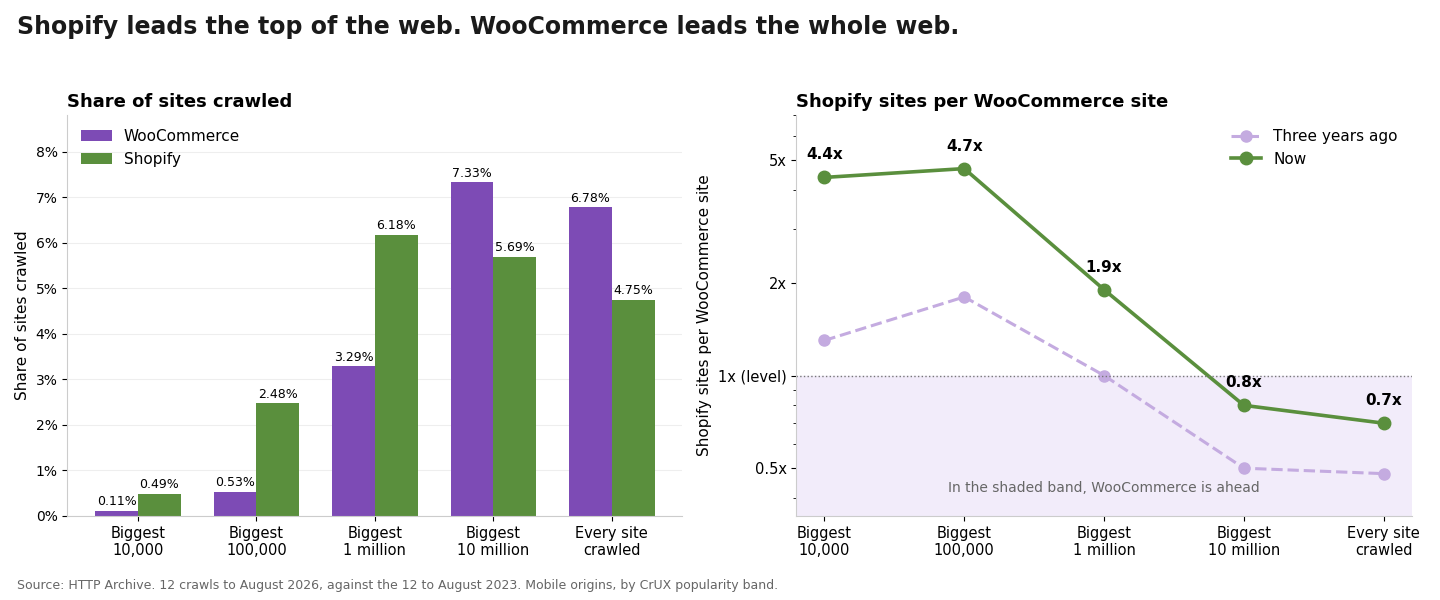
I explore this in more detail in my analysis of the current Shopify vs WooCommerce market share.
Does self-hosting still buy you anything?
We've built self-hosted software at Barn2 for over 10 years, and more recently we started selling Shopify apps as well. Working on both sides has made me much less romantic about this question.
Self-hosting used to be the obvious choice for anyone who wanted control. The case was easy to make: You own the files and you own the database, and nobody could change your terms overnight. All of that's still true. What's changed is whether store owners can care.
Shopify, Wix and Squarespace took the parts of running a store that nobody enjoys - the server, the updates, the backups and the PCI compliance, and they run all of it for you. For a shop selling 40 products with nobody technical on hand, that's a good trade.
Being hosted guarantees nothing either, mind. Wix has lost 12.3% of its share in the last year and Squarespace was flat. Of the three, only Shopify is growing.
The problem with self-hosting starts before anyone installs anything
I think one specific problem explains a lot of this. We'll use WooCommerce as an example, but the same applies to all self-hosted ecommerce software.
Visit WooCommerce.com and it looks fantastic. Great tagline!
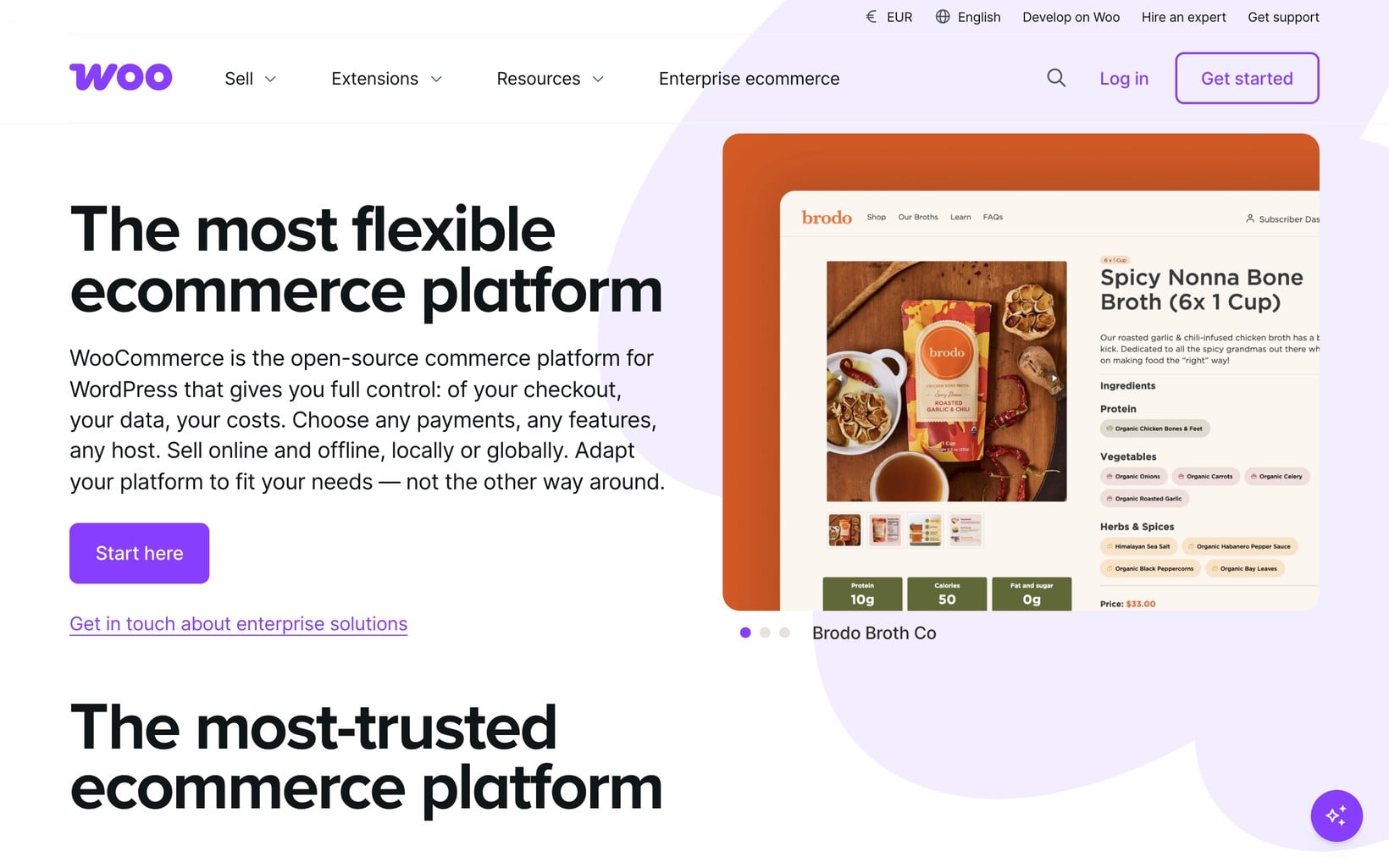
Then click "Get Started" and you're presented with three choices (friction point #1).
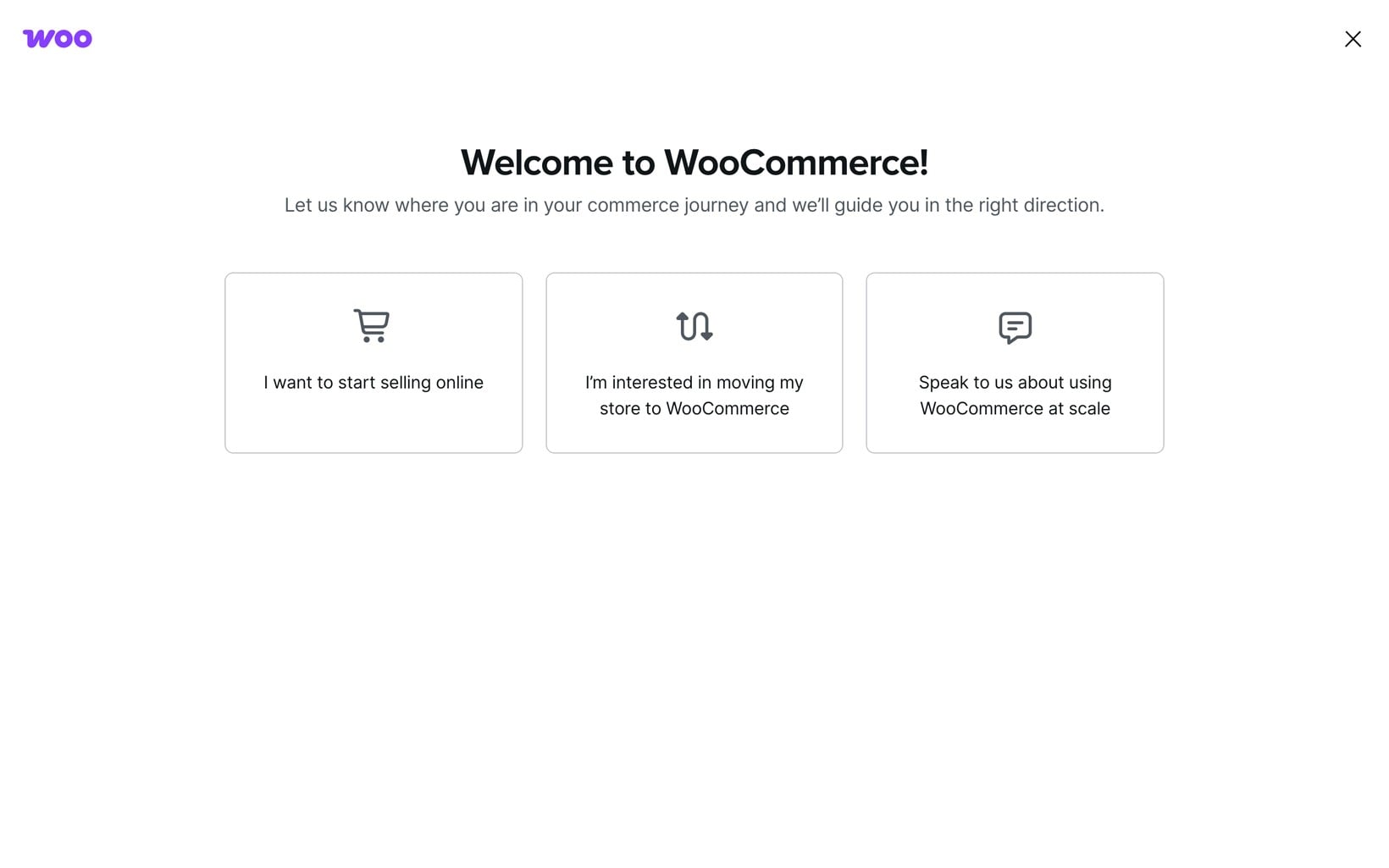
Click "I want to start selling online" and you're presented with a choice of hosts (friction point #2).
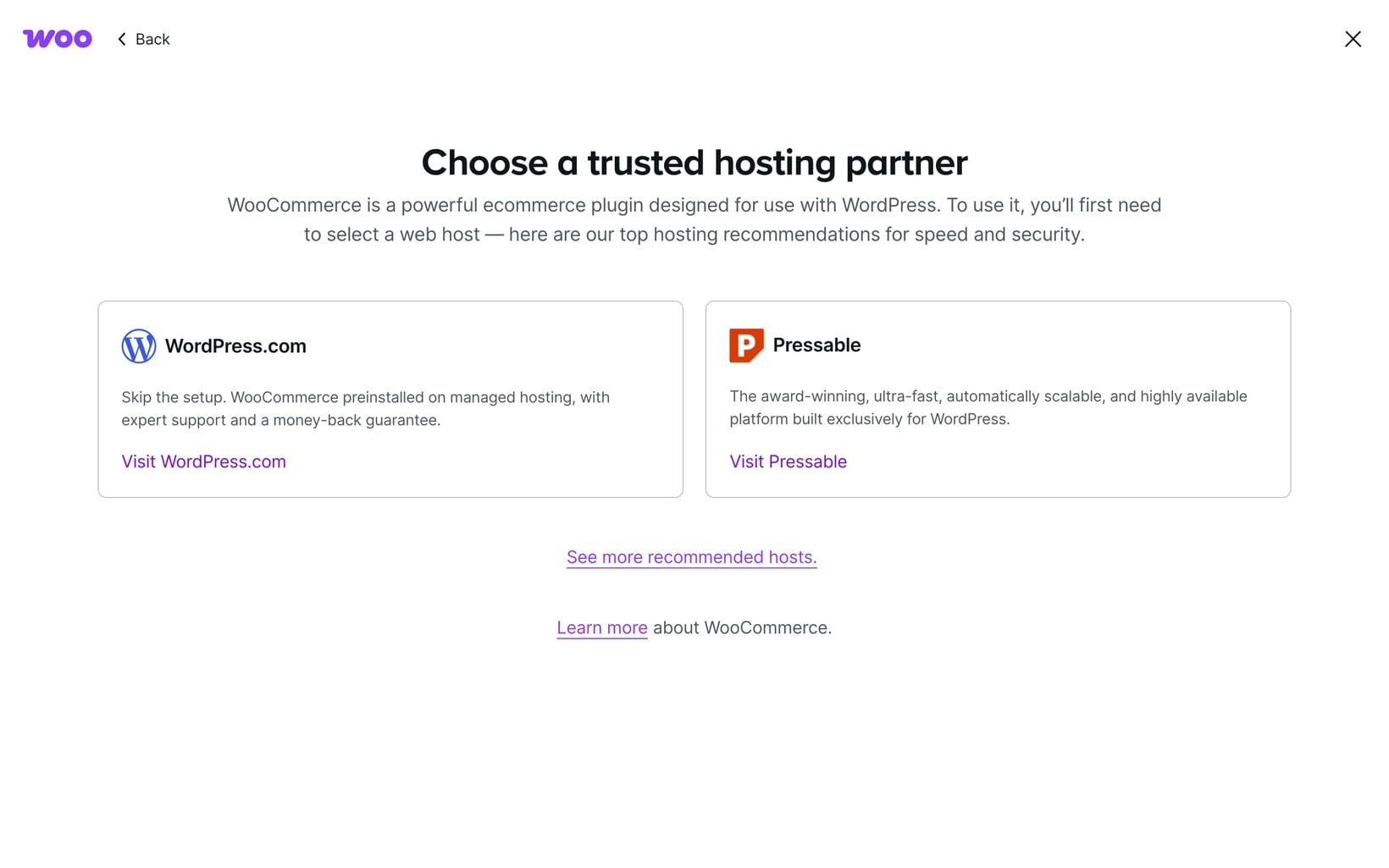
Huh? What's a hosting provider? 😵💫
Right there, you've lost the aspiring new merchant who is excited about setting up their first online shop.
That's not WooCommerce's fault, but the friction is still real. So now let's compare the experience to Shopify.
Visit Shopify's homepage and it looks fine. (Honestly, I thought WooCommerce's was clearer. I guess "aspirational" doesn't appeal to me.)

Let's click "Start for free". (The wording is slightly ironic given that WooCommerce is free and their button says "Get Started", and Shopify is not free and implies it is 🙃. But anyway...)
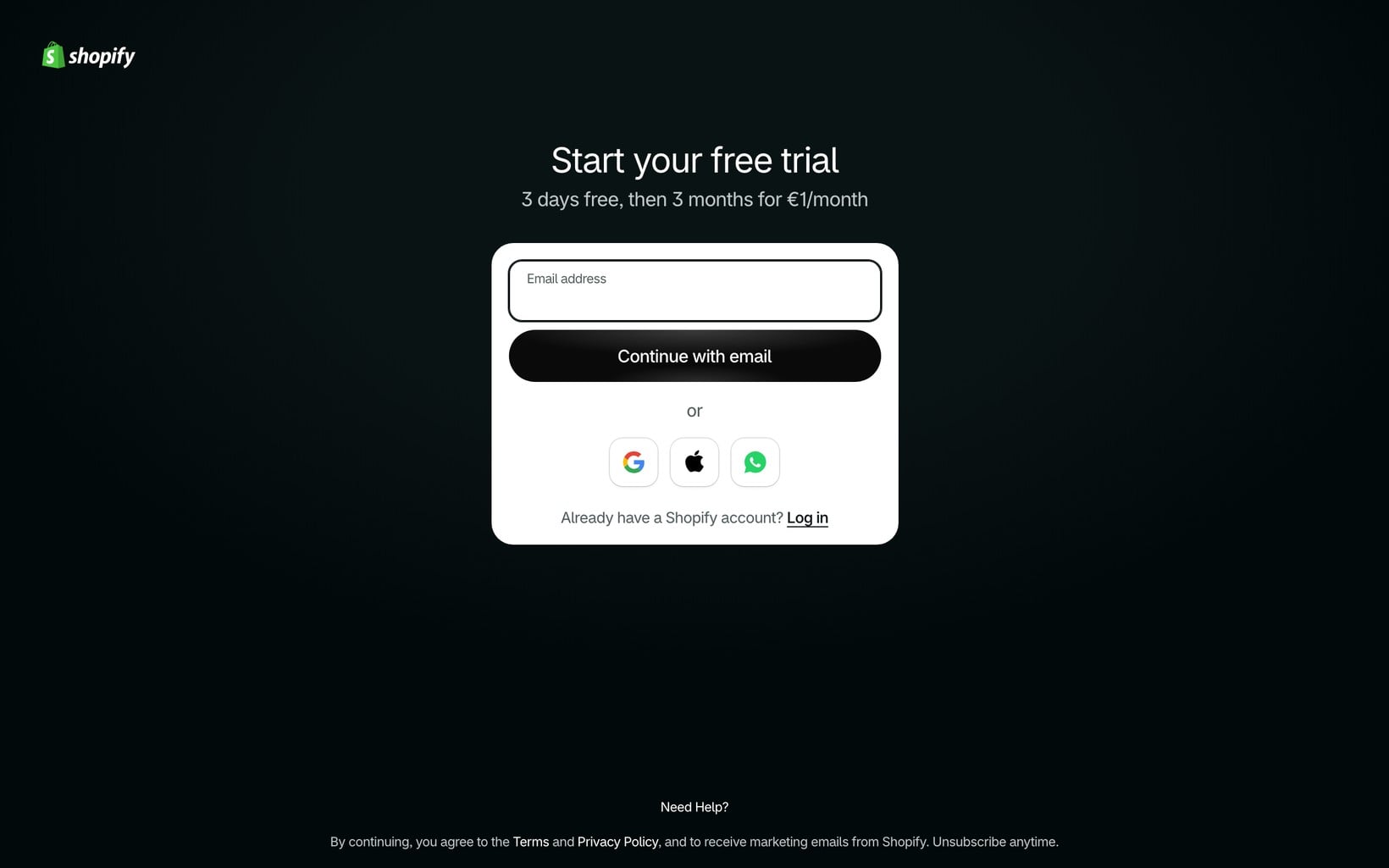
Immediately, you're prompted to create an account and it takes you straight to the onboarding for your online store. That's a huge difference.
For someone who doesn't already understand hosting, having to choose a host is a huge blocker. They've come to buy a store, and instead they're asked to make a technical purchase they weren't expecting, from a company they've never heard of, before they've seen the product work. In contrast, Shopify just asks for an email address.
I believe this friction is a big reason why the self-hosted platforms are declining. Self-hosting has become a choice you make for a reason, rather than the default way to build a store.
So why do people choose self-hosted?
Despite the extra convenience of hosted ecommerce, there are still reasons for certain people to use self-hosted. For example:
- They want full control over their site's infrastructure.
- Their store needs features or customizability that hosted platforms don't offer.
- Needing to own the customer data outright.
- Selling something unusual enough that no app covers it (e.g. products that are forbidden by Shopify's terms and conditions).
- A belief in open source principles.
I covered about this in more detail in my article about reasons to use WooCommerce over Shopify.
Those reasons are real and they aren't going away. However, it appears that they now apply to fewer people than in the past.
Why have people's priorities changed?
It's not a coincidence that Shopify has growth twice as much as the self-hosted platforms have shrunk. I believe that rather than being an active rejection of self-hosted software, the change simply reflects how easy Shopify has made the process.
A few years ago, WooCommerce genuinely was the best way to build a flexible ecommerce store, with no good alternatives. Figuring out things like hosting was an unavoidable part of the process. People persevered because the hosted platforms were so limited and inflexible, and they probably hadn't heard of them either because WooCommerce was the undisputed market leader.
What has changed is that Shopify have now overcome a lot of those pain points:
- Shopify stores are now very flexible as despite being hosted, you can customize them via the API. Sure, there are some limitations - but no self-hosted platform is infinitely flexible either.
- They have improved their marketing - particularly on platforms like YouTube - so that new merchants often think of Shopify when they think of ecommerce.
And as Shopify grows, its budget grows too and these factors accelerate.
How I measured this
Every figure here comes from HTTP Archive, which crawls millions of real sites each month and records the software it detects on each one. I normalized everything to the number of sites crawled each month, which fell 7% across the three-year window. Without that step, raw counts read as a collapse that didn't happen.
The 29 platforms are the self-hosted ecommerce platforms HTTP Archive can detect, not every one that exists. That distinction matters more than it sounds.
The list includes WordPress plugins such as Dokan, Welcart and Easy Digital Downloads. Once you count those as ecommerce platforms, plenty of other WordPress software sells things too. Paid Memberships Pro and LifterLMS both take payments, and neither appears anywhere in this data because HTTP Archive doesn't detect them.
So read the 29 as a consistent sample measured the same way over the same period, rather than a census.
The crawl also reads a site's homepage plus one interior page and nothing deeper, so a platform whose fingerprint only shows up inside a checkout is undercounted. That undercount applies to all 29 equally, so the comparison between them still holds even though the absolute numbers are a floor.
My conclusions on self-hosted ecommerce
Several facts are true at once:
- Self-hosted ecommerce is a shrinking category.
- WooCommerce is winning a larger share of the self-hosted, while it shrinks at about half the rate of the platforms around it.
- Most hosted ecommerce platforms are shrinking too, but less than the self-hosted ones.
- Shopify is the clear outlier which is eating up everyone else's market share as well as attracting more and more new stores.
I believe that this is due to two key reasons. Let's face it - setting up self-hosted ecommerce is a pain and the platforms can't avoid the friction of merchants having to arrange their own hosting. In contrast, Shopify makes this incredibly easy and gets you up and running straight away.
But it's far more than that. Shopify is reaching a tipping point that is making them the ecommerce platform that many entrepreneurs think of first, and their huge marketing budget is allowing them to consolidate this.
So, what's the future of self-hosted ecommerce?
I believe that self-hosted platforms do have a future, but it might be smaller than they expected. There will always be people that want to control their infrastructure, own their data, or don't want to pay Shopify's ongoing prices. After all, it's no coincidence that when you include small sites in the data, WooCommerce still runs on more stores than Shopify - it's still the preferred option for a large number of merchants.
No one can stop Shopify, so the self-hosted platforms need to focus on the things they can control. To do that, they need to make the first 10 minutes as easy as Shopify - and realistically, that might mean releasing a hosted version of their own platform 🙃