9 tips for writing donation thank-you letters that lift retention


A well-written donation thank-you letter is one of the highest-leverage things a small nonprofit can send. It costs almost nothing, it lifts donor retention rates, and it turns one-off givers into repeat supporters. Here are nine tips for writing them and a template you can adapt.
Donor retention rates in the nonprofit sector hover around 45%. More than half of first-time donors never give again, and the single biggest reason is the same: they didn't feel acknowledged. A thoughtful thank-you letter, sent within a few days of the gift, materially changes that number. The same effect compounds across the rest of your nonprofit website when stewardship and storytelling are taken seriously throughout.
This guide covers what makes a thank-you letter effective, walks through nine practical tips, and ends with a template you can adapt for your own donors. The hardest part is starting; the tips below are designed to give you the structure so you can write each letter quickly without thinking through the format from scratch.

Why thank-you letters matter for donor retention
The economics are stark. Acquiring a brand-new donor typically costs 5-10x the dollar value of their first gift. Retaining an existing donor costs almost nothing, which is why most experienced fundraisers prioritise stewardship over acquisition (the fundraising with WooCommerce for nonprofits guide covers the wider revenue side). So even a small lift in retention from better thank-you communications pays back many times over.
The mechanism is simple. A donor who hears back specifically about their gift, in a tone that feels human, gives again at much higher rates than a donor who only receives an auto-generated receipt. The thank-you letter is the difference between feeling like a line item in a donor database and feeling like a valued supporter of the cause.
You don't need a fancy CRM or expensive software. A WordPress site with a solid donation plugin, a small set of email templates, and a routine for sending them will outperform almost any setup that doesn't prioritise the donor experience.
9 tips for writing donation thank-you letters
The tips below are sequenced so the first few cover the letter itself, the middle few cover delivery, and the last few cover the operational side.
1. Personalize it

Start with the donor's name, not "Dear Supporter" or "Dear Friend". Acknowledge the specific donation amount: "thank you for your $100 gift" beats "thank you for your gift". If you can, reference any prior history (this is their fifth donation, or their first since attending an event, or the largest gift they've made to date).
Most modern donation plugins capture all of this automatically, and a small donor gift alongside the personalised letter can lift the impact further. The challenge is using it: most thank-you emails leave the merge fields empty or treat them as optional. Don't.
2. Make it authentic

Sign the letter from a real person at the nonprofit, not "The Team" or "The Communications Department". Use conversational language that sounds like something the signer would say out loud. A casual tone reads as heartfelt; corporate language reads as form-letter, even when the content is otherwise good.
For your biggest donors or recurring supporters, consider a handwritten note a few times a year. The hand-written variant materially outperforms even the best digital thank-you in donor surveys, but it doesn't have to be every letter to every donor.
3. Tell a story

Show the donor what their gift made possible. "Your $50 funded the after-school programme for three children this week" beats "your generous gift supports our mission" by a wide margin. Specific, concrete, near-term impact.
If you have a quote from a beneficiary, include it. If you have a photo from the field, attach it. Storytelling around the donation, not the donor, is what makes the next donation feel meaningful too. See the nonprofit social media toolkit guide for how to capture and organize the stories you'll need.
4. Keep it brief

A donation thank-you letter is a personal note of gratitude, not a recap of your annual report. Two short paragraphs, three at most. Anything longer dilutes the thank-you and starts to feel like an ask in disguise.
Brief doesn't mean cold. The shortest letters often feel the most personal because every sentence carries weight.
5. Include branded elements

Donors should be able to tell who the letter is from at a glance. Logo at the top, brand colours on any digital buttons, a consistent signature block at the bottom. Canva for Nonprofits handles the design work for free if you don't have a designer in-house.
For email thank-yous, a header image that reflects your nonprofit brand identity helps the donor instantly recognise the sender. For printed letters, a branded letterhead does the same job.
6. Provide ways to stay in touch

The thank-you isn't the place to ask for another gift, but it is the place to leave the door open. Include your contact details, links to your social channels, and an invitation to subscribe to your impact updates if they aren't already.
A small "you might also like" section pointing to upcoming events or recent blog posts works well, as long as it doesn't dominate the page. For membership associations, this section is also where you remind donors of their member benefits. The aim is gentle continuity, not another ask.
7. Consider the timing

The thank-you should arrive within 48 hours of the donation, and ideally within 24. Automation handles the first wave (most WordPress donation plugins send an automated receipt-plus-thank-you email immediately on donation). The personalised follow-up should land a day or two later.
For recurring donations, set up a quarterly impact email rather than a thank-you on every monthly gift. Repeating the same thank-you message every 30 days makes it feel mechanical, even when paired with strong fundraising follow-ups; a quarterly "here's what your monthly support has funded" reads as much more meaningful.
8. Build a routine

The teams that get thank-you letters right are the ones with a routine. The same admin or volunteer handles them every week, on the same day. The templates live in one place. The process is documented so a stand-in can cover when needed.
Keep the templates wherever your team already collaborates: a shared Google Drive folder, a Notion workspace, a folder on the team file server. Different versions for major donors, recurring donors, one-time donors, corporate sponsors, in-memoriam gifts. The volunteer pulls the relevant template, personalises it, and sends. No hunting through old emails.
9. Focus on the donor

Use "you" and "your" more than "we" and "our". The letter is about what the donor made possible, not what the nonprofit did. Donor-first language signals respect and reinforces the supporter's role as the active agent, not the passive funder.
A simple test: count the instances of "you/your" versus "we/our" in your draft. The donor-words should outnumber the nonprofit-words by at least 2:1.
A simple donation thank-you letter template
You can adapt this template for one-time and small recurring donors. For major gifts and bequests, write each letter individually rather than starting from a template.
Dear [First Name],
Thank you for your gift of $[Amount] to [Nonprofit Name]. Your support is making a real difference.
In the last [period], donors like you have helped us [specific outcome, e.g. "serve 240 hot meals at our community kitchen"]. Your contribution is part of that, and we're genuinely grateful.
If you'd like to see more of what your support funds, our [recent update / annual report / impact dashboard] at [URL] has the latest stories from the team.
With sincere thanks,
[Signer Name]
[Title], [Nonprofit Name]
[Contact email or phone]
Adapt the bracketed sections for each donor type. The phrasing stays the same; the specifics change.
Beyond the thank-you letter: a stronger donor-facing operation
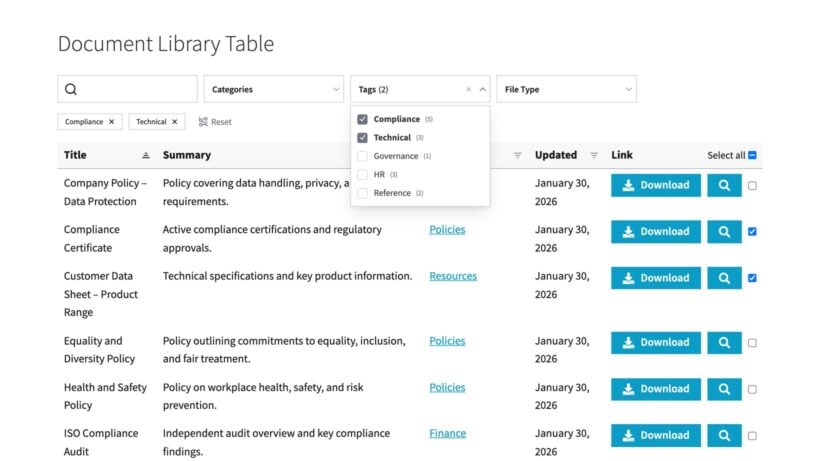
The same care that makes a thank-you letter feel personal carries over to the rest of the donor experience. The annual report that lands in their inbox, the sponsor pack a corporate donor downloads, the brand assets a board member shares, the past campaign updates a major donor wants to revisit.
The nonprofits that get this right host a public donor-facing resource library on their own site. Document Library Pro turns a section of your site into a searchable, filterable archive that supporters and donors can self-serve from. Annual reports stay open to anyone; sponsor-only or board-only materials sit behind gated content rules. You build the library once and embed it in any website, whether that's WordPress, Squarespace, Wix or a custom site.
Five real nonprofits show how they built libraries like this in our WordPress nonprofit resource library examples roundup. It's not a thank-you letter tool, but it sits alongside the rest of your donor-stewardship work, and strong donor relationships mean the same supporters who appreciate a well-written thank-you letter will appreciate being able to find the rest of the organisation's materials in one place.
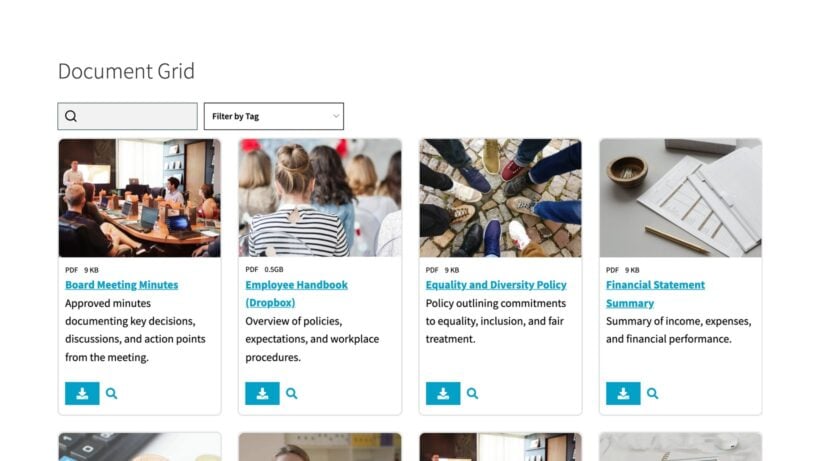
While you're tightening up the donor experience, also worth looking at the wider donor gifts guide for the post-donation retention side, and fundraising ideas for the next campaign.
Frequently asked questions about donation thank-you letters
How long should a donation thank-you letter be?
Two short paragraphs, three at most. Around 100-150 words. Anything longer dilutes the thank-you and starts to feel like a fundraising appeal in disguise. The donor's attention span on a thank-you is limited; respect it.
Should thank-you letters be sent via email or post?
Both, ideally. Automated email immediately after the donation handles the "you've been heard" job. A printed or handwritten letter a few days later handles the "we genuinely appreciate you" job. For donors above a threshold (say $250+), the post-mail version is well worth the cost.
How quickly should I send a thank-you letter?
Within 48 hours, ideally within 24. The automated email should fire immediately; the personalised follow-up can come a day or two later. Donors who hear back within a week are significantly more likely to give again than donors who wait longer.
Do I need to send a separate thank-you for each recurring donation?
No. Send an automated receipt every month (for tax-deductibility records), but reserve the personalised thank-you for a quarterly or annual cadence. Monthly personalised thank-yous start to feel mechanical and lose their impact. For ongoing donor engagement, mix the thank-yous with content from your online fundraising calendar. See our donor gifts guide for how to keep recurring donors engaged year-round.
What's the tax-receipt requirement?
In the US, the IRS requires a written acknowledgement for any gift of $250 or more. In the UK, Gift Aid declarations cover most of the equivalent ground. Check your local rules and make sure the automated receipt component of your thank-you process includes whatever legal language your jurisdiction requires.
Should I include another ask in the thank-you letter?
No. The thank-you should not be a fundraising appeal. Mentioning upcoming events or inviting the donor to subscribe to your newsletter is fine; pitching for another donation isn't. The next ask comes later, in its own communication.
Final thoughts
A great donation thank-you letter is short, specific, sincere and signed by a real person. It arrives quickly, focuses on the donor rather than the nonprofit, and points the reader toward the next stage of their relationship without asking for anything more in the same breath.
The leverage point is repeatability. Build a few good templates, store them somewhere the team can find them, run the routine weekly. The compounding effect on donor retention will show up within a year, and the cost is essentially just the time it takes to write the templates well in the first place.