10 cheap fundraising ideas you can execute this week


Cheap fundraising ideas use what you already have on hand: an email list, a website, a few volunteers, and a story worth telling. Here are 10 that cost next to nothing to launch and still bring in real money.
Most fundraising ideas you'll find online quietly assume you have a budget. A new venue. Custom merchandise. An events team. The reality for most small nonprofits is the opposite: every pound has to fight for its place in the budget, and any new campaign has to pay for itself fast.
The ideas in this guide are deliberately near-zero-cost. Each one uses tools you probably already have access to (a WordPress site, social channels, an email list) plus a handful of volunteer hours. No venue hire, no marketing budget, no custom development.
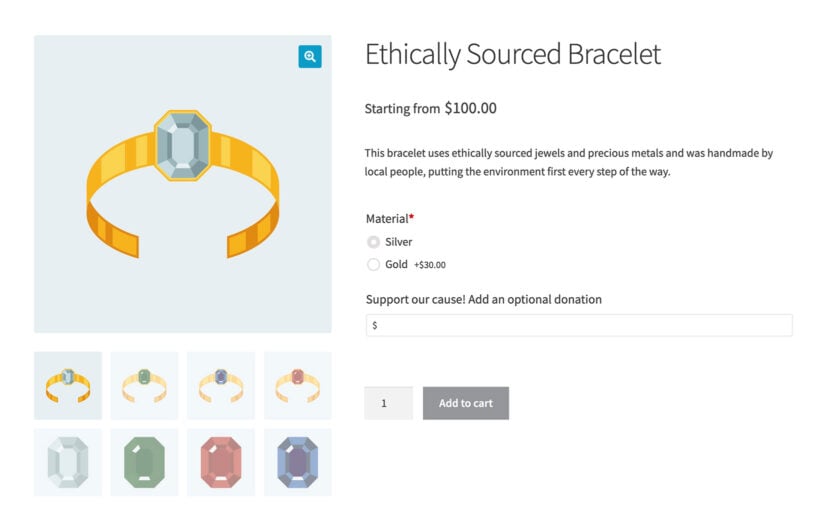
The single biggest unlock for cheap fundraising is making your existing donation form work harder. Suggested amount buttons, an optional add-on for an existing order, a one-click recurring upgrade. A good donation flow on your nonprofit WordPress site is the engine behind most of the ideas below.
What makes a fundraising idea "cheap"?
A cheap fundraiser meets three criteria. It uses tools you already pay for: the WordPress site, the donation plugin, the email tool. It needs no external venue or vendor: no hall hire, no caterer, no print run. And it scales with volunteer time rather than money: more hours from existing supporters always beats more cash from the budget.
The ideas below are sorted roughly by speed-to-launch. The first few can go live this afternoon if your donation form is already set up. The later ones need a bit more setup but compound for years.
10 cheap fundraising ideas you can run this week
1. Promote donor matching with a clear ask
A surprising share of corporate employers will match charitable donations from staff, often pound-for-pound. The catch is that almost no donors know whether their employer offers matching, and almost no nonprofits surface the question at the right moment.
Add one line to your donation thank-you page: "Does your employer match charitable gifts? Check here." Link to a free tool that lets donors look up their employer's policy. Even a 5% match rate uplift across a year of donations is a meaningful chunk of revenue you didn't have to spend a penny to capture.
2. Run a virtual challenge with peer-to-peer sharing
"Walk a mile for every £10 donated." "Read 30 books in 30 days, get sponsored per book." The setup costs nothing because the participants are doing the work. The role of the nonprofit is just to provide a campaign page, a hashtag, and a shareable graphic.
Use your existing donation page with a custom landing message tied to the challenge. Peer-to-peer fundraising (where supporters create their own personal pages under the campaign umbrella) makes this scale especially well, since each ambassador brings their own network in.
3. Launch a hashtag-led social campaign
A campaign hashtag costs nothing and turns every supporter post into free distribution. Pick one tag, write three sample posts, and ask board members and core volunteers to share them on a fixed day. The momentum from concentrated posting on one date does what spread-out posts can't.
For a deeper treatment see how to put together a nonprofit social media toolkit that supporters can pick up and use without further briefing.
4. Run a trivia game tied to your cause
Trivia rounds about your mission, your beneficiaries, or facts in your sector. Players pay a small entry fee per round, get a few questions, and enter a drawing for a small prize (often donated by local businesses). The format works equally well online (Zoom-hosted) or in person (community hall).
The cost is zero if you write the questions yourself, donate the prize pool from supporters, and host in a free space. The educational element doubles the campaign as awareness for your cause.
5. Send an eCard campaign for a calendar moment
Donors pay £5-£25 to send a branded eCard in someone's honour. Mother's Day, Father's Day, Valentine's, Christmas, World Teacher's Day, anniversaries. The pattern is well-established and donors find it emotionally easy to give "because it's a gift" rather than "because we asked".
A simple WordPress form with a personalised message field and a few card designs is all the setup you need. Live text preview on the card lets donors see the final design before paying, which lifts completion rates.
6. Create a countdown campaign with a public timer
A specific dollar amount, a specific time window, and a visible countdown on your homepage. "Raise £2,000 for the after-school programme by Friday at noon." The urgency drives donations that wouldn't have happened on an open-ended page.
Include hourly social posts during the final 24 hours, and reset the goal upward if you hit the target early. Public progress thermometers and live updates are part of most modern WordPress donation plugins.
7. Add donations to your existing online store
If your nonprofit already sells merchandise, tickets, or memberships through WooCommerce, an optional donation field at checkout can capture a few percent of orders without any new infrastructure. "Support our cause: Add an optional donation" with a free-form amount or a few suggested pre-fills.
The WooCommerce side is straightforward to set up with a donation plugin tied to a checkout add-on, and tax-exempt customer roles handle any reporting requirements automatically.
8. Push recurring (monthly) donations as the default
A £10/month donor is worth £120/year in repeat revenue. A £100 one-off donor is worth £100 and you start from zero next year. The cost difference for the nonprofit is essentially zero; the difference is just in how the donation form is configured.
Make the monthly option the default selection on your donation form, not a "and also" tickbox. Add a one-line explanation: "Monthly gifts let us plan ahead." Most donation plugins support recurring donations natively, including the major GiveWP alternatives.
9. Recruit ambassadors with personal donation pages
Give supporters who already love your cause a personalised donation page they can share with their network. Their photo, their story, a custom target. Conversion rates from "Sarah is raising money for X" pages are several times higher than "X is raising money" pages, because the personal vouch carries the trust.
The setup cost is zero if your donation plugin supports peer-to-peer or fundraiser pages. The recurring effort is just identifying your most active 10-20 supporters and asking them to participate. Membership associations often have the strongest baseline for this because their members already have an active relationship with the org.
10. Run a contest where votes are donations
A fun, non-financial contest where each "vote" costs £1-£5. Best volunteer story, best photo, naming the new mascot, picking which programme to fund first. People vote multiple times because the cost per vote is tiny.
The trick is to pick a vote subject that supporters actually care about. A naming contest for a new initiative is more engaging than abstract "pick our favourite cause" framing. Free polling plugins handle the vote count; the donations go through your normal donation page with a "Vote for X" reference field.
Set up cheap fundraisers with your existing WordPress site
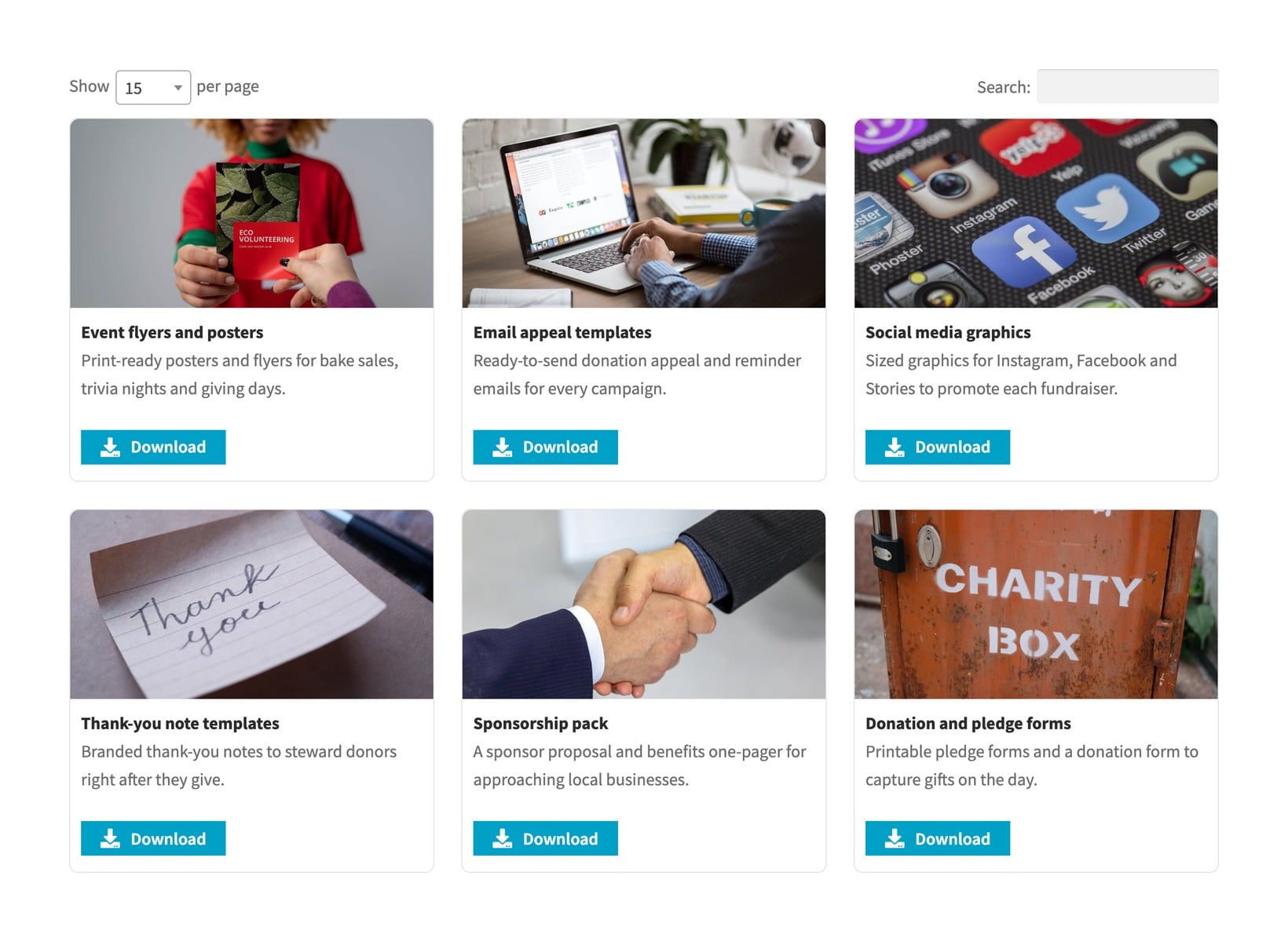
The common thread across these ideas is that your existing nonprofit website is doing more of the work than your team is. A donation plugin handles the payments. The CMS handles the campaign pages. A document library hosts the templates volunteers reuse from campaign to campaign.
If your nonprofit doesn't yet have a strong donation flow, the GiveWP alternatives roundup compares the current options. For the campaign-asset side (templates, social posts, donor packs), Document Library Pro turns the running pile of campaign files into a searchable, filterable library. Five real organizations show how they did it in the WordPress nonprofit resource library examples roundup.
For supporter-facing materials (hashtag graphics, pre-written posts, brand logos), the public side of the library doubles as a self-serve toolkit. Donor-only documents can sit behind gated content rules tied to user roles. Volunteers stop emailing each other for the latest poster, and your communications lead gets their afternoon back.
Frequently asked questions about cheap fundraising ideas
What's the cheapest fundraising idea to start with?
Promoting donor matching is the genuine zero-budget option. You're not running a new campaign; you're capturing matched gifts from donations your nonprofit already receives. The only cost is one line of copy on the thank-you page and a link to a free matching-gift lookup tool.
How can a nonprofit run a fundraiser without a budget?
Lean on tools you already pay for, ask supporters to do the heavy lifting (peer-to-peer pages, hashtag posts, ambassador stories), and pick formats that cost time rather than money (trivia nights, virtual challenges, eCard campaigns). The list above is deliberately ordered so the first few options need almost no setup at all.
What free tools help run cheap fundraisers?
There are lots of free tools available:
- A WordPress site you already host.
- A donation plugin you've already installed.
- Canva's graphic design software has a Nonprofits plan which is free for qualifying organisations. Our Canva for nonprofits guide will further help you with this.
Our article aboout discounted software for nonprofits covers more free or heavily-discounted tools across email, social media management and analytics.
Are these ideas only for small nonprofits?
No. The same patterns scale up: a peer-to-peer ambassador programme that brings in five donors at a small charity can bring in five hundred at a large one. The reason the ideas are listed here as "cheap" is that they don't have a floor cost. They work at any size, but they're especially valuable when budget is the limiting factor.
How do I prevent campaign fatigue with supporters?
Limit each supporter to one ask per month at most. Mix asks with non-asks (impact updates, beneficiary stories, behind-the-scenes posts). And segment your list so supporters who recently gave don't immediately see a new ask. Fundraising with WooCommerce covers segmentation options in more depth.
Final thoughts
The mistake small nonprofits make most often is running every idea half-heartedly because the team is stretched thin. Pick one of the ten above, give it three weeks of focused attention, and see what your specific donor base responds to.
The cost of these ideas is mostly time, not money. The benefit, beyond the immediate revenue, is the data you collect about which approaches work for your supporters. That data is what lets the next campaign do better than this one.